Water shortages at home, too much water in the Solomon Islands
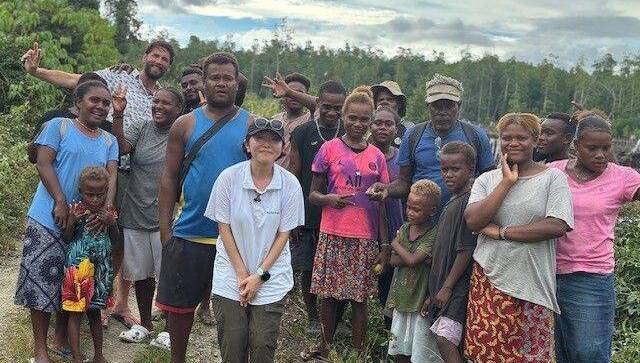
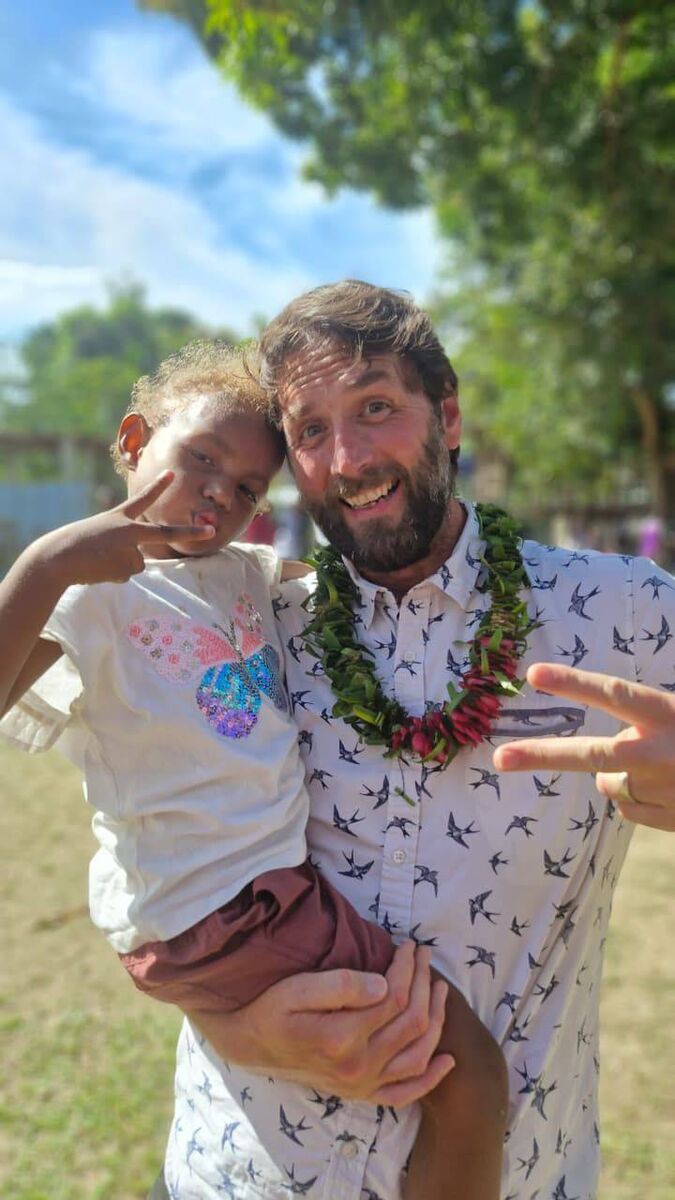
Maurice Sadlier with members of the Maeana community on the Solomon Islands.
The theme of distance surfaced before I had even left Ireland. Checking in at Dublin Airport, the young man behind the desk asked where I was from.
"Tipperary. Clonoulty-Rossmore," I replied.
His face lit up.
"Clonoulty-Rossmore? Great hurlers."
I have lived in Dublin for many years and am always pleased to encounter someone familiar with the parish. It is a wonderful place after all, but I confess I hadn't expected it to feature in a conversation at an airport check-in desk that morning.
He then glanced at my itinerary.
"Where are you headed?"
"Honiara."
A blank look.
"Solomon Islands."
Still nothing.
He had never heard of Honiara, yet he knew my home parish.
It was a useful reminder that everyone carries their own map of the world. What feels familiar, important or central depends largely on where we stand.
People often think of Solomon Islands as remote. After several visits, I have come to realise remoteness depends entirely on where you are standing. What appears distant from Dublin or Brussels sits at the centre of a vast ocean that sustains communities, cultures and livelihoods across the Pacific.
As Ireland assumed its EU presidency, I found myself almost 15,000km from home in a country many Europeans would struggle to locate on a map.
A few days into the trip, my wife rang from home. She was worried about the hydrangeas and other plants I had left in her care. With a hosepipe ban in place, what would normally be a routine gardening concern had become something of a household crisis. I offered what I hoped sounded like expert horticultural advice while privately considering whether a garden redesign might be easier.
Read More
While water shortages were shaping conversations at home, the practical realities of island life were shaping ours in Solomon Islands.
We had hoped to travel to Makira Province, but flight disruptions and a growing backlog of passengers had other ideas. In a country of more than 900 islands, a delayed flight can mean entirely rewriting your plans.
Instead, we travelled to Malaita Province.
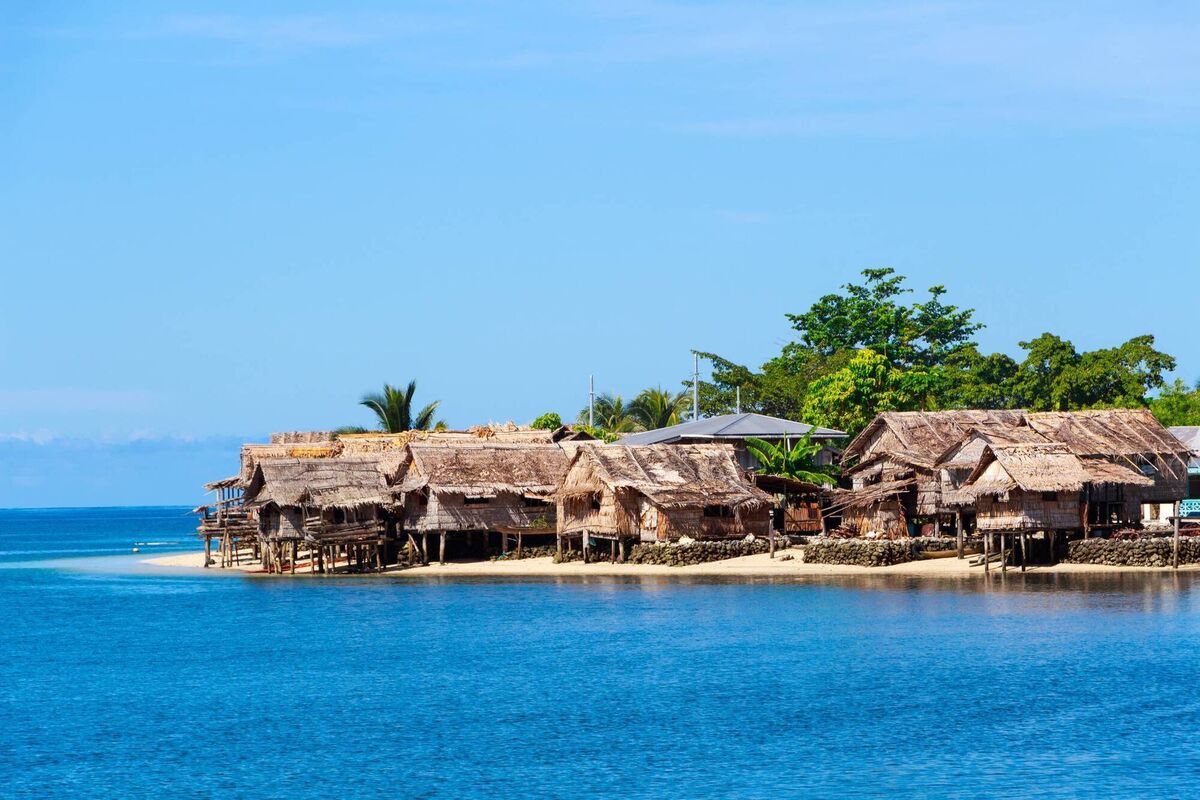
The journey involved a two-hour boat trip from Honiara to Auki, the provincial capital, followed by a drive to the community of Sulagwalu. Google Maps confidently informed us the journey covered less than 90km and should take just under three hours. In reality, it was closer to five.
To describe the road as the M8 would be optimistic. A Tipperary boreen would be a fairer comparison.
It was in Sulagwalu that I met another plant enthusiast. His name is Ben.
Standing on the beach, he pointed to where the coastline had been when he was a child. He was pointing not at the beach in front of us, but several metres out to sea. The sea, he explained, now reaches some 10m to 15m further inland than it once did.
Ten years ago, a car accident left him without the use of his right arm. It has not diminished his determination. Over the past four years, Ben has helped mobilise his community of about 200 people to plant more than 10,000 mangroves along the shoreline.
Ben's response has not been to wait for somebody else to solve the problem. Instead, the community has planted mangroves to protect the shoreline, strengthen fisheries and support livelihoods.
Ben did not speak in the language of international climate negotiations or environmental policy. He spoke about children, livelihoods and responsibility.
A few days later, in the community of Maeana, I encountered a similar story.
Seven years ago, the community lost two hectares of valuable mangrove forest as a result of logging. Along with the trees went critical habitat for mud crabs, an important source of both food security and household income.
Today, the community proudly showed us a new mangrove forest they have established with support from World Vision. In just over a year, the community's 300 residents have planted 3,000 mangroves, restoring not only an ecosystem, but also a source of food, income and hope for future generations.
As we walked through the site, my colleague Lee smiled and thanked us for making the journey.
"I'm glad to see you," he said. "Our stories will be retold in the future."
Looking around at the young mangroves taking root where forest had once been lost, it was difficult to disagree.
People often describe Solomon Islands as a small island state. Increasingly, I think that description misses the point. Its land area is only about one-third that of Ireland, yet it is responsible for approximately 1.6 million square kilometres of ocean, almost twice the size of Ireland's maritime territory.
We tend to think of Ireland as an island nation and Solomon Islands as a collection of small islands. In reality, Solomon Islands may be the more maritime society of the two.
This is not simply a nation surrounded by the sea. It is a nation defined by it, which is why conversations about oceans feel different here.
As Ireland holds the EU presidency, oceans and marine biodiversity are receiving increasing attention. Yet in places such as Sulagwalu and Maeana, these are not policy discussions. They are lived realities. The health of the mangroves affects fisheries, livelihoods and ultimately the future of the village itself.
Back home, family conversations revolved around hosepipe bans, watering cans and the fate of a handful of hydrangeas. In Malaita, conversations revolved around shorelines, fisheries and the long-term future of entire communities.
Both conversations were, in their own way, about water. The scale, however, could hardly have been more different.
During one conversation, a colleague offered a simple observation that has stayed with me.
"We share the same ocean."
At first, it sounded odd. Ireland faces the Atlantic, while Solomon Islands sits in the Pacific. Yet the more I reflected on it, the more sense it made. The oceans we give different names on maps remain part of the same interconnected system, sustaining communities, livelihoods and ecosystems far beyond our shores.
Lee was right.
Those stories deserve to be retold.
Because behind every discussion about oceans, biodiversity and climate resilience are people quietly doing the hard work of protecting the places they call home. Ben's 10,000 mangroves. Maeana's 3,000. Communities investing not in the next budget cycle, but in coastlines and livelihoods that may outlast them.
Some of the most useful lessons about stewardship are being taught in communities most of us could not locate on a map. Their shores may be half a world away, but their future is bound up with ours.
After all, we share the same ocean.
- Maurice Sadlier is director of programmes and policy at World Vision Ireland


CLIMATE & SUSTAINABILITY HUB
CONNECT WITH US TODAY



Be the first to know the latest news and updates