Ireland must continue to lead the way on overseas aid
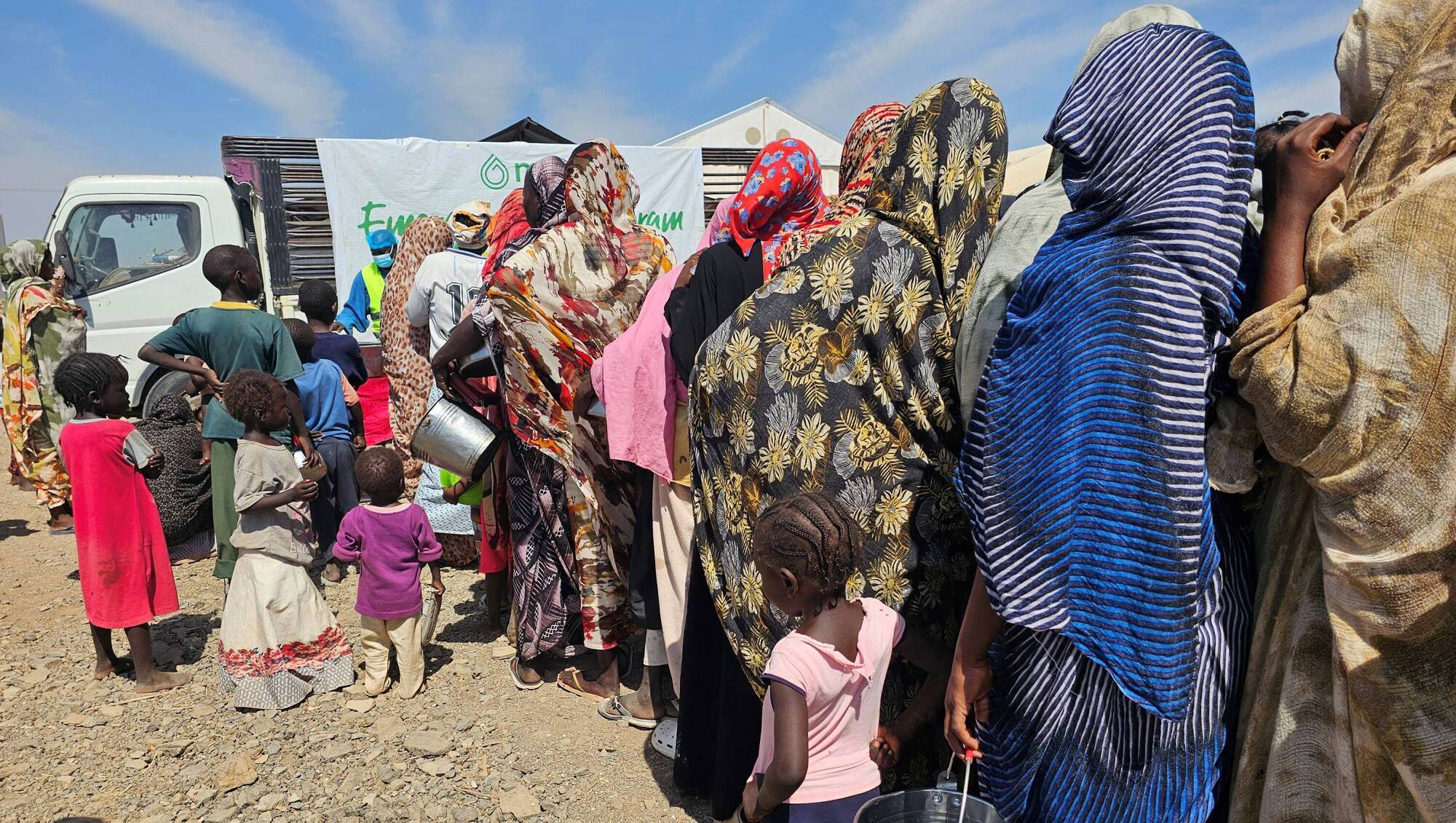
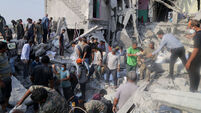
Displaced Sudanese wait to receive humanitarian aid at the Abu al-Naga displacement camp in the Gedaref State in February. Famine is spreading in Sudan's western Darfur region. Sudan is one country in a world that is moving in a harsher, more frightening direction. Photo: AFP via Getty Images
At the UN General Assembly last week, Taoiseach Micheál Martin’s remarks on the collective failure of the international community to act on Palestine were stark.
He highlighted a sustained campaign of displacement and destruction akin to ethnic cleansing that is “deepening conflict, suffering and despair.”
Less reported on was his intervention on Sudan, the “forgotten war,” where he stated that “the people of Sudan deserve the same attention, urgency and solidarity that we rightly extend to crises elsewhere”. Two years after former President Mary Robinson decried the lack of world attention to the conflict there, the indifference has only grown.
Today, more than 11 million people have been displaced, and more than 30 million people need urgent humanitarian assistance. The words floated from the podium by Micheál Martin and others in New York were welcome, but it is action on the ground that makes a difference.
Sudan is one country in a world that is moving in a harsher, more frightening direction.
We are living through an era of growing global instability and weakening multilateralism. Around the world, violent conflicts are multiplying, deepening, and being waged with total disregard for civilian life and international humanitarian law.
At the same time, the climate emergency is accelerating, converting fragile regions into hotspots of chronic displacement, severe food insecurity, and economic uncertainty. The El Niño weather phenomenon is projected to kill more than 450,000 people by next February.
While Europe feels these pressures, the deadliest burden is borne by those living in fragile and conflict-affected states — countries like Sudan, Afghanistan, the Democratic Republic of Congo, and Somalia, where state capacity is severely weakened and vulnerability is at its absolute peak.
Today, two billion people — a quarter of humanity — live in these fragile contexts. On our current trajectory, that figure will rise to 3.2 billion by 2030, representing almost 90% of the world’s extreme poor.
Yet, just when help is needed most, international aid is shrinking and shifting away from basic human needs. This is putting decades of hard-won progress at risk.
Modelling by suggests that there could be 22 million avoidable deaths by 2030, including more than five million children under five. Increasingly, donor countries expect development budgets to serve their own economic, trade, and security interests.
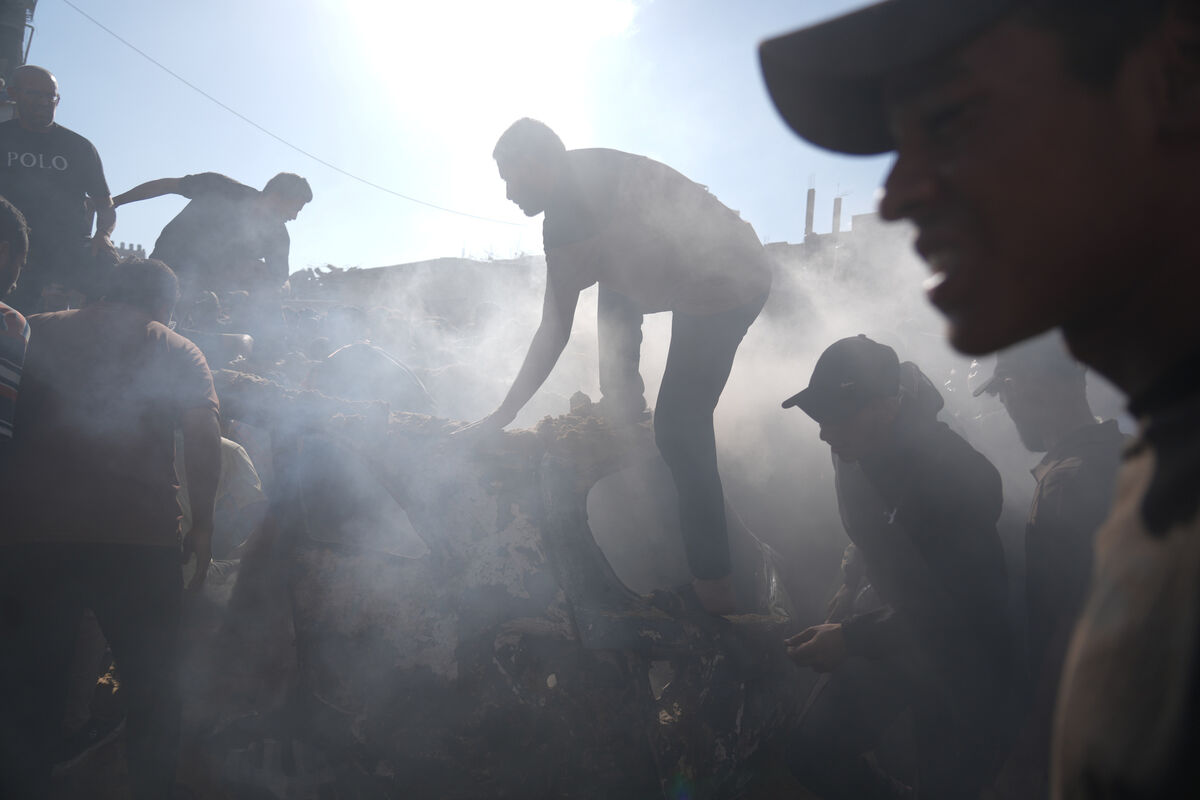
We need to reflect on the immense impact aid has had on communities and individuals who live through the worst effects of conflict, climate change, and hunger. Over the last two decades, Official Development Assistance (ODA) has been a critical tool in improving global health, education, and food security.
Aid invested in healthcare has saved 91 million lives worldwide, including 30 million children under five, while providing a vital lifeline to prevent disease outbreaks and respond to natural disasters.
Beyond humanitarian relief, international aid is a vital long-term investment that builds a safer, more stable world. By funding essentials like peacebuilding and healthcare, it drives economic growth and creates a shield against global emergencies like pandemics, climate change, and economic downturns.
Ireland has not followed the herd when it comes to international aid. Last year, it increased its contribution by a modest amount, an act that former WHO Executive Director Mike Ryan told a Dóchas conference last week was a “moral flag waving to the world”.
Next week, we need to continue to be that moral voice in the world that stands up and says “no more”. We must demonstrate in Budget 2027 the same level of determination and ambition echoed by Micheál Martin at UNGA.
Real and tangible progress toward meeting our commitment to reach 0.7% of GNI on Official Development Assistance (ODA) must be made in Budget 2027. We must make good on our commitment to increase ODA year on year and spend it on those who are furthest behind.
The world now needs leadership from countries that know and understand the transformative impact ODA can have in delivering life-saving support and building community resilience in the world’s most forgotten and long-lasting crises. The world needs leadership from countries known for their credibility, consistency, and trustworthiness.
As the network for international development and humanitarian organisations, we believe Ireland is uniquely positioned to provide that leadership — to be a “model power” that leads through its values, strengthens international co-operation at a time of fragmentation, and uses its influence to build a fairer, more resilient world.
We can demonstrate what it looks like to lead through co-operation, rather than dominance and defence. We can contribute to global peace and security in a way that encompasses who we are.
To quote Mike Ryan again: “It is a moral imperative that we as a human race do not allow the suffering to continue. Yes, we can make an economic argument, we can make a stability argument, we can make a peace argument, but for those of us who work in humanitarian settings it is about just saying ‘no’ — we cannot allow this on a planet that has so many resources, with all our wealth, technology and AI, that we can leave a quarter of a billion people out in the cold.
"We cannot simply do that as a human race, and then call ourselves civilised.”
- Jane-Ann McKenna, Dóchas CEO


CONNECT WITH US TODAY



Be the first to know the latest news and updates