Jack Power: Irish salmon are in big trouble
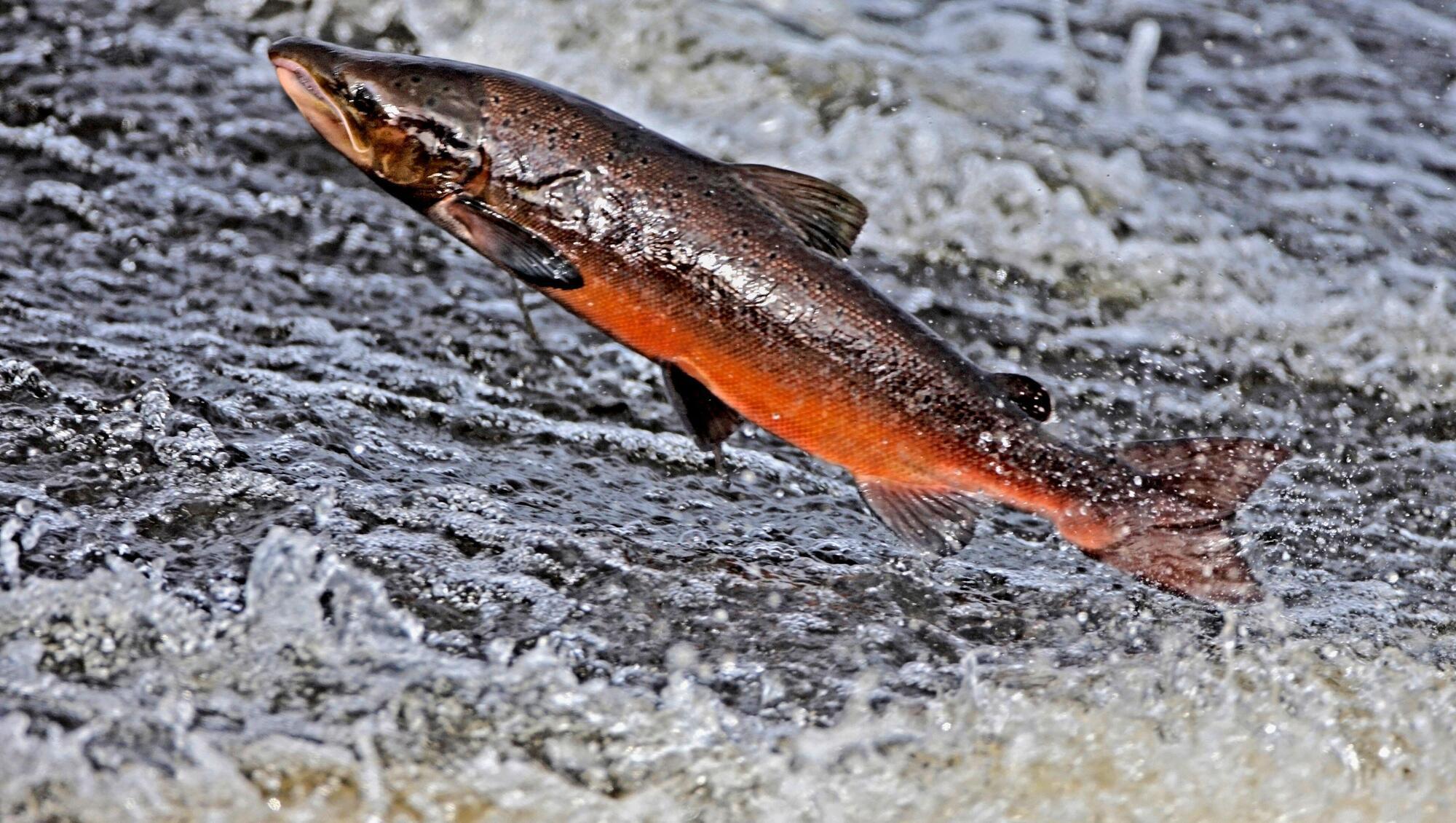
The latest addition to the grim litany detailing the 90% collapse of Irish salmon stocks in less than a lifetime is a report from the Marine Institute that details how escaped farmed salmon have compromised the genetic integrity of the remnants of a once abundant population. File photo
Every obituary — even an ever so slightly premature one — needs a starting point. JW Seigne’s , published in 1928, offers one for this piece.
In it he quotes an angler from the Nore who laments that fewer than a dozen 40-pound salmon were taken from the river over the previous season. To give that sorry Rubicon some context the prospect of even one 40-pound salmon turning up in any Irish or British river today is far, far more remote than the reunification of Ireland’s 32 counties.
That tragedy is exacerbated by otherwise perceptive citizens imagining that articles like this, thousands upon thousands of them, are no more than grumpy ’oul lads moaning the loss of their quaint pastime. ’Oh that it were so.
Every story about a fish kill, every story about the relentless decline in one species after another — especially farmland birds and insects — every story about gross pollution of waterways or a deferred chemical ban is another warning that we are misusing nature’s gift of sustained life.
That this is a relentlessly negative narrative is a tremendous impediment to gathering the momentum needed to successfully confront the destructive forces in play, especially the anti-democratic power of the farm and food lobby.
No one, or at least very few people, want to buy into a story as dismal and challenging as our wilful destruction of wild salmon. That our all-too complicit politicians indulge these international businesses is another unsustainable concession.
It is also a deepening affront that government organisations have made greenwashing something close enough to propaganda as an art form.
The latest addition to the grim litany detailing the 90% collapse of Irish salmon stocks — curlews have endured the same fate — in less than a lifetime is a report from the Marine Institute that details how escaped farmed salmon have compromised the genetic integrity of the remnants of a once abundant population.
The study, led by UCC, found that in some locations up to 27% of sampled fish carried genetics from commercially bred fish. This may be a contribution to the death spiral showing that fewer than 3% of salmon that leave any Irish river to go to sea return as adults.
Commenting, John Murphy, CEO of Salmon Watch Ireland, pointed out that "this … confirms that escaped farmed salmon … represent a genuine conservation concern for Ireland's wild Atlantic salmon. Wild salmon have evolved … to become uniquely adapted to their home rivers.
"Genetic introgression from domesticated farmed salmon has the potential to weaken those local adaptations and reduce the resilience of wild populations at a time when they are already under enormous pressure."
Anyone with an interest in restoring wild salmon will have a wearying sense of déjà vu reading that, as it is a variation of what conservationists have said for decades.
The warnings about salmon farming are routine as is their dismissal by blinkered governments far happier to promote a destructive business than stand up for a natural resource, one that is more a marker of how we are treating our planet than a marker of how one species or another is doing.
This catastrophe is an international one as Atlantic salmon are in grave jeopardy across the species’ range. As the Irish report was published, authorities in Norway, where they have far, far shorter fishing seasons, were either closing rivers to angling or curtailing it because of very low salmon stocks.
Once magnificent rivers with plenty of Storlax — the Nore 40-pounders of a century ago — are being closed to try to protect what remains of the breeding population. Norway has a massive salmon farming industry that has helped decimate wild stocks.

Norwegian conglomerate Mowi, one of the industry’s biggest players and one with farms in Irish waters, just posted operational earnings before interest and taxes of €220m in the second quarter of 2026, an increase of 23% from last year.
The salmon farmer harvested 150,000 metric tons of salmon,10,000 metric tons above its own guidance and a second-quarter record for Mowi.
One of the characteristics of the age is a sense of powerlessness in the face of behaviour that by any criteria is wrong. Open cage salmon farming at sea falls into that bracket so the only option open to someone who hopes their grandchildren will see wild salmon is to avoid the wretched produce of this dirty industry and avoid restaurants that offer it.
Unfortunately, you can’t have it both ways. It really is that simple.
- by JW Seigne was published by Longman in 1928. Seigne, a Royal Navy veteran who travelled the world is buried in the Church of Ireland graveyard, in Inniscarra, Co Cork