Ireland built the data centre boom. Now Irish firms are taking it around the world
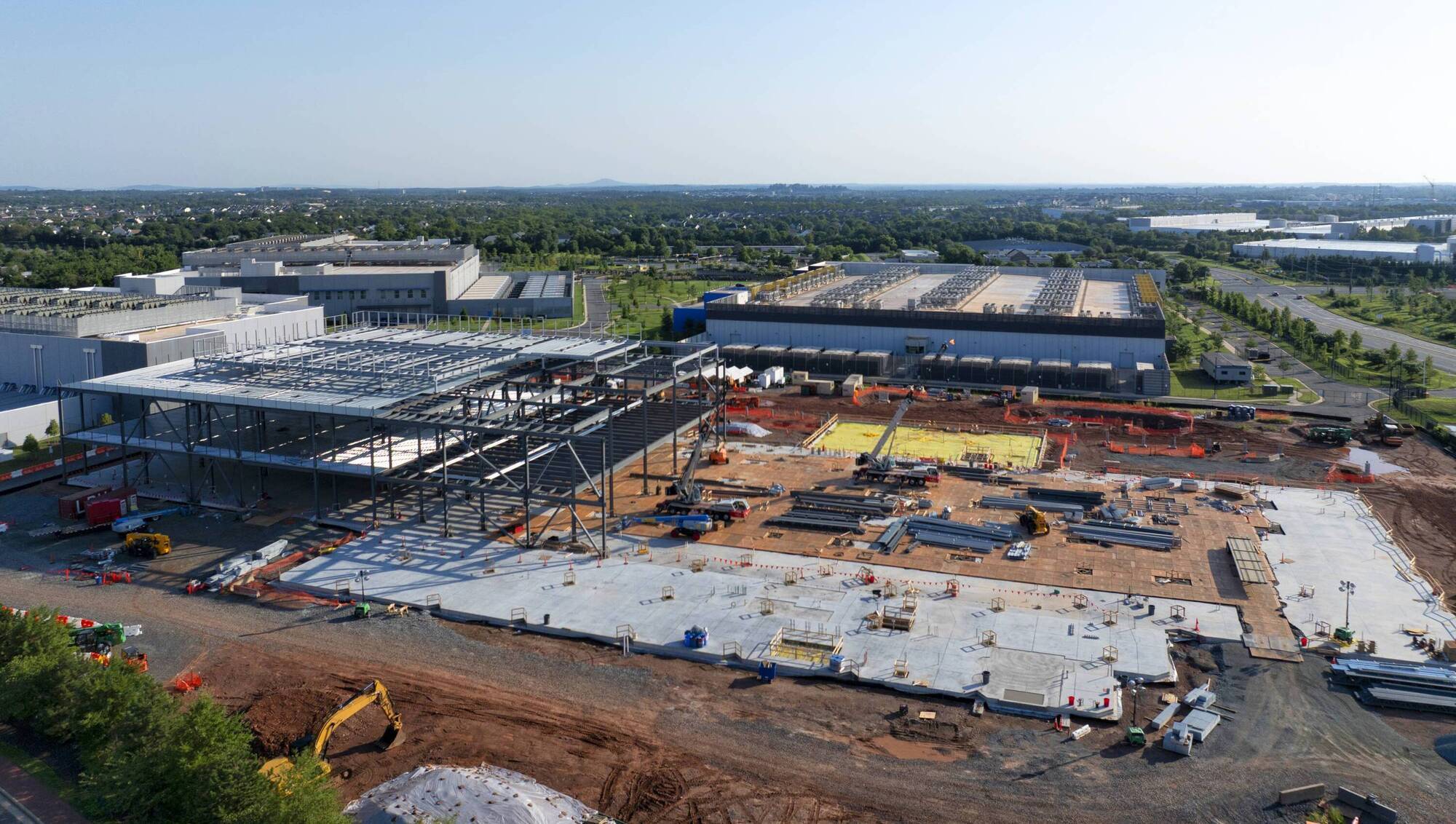
About €2.1bn (40%) of Ireland’s high-tech construction exports in 2024 were associated with the construction of data centres by Irish-owned companies.
Data centres in Ireland come in for significant criticism and often for good reason.
A vital part of modern digital technology, they also consume significant amounts of energy.
In Ireland, data centres consume more than a fifth of the country's electricity, employ few people once they are built, and their economic contribution is heavily contested.
Already a key part of the global technology chain, storing emails, pictures, financial data and company databases, the need for data centres has exploded further with the rise of AI and its need for massive computing power.
A new report from recruitment firm Indeed, published this week, highlights how the sector continues to rapidly expand and a number of Irish companies are at the forefront. A cluster of firms based in Ireland are now busy across the globe building such infrastructure from Cape Town to Texas.
The criticisms of data centres are widespread, both in Ireland and abroad. Just this week, environmental group Friends of the Earth called on the Government to urgently halt new data centre developments and issue a moratorium on climate, affordability and energy security grounds.
According to the Central Statistics Office (CSO), data centres accounted for 22% of Ireland's metered electricity use in 2024, with that share likely to pass 30% by 2030.
While the construction of such infrastructure requires significant and specialised staff, once they are built, even the largest facilities require a small amount of permanent staff.
Read More
Academics Patrick Bresnihan and Patrick Brodie recently published a paper which stated the economic benefits of data centres to Ireland have been “exaggerated”. They were responding to a KPMG report for the Department of Enterprise, published in August, which acknowledges operational data centres create relatively few direct long-term jobs.
In the US, the spread of data centres has led to widespread opposition, with their development becoming an election issue. Just this week, Amazon announced $1bn in spending plans for local communities near planned data centres in an attempt to address the blowback.
Despite the criticisms and concerns, data centre construction continues, and many Irish firms are at the forefront.
The report from jobs website Indeed shows data centre hiring has surged, with almost 5% of job postings now related to data centres. Indeed said 4.9% of all job postings on Indeed in Ireland now mention data centres.
Ireland stood out among the 10 markets analysed by Indeed, with data centre-related job postings jumping sharply in early 2026 and reaching 2.1 times the level observed in early 2020.
The roles sought for data centres include IT infrastructure, operations and support, software development, management, installation and maintenance, as well as project management.
The work pays well too. In 28 of the 29 countries Indeed examined, employers advertised more for data centre roles than for the same jobs elsewhere. The biggest premiums went to workers tied directly to sites, including installation and maintenance staff.
In Ireland, data centre searches made up about one in every 2,000 Indeed searches in Ireland in August, more than double the share in any other country analysed.
"Data centre hiring is one of the few areas where we are seeing growth in tech-adjacent hiring at a time when wider tech postings remain under pressure," said Pawel Adrjan, senior director of economic research for EMEA and APAC at Indeed.
"Ireland's data centre labour market is already more developed than in most of the other European markets we analysed."
Indeed links the Irish surge to the easing of grid constraints around Dublin and a Government plan to steer new data centres towards regions.
A report from Goodbody earlier this year said Ireland was entering a multi-year construction "super cycle", with employment reaching 192,000 at the end of 2025, up 9.1% in a year. It names data centres as a key structural driver, with hyperscaler capital spending projected to rise about 76% by 2027, led by the tech giants Amazon, Microsoft, Meta, Apple, Oracle and Alphabet, "who show no signs of slowing growth", Goodbody said.
The KPMG report also notes Irish-owned firms have developed expertise in delivering complex, mission-critical facilities for global hyperscalers. This makes data centres a core pillar of Ireland’s high-tech construction exports. About €2.1 billion (40%) of Ireland’s high-tech construction exports in 2024 were associated with the construction of data centres by Irish-owned companies.
Dublin-based Winthrop Technologies is one of the major players here. The firm’s website lists data centre projects in Dublin, Frankfurt, Warsaw, Amsterdam and locations in Finland. Asset management giant Blackstone took a majority share of Winthrop in 2024. Its pre-tax profits last year rose 27% to €131m, with the firm reporting "an exceptionally strong order book for 2026 and beyond"
Limerick's H&MV Engineering has grown faster still. The high-voltage specialist designs, builds and energises substations and grid connections for hyperscale tech firms, utilities and energy developers. It has seen revenues climb from €61m in 2020 to more than €1bn. Recently valued at about €1.4bn, it has a €2bn order book, a €16bn pipeline and a target of €3bn in annual revenue within five years.

Last month, it announced plans for 1,000 US jobs over five years from a new North American headquarters in Dallas, with Texas and Louisiana its busiest markets.
"AI and data centre growth is putting huge focus on the need for power infrastructure, but the opportunity is much broader," said chief executive PJ Flanagan.
"Across the US, investment in the grid, renewables and battery storage is driving demand for new high-voltage infrastructure. That is exactly where H&MV specialises, and why we see the US as a major part of our next phase of growth."
Another Limerick firm, Kirby Group Engineering, also headquartered in Limerick, employs more than 1,900 people across Ireland, the UK, mainland Europe, the Nordics and South Africa.
The mechanical and electrical contractor upgrades and expands live data centres for major operators and colocation providers serving hyperscale clients, with projects in Ireland, England and the Netherlands. It is opening a second Cape Town office and adding 50 roles, from high-voltage electrical engineers to commissioning specialists, taking its South African workforce past 110.
The PM Group has a data centre division that focuses heavily on international expansion across mainland Europe and Asia.
Cork firm Dornan Engineering has worked on major data centre projects in Denmark and the Netherlands.
Cork-founded Sisks has been involved in data centre construction projects across Ireland and Europe for the past 25 years, including Dublin, Sweden, Denmark and the Netherlands.
The Jones Engineering Group has 1,800 workers on data centre projects around Europe and the Middle East, while Waterford's Suir Engineering has worked on projects across Germany, Sweden and Denmark.
Irish firms targeting work abroad is obvious given the constraints here in Ireland. The KPMG report notes there are only 300MW of further grid connections contracted and projects data centre construction jobs in Ireland falling to zero by 2030 if no new contracts are signed.
On the continent, about €176bn is expected to be invested in European data centres, and the European Commission's proposed Cloud and AI Development Act aims to triple EU data centre capacity within five to seven years.
Globally, the numbers are larger still. One analysis expects worldwide data centre capacity to nearly double from 103GW to 200GW by 2030, requiring up to $3trn in investment, with AI accounting for half of all capacity by the end of the decade.


CONNECT WITH US TODAY



Be the first to know the latest news and updates