The Tipperary priest who sailed with Shanahan and clashed with Belfast’s missionaries over Eket
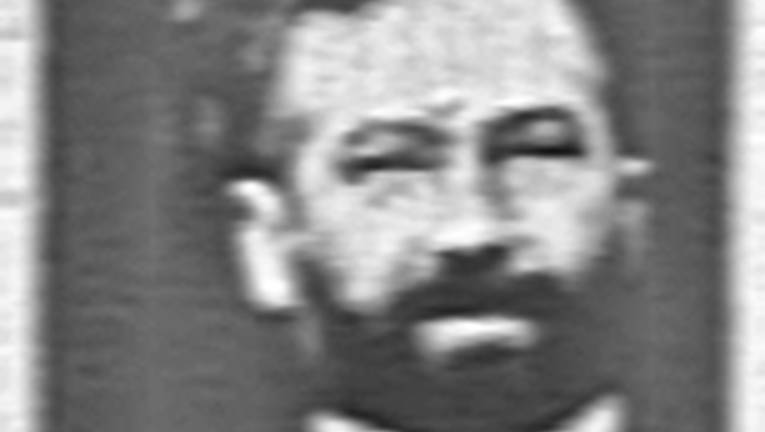
Fr Patrick McDermott, who first arrived in Africa in 1902. Picture: Sean P. Farragher, Irish Spiritans Remembered
Every account of Irish Catholic missionary work in south-eastern Nigeria ends up at the same man, Joseph Shanahan: The Tipperary priest put in charge of the whole Catholic mission in southern Nigeria in 1905.
He didn't start it. The French Holy Ghost Fathers (also known as Spiritans) under Fr Joseph Lutz had planted the faith at Onitsha back in 1885, working with the Sisters of St Joseph of Cluny; and it was a colleague, Fr Leon Lejeune, who worked out the strategy Shanahan is remembered for: Schools first, converts follow.
Shanahan expanded and consolidated what they'd begun, and it paid off. Igboland is still one of the most densely Catholic parts of Africa because of it.
Even the story's biggest name, then, built on foundations laid by someone else.
Patrick McDermott, a native of Mullinahone in the same county, sailed out with him from Liverpool to Onitsha in November 1902. Until I came across a batch of correspondence in the Nigerian National Archives in Kaduna (NNAK), almost nothing was known about what he did in southern Nigeria afterwards.
McDermott returned to Europe in 1904 to raise funds to start a cotton farm in Old Calabar.
Read More
By 1905, McDermott was running the Catholic mission's schools at Calabar, a town where the Presbyterians had been rooted since 1846. Catholics had only been let in since 1903, yet once they arrived, converts came "in crowds", a letter written by McDermott found in NNAK noted, and its schools were "filled to overflowing".
That growth ran straight into the coast's other major Protestant player, Qua Iboe Mission, founded at Ibeno in 1887.
Two decades before this row, local chiefs, alarmed by practices like the killing of twin babies, asked Belfast for a teacher. They got Samuel Bill, a 23-year-old builder who taught himself Efik from his own pupils and, by 1907, had built it into five European-staffed stations and dozens of outposts — a whole district Qua Iboe considered its own, earned, its secretary said, by "20 years' occupation".
So, when word reached Belfast that McDermott had been visiting villages in Eket, roughly halfway between Calabar and Ibeno, the mission's council cabled Bill to claim the whole river, warning of "confusion" if two missions worked the same ground.
What I like most about the correspondence that survives this row is how personal it gets. McDermott gives his own account of the meeting that started it all: A Sunday with Bill in a village he wrote down as Ikotakpan, on July 28, 1907, during a trip round the district that, he insisted, villagers had asked him to make.
He sounds genuinely wounded, writing to the official in charge that September, that Bill kept implying he'd used the government's name to stir up trouble in a rival's patch — not true; chiefs had simply asked for a school, McDermott wrote back.
Bill told it differently.
McDermott, he said, had come at one convert's invitation and Bill listed, station by station, how much Qua Iboe had already built there to prove he'd got there first.
When the British official finally ruled, he was applying a rule the colonial administration had by then worked out for exactly this kind of clash, a sphere-of-influence policy, meant to keep rival missions off each other's established ground without handing anyone a monopoly over the rest.
He promised Belfast that "no competitive opposition will be allowed with the present work of your mission". He wrote that their existing stations were safe but noted plenty of nearby districts were still "untouched", where the Catholics could just as naturally expand.
As for the two priests themselves, he wasn't impressed with either. It seemed "quite clear" that Bill had simply misunderstood McDermott.
Not much is known about McDermott beyond the bare outline.
Born in 1859, he trained for the priesthood at Rockwell College and in France, was ordained in 1880, and spent most of the next two decades teaching at his order's college in Pittsburgh.
In between, he managed St Peter Claver's, a mission for Philadelphia's Black Catholic community.
Only in 1902, aged 43, was he finally sent to Africa, by far the older of the two who sailed out together. Poor health drove him out of the tropics not long after that Eket row, and by 1908 he was back in America raising money for Shanahan, his superior now.
He spent his last years in Pittsburgh, dying suddenly on June 3, 1918.
None of this was unique to Calabar. The same tug-of-war for converts played out village by village all along this coast, with local people often playing one mission off against another for the school or teacher they wanted.
That summer, Shanahan was in Onitsha building, the school system he's remembered for. The man who'd landed with him was on the coast at Calabar, doing the unglamorous groundwork that project was built on, before slipping out of the story.
McDermott is unlikely to be the only one. Ireland sent out hundreds of priests, sisters, brothers, and lay workers on missions like this one in the decades that followed.
Many did remarkable work building schools, clinics, and learning languages, working in remote mission stations that never travelled beyond a line in an archive.
Shanahan got the statues and the biographies. Most of the rest are still sitting there, unexplored.
- James Akpu is research fellow at the School of History and Geography at Dublin City University


CONNECT WITH US TODAY



Be the first to know the latest news and updates