School logistics will be heavily affected by industrial action, and that's before pickets at the gates
Teachers will join more than 100,000 public sector workers who began their work-to-rule last week, initiated after delays in agreeing a new public sector pay deal
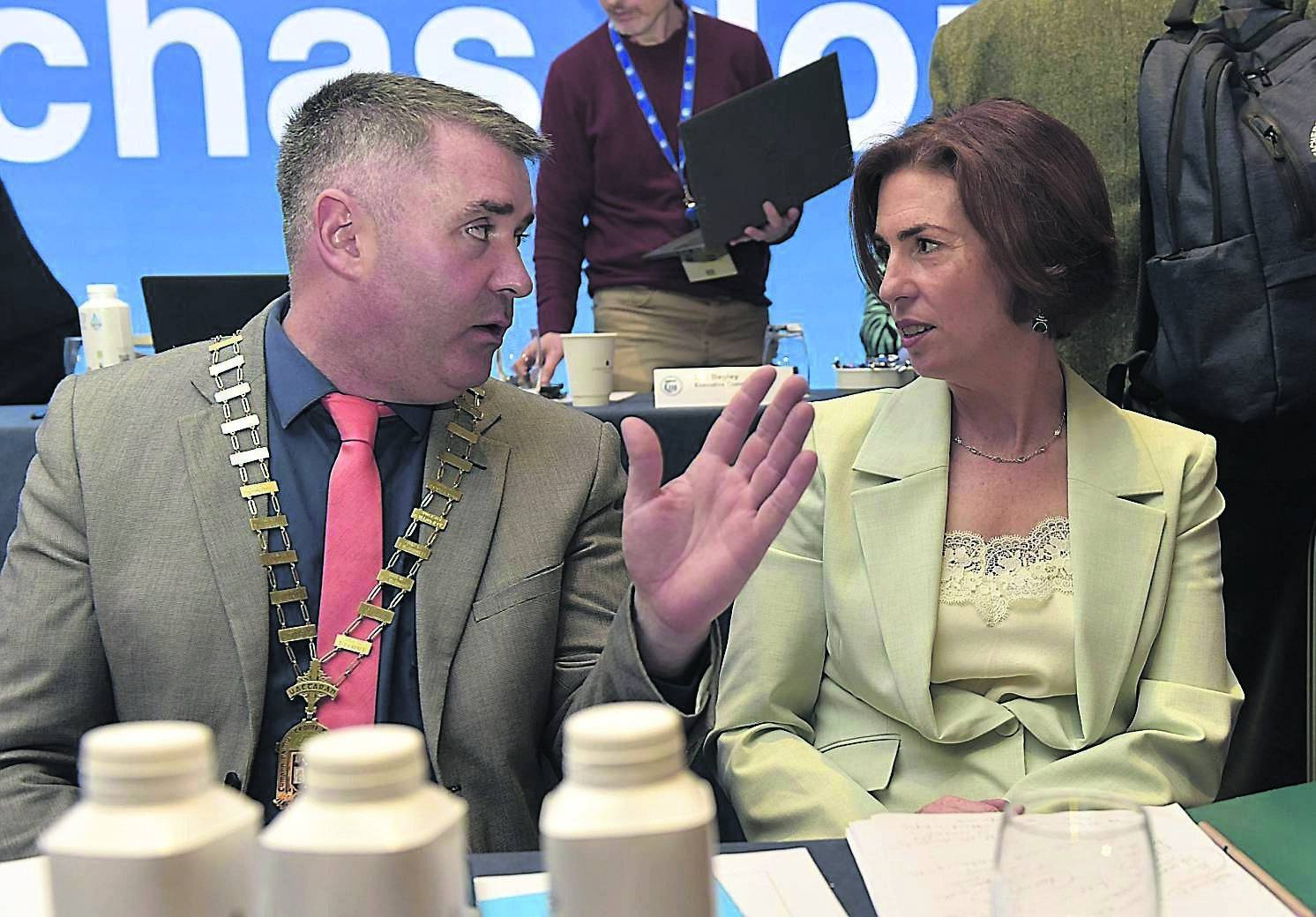
Teachers' Union of Ireland president Anthony Quinn and minister for education Hildegarde Naughton. Next Monday, TUI members will join their colleagues in industrial action. Picture Tommy Clancy

Teachers' Union of Ireland president Anthony Quinn and minister for education Hildegarde Naughton. Next Monday, TUI members will join their colleagues in industrial action. Picture Tommy Clancy

There won’t be pickets at the school gates — yet — but parents will feel the impact as the first phase of industrial action in schools begins to unfold and strike action looms large.

From Monday, thousands of teachers across the country will begin the first stage of their industrial action campaign, withdrawing from non-teaching duties covered under the often contentious Croke Park hours.

Depending on how a school uses these non-teaching hours — which equate to 36 hours a week in primary schools and 33 hours a week at post primary — duties like student supervision, substitution, planning, and staff meetings will be affected.

Next Monday, Teachers’ Union of Ireland (TUI) members will join their colleagues who are members of the Irish National Teachers’ Organisation (INTO) and the Association of Secondary Teachers Ireland (ASTI).

Members of all three unions are also gearing up to join their fellow public sector workers in a proposed nationwide strike on October 14.

Only union members are protected to take strike action, but the daily logistics of running a school will be severely hampered. 

Should the action on October 14 go ahead, hundreds of schools are likely to close.

In a message to its members on Friday, the INTO said it is “unlikely” primary school students will be on school premises outside of normal school hours for the duration of the dispute. 

Many primary schools use the Croke Park hours to cover pre- and post-school supervision.

Insurers have exhorted school management to notify parents if adequate supervision cannot be provided, as schools “cannot accept responsibility for students until school hours commence”, the message said.

This means it is “unlikely” that students will be on school premises outside of normal hours during the dispute and “instead pupils will arrive during official reception time after the school bell rings”.

INTO members will also not take part in staff meetings or parent-teacher meetings outside of school hours for the duration of the dispute.

Many schools have indicated they intend to hold such meetings during school hours, “thereby necessitating early dismissal of pupils”.

Teachers will join more than 100,000 public sector workers who began their work-to-rule last week, initiated after delays in agreeing a new public sector pay deal.
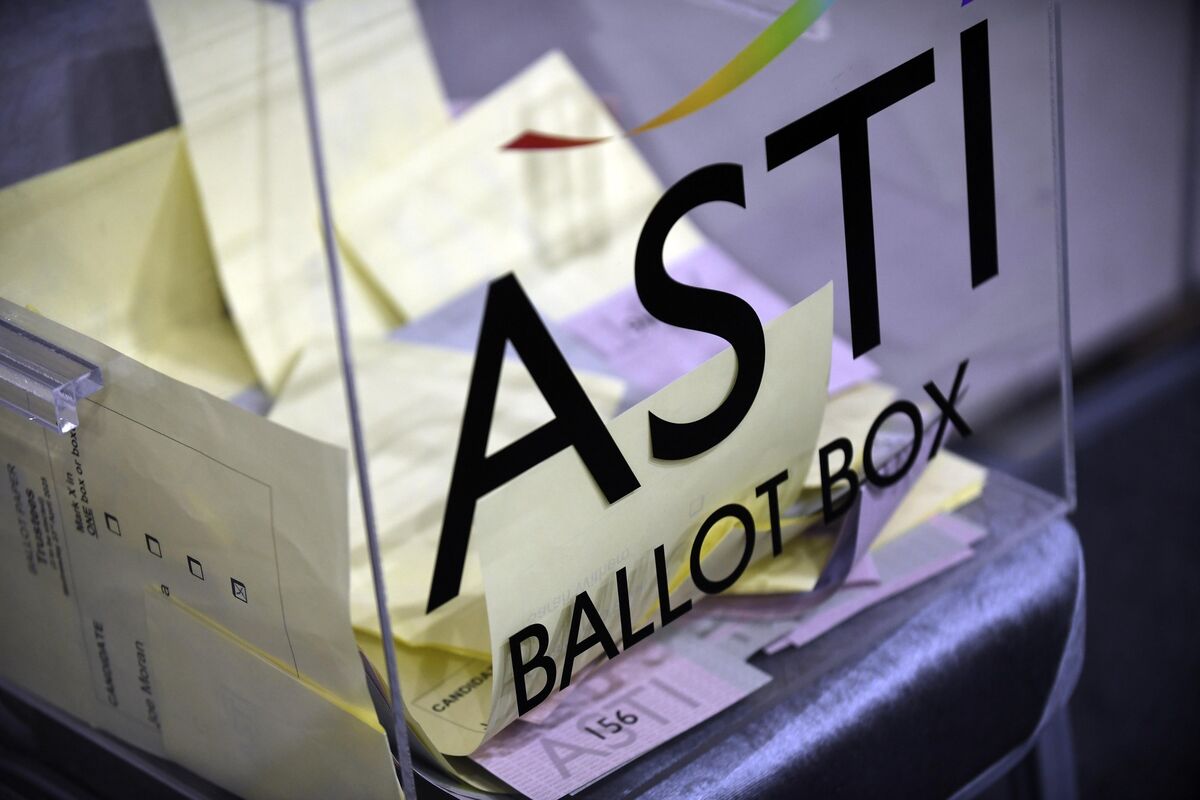
Thousands of teachers are beginning the first stage of their industrial action campaign, withdrawing from non-teaching duties covered under the often contentious Croke Park hours. File picture: Don MacMonagle

Linda Kelly, the new incoming general secretary of the ASTI, said teachers are “really frustrated” by the Government’s approach to pay.

“I think that frustration has been building very acutely over the last 10 years. 

"We’re at the point of trying to make gains for members in terms of pay, and that’s coinciding with really significant cost of living pressures coming through from external forces like covid, the war in Ukraine, and now we have the war in Iran.”

In the last two public pay agreements, unions have attempted to have “release valves” for that pressure through sectoral bargaining, she added.

“There’s been such resistance to that from Government in terms of making that meaningful, and I think that frustration is now boiling over. 

It’s not business as usual. The Government approach, which has been the approach they’ve adopted since 2008, is not the approach that’s going to carry us through this public service pay agreement.

“People really want recognition that pay is a significant issue, cost of living is a significant issue, and it’s not business as usual, it’s not the way that the Department of Public Expenditure is used to doing business, and there needs to be a new dynamic.”

There needs to be a move away from the austerity mindset, she added.

“That is very much there within the Department of Public Expenditure, and in the very short term, there needs to be a reckoning from Government that public service pay this year alone is behind inflation, and any deal has to be predicated on that issue being addressed.

“Part of the reason that we are not in talks is that the Government refused to give a commitment that would be addressed, so unions took the action then of moving to ballot.”

Today will mark the initial stages of the ASTI’s campaign, Ms Kelly said.

“We have plenty in the tank in terms of escalating the action if Government continue in this vein of not addressing the real concerns that are there.”

“I do think there is a lot of smoke and mirrors from the Government,” she said. 

This was “evident” in an opinion piece penned last week by public expenditure minister Jack Chambers, according to Ms Kelly.
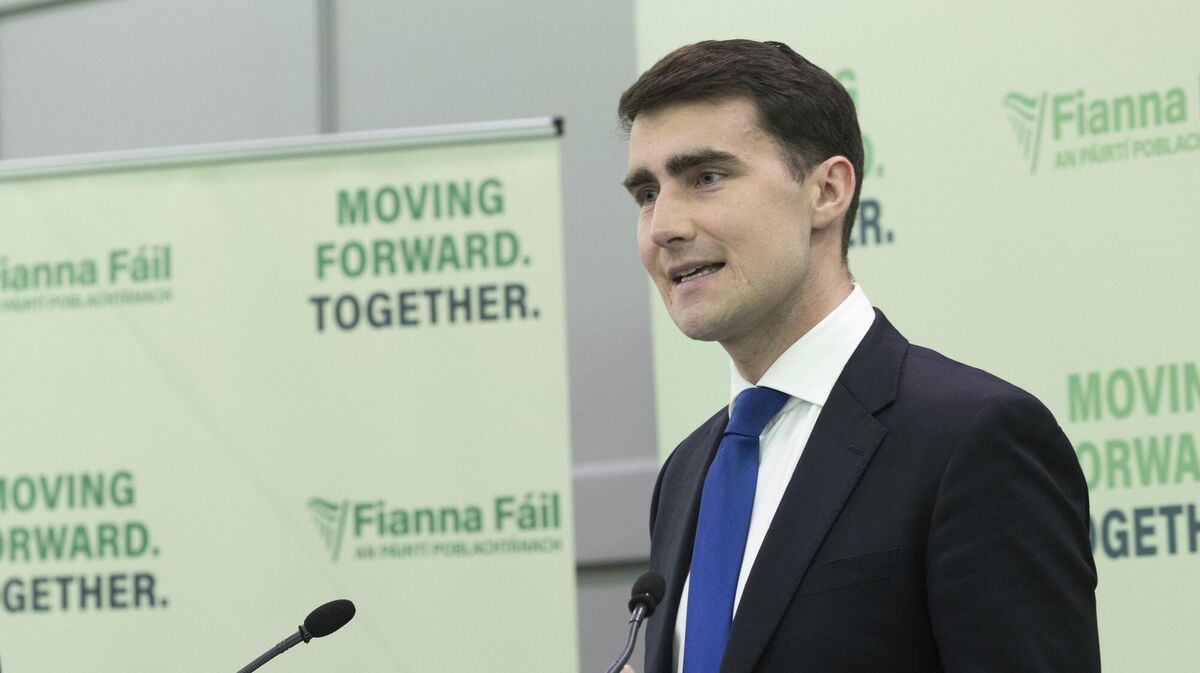

Public expenditure minister Jack Chambers said he has 'repeatedly indicated' the Government’s desire to reach a new agreement. Picture: Sam Boal/Collin Photos

Mr Chambers said his department is open to “exploring how to respond to concerns about inflation”.

He also pointed to public service pay and pensions costs rising by 76% since 2018 to now account for 37% of day-to-day Government spending. 

Ms Kelly said: “Our members on the ground are seeing through that, and what they want is real negotiations, real pay increases, and they are mandated in their union to pursue that.”

University staff are also set to join the action today, stopping work for one hour.

Members of the Irish Federation of University Teachers (IFUT) will stop work from 12pm to 1pm on Monday across 10 universities and higher education institutions.

This includes University College Cork (UCC), Dublin City University, Trinity College Dublin, and the University of Galway.

Eoin Sheehan of the UCC branch of IFUT said staff will be standing together “because the pressures facing staff are real and they have consequences for the university as a whole”.

“Fair pay, manageable workloads, and decent working conditions are not separate from the quality of education students receive. Our working conditions are our students’ learning conditions,” he said.

In the absence of a resolution, IFUT members are also expected to join the 24-hour strike action on both October 14 and October 21.

Unite the Union, which represents staff across eight colleges, is also set to join the 24-hour strike action on
October 14.

The union represents staff across Munster Technological University, University of Limerick, Technological University Dublin, Dundalk Institute of Technology, Institute of Art, Design and Technology, Atlantic Technological University, Technological University of the Shannon, and South East Technological University.

Meanwhile, work-to-rule industrial action continues elsewhere across the public sector.

This includes workers across local and municipal authorities, health and welfare services, education, Government departments, and State agencies.

Fórsa, which represents special needs assistants (SNAs), school secretaries, and school caretakers, has directed its members to work strictly to contract.

Fórsa has also instructed its SNA members to not attend or participate in any form of training in the school, and to refuse to attend student planning meetings.

Members of health trade unions have been involved in the work to rule since last Wednesday. 

This means staff only do work specified in their contracts with no “goodwill” for extra hours.

Sharing data on delayed hospital discharges with central HSE offices, for example, can only be done under derogation.

Members are not to engage with external management consultants either.

Siptu health division members are also taking part in the work-to-rule. 

It ran a day of action last Wednesday at 30 hospitals, including University Hospital Waterford.

Siptu health division head Kevin Figgis said: “Our members are demanding a fair pay agreement that reflects the economic reality facing workers and provides real protection for directly delivered public health services.”

The Irish Nurses and Midwives Organisation members continue to deliver safe care but will not do extra unpaid hours.

They are not attending non-clinical meetings unless absolutely necessary for a patient. They are also not cooperating with audits or information requests.

Chair of the Irish Congress of Trade Union’s (ICTU) public services committee, Kevin Callinan, has described attempts to engage on a successor to the last public service pay agreement as coming “to nothing because of the Government’s steadfast refusal to address cost-of-living pressures at the outset”.

“The minister for public expenditure has variously described union ballots as “unnecessary” and any industrial action as “unfair”, but it is the minister’s own refusal to discuss pay measures that has made industrial action unavoidable,” he said.

A spokesperson for the Department of Public Expenditure said: “The trade unions and representative associations have made a decision to move to industrial action rather than engaging in substantive talks, and this action has now commenced across many areas of the public service.

“It is deeply unfair on the general public for there to be significant disruption to their daily lives because unions are unwilling to sit down and negotiate a new agreement.”

Mr Chambers said he has “repeatedly indicated” the Government’s desire to reach a new agreement.

“Provision is being made in Budget 2027 for a new pay agreement for public sector workers.

“I am disappointed by the assertion from ICTU that there is no basis for engagement. A mutually acceptable agreement could be reached quickly and efficiently if there is a willingness on both sides to do so.”

x

More in this section

Lunchtime News

Newsletter

Get a lunch briefing straight to your inbox at noon daily. Also be the first to know with our occasional Breaking News emails.

Cookie Policy Privacy Policy Brand Safety FAQ Help Contact Us Terms and Conditions

© Examiner Echo Group Limited