I get a sense of pride from Be OK Garage — a group for car-loving men to talk about mental health
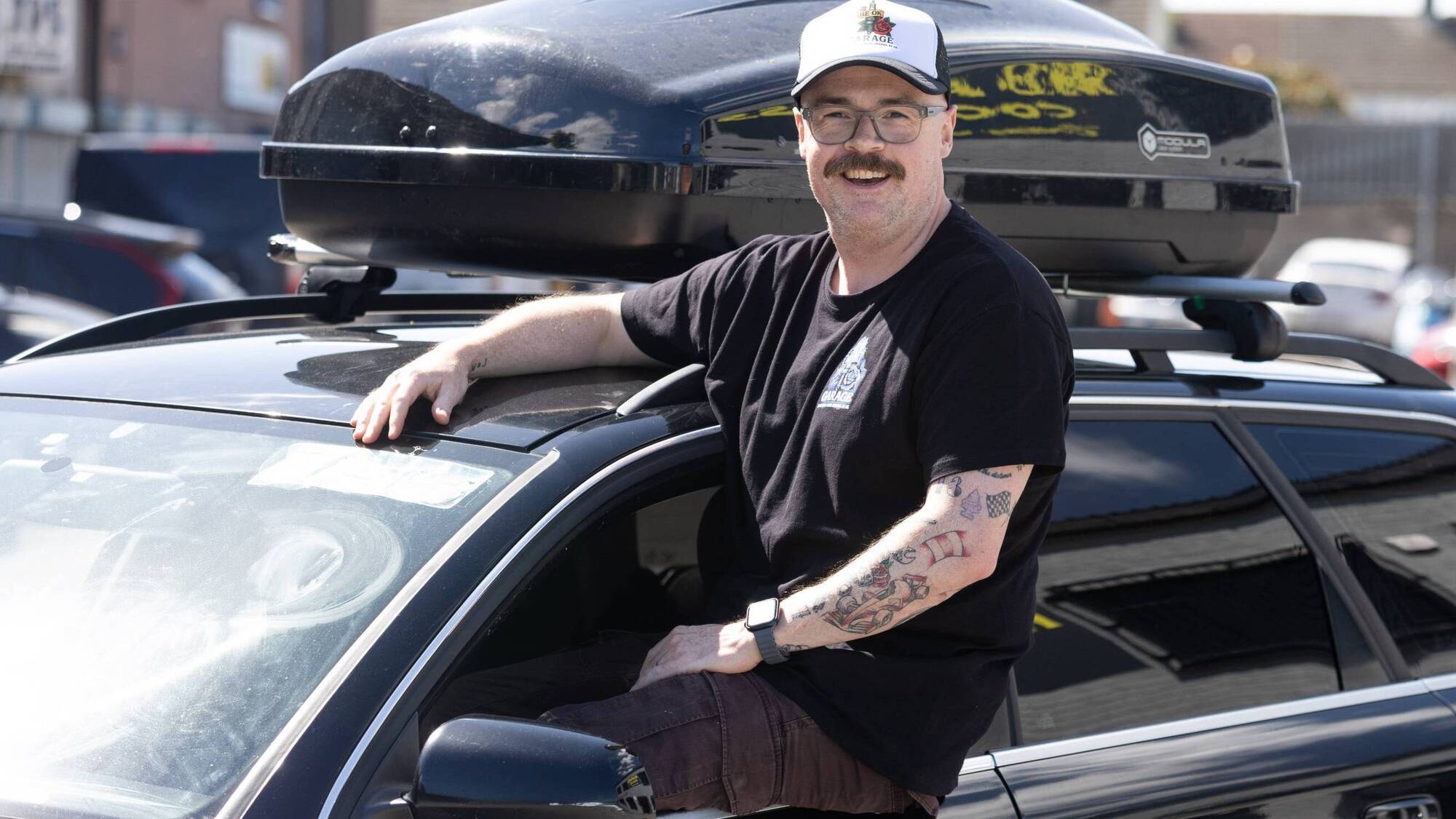
Dave Smith from Be OK Garage - a car-based support group for men at Darndale, Dublin Picture: Gareth Chaney
An indoor karting arena in the middle of a Dublin industrial estate is probably not the first place you’d think of when it comes to hosting a gathering on mental health. But last month, a dozen or so car lovers from different parts of Ireland gathered at Kylemore Karting for the latest in a series of events run by Be OK Garage.
The group is helping men to open up about their mental health through a shared love of motors. While this particular get-together indulged attendees’ Formula One fantasies, other meet-ups are simpler affairs, gathering in car parks or open spaces to admire each other’s wheels, share tips on making them funkier, and, critically, discuss anything that might be happening under the bonnet of the person themselves.
Its founder, Dave Smith, has always loved cars.
“I went to rallies with my father and uncle as a child,” recalls the Dubliner. “Back when you could stand on the side of the road next to a car going a hundred miles an hour. I loved them. I was fascinated with how things worked.
“In school, I found it very difficult to focus on a topic that didn’t interest me. I did a terrible Leaving Cert, but I went on and got two degrees in engineering.”
Much of that apparent distraction was later explained with an ADHD diagnosis. Before that, Smith went into a career in aircraft engineering, where he found like-minded individuals who were “all mad into cars”.
“My first was a 1999 Honda Integra, which I bought in a car park in Airside for €1,050,” says the 39-year-old father of two. “That was a lot of money when I was an apprentice. I never drove a stock car. I always wanted to make it a little bit different, make it my own thing.”
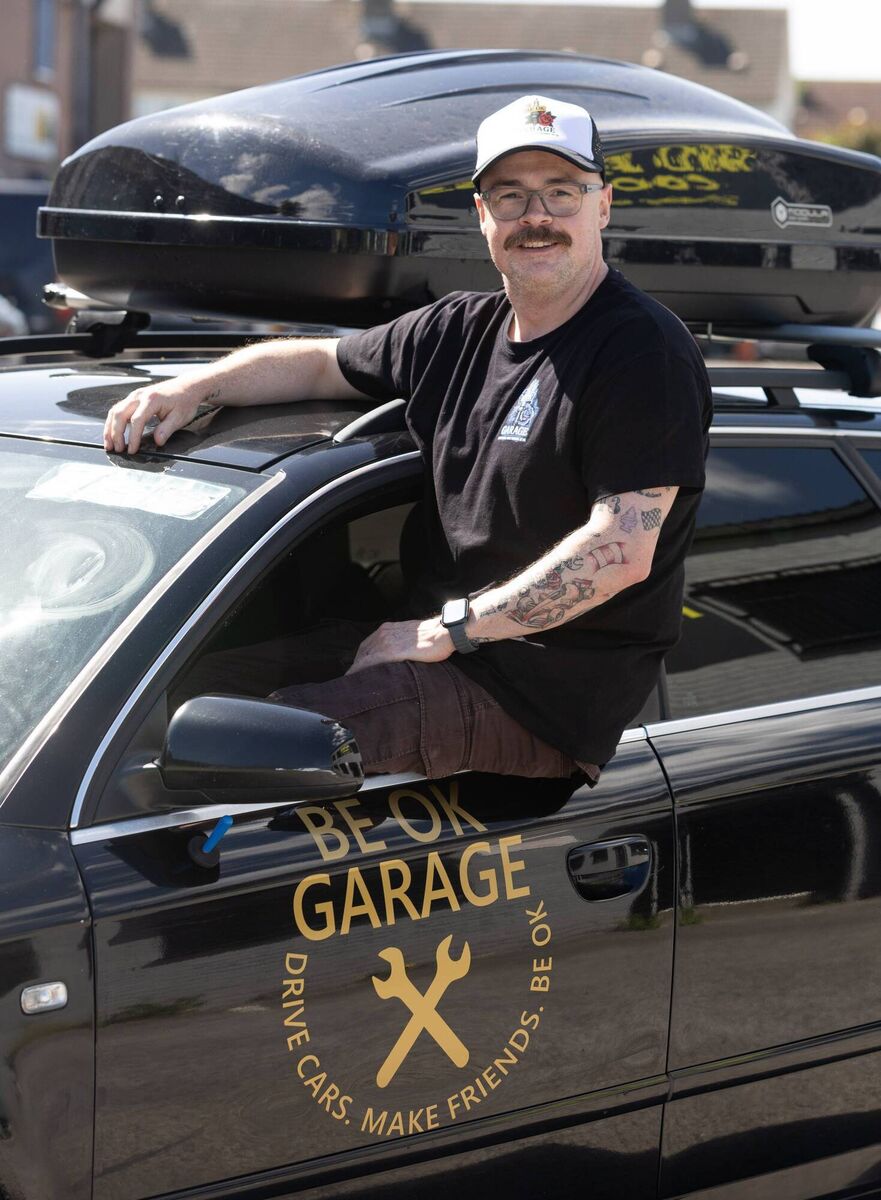
As Smith’s passion for collecting and modifying cars grew, so did his “enthusiasm for drinking and partying”.
“I had a very poor relationship with alcohol,” he says. “I just got as drunk as possible whenever I drank. I never understood someone who could have one or two drinks and leave it at that. I didn’t realise it at the time, but looking back on it now, it was a way to quiet my brain down.”
Smith and his wife had their first child during covid. The boy’s birth was difficult and, without family support in the early days of childcare, the couple struggled to cope. Smith had his first in a series of breakdowns.
“Just before the birth of my second child, I was suffering from severe anxiety,” he says “I was finding no joy in life at all. I was having a particularly bad day one day when I heard my son say, ‘Is daddy sad again?’. This was coming from a three-year-old and will stay with me for the rest of my life. I decided something had to be done one way or the other. I stopped drinking, went into therapy and started taking antidepressants, which really worked for me.”
As part of his mental health reset, Dave quit his “high-pressure” job in aircraft engineering and went into the civil service. All of a sudden, he found a life that gave him more time to follow his true passion — that love of cars. To celebrate one year off alcohol in 2024, he bought himself an R33 Nissan Skyline, which he transported home in a small convoy of car-loving friends he’d met since going sober.
“I took a picture of myself and the car in my driveway, posted it on Instagram and then that started to turn into a little group of similar car people. I hosted a few meets in local car parks. Small seminars, announced on Instagram. I wanted to give people somewhere where they were comfortable and felt welcome.”
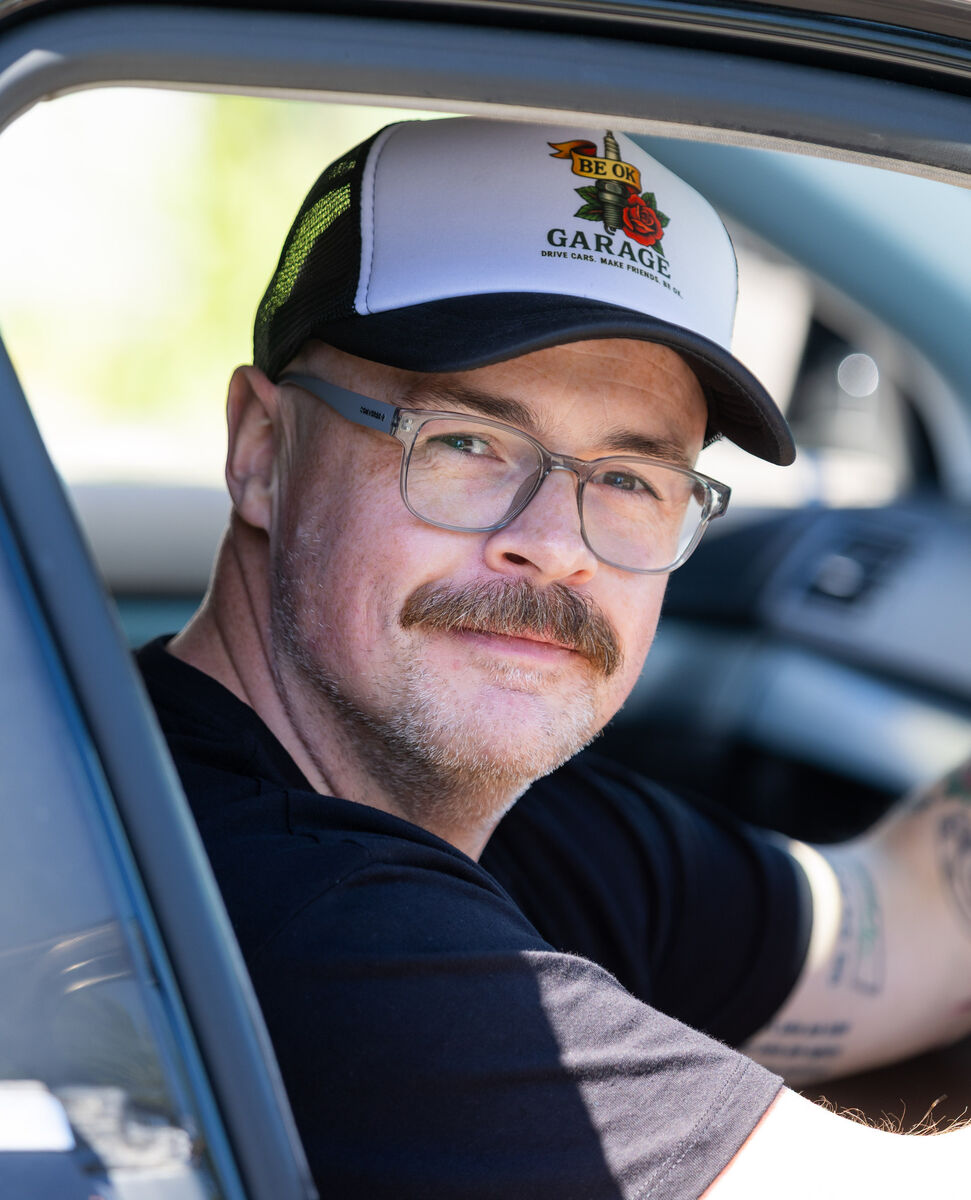
He eventually named the group Be OK Garage after a small tattoo on his arm, which reminds him to ‘be OK’ when he’s feeling down.
The group has gathered momentum. Smith’s Instagram following, @davebokgarage, has reached almost 7,000, and he was recently appointed as an ambassador for charities Men’s Health Forum in Ireland (MHFI) and Suicide or Survive.
“When they approached me, I wasn’t sure,” he says. “I’m not trained. I’m not a medical professional. But they encouraged me, saying that I have lived experience, which was almost as valuable because it resonates with people.”
National programme manager for Men’s Health in the HSE, Dr Shane O’Donnell says that initiatives like Be OK Garage are exactly what men need more of if we are to tackle issues around their mental health.
“There’s definitely been more public discussion around men’s mental health in recent years,” he says. “It’s about providing the space and the right time and setting.”
Before joining the HSE, O’Donnell was involved in several studies and projects on men and mental health, including MHFI’s CAIRDE initiative, which aimed to reduce suicide stigma and enhance knowledge of suicide and mental health issues in the Irish construction industry.
“We were aiming for 400 men, and 1,700 men filled out the survey,” says O’Donnell. “I couldn’t believe how many people wanted to complete it.”
The initiative found that stigma, rigid masculine norms, low mental health literacy and workplace cultures were the main drivers preventing construction workers from seeking support.
As a result of its findings, CAIRDE developed and piloted two training model: A General Awareness Training (GAT) to build personal mental health literacy and reduce suicide stigma among workers and a Connector/Manager Training to help site managers and leaders recognise distress, offer mental health first aid, and signpost workers to professional help.
Finding that common ground is as important as ever. Though Ireland’s overall suicide rate has declined significantly over the past two decades, with numbers down by almost a third, almost everyone on this island has been touched by suicide. Despite today’s apparent openness around men’s mental health, men still make up the bulk of those deaths, with 80% of total suicides. Statistics from the last ten years show that suicide rates of men aged roughly 35 to 54 have gone up and that this age bracket accounts for the majority of deaths by suicide among men.
As part of his research for a 2018 publication entitled , O’Donnell spoke to different groups of men from various socio-economic and ethnic backgrounds to get a sense of their mental health experiences in Ireland.
“What I found was there was a baseline masculinity that they grew up with,” says O’Donnell. “They learn that expressing emotions isn’t manly. Big boys don’t cry. So they might suppress their emotions or turn to things deemed more manly. You might drink alcohol, or you might take drugs and get irritable or angry because you’re not sure how to deal with being sad. And then there’s a stigma, not only around mental health itself but also seeking help to deal with it. You’re expected to be able to sort this out on your own.”
For that reason, O’Donnell says “engaging men in any health intervention” is often easier when they have “a credible role model”.
“They don’t have to be celebrities or sportsmen or artists, it can be your neighbour down the road. And when these people come out and say that they’ve struggled, that’s really powerful for men. It normalises openness and goes a long way to reducing stigma, which makes it easier for organisations like the HSE or MHFI to come in and deliver programs in those settings.”
As Men’s Health Week rolls around (starting Monday, June 15), Dave Smith says this year’s theme, “One Step at a Time”, is particularly relevant for him. He was recently diagnosed with coronary artery disease. It’s a new battle but one he feels better prepared to take on since founding Be OK Garage.
“The friends I’ve made through this journey with Be OK have helped immensely,” he says. “As well as the support from my family, they’re constantly checking up on me and making sure I’m OK.
“From a mental health perspective, it’s about being aware of how I’m feeling, accepting the uncertainty, maintaining purpose in my work with Be OK Garage, seeking support professionally and from friends and focusing on what I can control.”
Despite his health concerns, he is determined to help more people. “I want Be OK Garage to be a household name, to be at every car event in the country and eventually in the UK and Europe.
“I would love for my two boys to remember their dad as someone who was happy, positive and doing good. I want to make the world a slightly better place than I found it.
“It’s not a selfless act by any measure. What I get from it is a sense of pride.”
His two boys already have a lot to be proud of.
- Research shows that men experience a disproportionate burden of ill-health and die too young.
- Men’s Health Week starts on Monday, June 15 and ends on Father’s Day, Sunday, June 21. It aims to raise awareness of preventable health problems among males of all ages and encourages them to adopt healthier lifestyle choices.
- The theme for the island of Ireland this year is ‘One Step at a Time’. Men are being asked to set simple, realistic and practical tasks to improve their health and are encouraged to make progress, rather than being overwhelmed by aiming for perfection.
- It’s easy to do something to mark the week and improve the health of men and boys, and everyone can get involved (see the ‘What Can I Do’ paper).
- Start with the ‘Action Man’ Manual which offers ten top tips for men’s health.
- You can find out everything that you need to know at www.mhfi.org

CONNECT WITH US TODAY



Be the first to know the latest news and updates