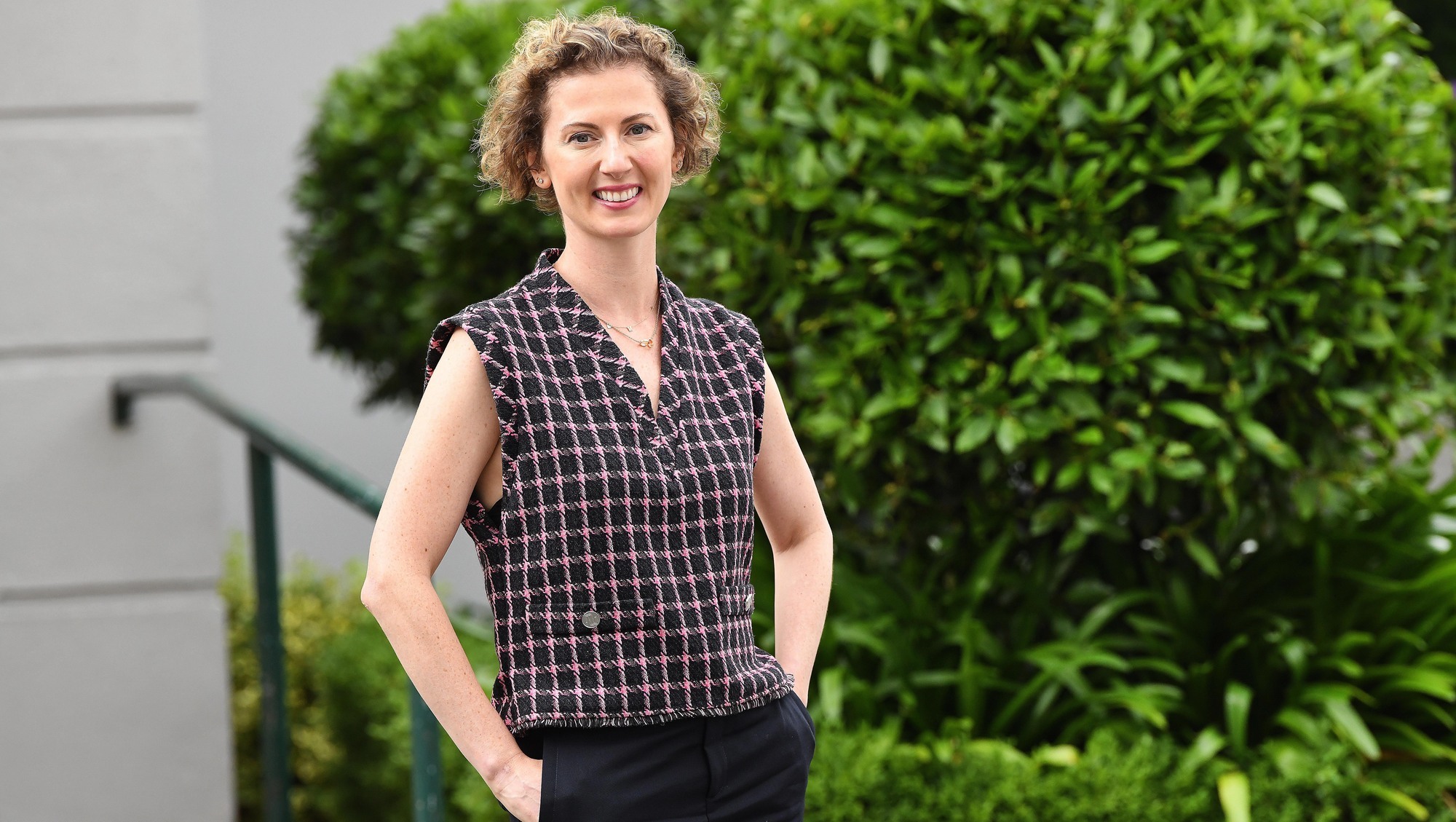
I’m from Wexford. I had a very healthy lifestyle growing up; my mom gave us cod liver oil and apple cider vinegar before that was a thing. There was no chocolate in the house, unfortunately. No sweets. That’s why we’re all fiends now!
I used to swim and run competitively. [My family] were all big in to sport and always made sure we ate well in order to do that amount of sport.
I liked learning. I was a total nerd. It never bothered me having to study. I really liked science, and knew I was good at problem-solving. I did time in a dental practice and with an anaesthetist [during school summer holidays] and really liked [those jobs’ aspect of] trying to figure out what was wrong with people and then being able to solve the problem and help them.
I prioritise my sleep, so I’ll go to bed about 9.30pm most nights. I read before I go to bed, with my infrared mask on. Every day, I get up around 5am and exercise. I used to swim every morning before school, so that’s not unusual for me. That’s my norm.
I eat very well. I don’t really eat processed food. That being said, I will pig out and have my popcorn and Minstrels, and go for drinks. But all the food I make for the kids and for me is from scratch. I enjoy cooking.
When I did ‘obs and gynae’ in third med, I just loved it. Then, in time, when I got in to it, it was such a nice, varied job, and I didn’t think I’d ever get bored.
As I progressed through my training, surgery was what I enjoyed most, and then I went down the urogynae route, which I obviously love.
As a urogynaecologist, it’s mainly prolapse and urinary incontinence that I see. I would see some complications after vaginal delivery, any voiding dysfunction after a vaginal delivery, that kind of thing.
Here are my top tips and observations, borne out of my years of experience in this area.
Never ignore post-menopausal bleeding
Usually, menopause is around age 51/52. [Once your periods] stop for a year, you’re in full-on menopause. And you should never have bleeding after that. You should never ignore post-menopausal bleeding. It’s really important to get that seen urgently.
Vaginal oestrogen is a game-changer
I did my MD on the use of vaginal oestrogen and its impact on the microbiome of the vagina and the bladder, and how using vaginal oestrogen, in the majority of cases, will stop you getting recurrent UTIs, because it changes the microbiome of the vagina.
Vaginal oestrogen helps with urinary urgency; it helps with frequency — so peeing a lot, having any urgency symptoms. It plumpens and strengthens the vaginal tissues. It helps with stress incontinence, it helps with prolapse symptoms. Any pain during intercourse, it can improve that, too.
Unless you have active vaginal bleeding at the time, or if you’re on the breast-cancer treatment anastrozole, it’s totally safe to take. There’s no downside to it.
Prolapse does not have to mean surgery
Prolapse is common. While one-fifth of women will have prolapse, not all of them will need treatment for it. The literature would say that between 10% and 11% of people will have surgery for prolapse in their lifetime.
The typical symptoms would be pressure sensation; a feeling of a bulge or an ‘egg’ between the legs that’s causing discomfort.
As a result, [women] would have urinary symptoms, such as incomplete bladder emptying; having to go more frequently, because when they do empty their bladder, they’re not emptying it fully; and urinary tract infections.
The tissue that’s weak is the vagina, and then the organs within the pelvis fall down into that weak vaginal tissue. It can be the bladder or the womb coming down. If you’ve had a hysterectomy, it’s usually the small bowel coming down. If it’s at the back, it’s the rectum that’s prolapsing into the vagina.
Typically, you would see all three compartments prolapsing to a degree.
You’d start [treatment] with conservative measures first; vaginal oestrogen most of the time, because most of these women are post-menopausal. You’d do physio, and try vaginal pessaries.
People might look [askance at] a pessary. But when you explain how it works, and [women] try it, [many are] more comfortable using it than having surgery. It’s very much patient preference and what they feel comfortable using.
Urinary incontinence is common, but you shouldn’t accept it
Urinary incontinence is a common part of aging, but it shouldn’t be acceptable. You shouldn’t have to wear pads constantly during the day. There are easy ways to fix that, and you shouldn’t have to put up with it.
There are two types of incontinence. One is urge incontinence, where you really need to pee; you’re rushing to the toilet and, on occasion, you won’t get there on time and you leak.
In these cases, you would use conservative measures, such as bladder retraining. The main bladder irritants are caffeine, smoking, and alcohol. [Addressing] those can have a huge impact.
If that doesn’t work, you’d try medications. If medications don’t work, you can look at other options, such as Botox or sacral neuromodulation.
Stress incontinence is completely different. It’s when you leak if there is an increase in abdominal pressure, such as when you cough, sneeze, walk, or jump. That will most likely be treated with vaginal oestrogen, physio, and pessaries. If pessaries don’t work, there are surgeries that can be looked at.
The benefits and risks of HRT
There are a lot of pros to HRT, particularly if you start before the age of 60. It reduces your cardiovascular risk, which reduces your risk of heart attack and stroke. It also reduces your risk of dementia. It helps maintain bone density and reduces the risk of osteoporosis. If a woman in her late 70s or 80s falls and fractures her femur, the risk of mortality in a year or two following that is close to 50%. If you have strong bones and fall, you’re less likely to fracture your femur and your mortality risk is much lower. So that’s really important.
Generally, you would start on HRT if you’re symptomatic, or you might want to do it for the [aforementioned] reasons, as risk prevention.
When you get to 60, you might try slowly reducing the dose, but it’s very patient-dependent, and it’s very much about the quality of life of the patient and, having weighed up the pros and cons and risks, what they’re happy to go ahead with.
The background risk of breast cancer is one in seven or one in eight.
The risk of taking HRT before the age of 60 increases your risk of breast cancer by four per thousand. If you drink more than the average amount of alcohol, your risk goes up by 28 per thousand. Whereas if you exercise regularly, it goes down by 25 per thousand. So you have to look at the whole picture.
Can STIs affect fertility?
Chlamydia and gonorrhoea can have a significant impact on fertility if they aren’t treated promptly.
If [a woman gets] an infection with chlamydia, the risk of it negatively affecting her fallopian tubes and causing infertility with one infection is 10%. With two infections — so one this year, another separate infection in a year’s time — that risk rises to 20%. With a third infection, it’s 40%.
Eighty to 90% of women who have chlamydia have symptoms [such as], bleeding and a foul-smelling discharge, whereas a lot of men who have chlamydia or gonorrhoea won’t necessarily have symptoms, so can [unknowingly] pass on the infection.
If you don’t treat [the infection] in a timely manner, it can [result in] infertility issues.
If a woman gets [chlamydia or gonorrhoea], it will affect tubal fertility. In order to get pregnant, you need the egg to leave the ovary and get down the tube. You need the sperm to go up to the tube and meet the egg, and then [the fertilised egg travels] to implant in the womb.
But if you have any blockages because of chlamydia or gonorrhoea or [other] STIs, that process doesn’t happen, and you can get an ectopic pregnancy or a miscarriage, or the pregnancy is blocked from happening in the first place.
These days, women are talking about their gynaecological symptoms more.
If something is causing you bother, talk to your friends about it; someone else might be experiencing it, too. That person might have gone to their doctor and sought help, and can tell you, ‘actually, that’s not normal. You should go and ask for help’.
Thankfully, people are seeing their GPs more and asking for help. They’re not just putting up with stuff, like they used to.
- As told to Gemma Fullam
No obligation. Ts&Cs apply.
CONNECT WITH US TODAY
Be the first to know the latest news and updates