I tried forest bathing for the first time in Waterford — here are the health benefits
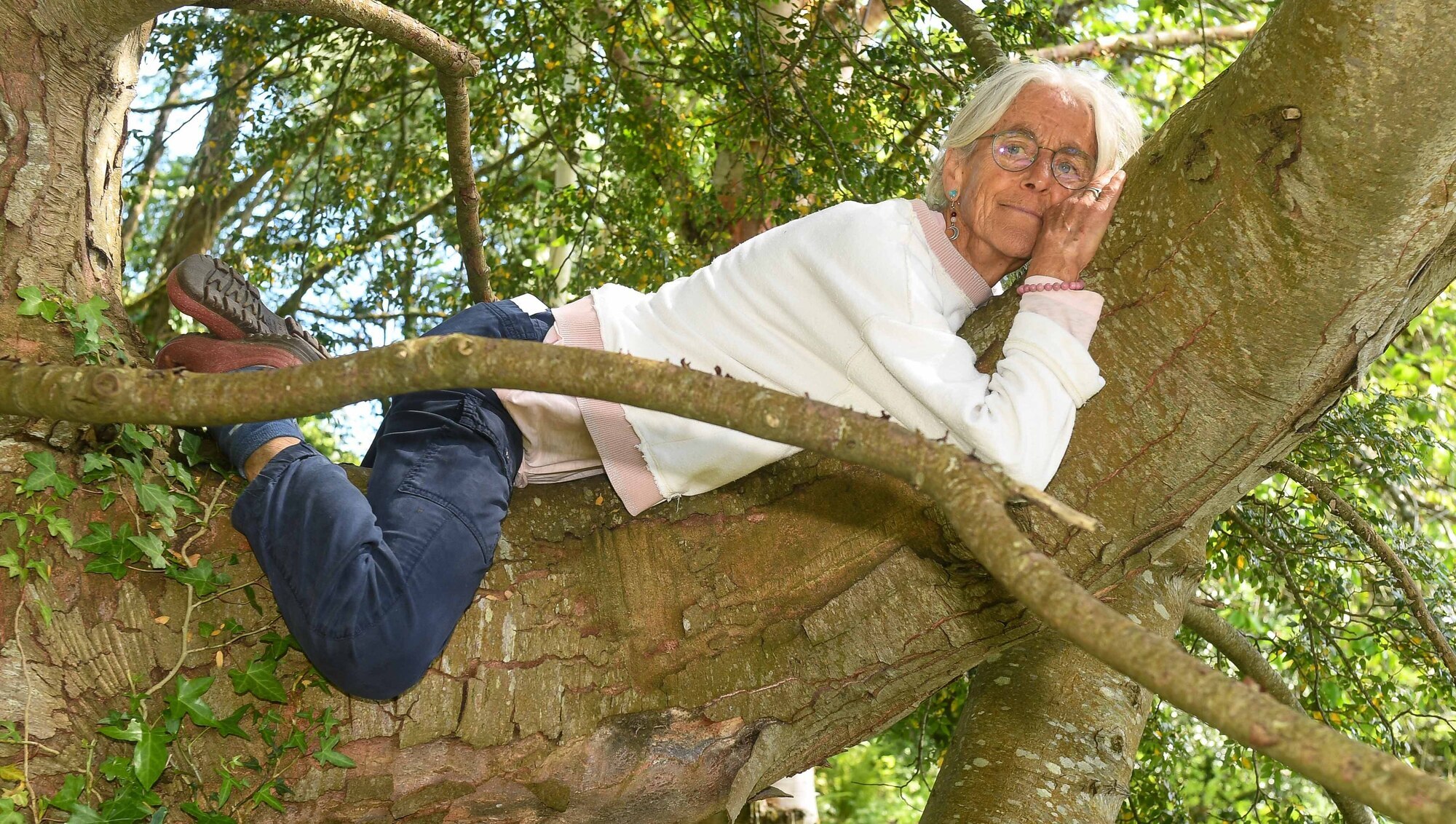
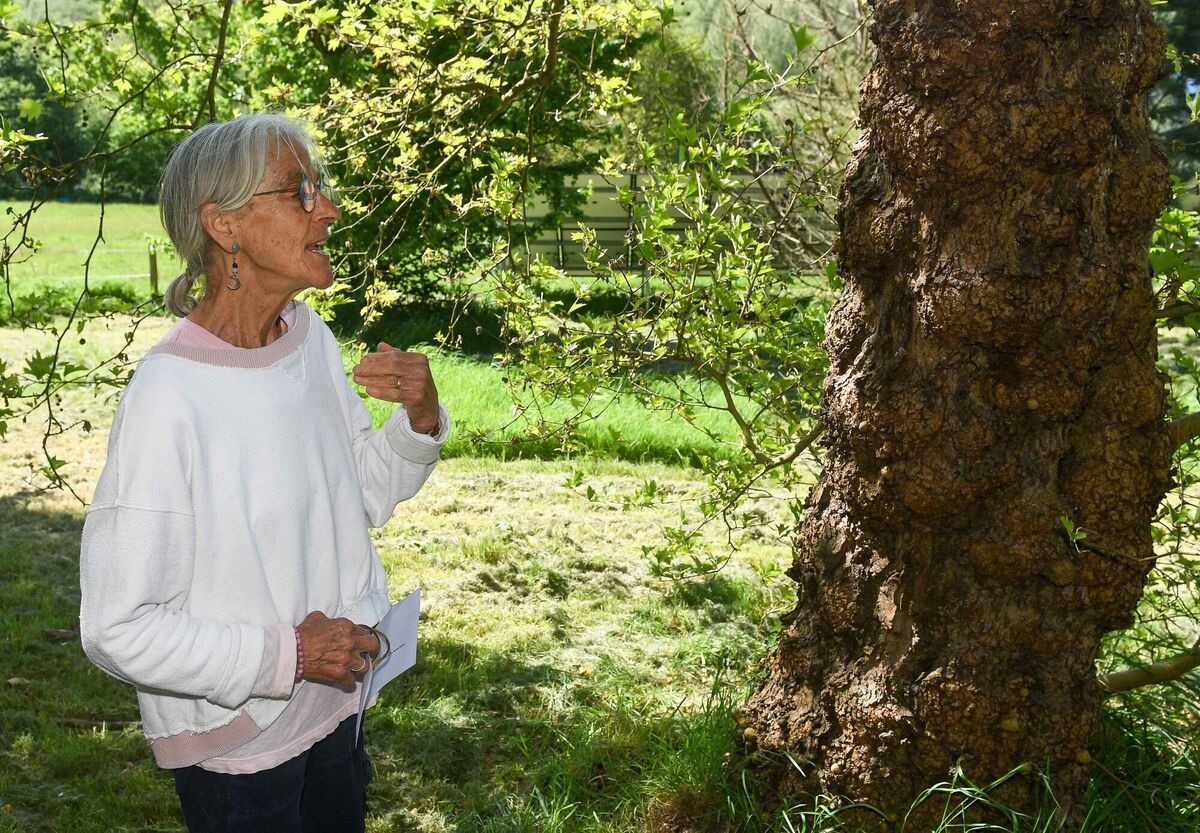
Mindfulness teacher Catherine Sutton relaxing on a Nothafagus Dombeyi tree as part of her forest bathing event near Lismore, Co Waterford. Pictures: David Keane.
This is where our group of eight will be based for the next three hours for a forest-bathing experience, guided by Sutton, who trained with the Forest Bathing Hub.
‘Forest bathing’ is translated from the Japanese word ‘Shinrin-yoku’, meaning ‘immersed in the forest’. The term was coined in 1982 as an antidote to high stress levels and burnout and has since become a bedrock of preventative medicine in Japan.
More than 2.5m people in Japan now walk forest trails every year.
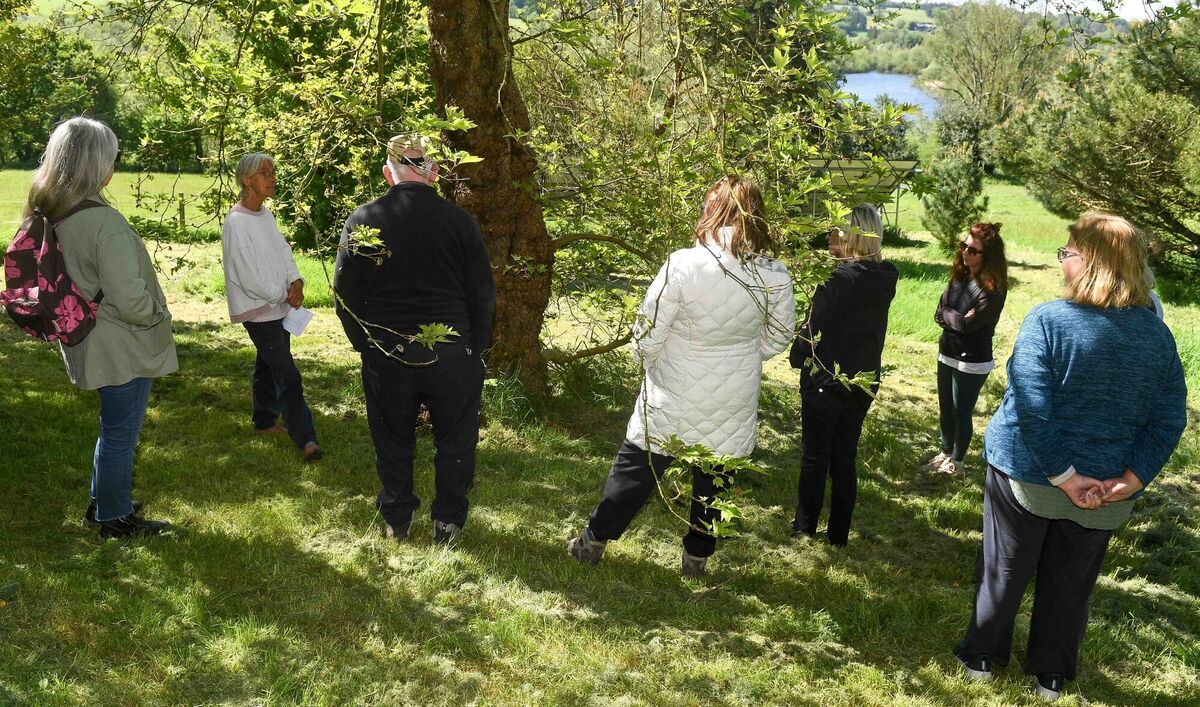
Forest bathing involves taking your time in nature and connecting with your surroundings by opening your five senses: Sight, sound, touch, taste, and smell. As I discovered, it’s more than just going for a walk in the woods; it’s being present in nature and feeling in harmony with it.
Most of us will spend time outdoors, going for walks in the woods or in a park, but there will nearly always be a destination, or a reason — exercise, getting the children out in the fresh air, or taking the dog for a walk. In many ways, forest bathing is the opposite — it’s about having no purpose and taking your time.
“We have a habitual tendency to rush everywhere,” Sutton tells us at the start of the session. “Today is all about slowing down.”
I didn’t need too much encouragement. The invitation to slow down, to find a place to sit or lie down in this wonderful setting, was gratefully received, as I, along with the other group members, broke away to discover our own “sit spot”. Sutton quickly pointed out that “this is not a botanical exercise. We’re not naming what we see or smell — it doesn’t matter. It’s just about being in the natural world”.
I found a sit spot under a broad leafy tree. It’s a beautiful day, and the sun shone through the leaves, dappling the ground. I revelled in the fact that I have nowhere to be and nothing to do, except sit and be.
For a forest guide, you couldn’t ask for more than Sutton. Her voice, her cadence, and her movements are all gentle and unhurried.
As she passes various trees in her garden, she reaches out to touch them. “This is my favourite tree,” she tells me, before climbing up into a branch that looks like it’s made for her. She is completely at home there.
With her own words and poems she has curated for the day, she paints a picture of a connected world, and I can’t help but tap into that ethos. Her overriding message is that we, and everything around us, are connected, each necessary to the other.
Throughout the forest bathing experience, Sutton invited us to explore the trees around us. She prompted us to touch the trees and experience the different textures; to sit still and just be in a space and take note of how the space makes us feel; to take a closer look at the tiny insects that inhabit the forest (she gave us all a magnifying glass); to create art with natural treasures we find; to listen to the sounds around us, honing our ears to pick up faraway sounds.
“By allowing the sense windows to be wide open, you can really take in the sights, sounds, smells, tastes, and sensations that we might normally rush through,” says Sutton. “You can then experience the healing and supportive qualities of nature. This way of engaging is slow, deliberate, and reflective. It’s like being in nature rather than passing through it.”
I’d had a busy week in the run-up to the forest bathing, and my brain was full and buzzing, but the three hours of communing and connecting with trees and nature left me feeling lighter— emotionally and physically. The feeling of wellbeing stayed with me for the rest of the day.
Dr Mark Rowe, a Waterford-based medical doctor and author, says he’s been giving out green prescriptions for the past 10 years.
“Getting out in nature is incredibly good for us,” he says. “Research has shown that if you can spend about 120 minutes a week in nature, that’s the tipping point to significantly enhance your wellbeing.”
Feelings of stress are reduced, anxiety alleviated, and mood boosted. Rowe adds that people will often feel “less irritable” and their attention span and focus are increased. Nature can also help to “quieten down” negative self-talk or our inner critic.
Rowe cites a 2015 Stanford University study that assessed the psychological impact of the natural environment. One group of people went for a walk through the urban streets in Stanford, while another group went for a walk in the woods.
“They did brain scans before and afterwards, and they found that the group walking in nature experienced changes in part of the brain called the subgenual prefrontal cortex, which is the part of the brain that deals with what we call your inner critic. In the nature group, that part of the brain was dampened down, and, as a result, people were nicer to themselves, as well as more empathic towards others.”
While scientists don’t know exactly why this happens when we’re in nature, Rowe points to a combination of factors. “When you’re in a forest, you’re hearing bird songs, and the specific frequency of bird song is good for wellbeing. It has a stochastic, unpredictable quality, which captures our attention without overloading the brain.”
The same is true of the repeating fractal patterns found in nature. “Our retinas are hardwired to pick up on these patterns and seeing them often dampens the stress response. It creates a sense of calm and safety.”
Our sense of smell also comes into play when we’re among the trees, says Rowe. “You’re inhaling not just the fragrances of nature itself, but you might be inhaling phytoncides, compounds produced by plants or trees to help them communicate with each other.
“Inhaling these airborne compounds has been found to boost feelings of happiness, lower our threat response, and boost threat recovery.”
Research suggests that exposure to phytoncides can also increase the activity of natural killer cells, which play an important role in the immune system’s defence against virus-infected cells and tumour cells.
Social prescription, a healthcare approach in which doctors or health professionals refer patients to non-medical, community-based activities rather than rely solely on medication, has been growing in popularity in Ireland. It’s a key pillar of the Sláintecare Healthy Communities Programme, and in 2023, more than 5,500 people accessed a social prescribing service, often by their local Family Resource Planning Centres.
Rowe suggests there is a case for including forest bathing, or even simply being in nature for those golden 120 minutes weekly, as a social prescription.
“Your emotional balance, your physical vitality, your purpose and meaning, your mental clarity and your degree of connection. All these elements are underpinned by the environment we spend our time in.
“For me, nature is such an incredibly health-enhancing environment.”
A follow-on ‘green prescription’ from Sutton gives advice for recreating that forest-bathing experience.
It includes taking a “deliberately slow” 15-minute walk in nature every day; “nature breaks”, like eating lunch outside; noticing “the play of light” through the trees and the patterns on the tree bark; and finding your “sit spot”, where you can observe the natural world.
“Sometimes, looking for the ideal place to go to get the most from nature actually gets in the way. Experiment and explore different environments — some far away and others very close to the place you live or work,” she says.
“Some days, you could have someone with you as you explore or sit quietly. Sometimes, sharing experiences and ideas allows for meaningful connection. Enjoy whatever you choose to do and let nature be your guide.”
Since my forest bathing experience, I’ve been more intentional. Instead of saying to my young daughter that we’ll go for a walk in the woods, I’ve framed it as ‘a wander’. When walking, I take the time to notice the finer details — like the patterns of the ferns and the way the light falls on the ground.
I can now see the benefits of slowing down and appreciating the world around us. We’re all moving so fast, in an endless loop. But as Sutton and Rowe both say, stepping off that track and spending a few minutes in nature each day may well make the difference in how long and how well we live.

CONNECT WITH US TODAY



Be the first to know the latest news and updates