How to make the most of seasonal gluts
Learning how to preserve fruit and vegetables while they're fresh and bountiful is an economical, sustainable and mindful way of holding on to nourishing and delicious foods even when they're out of season. 
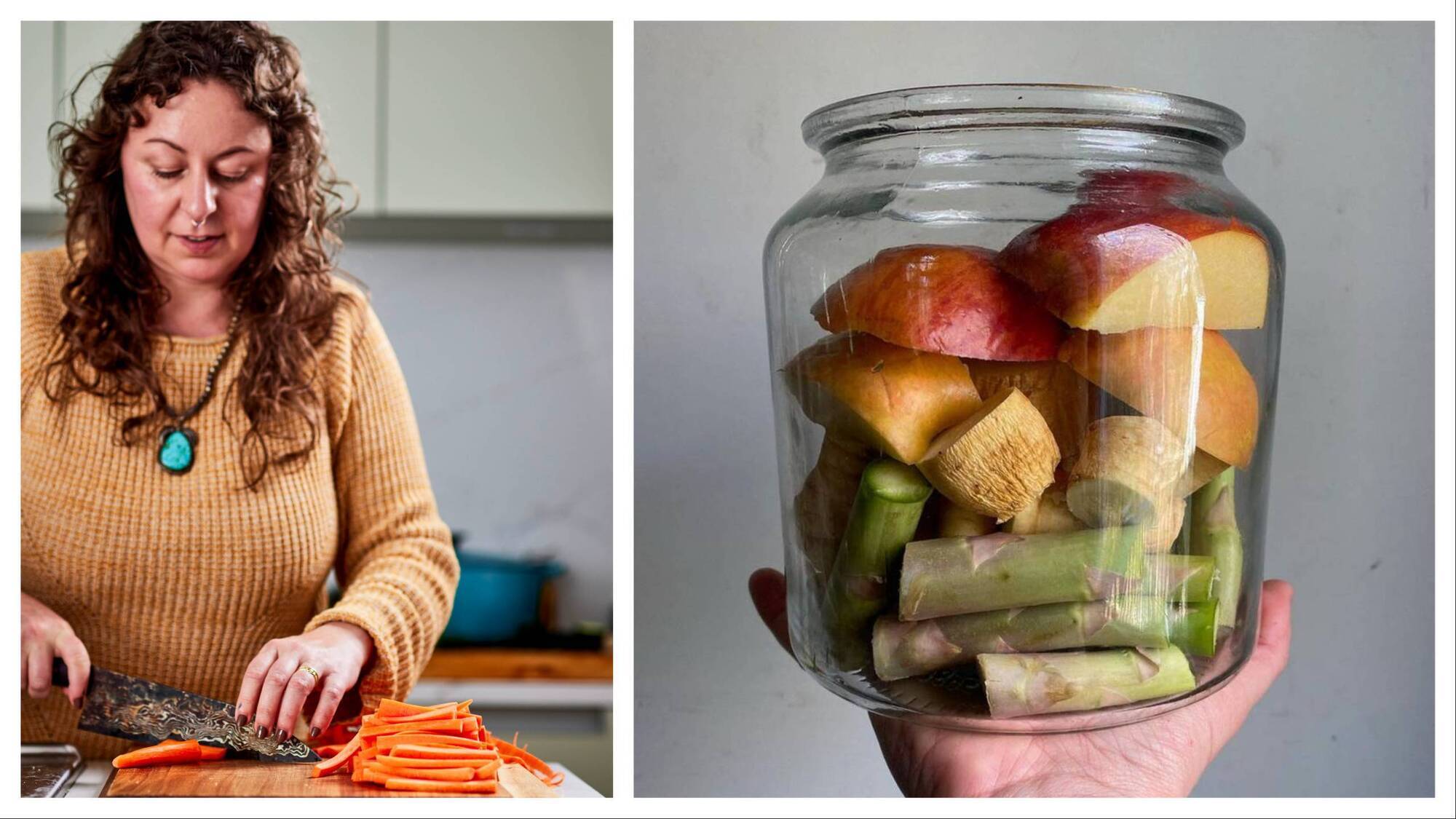
Julia Skinner: Wants to teach Irish people how to can food. Picture: Iain Bagwell

Julia Skinner: Wants to teach Irish people how to can food. Picture: Iain Bagwell

“The first thing to do is to start simple,” says Cork-based American food writer and culinary educator, Julia Skinner. She is an advocate for food preservation in all forms, but, as she explains in her latest book, Essential Food Preserving, it doesn’t have to be complicated. “Don’t try to do some really complex, time-consuming thing, if you don’t feel comfortable doing that,” she says over Zoom from Atlanta, Georgia, in the US, where she’s currently on a book tour. “Preserving can be simple and fast, it can be really complicated, or anywhere in between.”

Skinner’s first step in to preserving was when she had, as she says in Essential Food Preserving, “an abundant garden and a less-than-abundant bank account”, but she’s keen to emphasise that you don’t have to be a gardener to get started. “There are so many different ways we can go about preserving,” she says. “Even just what people get from the grocery store. If you get, say, a bunch of peppers on sale, or carrots, or herbs, you can repurpose them in all these different ways. It’s a useful set of skills for everybody to have.”

“You can take some fresh herbs that you have too much of, bundle them up, and hang them in a well-ventilated area to dry them. That takes five minutes,” Skinner says. “You can freeze fresh fruit. You can quick pickle something, stick it in the fridge, and let it work away in there. Or, you can take longer and do fermentation or do canning —which we don’t really see in Ireland as much — but I do a lot of canning and I’m convinced that I’m going to teach at least some folks in Ireland to can, so we’ll see how that goes.”

Canning — ingredients like beetroot, tomatoes, or peaches are heat-sealed in an airtight jar — is a technique more popular in America than in Ireland, but Skinner has high hopes for her Irish audience. “For the canning, even something a little intimidating like that, it’s just about learning the process. It’s just a new skill. You just learn how to do it, and then it’s not scary anymore.”

Skinner, who is also the author of Our Fermented Lives: A History of How Fermented Foods Have Shaped Cultures & Communities, believes that home fermentation has become much more popular. “I see more and more people doing it and people interested in it,” she says, “especially vegetable fermentation. I feel that’s something that I’m seeing a lot of home cooks getting in to right now, which is great. That’s the easiest one to do.”

Sauerkraut played an important part in her origin story. “I had all of this [cabbage] and I was broke, so I didn’t want to waste it. I came by [preserving] the way that people throughout history have: I had too much of something and I needed to make it last.” Her recipe for kraut in Essential Food Preserving is a template to riff on. Skinner has written it to work with vegetables beyond cabbage and also offers the intriguing prospect of including fruit, such as apples, berries, and pomegranate seeds. She also plays with flavours — adding herbs, spices, or aromatics (ginger, turmeric, citrus zest) to her basic recipe— and colour, by using edible flowers to produce what she calls flowerkraut.

As well as being a way of making the most of seasonal gluts from the garden, the market, or supermarket, fermentation can also improve digestibility, adding pre- and probiotics to the diet to support gut health. “Now I’m much more aware of the health aspects,” says Skinner. “When I first started fermenting, I was 21 and I wasn’t really thinking about that. Most of the food was from the food bank, so it was just, ‘What can I eat to feel full?’ But as I started to ferment, as I started to garden, I started to feel a lot better and a lot healthier, but…I didn’t really start to look at the health benefits of probiotic food, in particular, until a few years later. Now that I know more about the health aspects, it’s, ‘Like, oh, of course, this food co-evolved alongside us.’ It makes sense that we are naturally drawn to cooking in this way.”

When Skinner started teaching preserving 10 years ago, she noticed that there was still an air of “fear around fermentation”, but that has changed. “Now, I think the conversation about probiotics has become more part of the public discourse, so there’s less fear. I do still encounter it sometimes. Some people [ask], ‘What if I make this wrong and I kill my family?’ I’m like, ‘It’s OK. You’re not going to kill anyone’.” In Essential Food Preserving, Skinner covers food safety in detail, pointing out that, while it’s fun to try and add your own mark to recipes, “experimentation must exist within the boundaries of food safety”.

Preserving can also change how we think about food, because it is a practice deeply rooted in tradition and community that reminds us of the abundance that we have. It’s a way of storing nutritious and delicious ingredients against future food and financial shortages.

“One of the biggest shifts that preserving offers us is that we’re able to say, ‘Okay, not only can I preserve this, but I can also cut down on food waste by preserving as much of this as I can’,” says Skinner, “and the more you do that, the more you save money. It’s also a way to be more sustainable without stressing yourself out about it,” she adds. “Just being more intentional about using what you already have. That’s a great start.”

Essential Food Preserving by Julia Skinner

Fermented Carrot Sticks

I don’t mean to be dramatic here, but I eat fermented carrot sticks every day. They are easy to make, and you can offer them with dip for a snack, cut them up on salads, serve them as a dinner side, or do whatever else strikes your fancy. Ferment these carrot sticks for just a few days for a mild flavour, or longer for a stronger, more sour bite. I never peel mine (I do scrub them thoroughly, though). I suggest a few spice ideas, but feel free to use any spices you desire.

2 carrots, halved or quartered and cut into 2-inch sticks

Herbs and spices, like peppercorns, crushed red pepper, or dill seeds (combined as desired; optional)

2 cups water

½ tablespoon salt


1. Pack the carrots and spices (if using) into a pint jar, leaving one inch of headspace;


2. Make the brine: Combine the water and salt in a small saucepan over medium heat. Whisk until the salt is dissolved;


3. Pour enough hot brine into the jar to cover the carrots completely. Lightly screw on the lid;


4. Set the jar on a tray or plate out of direct sunlight. Let the carrots ferment for four to seven days, or until they have a flavour you enjoy. Store the fermented carrots in the fridge, where they will keep for at least two weeks.

  • From ‘Essential Food Preserving’, by Julia Skinner (Storey Publishing, £35)

x

More in this section

Lifestyle

Newsletter

Eat better, live well and stay inspired with the Irish Examiner’s food, health, entertainment, travel and lifestyle coverage. Delivered to your inbox every Friday morning.

Cookie Policy Privacy Policy Brand Safety FAQ Help Contact Us Terms and Conditions

© Examiner Echo Group Limited