Tracy Martin: More home support needed in the daily battle for the basics
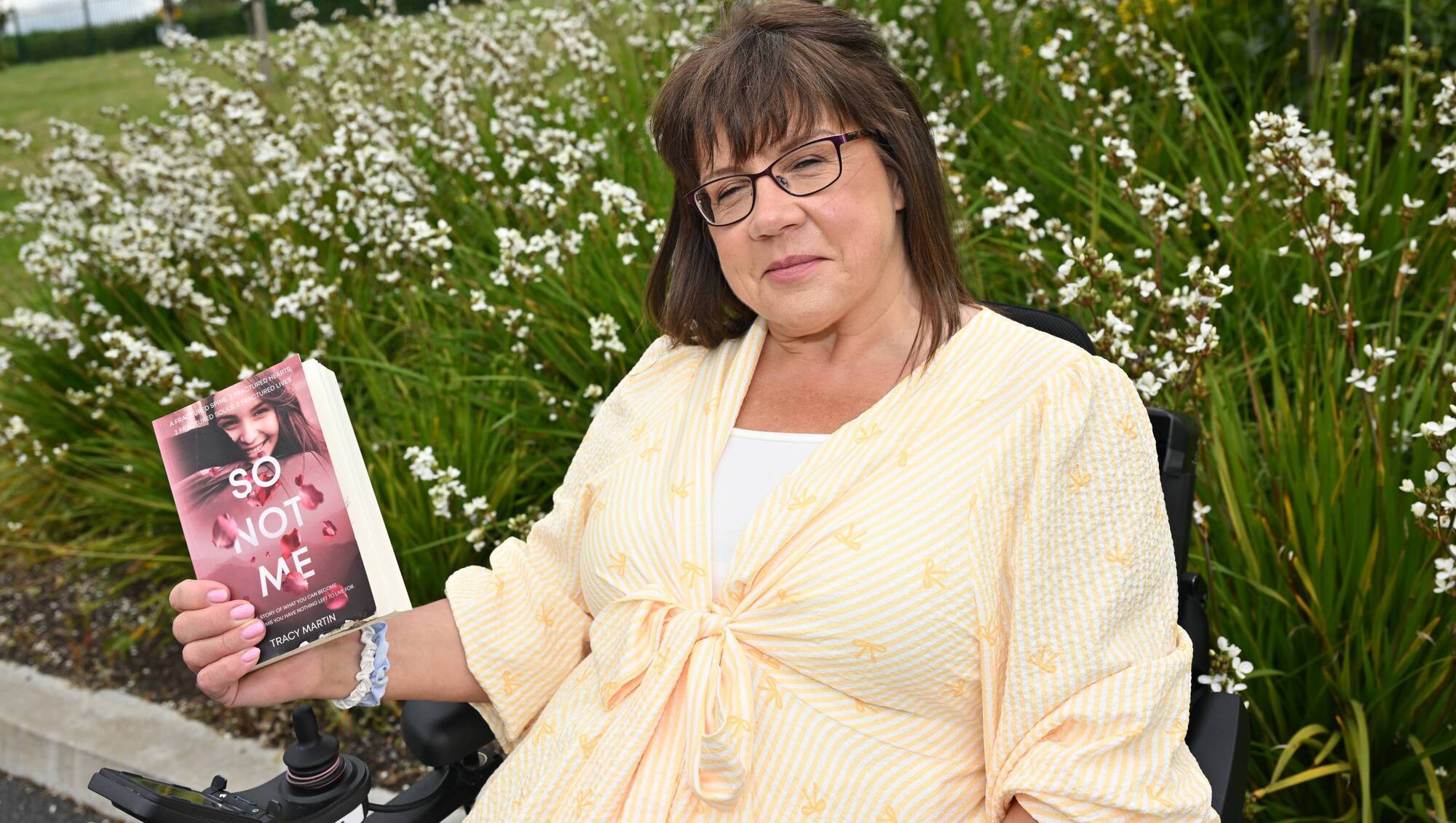
Tracy Martin: ‘Ireland talks about ageing in place, but that only works if the hours are actually provided.’ Picture: Philip Fitzpatrick
Two years ago, I wrote something that I never meant for anyone to see. It wasn’t a poem or a crafted piece. It was a moment. A moment where my pain was so severe, my mobility so limited, and my world had shrunk so small that I genuinely couldn’t see a way forward.
I wrote it because I didn’t know what else to do with the fear I was living in. I’m including two lines from that moment, because they show where I was then and where I am now:
“Living in a body that’s slowly shutting down is something most people will never have to comprehend. You learn to adapt, to survive, to keep going, but the system still treats you like someone to be quietly shoved somewhere conveniently out of sight.”
I don’t look back at that version of myself with shame. Instead, I look back with compassion.
She was doing her best with a body that was failing her and a system that had already failed her long before. Sometimes I look back at that moment and think: How are you still here, and why are you still here?
Read More
I suppose this is natural. A body that has lived for so long with paralysis has already done more work than most people will ever understand. And here’s me shooting from the hip. You know the ones, the ones that no longer grind. There are no Shakira moves around here, not much bumping and grinding. It’s more a slow rusting, enough to frighten any hardened MRI scanner. But — and there is a but — I’ve come to believe there is a purpose to it.
I touched on that in my book, So Not Me, the idea that maybe part of my existence is to mirror back the realities people don’t care to see.
Maybe advocating for others who are in this position is another part of that purpose. Another component of why I’m still here, still speaking, still pushing for change even as my own body deteriorates faster than anything left out in the Monaghan rain.
Things have gotten harder. My mobility has declined sharply. My pain is horrendous most days — not the kind you push through on Instagram, but the kind that takes over your whole body and makes every movement a negotiation.
There are still days now, days like today, when the pain is so severe it brings me right back to that moment from two years ago. Not emotionally, but physically. The deterioration we all knew would come has arrived with no red carpet included.
That’s the thing about living with chronic pain and paralysis for so long: Your brain has had to navigate things most people will never have to think about, the kind of mental gymnastics that make guiding a steamship through the Suez Canal during a blockade seem like light work.
You learn to adapt, to plan, to pace, to survive. And yet, when your condition deteriorates, when the pain becomes almost impossible to contain, when your mobility drops off a cliff, the tone you hear from the system is the same one disabled people know too well.
It’s a kind of polite pity. A kind of “sure look, we’ll just feck you into a home until you fade away”.
As if that’s the natural next step. As if that’s all your life amounts to. As if the safest place for you is to be shoved somewhere out of sight.
My mobility has dropped. My pain has intensified. Now I’m experiencing tingling in my hands, which signals something new and worrying.
Instead of support increasing, I’m left stuck between a rock and a very hard place — the hard place being a nursing home placement at 55. That’s the choice the system is quietly steering me toward, even though I’m still living in my community, still connected, still capable of contributing if the right supports were actually provided.
Across Ireland, thousands of people are waiting for home support hours that would allow them to stay safely in their own homes. Many of them are older or disabled people who want to remain in their communities, but the supports simply aren’t there. Instead, people like me are handed three options: Medication strong enough to wipe out the ability to manage your own life; staying at home without the support hours needed to remain safe; or nursing home care long before it is medically necessary.
None of these are real options. They are consequences of a system that doesn’t know what to do with disabled people who age, especially those of us without major family support.
Ireland talks about ageing in place, but that only works if the hours are actually provided. If they’re not, people like me are quietly pushed toward institutional care long before it’s medically necessary. Not because our bodies demand it, but because the State won’t fund the supports that would keep us in our own homes. Yet the State will facilitate paying for nursing home care at a cost of at least €1,200 a week.
I’ve been in one of these facilities for respite, and I’ve seen exactly what that consists of. It makes the lack of home support even harder to understand.
This isn’t just about disabled people. Older people across the country are facing the same erosion. They are trying to stay in their communities, trying to stay connected, trying to hold onto the lives they’ve built, even as their conditions deteriorate. They want to remain at home, surrounded by neighbours, routines, and familiarity.
Without adequate home care hours, they’re left with no choice but to enter institutional care.
In Carrickmacross, Monaghan, where I live, access is already limited. Services are stretched. Supports are inconsistent. When someone like me loses mobility, the gaps become dangerous.
Without family to fill those gaps, you fall straight through them.
I’m not writing this for sympathy. I’m writing it because this is happening quietly all over Ireland. Independence isn’t being lost. It’s being taken.
Two years ago, I wrote from a place of fear. Today, I’m writing this from a place of clarity. Let’s see how long that lasts.
The problem here isn’t my body though, to be fair, it does play a part . The problem is the system that refuses to support it. I still have so much left to give. I still want to live in my home, in my community, with dignity and safety. But without the hours I need, the State is effectively telling me that a nursing home is the only path forward. This isn’t a personal tragedy. It’s a social care failure. And it’s time we stopped pretending otherwise.
- Tracy Martin is a writer and wheelchair user
CONNECT WITH US TODAY



Be the first to know the latest news and updates