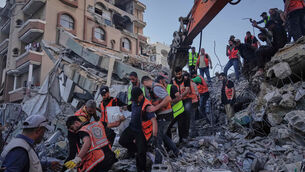
Letters to the Editor: A mother's struggle highlights impossible choices due to Israeli occupation
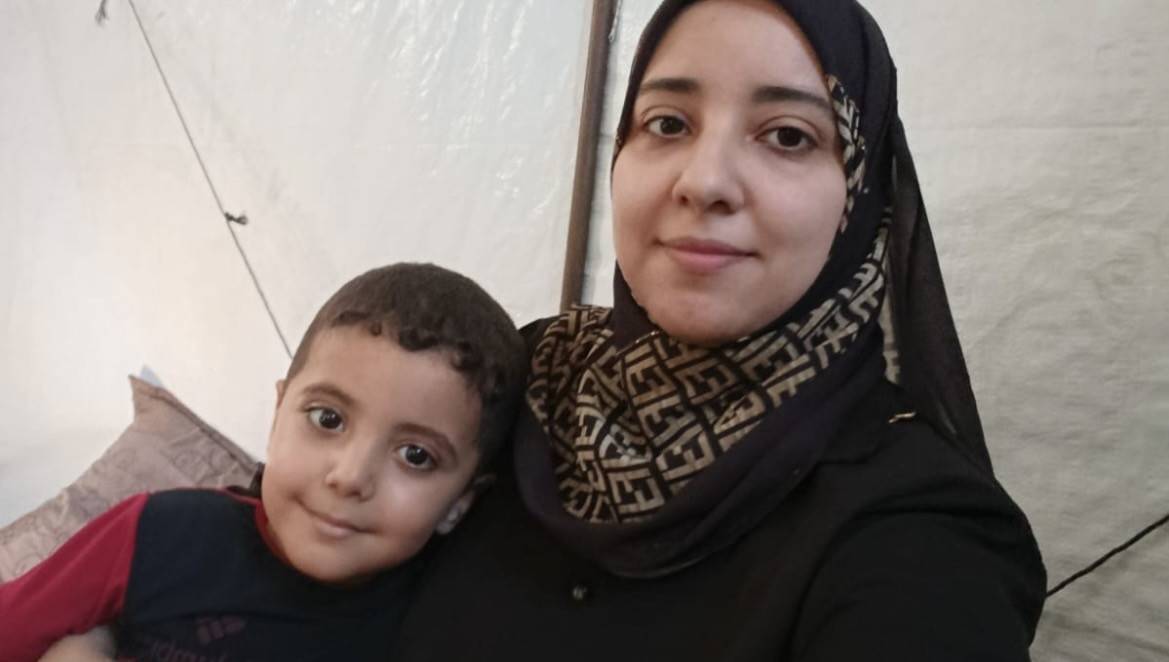
Donal O’Keeffe reported that Zainab Eid won a scholarship to UCC but now feels forced to choose
between caring for her four-year-old son and her dream of a physiotherapy qualification in Ireland. File picture
The story of Zainab Eid, highlighted in Donal O’Keeffe’s article (Irish Examiner, August 5) is a painful exemplar of the almost impossible choices faced by Palestinians living under brutal Israeli occupation. Not only do I feel that her son must be allowed to accompany her if she is to come to Ireland, but her whole family needs to be considered.
The Irish Government has been shameful in its failure to advocate for the basic human dignity of Palestinian people and has shown far more sympathy toward the murderous and genocidal entity that is oppressing Palestinians and many others in the region.
Ireland is one of the wealthiest states in the world, yet we provide nothing but crumbs to people who are in deep need and deep suffering. Meanwhile, the Government uses the immigration crisis to feather the nests of its cronies while Irish communities are burdened with the unenviable task of integrating traumatised communities from other parts of the world without preparation or support.
People like Zainab should be welcomed with their family; they should not be facing appalling choices between living their lives and abandoning their families.
She originates from a society that curtails a woman’s access to reproductive healthcare until after marriage as if our bodies are designed entirely for childbirth and now we in Ireland force her to choose between challenging that injustice and her only child. Shame on us.
The recent High Court ruling by Judge Mary Rose Gearty, that there was 'a fundamental denial of justice' to people who were refused bail in the district courts, will send shockwaves through the whole justice system, especially victims of crime (Irish Examiner, July 29).
While solicitors for the accuseds argued that they were detained illegally, I wonder were they the same solicitors that withdrew their services because of their dispute with the justice minister?
Is their representation due to the fact that because of this ruling, which neither held judges of the district courts nor solicitors who withdrew their services fundamentally responsible, that the state, ie the taxpayers, could be exposed to compensating the accused, because of this ruling, under Section 3A of the ECHR Act 2003 as inserted by the Irish Human Rights and Equality Commission Act, S.54?
How many of those cases referred to in the High Court, where bail was denied, were objected to by gardaí, who would have outlined the following reasons:
- Fear that the accused will not show up in court;
- Risk that the person will bother witnesses or destroy evidence;
- Concern that a serious crime might be committed while on release;
- A history of bail breaches.
While the challenge was on the legality of a person’s detention, under the provisions of Article 40 of the Constitution, one has to wonder, as a layperson, who is more entitled to protections under the Constitution — the accused, a possible repeat offender, or someone engaged in serious crimes, or their victims?
It seems the scales of justice are balanced in favour of the accused.
While even repeat offenders, or those engaged in serious crimes, are entitled to the presumption of innocence, with every aspect of their legal and civil rights guaranteed under the law and Constitution, it does not imbue confidence in a justice system where the balance for many has irrevocably dipped in favour of one side.
I thoroughly enjoyed the article 'Jonathan Anderson's Dior show in Dublin is my World Cup', (Irish Examiner July 26).
In particular, the observation that the show will present Ireland to the world “not on cliché but on creativity” really resonated with me.
I specialise in researching and documenting heritage couture, with a particular focus on Christian Dior.
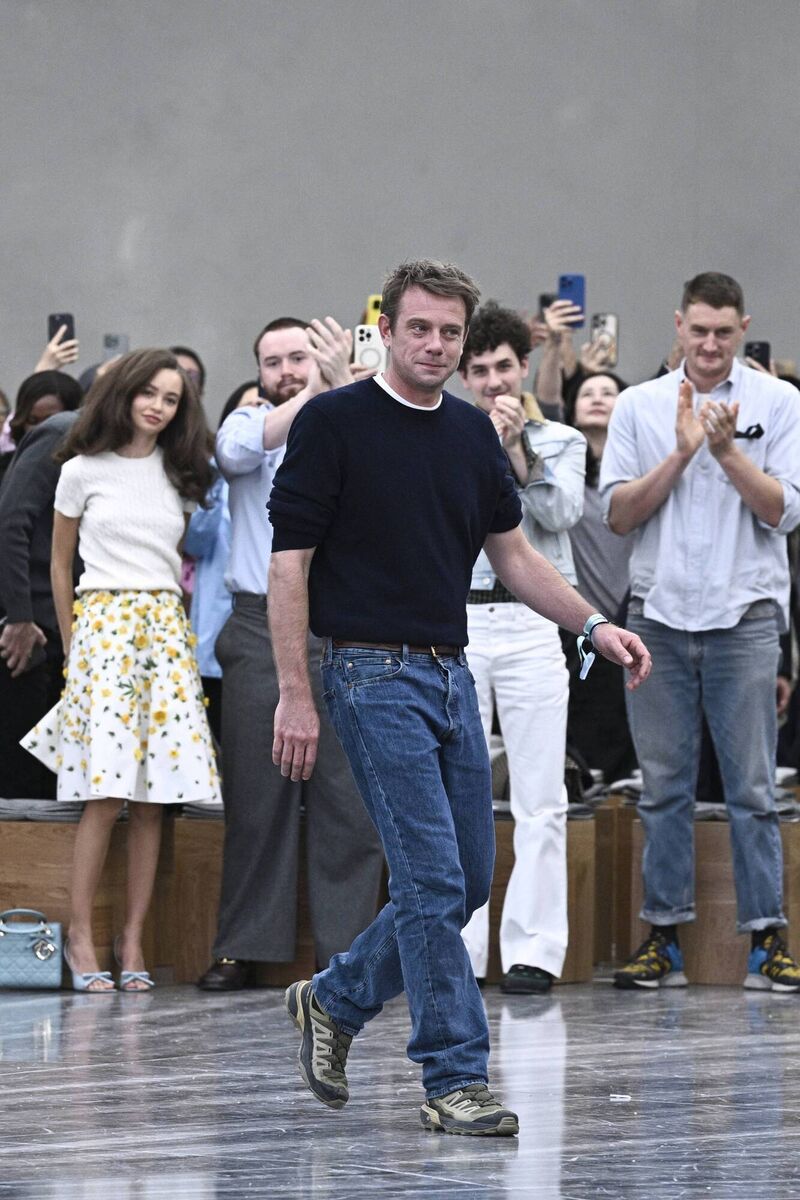
Thank you for such a thoughtful and engaging article.
Tony Lowes of Friends of the Irish Environment (‘The dangerous idea at the heart of the Government’s new infrastructure policy’, Irish Examiner, August 4) keeps banging the same old drum about the Government’s failure to achieve climate commitments, many of which are now believed to be unrealistic and unattainable.
Even the dogs in the street realise that Ireland has zero chance of achieving any climate targets, including the Paris Accord of a 51% reduction in emissions by 2030.
The Environmental Protection Agency has consistently forecast that the best that can be achieved is a 23% reduction.
Ireland is tiny in terms of land mass, population, and resultant carbon emissions and it is scientifically proven that any reduction that can be achieved will have little or no effect on the global situation.
According to the UN framework Convention of Climate Change, the most renowned global authority on climate matters, Ireland’s emissions are about 0.11% of the world total.
The major polluters are countries of the G7 and G20. China, India, the USA, the EU, and Russia are among the greatest polluters, responsible for over 70% of global carbon equivalent emissions.
Unaccounted emissions from wars and conflicts in the Middle East, Ukraine, and Africa, together with emissions from military operations, completely dwarf Ireland’s minimal contribution to global warming.
Calling on the Government to pump further billions chasing elusive targets is counterproductive and wasteful.
Homelessness, lack of housing, poverty, childcare, serious electricity grid and infrastructural deficits and precarious, import-dependent energy security all require urgent focus. Lack of policing, lack of control of our increasingly vulnerable maritime cables and pipes are vital areas, and are just some of the existential problems requiring attention.
Mr Lowes will understand that the Climate Change Advisory Council has for years called for resources to be focused on adaptation and resilience to protect vulnerable infrastructure, our coasts, coastal cities and towns against imminent rising seas and storms coming our way.
We should, of course continue, within our capability and resources, to reduce emissions, to improve our habitats and biodiversity and clean up our rivers, lakes and estuaries. Pragmatism and common sense should at some stage prevail, with the realisation that continually badgering the Government will not improve the situation one whit.
Re Jess Casey’s article (Childcare deserts: ‘Mothers are being forced out of the workplace’ — Irish Examiner, August 3), I find myself in a similar situation.
I have had to give up full-time work as I lived in the countryside and childcare was basically non-existent. This left me as a single parent not working for the last almost two years.
Two years ago, the opportunity arose to move into Portlaoise town and I thought this is great, I can get the kids into childcare and get back to work. It is just as bad in the town. I managed to get the youngest boy, 7, into an afterschool programme but it only ran until 5pm which meant the only hours I could work were 9.30am (after the school drop off) to 4.30pm (to allow myself time to get to the childcare for pick-up). That leaves a lot of jobs just out of my reach time-wise.
Even if I did manage to get a job with these set hours, what do I do during the ridiculous amount of school holidays each year?
It is extremely frustrating and leaves a lot of parents, especially single parents, in an awful position. Is it any wonder there are so many single parents claiming social welfare payments? I can assure you 90% of single parents are not on social welfare payments by choice. It’s because we are backed into a corner the minute we become parents and left to barely make ends meet for years.