‘Supersized’ El Niño could propel eight million children into acute hunger
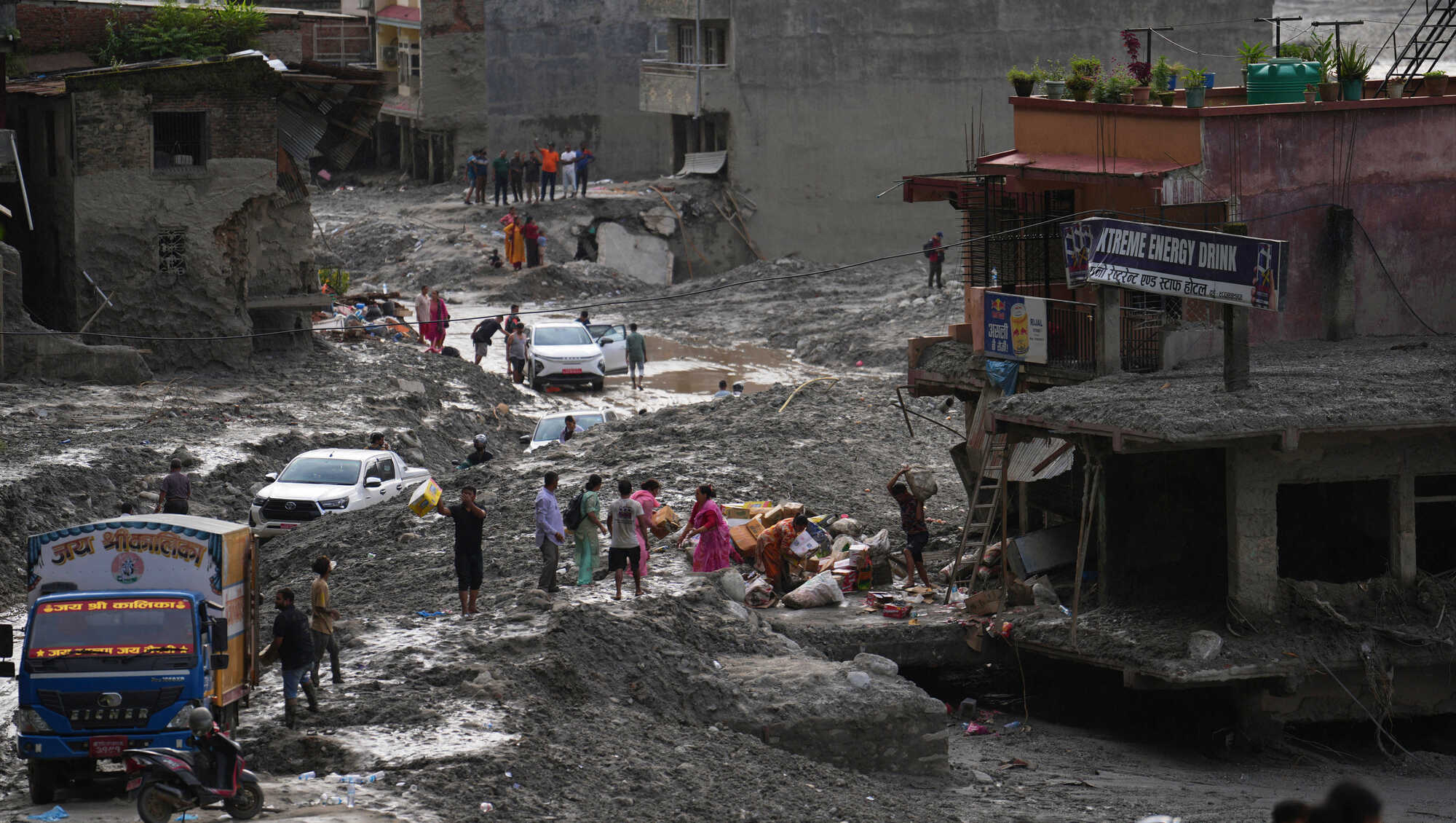
People salvage their belongings after flash flooding in Nepal earlier this month. International charity Save the Children said El Niño will cause devastating floods and will entrench families reeling from a record-breaking summer of heat and drought deeper into crisis. Photo: AP/Rajesh Kumar Singh
Around eight million children in just six countries could be pushed into acute hunger as the effects of a ‘supersized’ El Niño weather event contribute to a growing global food crisis.
Figures from the Integrated Food Security Phase Classification (IFSPC) forecasts that a looming El Niño will increase the number of people in crisis levels of hunger from 12.6 million to 16.4 million by March 2027.
The analysis focused on Madagascar, Malawi, Mozambique, Zambia, Uganda and Kenya with the brunt of devastation expected to be concentrated in East and Southern Africa.
International charity Save the Children said El Niño will cause devastating floods and will entrench families reeling from a record-breaking summer of heat and drought deeper into crisis.
The charity said the effects of El Niño are unfolding against a wider backdrop of conflict, hunger, displacement, economic instability and slashes in humanitarian funding.
“The international community and donors must invest now, before droughts, floods and food crises escalate,” said Yvonne Arunga, Save the Children’s regional director for East and Southern Africa.
“Every dollar spent helping communities prepare and act early can save lives, protect livelihoods, and reduce the need for much larger humanitarian responses later.”
El Niño refers to a naturally occurring weather phenomenon that occurs every two to seven years, where ocean temperatures and wind patterns in the tropical pacific change.
The normal circumstances of temperatures in the west tropical Pacific being warmer and waters in the east tropical Pacific are reversed alongside wind direction, leading to increasingly high surface level sea temperatures.
Pockets of the east tropical Pacific beside countries like Peru and Ecuador become much warmer, spurring unpredictable ‘convective’ weather conditions that can impact lands thousands of miles from the Pacific.
“When you have warmer oceans, it's more moisture above the ocean, more evaporation, and you’re likely to get more intense hurricanes. Not necessarily more of them, but more intense,” said Oisín Coghlan, policy advisor to the Irish Environmental Network.
“Depending on what country and how the weather systems go around the Pacific Basin, you get more droughts, or more storms, or more rainfall.
“Climate change (in East and Southern Africa) is already making droughts more and more frequent… the growing seasons are even less reliable than they than they were 10, 20, 30 years ago.
“If El Niño exacerbates that, it makes (farmers) even more vulnerable than they were before. And obviously, when all of these things happen, it's the poorest families with the least savings or the least things to fall back on…they’re the families most vulnerable.”

CLIMATE & SUSTAINABILITY HUB
CONNECT WITH US TODAY



Be the first to know the latest news and updates