Gaza woman left with choice of leaving four-year-old son in war zone to take UCC course
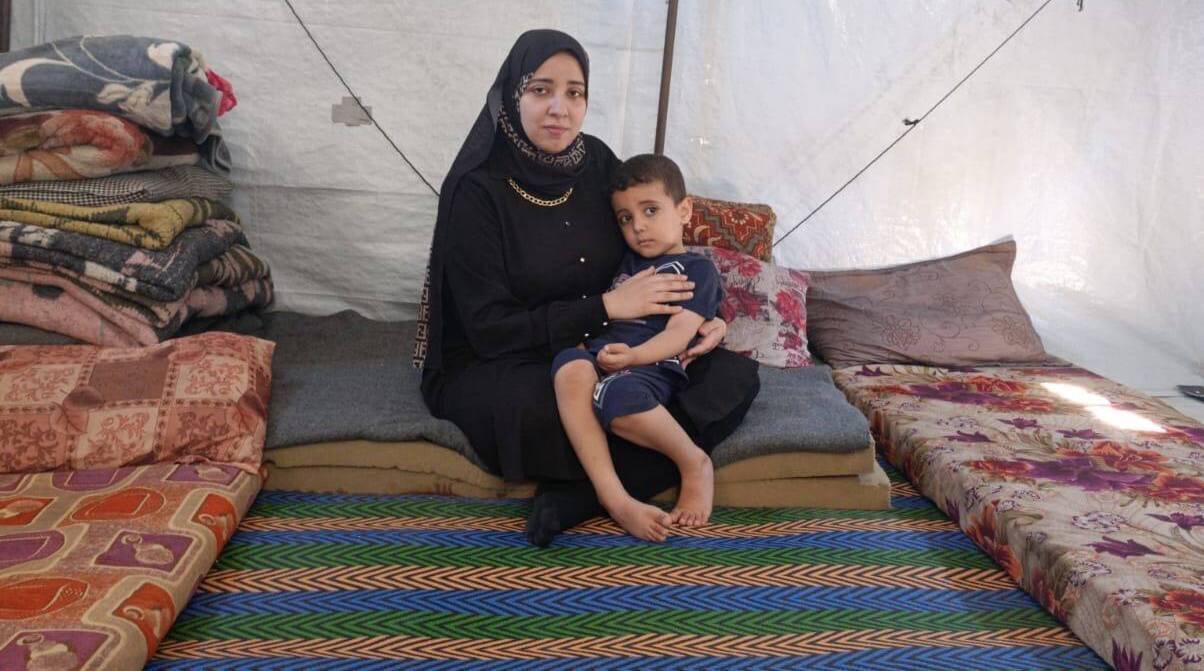
Zainab Eid and her four-year-old son Karim in their tent which is their home in Gaza. 'Our home in the Tal-Alhawwa neighbourhood in Gaza city was destroyed in November 2024, and we have lived in a tent since,' Ms Eid said.
A Gazan physiotherapist, granted a scholarship to University College Cork, has said she feels forced to choose between her four-year-old son and her dream of education in Ireland.
Zainab Eid is a 30-year-old who is currently living in a tent in the Al-Zawida area of Gaza with her husband Mohammed, and their young son, Karim.
Having previously worked for Medecins Sans Frontieres in Gaza, Ms Eid has been accepted to study for a Master’s degree in Public Health at UCC under the Ireland-Palestine Scholarship Programme (IPSP) and is due to begin her course on September 7.
She is currently awaiting a decision on her application for a visa to come to Ireland for a year, but she says that even if she is granted that visa, she cannot leave her son behind in a war zone.
However, the IPSP is clear that it does not cover dependents, and does not grant dependent visas, meaning it does not provide visa sponsorship or paperwork support for spouses or children.
Ms Eid has appealed to the Irish Government to grant Karim a visa to travel with her to Ireland, and Sinn Féin has made a number of representations on her part, including to Taoiseach Micheál Martin and Tánaiste Simon Harris. Both Mr Martin and Mr Harris referred the matter to the relevant officials, with the Taoiseach copying correspondence to the justice minister, Jim O’Callaghan.
Ms Eid has secured independent accommodation for her stay in Cork, and she says she is financially independent, meaning she and her son would not be a burden on the State.
Ms Eid’s case comes at a time when more than 20 other Gazan students, all of whom have been accepted onto fully funded scholarships for third-level courses, have had their visa applications turned down by Irish authorities.
Ms Eid’s husband works as the financial controller of an international humanitarian organisation in Gaza, working 12-hour shifts every day. Many of Ms Eid’s family members have died in the war, and her husband’s parents are elderly cancer patients, meaning that for most of the day, she is the sole carer of Karim, who will turn four next month.
“Our home in the Tal-Alhawwa neighbourhood in Gaza city was destroyed in November 2024, and we have lived in a tent since,” Ms Eid told the .
“Two years ago, my husband’s 12-year-old niece tragically died directly from severe famine here. My own father, who was a respected physician, passed away in January, due to a severe lack of essential medicine after a brief two-week illness.”
When Karim was two, he witnessed his cat being crushed beneath the tracks of an Israeli tank, something which left him deeply traumatised, and his mother said the continuous terror has made him extremely anxious.
“The war here is still raging relentlessly all around us, and no place is safe. We have been repeatedly forced under heavy nighttime bombardment, leaving everything behind, and we are currently struggling to survive,” she said.
Ms Eid works as a physiotherapist, focusing on helping women whose health is often overlooked in Palestinian society.
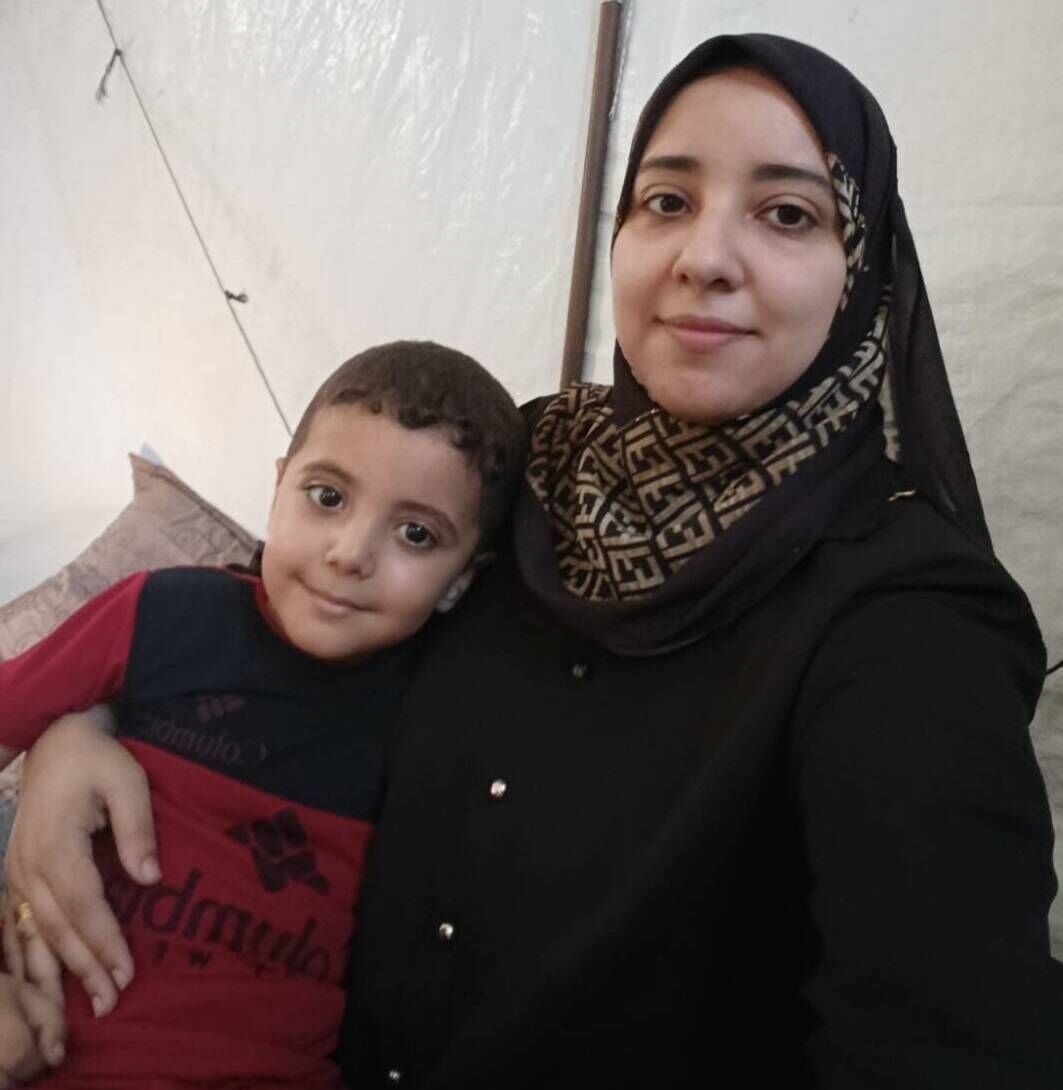
“In my community, conservative social and cultural barriers often mean that women’s private health conditions — such as gynaecological issues or pelvic organ prolapse — are treated with shame or assumed to only affect older, married women.
“As a result, seeking timely care for younger girls or discussing these sensitive issues is often stigmatised and overlooked, especially during times of conflict when basic survival takes priority over hidden health needs,” she said.
“My commitment to this cause began during my clinical work as a physiotherapist, when I insisted on referring a 16-year-old girl for a gynaecological consultation despite her family’s initial pushback due to social stigma; it turned out to be a tumour.
“That pivotal experience opened my eyes to how deeply socio-cultural barriers impact health outcomes.” She said that she intended to use her Master’s to build on her field experience to produce evidence-based research and policy solutions “that break the silence and ensure Palestinian women receive the specialised care and dignity they deserve”.
Ms Eid said that in asking to be allowed to bring her son to Ireland, she was not seeking unfair privileges.
She said:
Douglas solicitor Susan Doyle, who is acting as Ms Eid’s lawyer, said it would be “unconscionable” to separate a mother from her young son. “Ireland has an opportunity to support the people of Gaza with action by allowing people who have been denied an education since October 2023 the opportunity to study here,” she said.
“Zainab would undoubtedly be an asset to our country. She is a physiotherapist and a strong advocate for women’s reproductive health. In addition to this, the skills that she learns during her studies in Ireland could be used to rebuild Gaza when the time comes.”
In May, the HSE said more than 32,000 adults had been waiting more than a year for primary care assessment for disciplines, including physiotherapy.
Thomas Gould, Sinn Féin TD for Cork North Central, said he had been working “behind the scenes” to help Ms Eid, and he was appealing for her case to be heard sympathetically.
“I cannot imagine the prospect of choosing between her child and their chance at a future. She has done everything asked of her — secured accommodation, applied for a visa for herself, childcare, and additional funds to support herself and Karim,” he said.
“Karim is four years old. He’s been through more trauma than most of us will face in a lifetime. I hope that his visa can be issued and we can welcome him and Zainab to Cork in September.”
The Taoiseach and Tánaiste were asked for comment. The Department of Justice said it does not comment on individual immigration cases.

CONNECT WITH US TODAY



Be the first to know the latest news and updates