Patrick Holloway: Jonathan Anderson's Dior show in Dublin is my World Cup
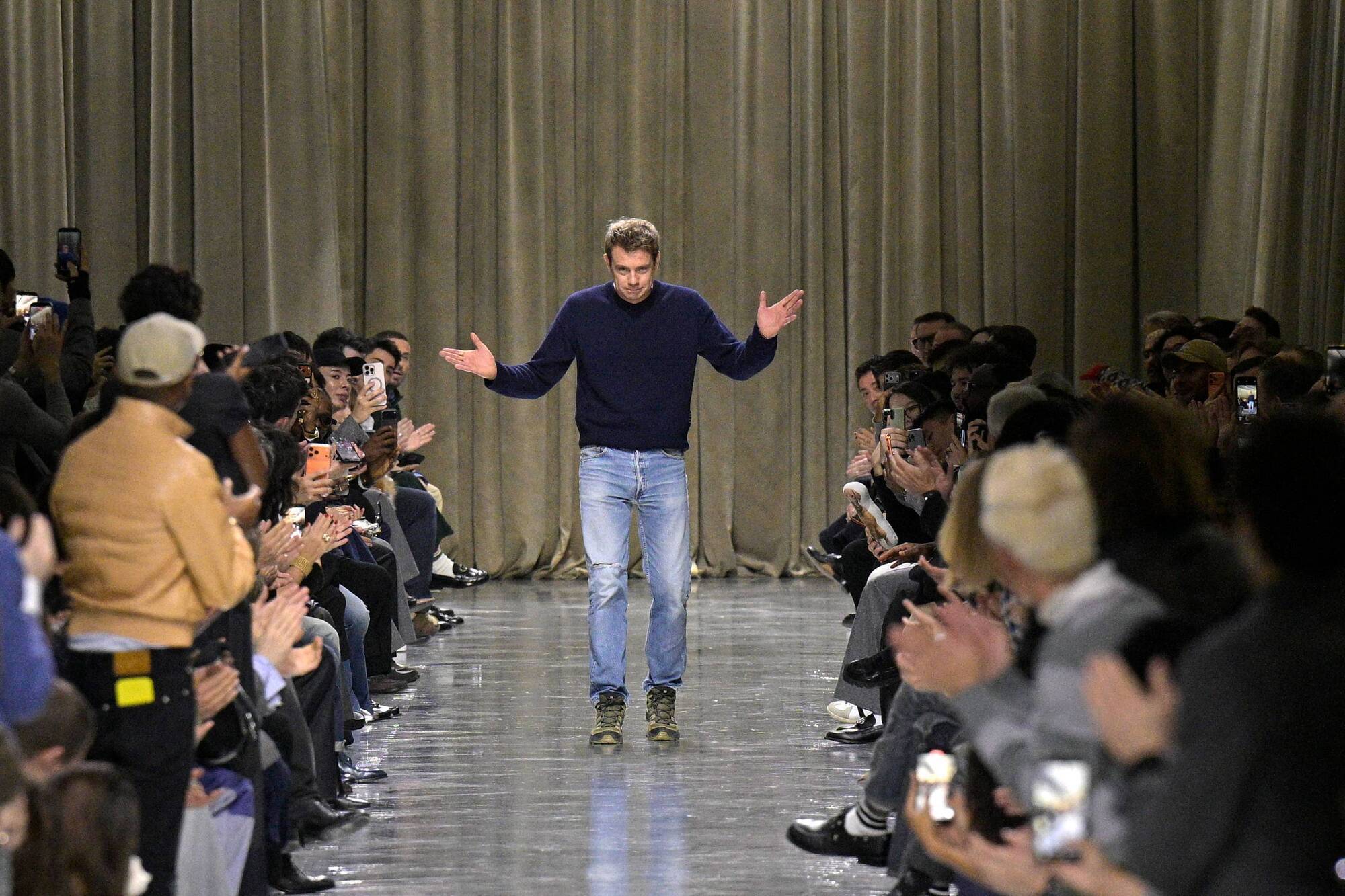
Fashion designer Jonathan Anderson acknowledges the applause of the audience during the Dior Homme Menswear Fall/Winter 2026-2027 show as part of Paris Fashion Week. Anderson bringing Dior to Dublin feels so significant. Picture: etty Images
The most expensive thing I own is a Gucci rucksack.
I bought it with the prize money from winning the Bath Short Story Award. I'd been admiring it online for almost a year, periodically opening the webpage before reminding myself I was broke and that I’d kind of gotten my careless spending under control. Then I won the prize, the money landed in my account, and before common sense or my wife had a chance to intervene, I bought it.
People assumed I'd treated myself because I'd won. They weren't entirely wrong, but that wasn't really it. Every time I sling it over my shoulder before heading to a literary festival, an interview or a day's writing in a café, I'm reminded of the story that paid for it. More than that, I'm reminded of every story that came before it — the years of rejection, of wondering whether writing would ever become more than something I did before work, after work, at weekends. The bag has become less a fashion statement than a quiet reminder that my writing has worth. That I can do this. We tend to think clothes and accessories are superficial, but they become repositories for memory. They carry versions of ourselves.
Perhaps that's why I've never understood the suggestion that fashion is somehow frivolous. I've loved clothes for as long as I can remember. I've always thought carefully about what I wear and what clothes can tell the world about who I am, how I feel. Clothes have become another language, an introduction. They shift with our mood. They can give confidence before a difficult meeting or a public reading. A favourite coat somehow becomes inseparable from a memorable winter, a pair of loafers from the city in which you bought them. Long before we've opened our mouths, we've already introduced ourselves.
This week came the announcement that Jonathan Anderson will bring Dior's Autumn/Winter collection to Trinity College Dublin this December, and I am abuzz. For plenty of people, the announcement probably drifted by unnoticed, or was swiped across a phone screen into forgetting. For those of us who love fashion, though, it landed with the sort of excitement usually reserved for Ireland winning the Six Nations.
This is our World Cup. I know exactly how ridiculous that sounds to some people. I could never tell you who Cork are playing in hurling or what teams made it through for the World Cup. Every year I promise myself I'll finally learn the rules of rugby properly before the Six Nations starts. Every World Cup I begin with the best intentions of becoming a football fan but it never quite happens. And yet, when the tournament begins, particularly with my wife being Brazilian, football has a way of taking over our lives. It spills into family dinners, WhatsApp groups and evenings gathered around the television. Before long I'm watching too, because enthusiasm is infectious. We ride the wave of other people's excitement, and in doing so become part of something bigger than ourselves.
Read More
I've often wondered why we don't extend that same generosity to fashion. Nobody asks sport to justify itself. We instinctively understand that it's about identity, community, artistry and hope. We don't question why it's on the front page or leading the evening news. Fashion, meanwhile, is often expected to apologise for existing, despite the fact that every single one of us participates in it every morning. We all decide what version of ourselves we want to present to the world. Even people who insist they don't care about fashion are still making choices. Fashion isn't confined to runways. It's woven into ordinary life.
I suspect some of our discomfort with fashion has also been shaped by gender. Men, in particular, have long been expected not to care too much. To care was somehow to be vain. Thankfully that feels as though it's changing. More men are embracing colour, tailoring, craftsmanship and individuality, and I don't think that's vanity. It's self-expression. We don't accuse someone of vanity for taking pride in their home, or the books on their shelves, or the music they listen to. Clothes deserve the same kindness.
Fashion doesn’t have to mean spending thousands of euro anymore either. One of the pleasures of Jonathan Anderson's work is that it doesn't begin and end on a Paris runway. Spend ten minutes browsing Vestiaire Collective and you'll find beautifully made pieces from earlier collections beginning second lives at surprisingly accessible prices. Clothes made to last, clothes that move from one wardrobe to another instead of ending up in landfill after a single season. In an age of fast fashion, there is something brilliant about that.
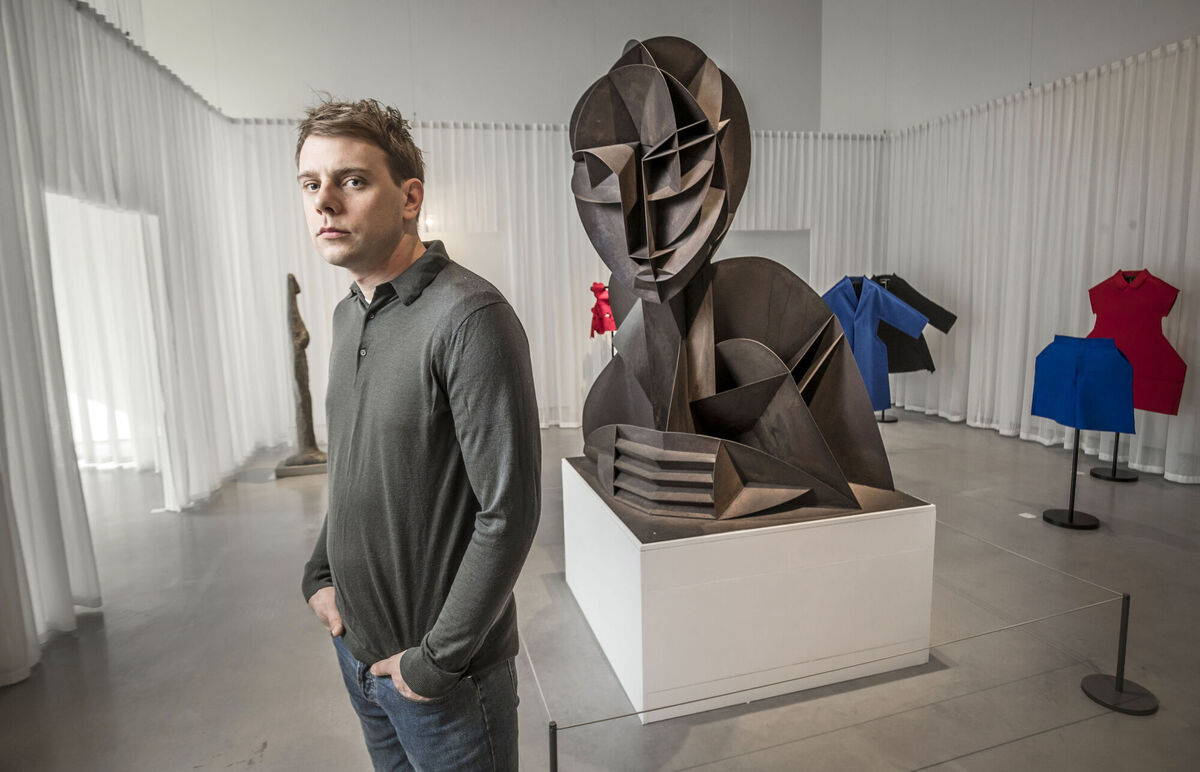
Which is one of the reasons Jonathan Anderson bringing Dior to Dublin feels so significant. This isn't simply one of the world's great fashion houses staging a show in one of Europe's most beautiful settings. It's an Irish designer bringing the world's attention home. Throughout his career Anderson has never relied on the easy shorthand of Irishness. Instead, he's drawn on our craft traditions, our textures, our eccentricity and our imagination. I've always loved, too, the way literature has found its place within his work. His celebrated tote bags bearing the names of writers feel like a reminder that style and intellect have never been opposing forces. For a country that has always exported stories, there is something deeply satisfying about seeing literature woven into another artistic language.
When the lights go up in Trinity this December, the photographs will travel far beyond Dublin. Editors, buyers and journalists from across the world will leave with another image of Ireland, one built not on cliché but on creativity. And this is important, not simply for fashion, but for tourism, for trade, for young Irish designers wondering whether there is a place for them on the world's biggest stage. Jonathan Anderson has already answered that question.
So yes, this December I'll be paying attention. Not in the way I pay attention to the World Cup, catching the odd match because everyone else is watching. I'll be monitoring every Instagram post, every blurry photograph from outside Trinity, every backstage glimpse, every tiny trickle of information that escapes before the lights go up. This is my World Cup.
And my hope is that plenty of people who have never watched a fashion show before might come along for the ride. Not because they'll suddenly care about lapels or silhouettes, but because that's what we do when something exciting happens at home. We borrow one another's enthusiasm. We celebrate excellence, even when it isn't our own particular passion.
Of course, if anyone at Dior happens to have a spare seat in the front row, I'd happily wear my very finest in the interests of journalism. Failing that, I can always take Jonathan Anderson for a pint afterwards. I have a few ideas on the back burner.
CONNECT WITH US TODAY



Be the first to know the latest news and updates