Childcare deserts: 'Mothers are being forced out of the workplace'

With waiting lists of up to two years, the lack of places in early childhood education and childcare is putting under pressure. Picture: iStock
NEW mother Emma Healy in Ballincollig is fielding calls from this reporter as she adjusts to life with her newborn.
Working in HR, she is well-versed in the supports employees need returning to work after maternity leave.
She found out she was expecting late last year and started contacting childcare providers in March.
“I was maybe 17 weeks pregnant when I was contacting them; I thought I was being very organised.”
From her initial inquiries, she received a slew of emails back, which she has shared with the Irish Examiner. They all share the same polite and sympathetic tone, but the responses are stark.
One Cork creche said its cancellation list currently has in excess of 330 children and it is “extremely unlikely” a space will arise for the majority of those waitlisted.
Another described its waiting list for full day-care as “extensive” with many families waiting up to two years for a place, particularly in the 1-2 year age group. Another message said its service is running at full capacity. It does not anticipate any availability until February 2028.
“At this point, my coping mechanism is to just not think about it,” Emma said.

“I know that’s not a solution either; I’m just saying it will have to work out. My mother still works, and my family are amazing, but I can’t be pulling on my family for full-time childcare.
“I maybe naively thought it would be easier, but it should be easier, to be honest.”
As monthly childcare fees continue to remain stubbornly high, despite Government commitments to bring them down, conversation around childcare in Ireland tends to be dominated by cost, understandably.
But for parents in many regional towns across the country where demand for places far exceeds supply, grappling with costs is something they’ve yet to contend with.
The places for their children are simply not there, or are only available at times vastly at odds with the regular working day.
Read More
The true demand for places — in early childhood education and care, and in school aftercare — can be hard to assess, given the likelihood that parents in a bind turn to informal arrangements to try to plug gaps, such as help from family members or leave or flexibility from employers.
These arrangements are often underreported. But limited childcare places, particularly for under-twos, and regional variations have led to what the National Women’s Council (NWC) has termed ‘childcare deserts’ springing up in various parts of the country.
These tend to be towns or areas that expanded rapidly in recent years in terms of development, without the necessary expansions of childcare to match.
“Right now, they are saying there are between 40,000 and 50,000 children on full day-care waiting lists,” said Corrinne Hasson, executive director of the NWC.
“There is likely to be some doubling up in these numbers, as children tend to be on more than one waiting list. However, it’s still thousands of families where, mostly mothers, are asking themselves ‘Am I going back to work, am I dropping down a few days, am I going to go back to education like I had planned to do?’
“It has such an impact on families, that women are mostly feeling,” Ms Hasson said.
“What we are seeing is that if you can get a place, great,” she explained. “You are probably paying through the absolute roof for it, Dublin in particular. It’s nearly €1,600 a month in some places parents are being quoted, and a lot of these places as well have pulled out of the National Childcare Scheme, which means parents can’t even get subsidies for it.
“Then you have the pressure on the system, and it’s being particularly felt in areas where there’s lots of expansion.”
Examples of these childcare deserts exist across the country, but they can be seen particularly across Waterford, Kildare, Meath, and Clare. The NWC is calling on the Government to “really look at where the gaps are,” Ms Hasson said.
“Start piloting a few of these schemes to actually have State-led, State-owned buildings, so that the State is paying educators’ wages.”
In Tramore, Carrie O’Hanlon was due to return to work in May. The mother of two works for a pharmaceutical company.
“The long and the short of it is, I can’t get back to work because I have no childcare,” she told the Irish Examiner.
“All I’m hearing is about more and more women who are giving up their careers, looking for part-time work, giving up their jobs, or being made to give up their jobs because the childcare arrangements they need are not there.”
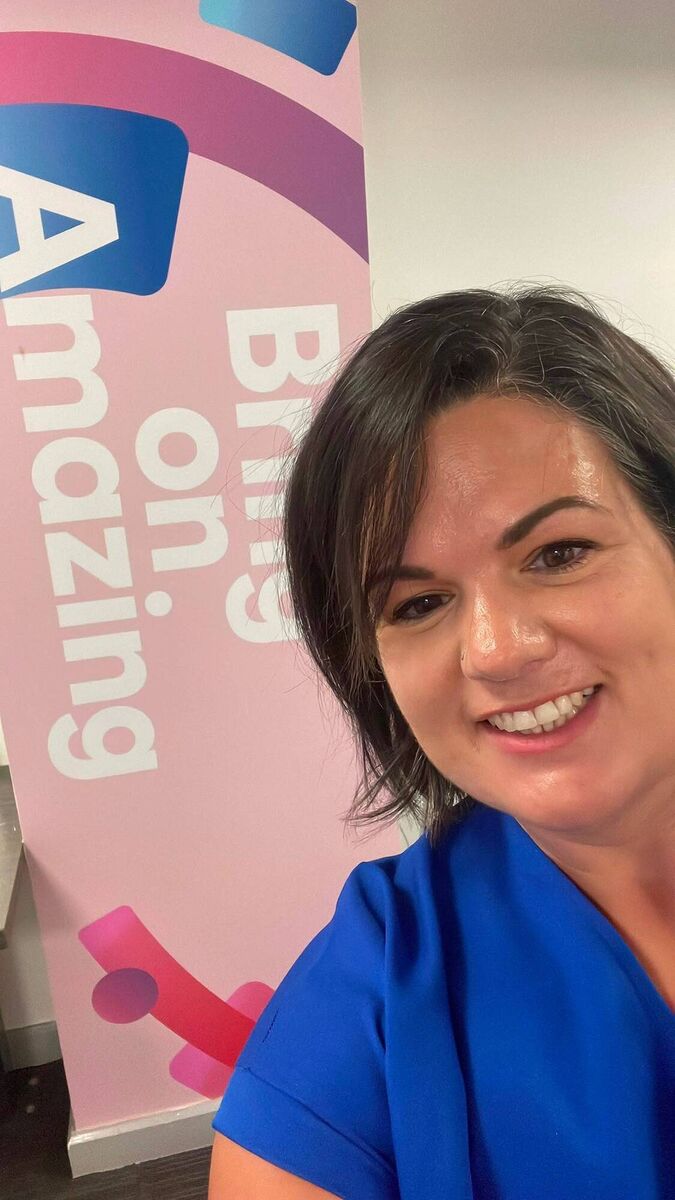
Carrie returned to work after her first child through a mix of three days a week with a childminder, help from her parents, and parental leave. Her eldest started pre-school while she was on maternity leave with her second child. Like many across the country, it only has the capacity to offer children an hour a day of care after its pre-school services finish, meaning she must be collected at 1pm.
“The creche I have registered my baby with couldn’t take her until September either, until she is walking.”
Earlier this year, she met new mothers through their local childcare committee.
“They were aghast to find, while holding their newborns, that they had no childcare for six months, 12 months plus.
“There was just huge pressure on them, because there are just no spaces there for their children, having tried every creche, childminder, and had no family. Having met them, I was pretty furious, and I realised it wasn’t just me, and my naivety.”
From this grew the Tramore Childcare Campaign. It surveyed parents locally, documenting the need for at least an extra 152 places. They also found limited afterschool capacity.
Sinn Féin Waterford TD David Cullinane recently raised the shortage of places locally with children’s minister Norma Foley, who pointed to the amount spent this year on the sector, Carrie said.
“It’s all great that we are spending €1.5bn on childcare, but we are not investing in infrastructure, and all of these subsidies are useless if you don’t have a place.
“Our whole campaign was set up to demand childcare infrastructure — actual physical buildings that would be under a State-led model, and that staff would be paid accordingly. Bring them in under the Department of Education model so they are like teachers. Our kids are starting their education journey when they start into childcare really.”
As a family support worker with the Shannon Family Resource Centre, Cathal Dillon sees the impact of the shortage of childcare places locally firsthand, particularly on lone parents.
He regularly receives phone calls and referrals from maternity services to support new mothers in need of access to services.
“Unfortunately, my answer has been the same for several years now: ‘No room at the inn’.”
The Government’s National Childcare Scheme gives parents access to a free ECCE (Early Childhood Care and Education} scheme place for their child aged 2 years and 9 months.
Mr Dillon said: “Unfortunately for many in Shannon, this is just a token place as the childcare spaces are just not available in the community.”
One of the current providers in the town is expected to exit the sector, and the other main provider has 100 children on her waiting list, he added. In June, the Shannon Community Partnership published its childcare survey, documenting the clear demand for more places, especially for babies and toddlers.
“The Government’s response is ‘we can help you build it, or if you find suitable premises, you can submit an application, and if successful we will pay for it’.”
However, it is left then to community organisations to “figure the rest out”, he added. This includes governance structures, the application process, and taking on the responsibility for managing and developing a childcare service for a minimum of 100 children.
Clare Fianna Fáil TD and chair of the Oireachtas education committee Cathal Crowe said the low availability of childcare is an issue in Clare, particularly for babies and ‘wobblers’.
“A lot of facilities haven’t the capacity to take them on. The ratio of adults to supervise babies is quite low; I think it’s one adult to two babies.
"From a provider’s point of view, you have the same payroll costs, and yet you can take in fewer children.”
Some parents are “crisscrossing” the county, travelling as far as Limerick City or Gort in Galway to access places. “That impacts hugely on people’s family lives.”
In Kildare, Labour TD and spokesperson on children Mark Wall points to Kilcullen as an area particularly affected but added that the lack of availability is felt across the county.
“There’s 110 families that responded to our survey, and there’s a population of about 4,000 people. Of that, 153 children needed a childcare or afterschool place.”
Of this, more than 70% of the parents were travelling outside of the locality to access childcare. One mother was travelling as far as Kilkenny to access a place, over an hour and 15 minutes away.
Almost 50% of the parents who took that survey said they were considering leaving their job or had to leave their job due to childcare issues.
“That is really the concern we have, and it’s really being replicated right across Kildare. It’s the same story.”
A spokesperson for the Department of Children said the State is now investing almost €1.5bn this year in the early learning and care and school age childcare sector and capacity is increasing.
“However, it appears that demand for early learning and childcare remains higher than available supply in certain parts of the country, particularly for younger children,” they added.
The State-led childcare capital programme “will invest €135m in buildings in the coming five years to support the expansion of provision, delivering thousands of additional places in areas where the need is greatest”, the spokesperson added.
The Together for Public Alliance of 40 organisations and campaign groups co-ordinated by the NWC, has called on Government to build a public system of early years education and care, and to begin the rollout of pilot models of public childcare across the country, especially in childcare deserts.

CONNECT WITH US TODAY



Be the first to know the latest news and updates