Paul Hosford: After the M9 crash, the rush to ‘do something’ risks missing the real problem
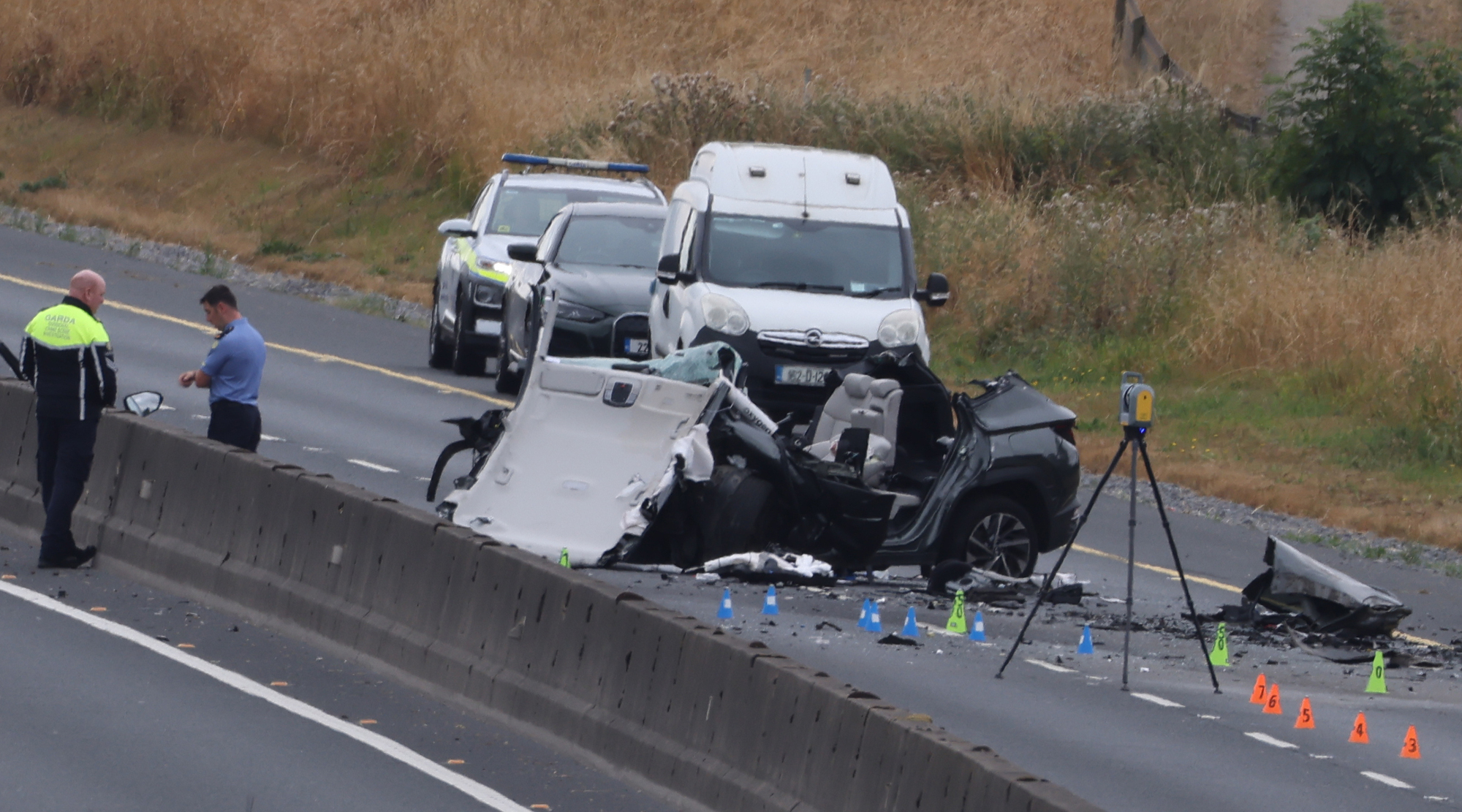
The prospect of another offence will not deter somebody who is already prepared to drive a stolen car onto a motorway in the wrong direction. Picture: Eamon Farrell/RollingNews.ie
There is a familiar ritual in Irish politics after a tragedy.
First comes the shock. Then the condemnation. Then the demand and promise that something must be done.
The M9 crash has produced all three.
Five teenagers are dead, three women and a child are in hospital after the teenagers' BMW, travelling the wrong way on a motorway smashed into a Hyundai in which a family of three sisters and a seven-year-old boy were travelling to Dublin Airport to attend a family wedding. The head-on collision took place after 3am, near Moone, Co Kildare, in the dead of night with no gardaí in pursuit.
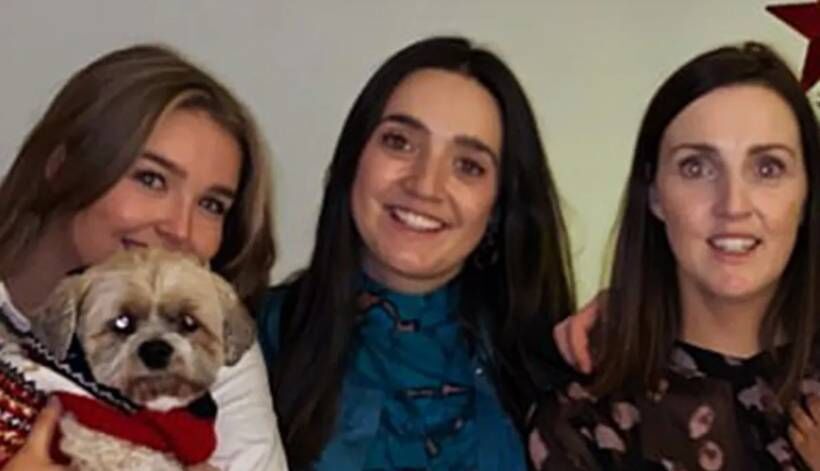
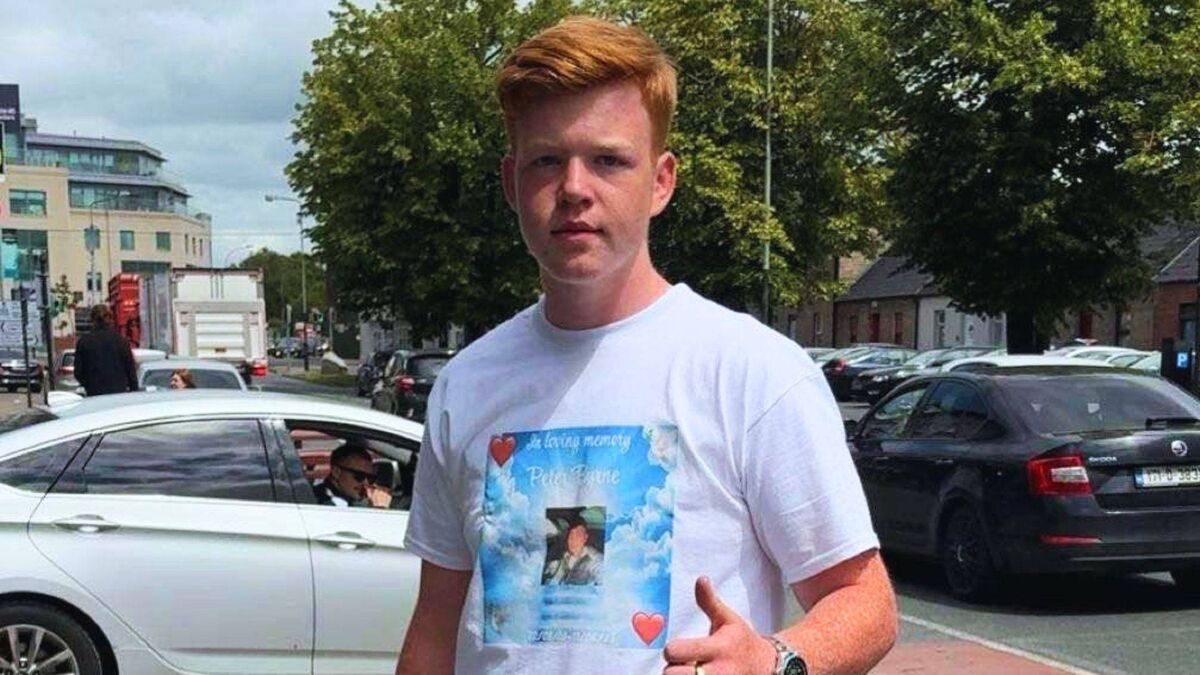
Sisters Alma Kinsella, Niamh Kinsella, Ella Hendricken, and a seven-year-old boy were all hospitalised with serious injuries while teenagers Jack Kennedy 17, Jeremy O’Brien, 18, his cousin Alex McCarthy, 17, from Carlow; Joey Carthy, 15, from Athy, Co Kildare; and Kamil Pustkowski, 17, from Limerick were all killed.
The damage in the crash was so severe that for much of Sunday, reports put the death toll at four because one body had not yet been found hours later.
Read More
Gardaí have described the circumstances as horrific, while politicians understandably struggled to find words adequate to the scale of the carnage and the nuances involved in such a loss of life coming in such a fashion.
But within days, the political machinery had moved on to the next stage: what new law should be introduced, what new powers should be given to gardaí, what should be done about social media — TikTok specifically was asked to attend an Oireachtas committee to answer why videos on its platform glorify and celebrate joyriding and car theft — and whether wrong-way motorway driving should become a specific criminal offence.
That instinct is understandable. It is also worth examining.
In moments like this, the Government comes under enormous pressure to demonstrate it is doing something. Nobody wants a minister standing before the cameras after five teenagers have died and saying there is little a Government can do about people behaving catastrophically.
The thought there is little that can be done to protect you from the worst behaviour of people scares many people and is an issue with which successive governments have had to grapple.
There are legitimate questions across the board because this was not simply an ordinary road traffic collision. The car was travelling southbound on the northbound carriageway.
There had also been another wrong-way motorway incident on the M50 only a week earlier, involving a car carrying teenagers. The Garda Commissioner has spoken about a disturbing trend of dangerous driving being carried out, in some cases, for social media attention, so this goes way beyond road engineering.
It is a question about policing, youth crime, stolen vehicles, online culture and the ability of the State to intervene before reckless behaviour becomes fatal.
Those questions demand a more complex answer than simply increasing the punishments for the crime, which will never act as a deterrent to young men who are blind to consequences of driving a car the wrong way down a motorway.
Indeed, in the days after the crash, another such incident was reported. These young men do not fear prison the way most do. Harsher punishments might sate the appetite for retribution after the fact, but it will do little to stop the acts in the first place.
But we are the realm of "do-somethingism" and something must be done. So, on Monday, Justice Minister Jim O'Callaghan announced that something might be done at some point.
"We will have to consider the introduction of a separate offence in respect of individuals who make a deliberate decision to drive their vehicles the wrong way down the motorway," Mr O'Callaghan said on Monday afternoon.
"That is using a vehicle as a weapon, and it is a lethal form of behavior that, as we saw over the weekend, results in deaths and serious injuries."
This notwithstanding driving against the flow of traffic is already illegal and many of those who do so are too young to operate a car legally, anyway. But, something must be done and when your levers are, largely, more or legislation, your options are limited.
There are also serious questions about Garda resources and training. Representatives have said gardaí lack specialist pursuit training, while political opponents have pointed to a substantial fall in the number of gardaí assigned to roads policing over the past decade.
As of last month, Garda numbers are marginally above where they were in 2009, with an extra million people in the country's population. Without gardaí to enforce the laws we currently have on our books, what good are new ones?
If gardaí need better pursuit training, give them better pursuit training.
If roads policing needs more resources, provide them.
If there are deficiencies in the systems used to identify stolen vehicles or alert motorists to a vehicle travelling the wrong way, fix them.
While some clamoured for a new law, few answered what problem it solves.
A person who deliberately drives at speed into oncoming traffic is already committing a catalogue of offences. Depending on the circumstances, existing law can deal with those. The prospect of another offence will not deter somebody who is already prepared to drive a stolen car onto a motorway in the wrong direction.
During the reaction to the crash, fingers were pointed at TikTok specifically, and social media more broadly. As if this latest trend of videoing joyriding was the advent of the crime.
Of course, social media changes the face of this kind of criminality, but it is naive at best and disingenuous at worst to think it is anything other than a downstream consequence of it, rather than a contributory factor. These young men will steal cars whether they can post it online or not. The likes are simply a bonus.
And this is the uncomfortable truth that few in power will ever admit publicly: the law is not much use against somebody who has decided that the law does not matter.
That does not mean the Government should do nothing. It means it should do the right things.
If young people are filming dangerous driving, sharing it, competing for attention and treating criminality as entertainment, then there is a problem that cannot be solved by increasing the maximum sentence by another few years, especially against a cohort which factors a stint in prison into its life plans.
It requires early intervention, youth services, community policing, family support, and a serious examination of why a minority of young people become attracted to this behaviour in the first place.
That is much less politically satisfying than announcing a new offence, but it is potentially far more effective.
The danger is that politicians reach instead for the symbolism of a new law because a new law is easier to announce than the slower, harder work of making existing institutions function better.
It was reported later in the week that one of the five teenagers killed, Jack Kennedy, was in the care of Tusla before his death, and two more of the teenagers were known to the agency.
Tusla has now referred the three teenagers' deaths to the National Review Panel for investigation. Despite what some in Government might argue, the crash raises more questions for arms of the State than it does for the Road Safety Authority.
The victims of the M9 crash deserve more than a new offence named after the circumstances in which they were seriously injured or died.
They deserve a State capable of learning from what happened.
That is a much harder promise to make — and a much more important one to keep.


CONNECT WITH US TODAY



Be the first to know the latest news and updates