A retired guard on the M9 crash: What are we getting wrong with our young men?
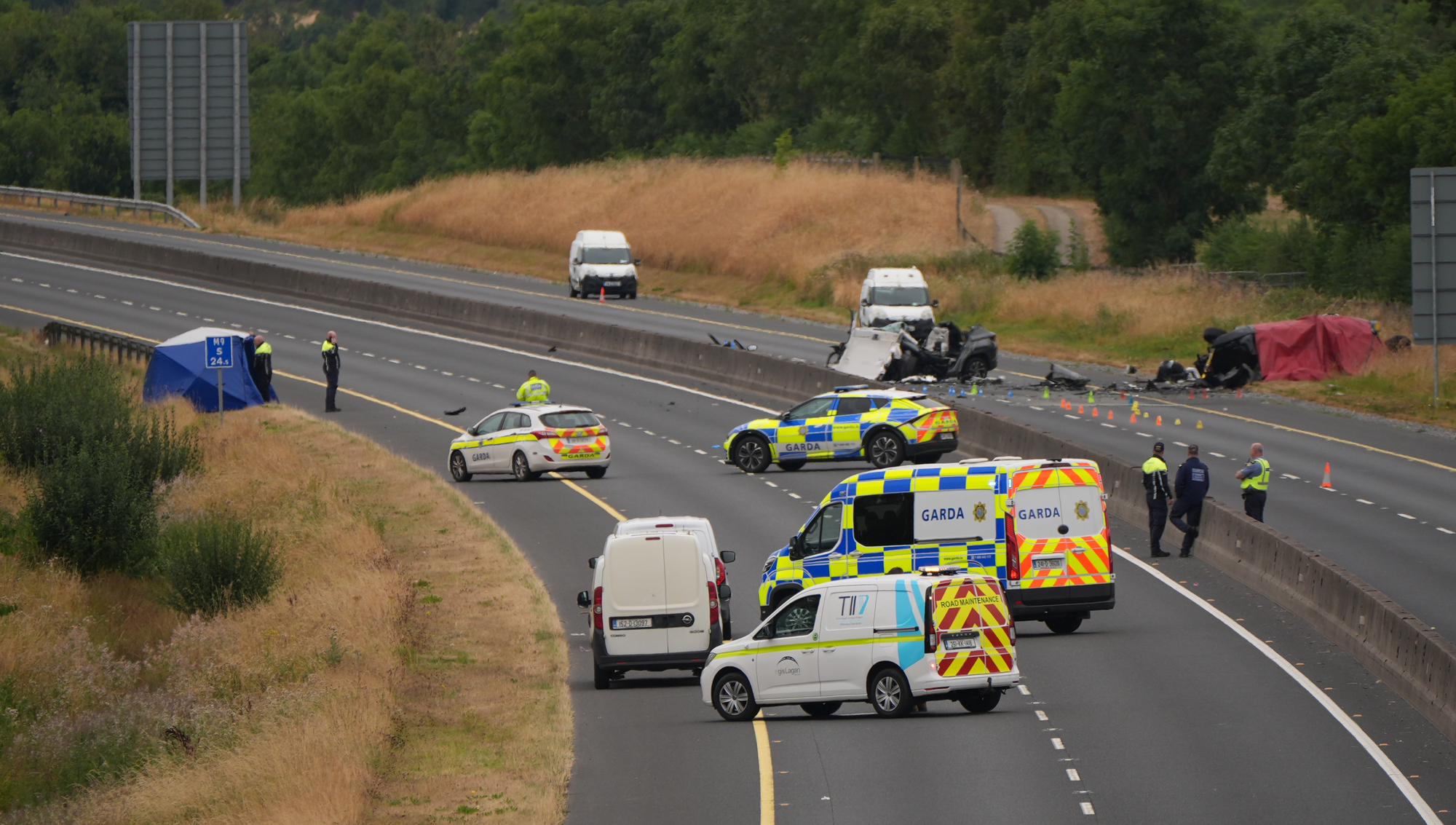
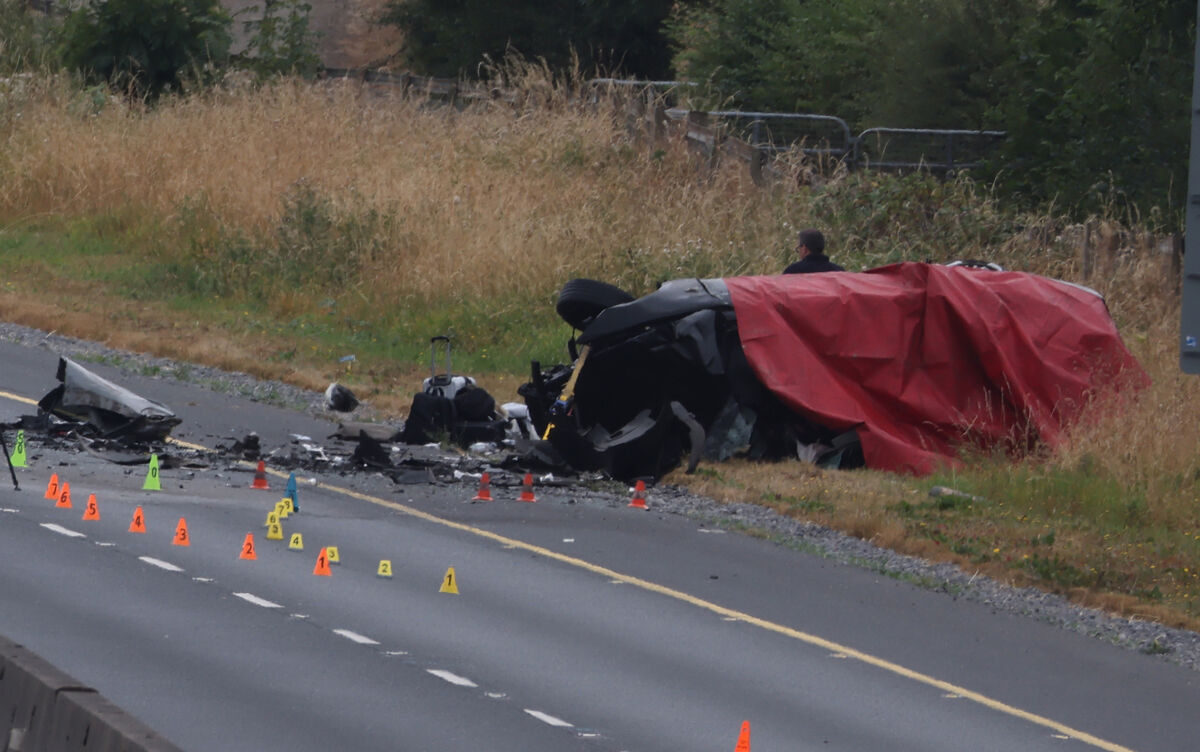
The scene of Sunday's crash on the M9 northbound at Junction 3 in Co Kildare in which one of the cars was travelling in the wrong direction.
I retired from An Garda Síochána after more than 30 years, but there are parts of the job that do not leave you when you hand in the uniform. I can still see the remains of nearly every person I came across at a fatal road traffic collision.
I remember the scenes, the families and the young people whose lives ended on a road. You move on because you have to. There is another call, another shift, another family to deal with. But you do not forget.
That is probably why what happened on the M9 last weekend resonated with me. Five teenage boys are dead and four people in another car are seriously injured. There has rightly been shock, anger and discussion about what happened and why.
Garda Commissioner Justin Kelly spoke about the recklessness of wrong-way motorway driving and the suggestion that some of this behaviour may be driven by social-media attention. Justice minister Jim O’Callaghan has raised the possibility of creating a specific offence for deliberately driving the wrong way on a motorway.
I can understand that. If there is a gap in the law, then look at it. If gardaí need better training or resources, provide them. If someone deliberately puts other road users at risk, there have to be consequences.
But I keep coming back to something else. What are we getting wrong with some of our young men?
That is not about excusing anyone. I spent too long in policing to confuse explanation with excuse. Victims matter. Accountability matters. The criminal justice system matters.
But by the time a young man is before a court, in prison, or involved in behaviour so dangerous that it ends in tragedy, we are often dealing with the end of a much longer story. That is the part I think we are still too slow to confront.
We know attitudes can change. Drink-driving is a good example. When I joined An Garda Síochána, attitudes were very different. It took years of enforcement, education, campaigning and a cultural shift before drink-driving became socially unacceptable. No single law did that on its own.
And yet drug-driving is now a serious problem, while road deaths remain stubbornly high. RSA figures show that 185 people died on Irish public roads in 2025, compared with 171 in 2024.
So legislation has its place, but legislation is only as good as its effect on behaviour. One of the things that frustrated me during my career was how slowly organisations can move, even when people on the ground can see a problem developing.
Looking back, I often felt there was too much distance between senior Garda leadership and what gardaí and communities were experiencing day to day. I do not say that as a criticism of individual senior officers. It was more about culture and structure.
Information moved upwards through layers of the organisation, decisions moved back down, and sometimes the reality on the ground became diluted somewhere in between.
That has improved, particularly over the past decade. There is a better understanding now of vulnerability, community policing and the complexity behind offending. That deserves to be acknowledged.
But we are still too slow to change, and too quick to react after controversy or tragedy. Something awful happens and suddenly there is urgency. A review. A new offence. More garda resources. A policy announcement. Then the headlines move on.
What about the people who were trying to intervene years earlier? Frontline gardaí often know which young people are starting to drift. Teachers know. Youth workers know. Families know. Communities know.
Sometimes the warning signs are obvious: disengagement from school, addiction, poor mental health, family difficulties, antisocial behaviour, violence, lack of purpose, or growing involvement with criminality.
The real question is what happens when people see those signs.
We are quick to talk about garda numbers and policing budgets when something goes wrong, and gardaí need resources, training and support. But what about youth services, addiction treatment, mental health supports, family services, schools, community organisations and diversion programmes? They are at the coalface too.
We cannot keep expecting An Garda Síochána and the criminal justice system to pick up every social failure after it has presented itself as crime.
So yes, examine the law. Examine garda pursuit policy. Hold people accountable. But do not stop there.

If the M9 tragedy is to lead to anything meaningful, then we need to ask why some young men are becoming so disconnected from the consequences of their actions, and whether we are engaging with them early enough.
For me, that is the harder question. Not simply what penalty should apply when somebody drives the wrong way down a motorway, but who was trying to stop them travelling the wrong way in life years before they ever reached it.
- Graham Kavanagh is a retired garda sergeant who served for more than 30 years in An Garda Síochána, including in crime prevention and community policing roles. He holds a Master’s in Criminology and Criminal Justice and has specialist expertise in crime prevention, community safety and Crime Prevention Through Environmental Design. He now works across research, education and community safety. He writes here in a personal capacity.


CONNECT WITH US TODAY



Be the first to know the latest news and updates