Mick Clifford: M9 catastrophe wasn’t just waiting to happen, but in some ways had already
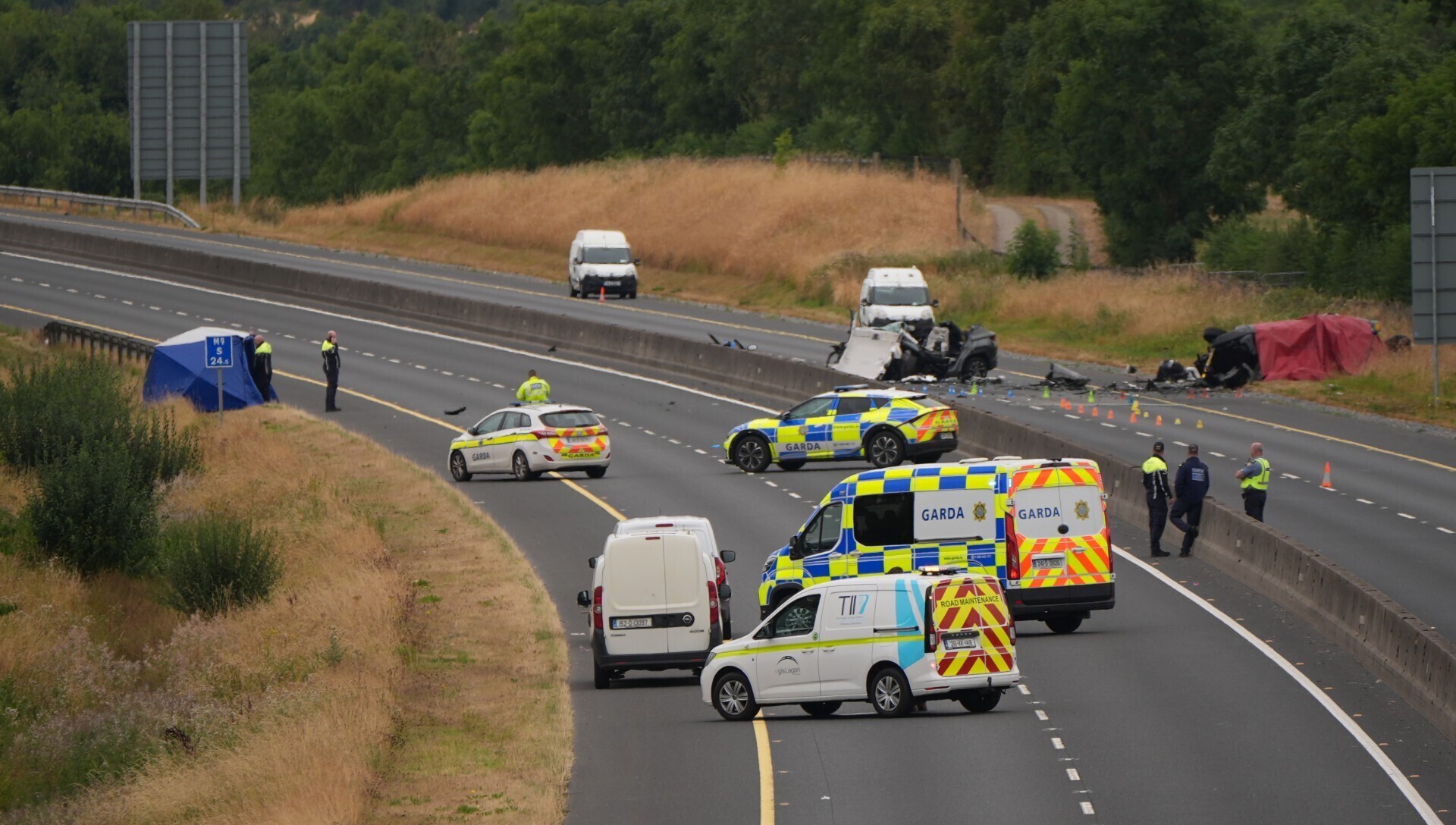
The scene on the M9 northbound at Junction 3 in Co Kildare where a number of people have died and others were seriously injured after a head-on collision between two cars. Picture: Niall Carson/PA
The M9 road tragedy that occurred on Sunday morning was foretold. That will be of no comfort to the family whose three adult members and seven-year-old boy were injured in one car, two of the adults critically — or the families of the five teenagers killed in the other car, for that matter.
But it is a reality that this kind of catastrophe wasn’t just waiting to happen, but in some ways had already.
For instance, on July 21, 2023, Róisón Stakelum was on the road early in the morning to Dublin Airport, just like the family on Sunday. Near Mitchelstown, Co Cork, her vehicle was in a collision with a car being driven at 170km/h down the wrong way on the M8 motorway.
A 16-year-old passenger in the stolen car was killed while two other teenage boys and a teenage girl were badly injured.
Ms Stakelum was en route to catch a flight to Australia to begin a new life. “I began my journey just after midnight on the morning of July 1, 2023,” she related in a victim impact statement.
“I never made it to the airport. I barely made it out of Fermoy. That crash brought a violent end to my plans, all my hard work, and dreams for a new life.
Read More
“What happened that night on the motorway altered the course of my life and changed me forever. I’m haunted by the memory of the impact. Haunted by the memory of the headlights and then what seemed like an explosion.
"I often think of how unlucky I was to be on that particular stretch of road at that exact moment.”
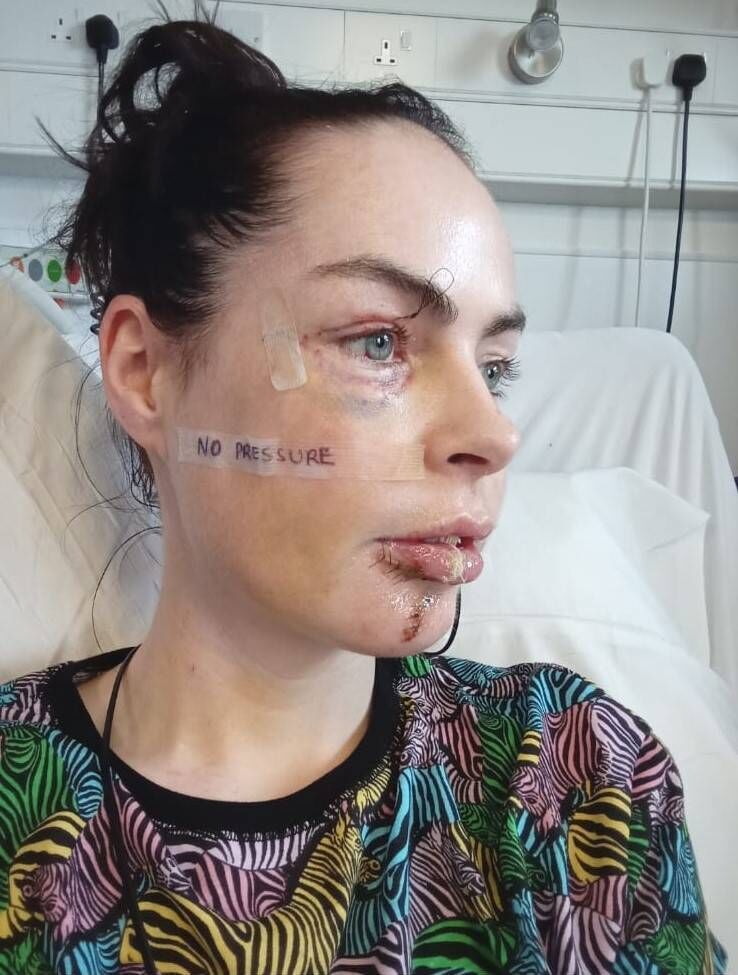
Ms Stakelum was in surgery for eight hours after being rescued, having suffered life-altering injuries. The 17-year-old driver of the stolen car pleaded guilty to dangerous driving causing death and other charges. He was sentenced to four years' detention. The court heard he couldn’t be named because of his age.
There have been several recent incidents in which innocent motorists have suffered serious injuries and were lucky not to have lost their lives.
Last week, a collision on the M50 in Dublin left a number of motorists seriously injured. A stolen vehicle travelling down an up ramp at Junction 12 collided with another car. Eight teenagers travelling in the stolen car were also injured.
In July 2021, three men — two in their 20s, the other in his 30s — died when they collided with a truck after driving on the wrong side of the M7 motorway. The three were experienced burglars and are believed to have been on a spree of thefts earlier that evening.
Two years later there was a close escape in Limerick when a 16-year-old driver, who was accompanied by five other teenagers, drove the wrong way down the M20 motorway because he was being pursued by gardai. Other motorists had to take quick evasive action before the vehicle came to a stop as part of a controlled Garda operation.
These are just a few examples of a growing and frightening subculture. Very often, as referenced by Garda commissioner Justin Kelly this week, reckless teens are engaging in this to provide material for social media feeds. Other times they enter a motorway in the wrong direction as a way of evading the gardaí in pursuit.
Yet, despite tragedy, near misses, and traumatic experiences for Garda members and first responders, very little has been done to tackle it.
One relatively new law in road policing that might provide direction in this respect is what is known as the Clancy amendment.
On December 22, 2015, Geraldine Clancy and her daughter Louise drowned near Fermoy, Co Cork, when the car they were travelling in was hit by another vehicle and flipped into an overflowing drain.
The other driver, an unaccompanied learner, was deemed responsible for the collision. Noel Clancy, who had lost his wife and daughter, campaigned for stiffer penalties for those breaking the law by driving unaccompanied.
In 2018, an amendment to the Road Traffic Act gave gardaí the power to impound a vehicle driven by an unaccompanied learner and made it an offence for a motorist to allow such an unqualified driver access to a vehicle. The penalties in the Act include fines of up to €1,000 or six months in prison for the vehicle owner.
Conor Faughnan, an independent motoring expert with Carzone, believes the Clancy amendment could provide a signpost towards one solution.
“This is not an issue that can be dealt with through road safety or with an engineering solution,” he says. "Maybe we should look at parental responsibility.
"The Clancy amendment is one example of a law that was implemented and works effectively. What effective piece of law could be applied to this? That is one thing that could be looked at.”
Changes to the law will certainly come into focus in the wake of the latest tragedy.
However, a central aspect to tackling this kind of crime is training for gardai, and in that respect, the force is living in the past.
Despite the growing incidence of teenagers acting recklessly on the roads, there has been precious little training for gardai in how to deal with it.
In the UK the various police forces have cohorts of officers trained in what is known as tactical pursuit and containment. This involves specialist training in driving and the supply of appropriate vehicles for the task.
All of this is designed to ensure that vehicles can be brought to a stop, often by boxing in the motorist in a controlled manner.
No such training programme or resources exist in Ireland. A policy on pursuit was introduced to the force in 2024, but sources suggest that the amount of training that followed it has been minimum and even non-existent in some divisions.
Equally, training in the use of stingers, the disablers that can be placed across a road to stop a fleeing motorist, is understood to be scant. For the greater part much of this is down to lack of resources or sufficient personnel.
Making changes to the law and providing proper resources is always going to be a function of political will. That should already be present in light of the growth of the type of crime at issue.
Yet so far, there has been no sign of successive governments applying the kind of pressure, and allocating the resources, required to ensure that priority is given to tackling a crime that is increasingly making our main thoroughfares more dangerous.

On Monday, justice minister Jim O’Callaghan said gardaí will have whatever resources are needed to tackle this crime. But it will take more than that from the body politic to ensure that the issue remains high in the priority list.
We have seen the success that can be reaped by gardaí in areas like organised crime when resources and political focus are applied.
Whether this blight on the State’s motorways will be given a similar priority will only become clear in the weeks and months ahead.


CONNECT WITH US TODAY



Be the first to know the latest news and updates