'Get tough' talk on motorway carnage not a strategy to tackle teen joyriding
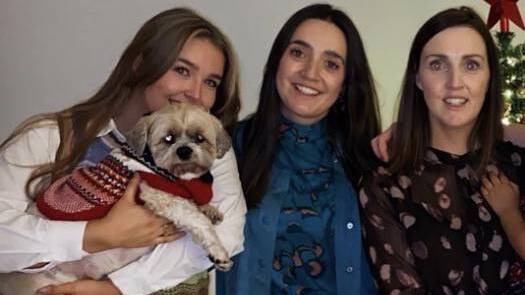
A GoFundMe page has been launched to help support three sisters (left to right) Ella Hendricken, Niamh Kinsella and Alma Kinsella who were injured alongside a seven-year-old boy in the recent M9 crash.
A combined intervention targeting the “hard core” of joyriders endangering lives on the roads and the likely “next generation” of joyriders is needed to address the problem, according to a youth worker with decades of experience.
Eddie D’Arcy, who was involved in a multi-agency response to a violent joyriding epidemic in west Dublin in the early 1990s, made the call following Sunday’s horrific head-on collision on the M9 motorway.

A youth worker for almost 40 years, Mr D'Arcy said a comprehensive intervention was urgently needed and would require support at the highest levels of Government, similar to the approach taken in Ronanstown, north Clondalkin, during the 1990s.
He said a law-and-order approach is not going to solve the problem, but that local gardaí know who to target and can work with local youth workers to devise interventions. A former garda sergeant, with over 30 years’ experience, echoed this call, saying that a ‘get tough’ response after a tragedy is “not a strategy”.
Graham Kavanagh is now a crime prevention officer at voluntary community development organisation Muintir na Tíre and assistant lecturer at South East Technological University. He said society needs to engage with this group of teenage boys before their actions become criminal.
The last of five autopsies for the teenagers killed last Sunday was carried out on Wednesday. They were travelling at high speed the wrong way down the M9 motorway before striking a car carrying three sisters and a young child.
Two sisters, including the mother, suffered serious injuries, with a third sister and the seven-year-old boy suffering less serious injuries. They were travelling to Dublin Airport for a flight to England to attend a wedding.
A GoFundMe account has been set up for sisters Alma and Niamh Kinsella and Ella Hendricken, which has so far raised over €360,000.
Gardaí in Kildare had been alerted by residents of a housing estate in Athy at around 1am on Sunday that a group of masked males were trying to break into cars.
When a patrol car responded, a BMW carrying the masked males sped past before driving on the wrong side of the motorway. The youths soon left the motorway and doubled back before careering down the M9 for a second time the wrong way, this time hitting a car.
Mr D'Arcy has spent much of his career in the youth sector, serving as president of the National Youth Council of Ireland and head of Youth Work Services. He currently sits on the board of the Solas Project, which works with young offenders in Dublin's south inner city.
“I’ve huge sympathy for the family injured, that goes without saying, but we need to look for solutions,” he told the .
“This is a growing problem and we need to do something now, and I’m not talking about tougher punishments and locking them up.”
He said the key was strong relationships between local gardaí and youth workers, backed by support and resources from management and the relevant authorities.
“Local gardaí need to identify the core group in their areas — they already know them by name — and give a list of names to the local youth diversion project and ask them and the local youth service, ‘Can you target them?’,” he said.
“If they can’t, then set up another programme. First you have to target the core group, and do that immediately, and then you identify and target the likely ones to replace them, the next generation.”
Mr D’Arcy started in youth work in Ronanstown, a highly disadvantaged area in north Clondalkin, in 1984. While joyriding was a problem, it spiralled in 1990, when a “hard core” of young joyriders began to steal faster and better cars from the wider Dublin area and bring them to Ronanstown to race them.

He said this group “competed amongst themselves”, gaining "hero status" among young people who gathered to see them in action, some of whom threw bottles at responding gardaí. He said social media hits had now replaced the supporting crowds.
“Gardaí had lost control of the area and could only enter with the riot squad," he said. "The Garda station came under attack and personal cars of gardaí were attacked.”
Mr D’Arcy said schools and the health centre were also vandalised. He said the trend then spread to an estate in Tallaght and the authorities were “terrified” of further contagion.
Mr D’Arcy described a situation where senior ranks of Government departments came together immediately with gardaí, Fás, and local authorities.
He explained that an inter-departmental committee was established at assistant secretary level, bringing together the departments of Education, Health, Social Welfare, Environment, and Labour. The committee was chaired by Tim Dalton from the Department of Justice.
Their report, , was published in November 1992. However, even before its publication, then justice minister Ray Burke had become so concerned about the situation that he provided £50,000 from Garda funds to support efforts by local gardaí and youth workers to tackle the problem.

This enabled the establishment of the Graft Project (Give Ronanstown a Future Today) — the first youth diversion project in the country. Mr D'Arcy, who praised the dedication of local sergeants and inspectors, said it received “incredible support” at the highest levels, including from assistant commissioner for Dublin Barney Curran, who was “a force to be reckoned with”.
He said the Graft plan had four levels. The first focused on what he described as the hard core of joyriders. According to Mr D'Arcy, youth workers already had relationships with many of those involved and began actively engaging with the group, which numbered around 10 young people.
He said that, “unofficially”, Garda management visited their homes and an “unofficial amnesty” was offered regarding charges if they youths agreed to give up joyriding. He said the local district court judge, Gillian Hussey, was “very supportive”.
The second level focused on the wider group of ‘at-risk’ young people, numbering around 60 to 70, who supported the joyriders and could replace the core group.
Programmes included a school awareness programme, school retention measures, music and sports programmes, and a more unstructured plan for struggling youths.

The third-level focused on community cohesion, and the fourth was aimed at capital projects, such as a community college, new youth service and other buildings, and long-term programmes providing intensive support to chaotic families.
“The projects were from the ground up and were developed relatively quickly," Mr D'Arcy said. "Within a month the core group had opted out and no new high-status group appeared.”
He said: “There are no quick fixes to this and there’s no point putting sticking plasters over it. The local gardaí and youth workers have the solutions, if they are supported.”
Mr Kavanagh, who spent much of his career working in crime prevention, said successive governments and Garda leadership had failed to listen to frontline members. However, he said he believed the current Garda commissioner and deputy commissioner were taking their concerns on board.
“Becoming tougher after things have gone badly wrong is not a strategy,” he said. “Too many young men become caught up in dangerous driving, violence, drugs, criminality and extreme risk-taking. Where are we going wrong? Where are we losing some of them?”
He said the response cannot begin and end with gardaí, courts, and prisons. “Accountability matters,” he said, “but criminal justice deals with consequences. It cannot solve all the causes.
“We need to look further upstream: Family support, education, youth work, addiction, mental health, employment, mentoring, community, role models, peer influence, online culture and how we engage with young men, before crisis becomes criminal.”
- Cormac O’Keeffe, security correspondent