Shona Murray: Brussels scepticism may mean that 'reconnecting' Britain with EU is not that easy
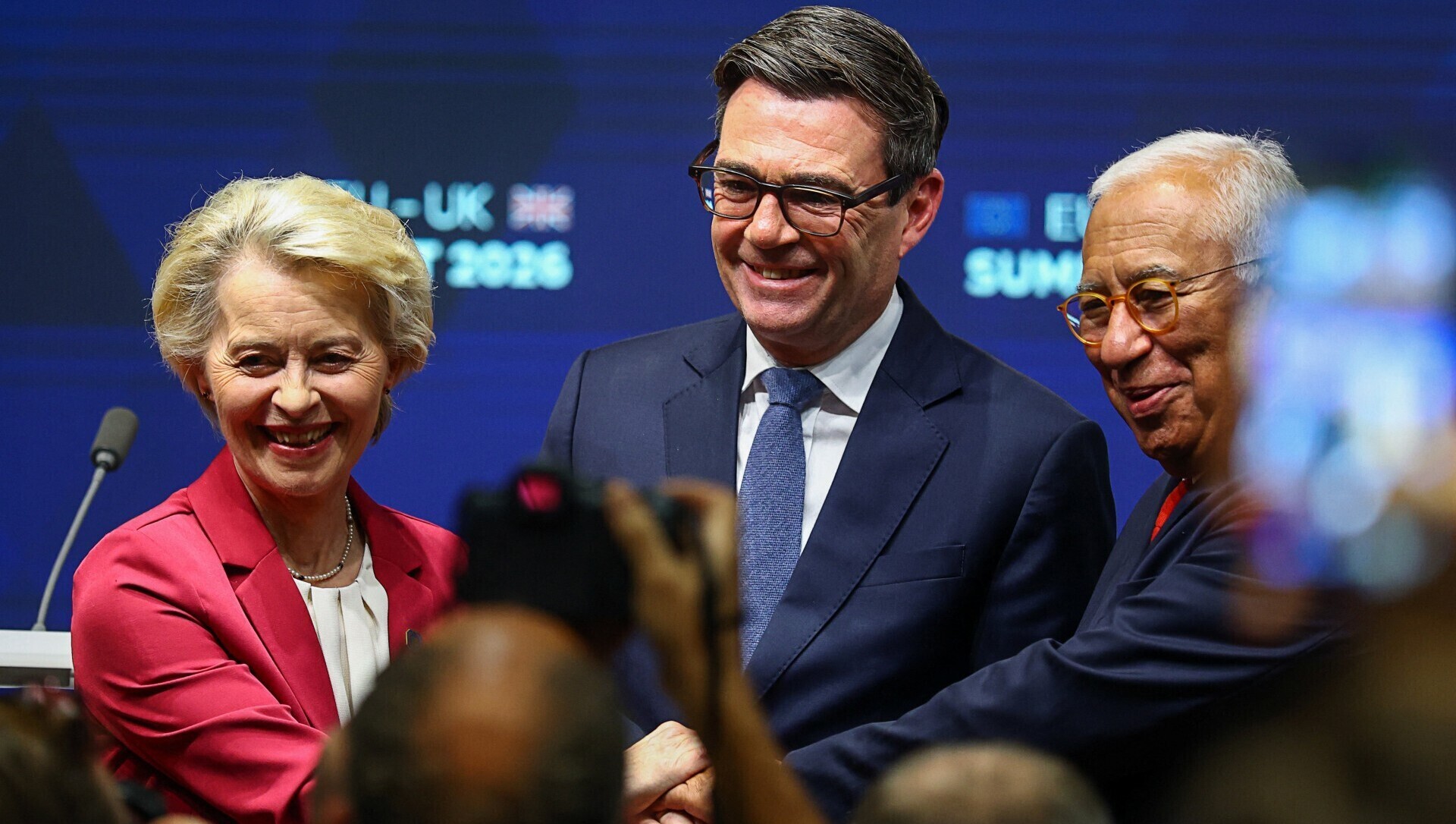
(From right) European Commission president Antonio Costa, British prime minister Andy Burnham, and European Commission president Ursula von der Leyen during the EU-UK summit in Brussels, Belgium on Friday. Photo: Hannah McKay/Press Association

"You are always welcome in the European Union, Andy," the president of the European Council, Antonio Costa, told British prime minister, Andy Burnham in Brussels.
The two men were speaking to reporters alongside president of the European Commission, Ursula von der Leyen, at the end of the second EU-UK summit since Brexit.
For the last few months Brussels has been a hive of chatter imagining the range of scenarios that might lie ahead given Andy Burnham's indication that he wouldn't rule out rejoining the EU.
It took everyone aback to hear a British prime minister saying it out loud — that Brexit has been "damaging."
And the only way for the UK to return to economic growth and development was to re-engage with its closest trading partner — which also happens to be the most lucrative, integrated multi-country economic area, single market in the world.
It shouldn't have taken so long for a Labour prime minister to admit to the public that the deal under former prime minister Boris Johnson, and his lead negotiator the once arch-remainer turned radical eurosceptic David Frost, was essentially meaningless when contrasted with the value of full membership.
Read More
And ever since the final agreement emerged on Christmas Eve 2019, the conversation in the EU has been about just how the UK would inevitably move back towards Brussels. Would it be in a piecemeal, incremental way or would some leader bite the bullet and call for another referendum?
Reconstructing the relationship isn't easy. The EU's Foreign Policy Chief Kaja Kallas, a big supporter of Britain, cautioned a few weeks ago that there are many people in Brussels "still traumatised" after the torrid Brexit negotiations.
The UK has found its raison d'etre in Brussels through the necessity in supporting Ukraine and the European continent from Russian aggression, and then an unpredictable, unfriendly US administration. So, relations are wholly improved.
But nobody wants to risk the bitterness of Brexit again. Moreover, Brussels is sceptical that any fundamental shift forward by Burnham and Labour could be erased by the Tories or a Reform government under or Kemi Badenoch or Nigel Farage.
Brexit consumed an unprecedented amount of time and energy from the European Commission staff, the Irish government and then the governments of each member state.
For over six years, task forces, lawyers and the creation and deployment of a whole team led by former commissioner Michel Barnier watched on as the UK squabbled with itself over the meaning of Brexit.
It risked Ireland's own sovereign membership of the single market and made the Good Friday Agreement vulnerable, as tensions around identity rose to the surface in Northern Ireland.
Andy Burnham says Britain today is not the same Britain of 2016. He says he is committed to undoing the "decade of drift" and "low growth in economy."
The UK will rejoin the EU's regulatory system for food and agriculture — meaning a whole raft of expensive administration for farmers and fishermen will be slashed.
Burnham says it will add £17bn to the British economy and save a lot of energy. "It costs £1,400 to export one single shipment of salmon," he said. This deal won't be in place until March 2028 but it's worthwhile.
Crucially, when asked whether he was considering rejoining the club, Burnham made the point that he could only do so after the next parliamentary cycle.
But we've been here before. David Cameron made the same pledge to the public in 2015 when he promised to renegotiate Britain's relationship with the EU.
"It is time for the British people to have their say. It is time to settle this European question in British politics,” Cameron said, adding the Conservative party would campaign promising to renegotiate Britain’s EU membership.
"And when we have negotiated that new settlement, we will give the British people a referendum with a very simple in or out choice to stay in the EU on these new terms; or come out altogether. It will be an in-out referendum", he said.
Burnham says Britain is now "reconnecting with old friends." It may not be that simple.

BLACK FRIDAY
Already a subscriber? Sign in

CONNECT WITH US TODAY



Be the first to know the latest news and updates