Elaine Loughlin: Deciphering fact from fable on triple lock not a simple task
Increasingly heated discussions on the triple lock now contain more myths than a children's bedtime story.

Increasingly heated discussions on the triple lock now contain more myths than a children's bedtime story.
The Government's move to axe the triple lock, has been wrapped up in highly emotive language on both sides, with the need to protect neutrality, concerns over surrendering our sovereignty, and even the 1916 leaders all being brought into the debate.
Those against the proposed changes warn of a lurch towards militarisation and Nato alignment, while those in favour consistently raise the negative consequences of continuing to provide nations such as Russia with a veto over Irish peacekeeping deployments.
Deciphering the fact from the fable is not a simple task.
During a debate on a motion to put the question to the people in a referendum, the word myth was bandied about no fewer than 10 times this week.
At the heart of the proposals is a move to end the current three-step legal mechanism which governs the overseas deployment of more than 12 members of the Defence Forces.
Read More
Currently, overseas deployments must be approved by the UN security council under the triple lock system.
Under the changes, the requirements to obtain sanction from the government of the day before putting the matter to a vote in the Dáil will both be retained, but the third element, that of UN security council approval, will be removed.
The triple lock, would in effect, be reduced to a double lock.
The perceived implications and consequences of removing this final component have been interpreted in wildly different ways, which in the past week alone has lead to tetchy exchanges in the Dáil, that have bordered on vicious at times.
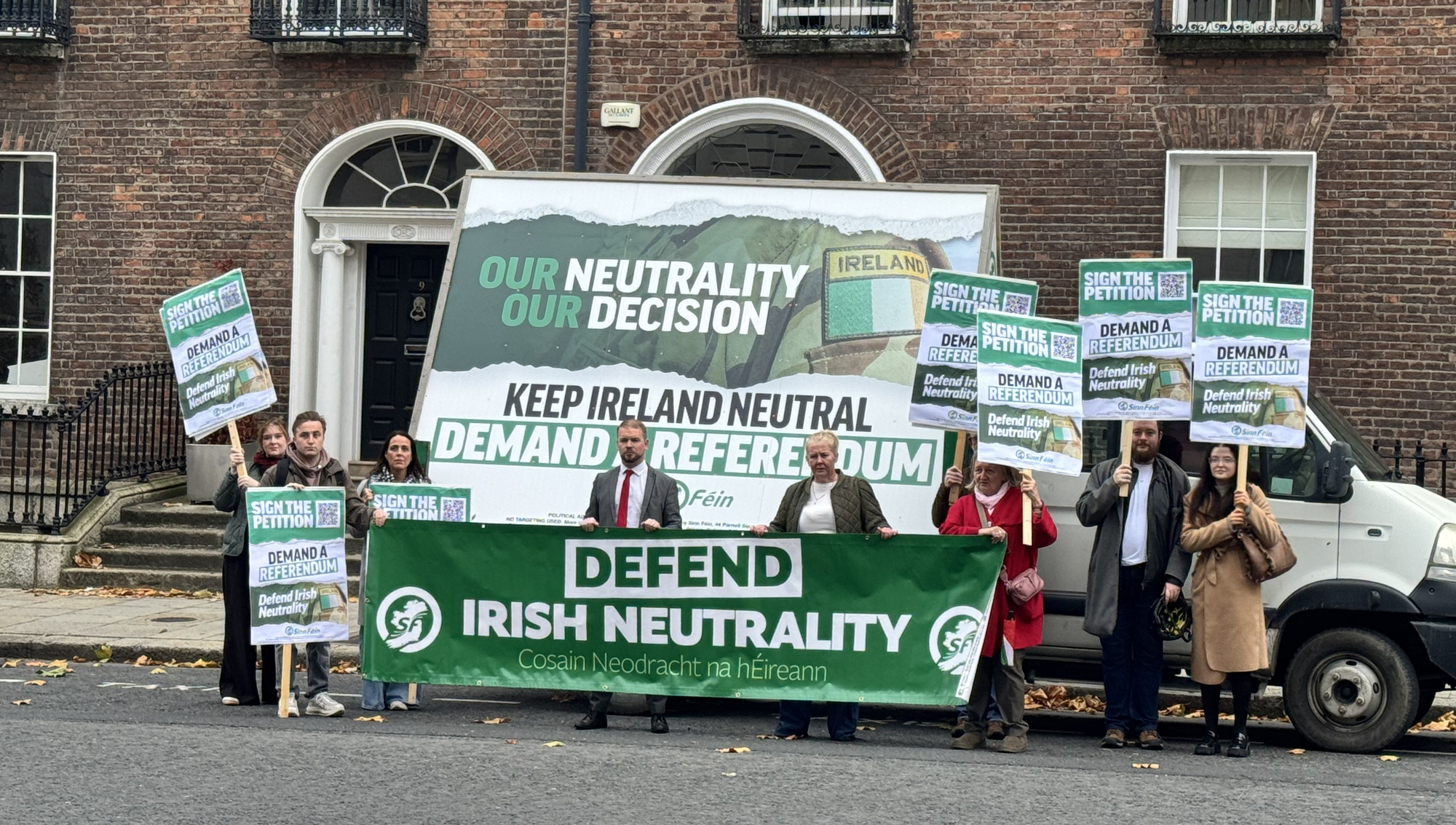
Calling for a referendum, Sinn Féin leader Mary Lou McDonald accused Taoiseach Micheál Martin of "hitching Ireland to Europe's headlong rush to rearming, pouring hundreds of billions of euros into weapons and deepening military integration".
On Tuesday and Wednesday, she queried the Fianna Fáil leader on a proposed EU mission to Lebanon and asked if this mission would involve intelligence sharing, operational co-ordination, and planning with Israel?
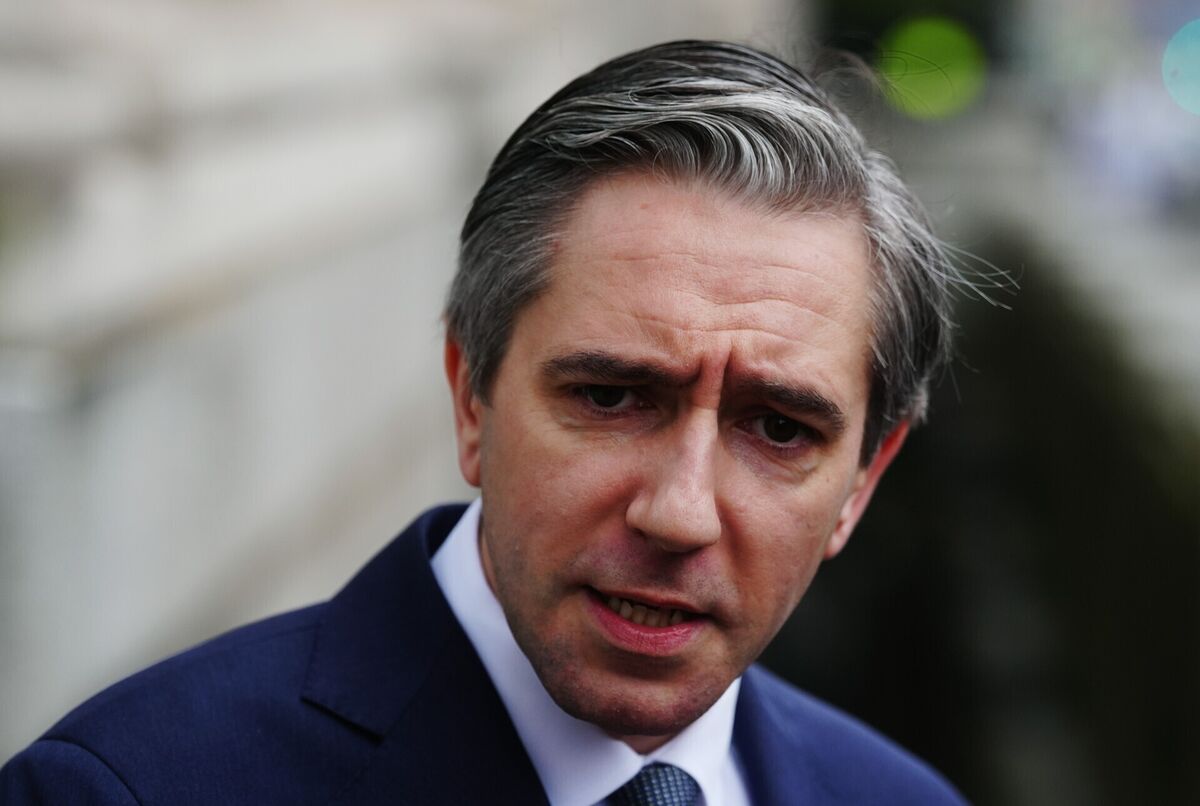
The line of questioning prompted a curt response from the Taoiseach who accused her of being "reckless" as such suggestions, which he dubbed as "untruths" endanger the lives of Irish soldiers currently in Lebanon.
"The deputy should not be saying it."
More than two hours of debate on the Sinn Féin motion on Tuesday evening followed a similar plotline.
The bitterness moved into Thursday when Tánaiste Simon Harris held a copy of aloft in the Chamber and in accusing Sinn Féin of spreading mistruths he said: “This Constitution means we can’t join common defences and it ain’t changing.
"Nothing in the legislation changes this. But without it you are limiting the opportunities for this country to continue its proud peacekeeping service.”
Announcing his plans to remove the triple lock in November 2023, Martin argued that the triple lock "hands the five permanent members of the Security Council a veto over our national sovereign decision to deploy troops to peacekeeping missions as we see fit".
He went on to voice criticisms of the UN, stating that the "systemic challenges" facing the UN Security Council could not be ignored.
"That is most evident in how difficult it is to agree or renew UN peacekeeping mandates, which we saw at first hand while on the council in 2021 and 2022.
"It is striking, for instance, that not a single new peacekeeping mission has been authorised by the security council since 2014.”
“Let’s be clear that many crises that the council deals with never get near the stage of discussion on a peacekeeping mission or even on a comprehensive peacebuilding plan."
Martin then outlined that at that point the council, of which Russia is a permanent member, "not even issued a statement on the issue [of the war in Ukraine], never mind agreed on a resolution”.
He then stated that it took almost six weeks after the attack by Hamas in Israel and the terrible loss of life in Gaza for the council to agree on a resolution calling for humanitarian pauses.
All of this provides a valid argument for not only reform, but a complete overhaul of the security council.
UN secretary general Antonio Guterres has over the years repeatedly called out the failings of the security council structure.
Addressing Qatar's Doha Forum in 2023, Guterres said the council was "paralysed by geostrategic divisions", adding that body's "authority and credibility were severely undermined" by its delayed response to Israel's actions in Gaza.
Read More
The Government's answer to address the clear failure of the UN security council, is to simply remove it from the equation.
But there is now a rump within Fianna Fáil led by Willie O'Dea that is pushing to keep a UN component, thus retaining an altered triple lock.
So far, nine backbenchers from Martin's party have signalled support for the amendment put forward by Mr O'Dea which would require approval from the UN General Assembly, but not the Security Council, when Irish troops are being sent abroad.
People Before Profit–Solidarity TD Paul Murphy suggested rejecting O'Dea's amendment would "expose the reality that this has never been about a supposed security council veto by Russia, China, or anyone else.
"It is about freeing the Government up to act without any regard to the United Nations and without any regard to international law."
And in another indication of perhaps a growing disquiet within Fianna Fáil, former long-serving TD Éamon Ó Cuív appeared as the main speaker at a meeting hosted by the Roscommon Neutrality Network in recent days.
As politicians become even more embroiled in intractable arguments over the consequences of removing or retaining the triple lock, this week the real-life experience of our peacekeepers was playing out away from the confines of Leinster House.
Recalling the frantic moments before his death, a colleague of slain Irish soldier Private Seán Rooney told his inquest that their group had "said our goodbyes to each other" before a volley of bullets hit their armoured Toyota Land Cruiser in Lebanon.
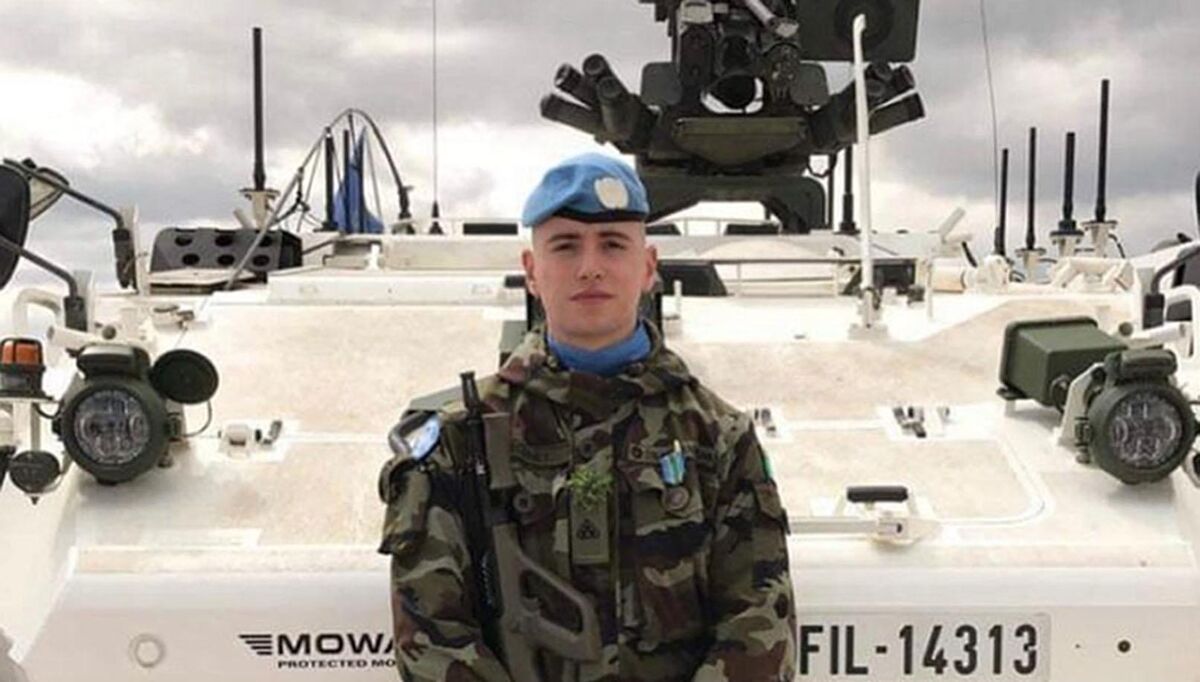
Pt Rooney, 24, was shot dead in an ambush while driving on UN peacekeeping duty on December 14, 2022.
His mother, Natasha McCloskey this week described how her “life ended” on the morning she was told he had been killed, adding that he “would have made a fantastic father”.
The reality of those serving in our defence forces was also laid bare by Sinn Féin's Mark Ward who succinctly outlined how our soldiers don't have the luxury of ruminating over the sometimes-lofty subjects of neutrality or the triple lock in deciding to sign up for overseas deployed.
Hi father served in the Irish army for 27 years.
But as proud as he was to serve overseas, including in Lebanon, he did not serve abroad for the love of his country, or at least that was not his first priority.
Instead, Ward outlined that being a defence forces family in the 1980s meant being among the working poor, and his father's first priority was to put food on the table and clothes on his children's backs.
"Fast-forward now to 2026. A constituent of mine who, after serving his country abroad for six months, has to sign on for the working family payment when he returns," Ward told the Dáil.
The triple lock will continue at committee level next week as a myriad of amendments, including O'Dea's suggestion, are examined.
On Friday, foreign affairs minister Helen McEntee insisted that she still intent on getting the legislation passed before the Dáil rises for Christmas.
But with both sides now deeply entrenched, the proposed legislation faces a difficult and likely protracted path through the Oireachtas.

BLACK FRIDAY
Already a subscriber? Sign in

CONNECT WITH US TODAY



Be the first to know the latest news and updates