Pension power: How nuns drove the medieval economy before banking began
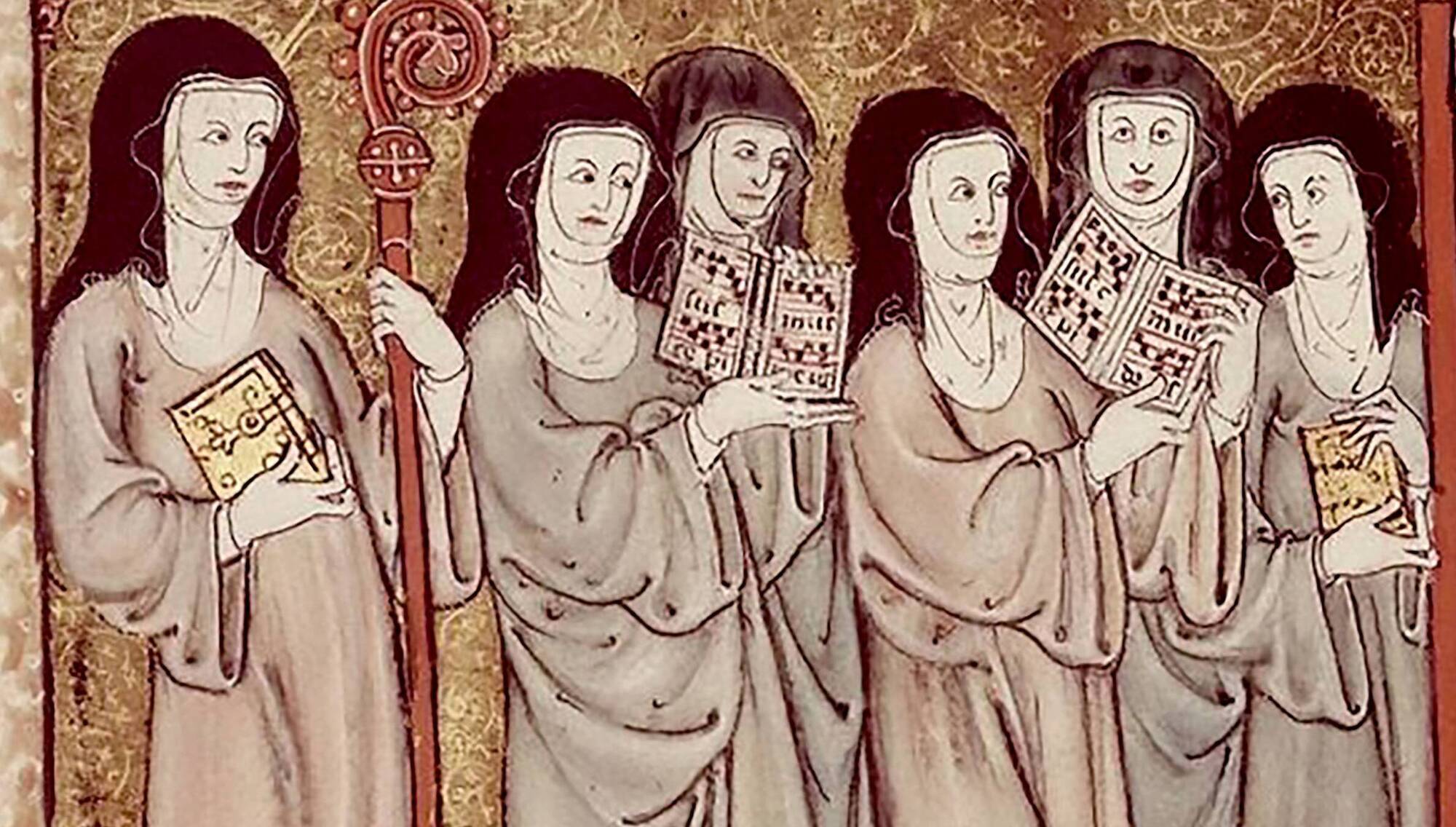
‘The nuns’ procession to Mass’ illustrated in a 13th century manuscript. Records from medieval Vienna show that women were embedded in the everyday functioning of late medieval credit markets. Picture: British Library Board/Canva
Retirement planning might seem like a thoroughly modern concern, with pensions, investments, and annuities forming part of today’s financial toolkit. But these financial tools are much older than they appear. In the later Middle Ages, people were already exchanging lump sums for steady income streams — and, in cities like Vienna, these arrangements underpinned entire urban economies.
Less expected, perhaps, is who helped make this system work. Alongside merchants and elites, communities of nuns quietly emerged as some of the city’s most reliable financial operators.
Annuities existed in several forms, each suited to different needs. At their core, these contracts involved one party providing a lump sum in exchange for a regular payment, usually secured on property or urban revenues.
HISTORY HUB
If you are interested in this article then no doubt you will enjoy exploring the various history collections and content in our history hub. Check it out HERE and happy reading
There were also public annuities issued by civic authorities, through which the city itself raised funds by promising regular payments backed by its revenues.
Households used them to access liquidity, investors secured predictable income streams, and institutions managed long-term assets.
Read More
Women are especially visible in these records, appearing frequently as both borrowers and lenders.
Wives participated in household finance alongside their husbands, widows managed and reinvested their assets, and some women acted as independent economic agents in their own right.

- Anna Molnár is the University of Reading Leverhulme early career research fellow in the late medieval financial history of central Europe.
- This article was first published here in The Conversation.
Read More

CONNECT WITH US TODAY



Be the first to know the latest news and updates