Memorial garden honours 'Irish Roses' shipped to Australia in 18th and 19th century
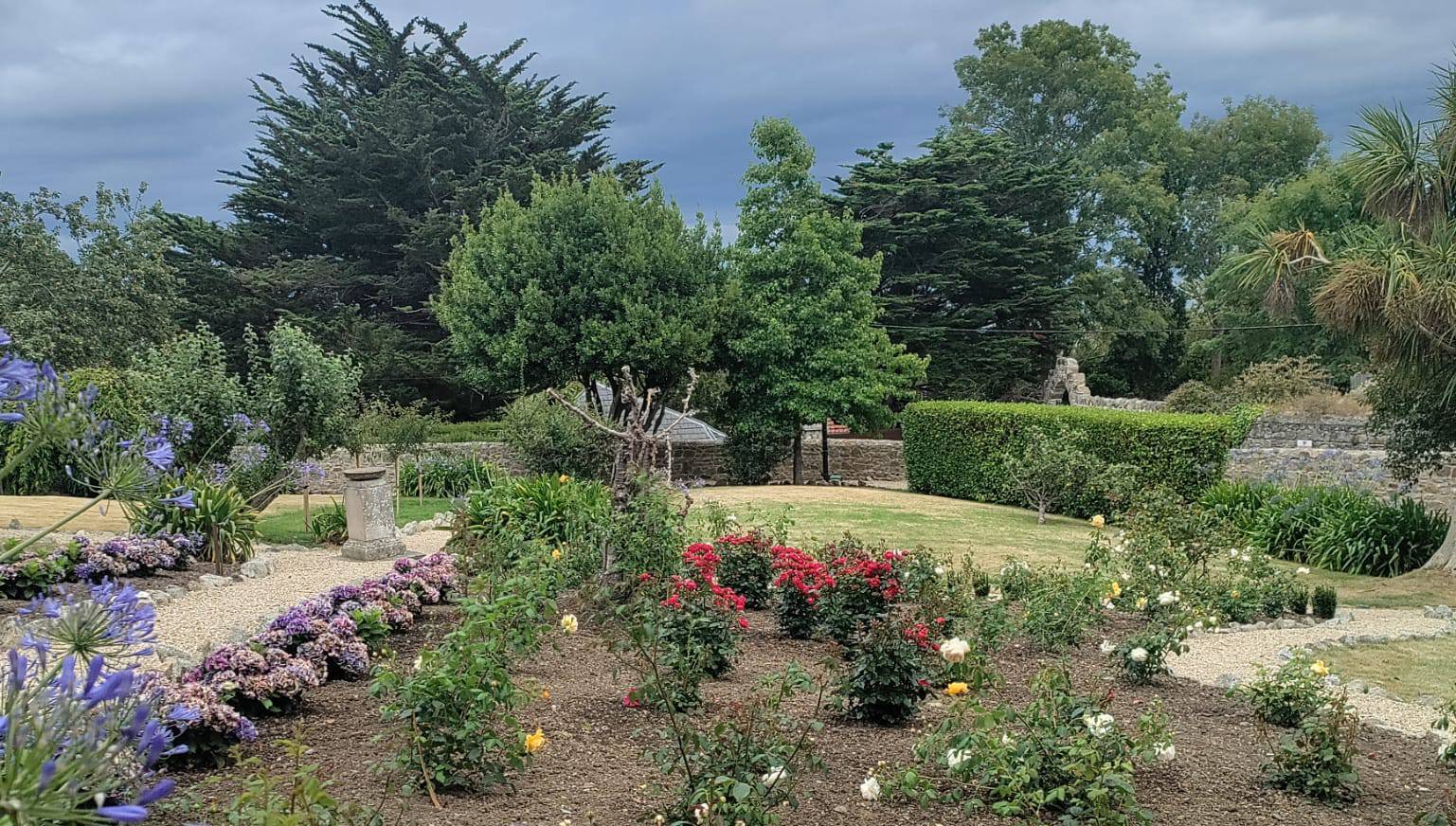
The Irish Roses Garden to commemorate the young Irish women sent to Australia was unveiled at Ambassador of Australia's official residence on Saturday. File picture
The contrast could not have been more striking.
The Irish women transported to Australia in the 18th and 19th centuries left this country as convicts, but now they have been honoured among the many “Irish roses” who helped to build that country.
All of the Irish women who left Ireland for Australia — including the convicts and those sent on assisted emigration schemes — were commemorated at the unveiling of the Irish Roses Garden at Abbey Lea in Killiney, the Australian ambassador’s residence in Dublin.
As ambassador Chantelle Taylor explained: “The garden [designed by horticulturist Olga Muzychuk] is a living tribute to the young Irish girls who left these shores and journeyed to Australia in search, and in hope, of a new future.
"Many endured profound hardship and uncertainty. Yet through extraordinary courage, resilience, and determination, they built lives and communities across Australia.”
HISTORY HUB
If you are interested in this article then no doubt you will enjoy exploring the various history collections and content in our history hub. Check it out HERE and happy reading
It was striking, too, to see these women recalled by the Governor-General of Australia, Sam Mostyn, who unveiled the dedication plaque during the first event of her visit to Ireland to mark the 80th anniversary of diplomatic relations between the two countries.
Read More
“The ‘Irish roses’ brought with them a rich heritage to join in the building of a nation of peace, prosperity, safety, and freedom,” she said.
Those women formed an important part in the story of Australia, and they and their descendants — the one in 10 Australians who claim Irish heritage — enriched the country beyond measure, she said.
While the women’s descendants are now found in every aspect of Australian life, from the public service to the judiciary, to the arts, music, and sport, the women’s lives were often marked by hardship and loss.
Many never returned to Ireland again.
Such as Mary Walsh, a married mother of three who was sentenced to seven years and transported to Van Diemen’s Land (now Tasmania) with her infant daughter in 1840 for “aiding the theft of cloth”, a charge she always denied.
Her baby daughter later died in Hobart, and she never again saw the husband or two sons she left behind in Clonmel, Co Tipperary.
Her life — or the tiny portion of it that is knowable — is now commemorated with a bonnet made by Margaret Richards as part of Waterford’s Transported Convict Women, A Herstory, alongside a biographical note prepared by Ann Fitzgerald.
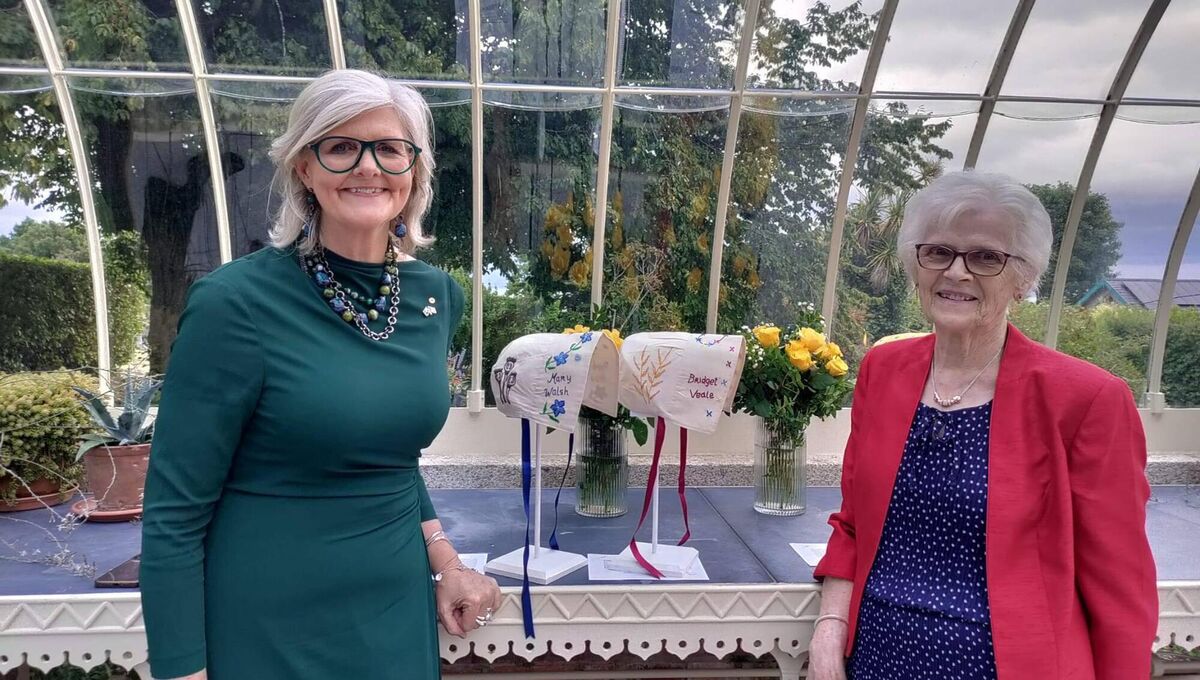
It was one of several bonnets on display at Abbey Lea, but they represent only a small portion of the Waterford bonnet collection, a community project designed to commemorate some of the 25,566 women convicted and transported from Britain and Ireland to Australia between 1788 and 1853.
The Governor-General, Sam Mostyn, and bonnet-maker Margaret Richards, stood in front of the display to acknowledge a woman who could, so easily, have fallen through the cracks of history.
“I think we must always be asking ourselves, who’s been left out of history?” the Governor-General said.
“Women are typically left out of history, often our stories are overlooked, our contributions are overlooked, she said, highlighting the significant and enduring contribution made by Irish women who were treated so poorly when they first arrived.
The bonnet project, created by conceptual artist Christina Henri in Tasmania more than 20 years ago, is intended to make a visible connection to the thousands of women sent as convicts to Van Diemen’s Land by recreating the bonnets they once wore.
She called it the Roses from the Heart Memorial Project, a commemorative name that must have been unimaginable to the women who often suffered anti-Irish sentiment, prejudice, and vitriol in the colonial press.
Now, more than two centuries on, those women have a garden dedicated to them, which was unveiled in a ceremony attended by Australia’s Governor-General, the Australian Ambassador to Ireland, the Lord Mayor of Dublin, the Minister of State at the Department of Children, the Rose of Tralee, and many others.
If only we could tell them.


CONNECT WITH US TODAY



Be the first to know the latest news and updates