Aoife Foley: Ireland must build a national infrastructure commission
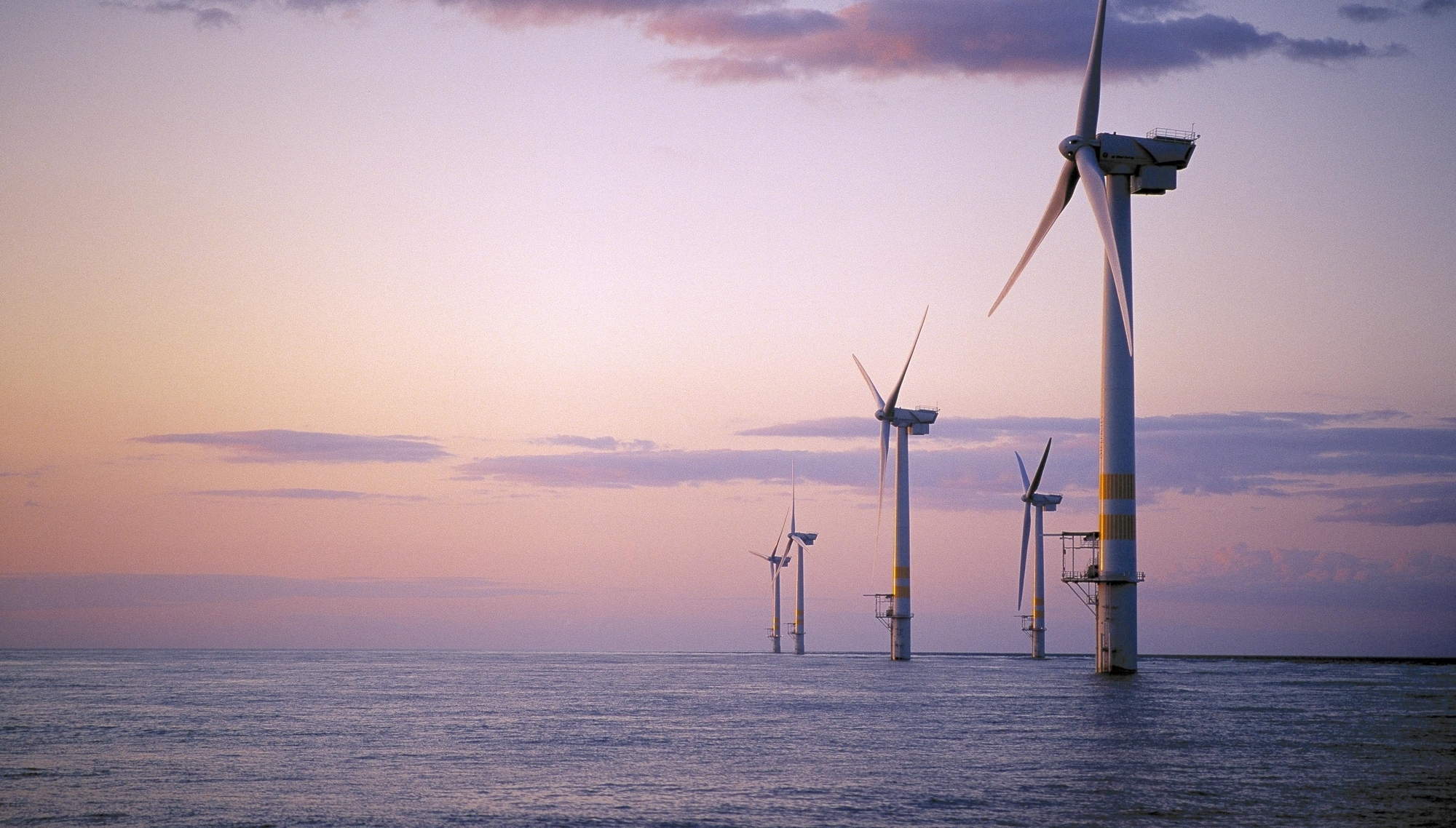
Ireland is capable of delivering big projects such as Arklow Bank. But, despite having Europe’s best wind resource, it is our only 25MW wind farm. We must take control of how we plan and deliver infrastructure. File picture
For decades, Ireland’s infrastructure debate turned on one question: Where would the money come from?
Today, for the first time in a generation, that question has largely been answered.
The National Development Plan commits €275.4bn, with billions more for energy, water, transport, and housing.
Nine projects are designated as ‘critical infrastructure’, and new legislation aims to speed delivery.
The question is no longer whether Ireland can afford to build. It is whether Ireland can build what it has already promised.
Read More
For most of my career, the constraint was funding. Today it is co-ordination, sequencing, and delivery.
The International Monetary Fund’s latest assessment put our infrastructure around a third behind comparable economies, blaming planning delays, low productivity and skills, not a lack of funding.
Ireland does not lack strategies.
We have the National Planning Framework, Project Ireland 2040, and sectoral plans for housing, transport, water, and energy.
The challenge is implementation.
Infrastructure is delivered through many organisations, budgets, and timelines. And, when one part falls behind, the rest feels it.
A new home is not four walls and a roof. It needs water, wastewater, electricity, roads, transport, schools, and broadband. Build the homes before those services are ready and you have not solved the housing crisis, only moved the bottleneck.
Development plans increasingly reduce parking because residents are expected to use public transport — sensible, but only if BusConnects, MetroLink, or better rail arrive before the homes. If not, people still travel, and cars move to the next street.
Offshore wind tells the same story. Europe’s best wind resource does not make an industry without ports, connections, and markets for the power. After 20 years we have one offshore farm of 25 megawatts, with gigawatts more auctioned but unbuilt. Last year, much of our wind was constrained, the network unable to absorb it. Data centres come at it from the other side, at a fifth of our electricity.
Infrastructure only works when the whole system works.
Other countries have recognised this. Infrastructure Australia independently evaluates major projects, publishes a national pipeline, and checks whether the people, materials, and delivery capacity exist to build them. The Netherlands and Denmark plan infrastructure as one connected system.
Read More
Some will say Ireland has begun this, through An Coimisiún Pleanála and wider planning reform. Those reforms matter. But planning is only one stage. Projects must still pass through business cases, assessment, land, procurement, financing, and construction. They also need labour and supply chains. Improving one stage does not improve the whole system.
You cannot manage what you do not measure. Australia knows what it plans to build. Ireland publishes a Project Ireland 2040 tracker of announced schemes, but not one reconciled national infrastructure register covering every major state, semi-state and regulated project. Uisce Éireann, EirGrid, the transport agencies, ports, and councils all publish their own plans. Nobody publishes the ledger that adds them up. That means no one can see the whole picture.
Without it, questions go unanswered. What is the total value of the ambition? How much is funded, how much rests on borrowing or our sovereign funds, and how much falls on households through network charges? Can the State deliver everything it has promised?
There is also how we pay. Norway keeps its sovereign wealth abroad and spends only the returns. Ireland does both, at home through the Ireland Strategic Investment Fund and abroad through the Future Ireland Fund. Using more at home could help, but only with stronger governance, not for pet projects.
I believe Ireland now needs an independent national infrastructure commission. Its first responsibility would not be approving projects. It would be publishing a live national infrastructure register and an annual infrastructure balance sheet. The register would be the State’s institutional memory, holding every business case, cost revision, and milestone as governments change. The balance sheet would show each year the cost, how much is funded and who pays. It should include an annual assessment of whether Ireland has the engineering capacity, construction workforce, and supply chains to deliver what has been promised.
Elections change governments. They should not reset the country’s infrastructure programme.
Infrastructure is not there for headlines or photo opportunities. It is there to create public value. It should be remembered not for how often it is announced but for the day it opens. We all know the project in our own parish with more photocalls than progress.
Ireland has the money to build the country we want. Yet, despite planning to invest hundreds of billions, it still publishes no complete, reconciled national infrastructure register. Every company knows the value of its assets. Every local authority maintains an asset register. The State should know no less. Until we know what is in the pipeline, who is paying, how projects depend on one another and whether they can be delivered, we cannot say if Ireland is investing wisely or announcing more than it can build.
Before announcing the next billion-euro project, perhaps the first task is much simpler — count the ones we have already promised.
- Aoife M Foley is professor and chair in net zero infrastructure at the University of Manchester and a chartered engineer

CONNECT WITH US TODAY



Be the first to know the latest news and updates