Supermac's loses right to register name as trademark in EU following opposition from McDonald's
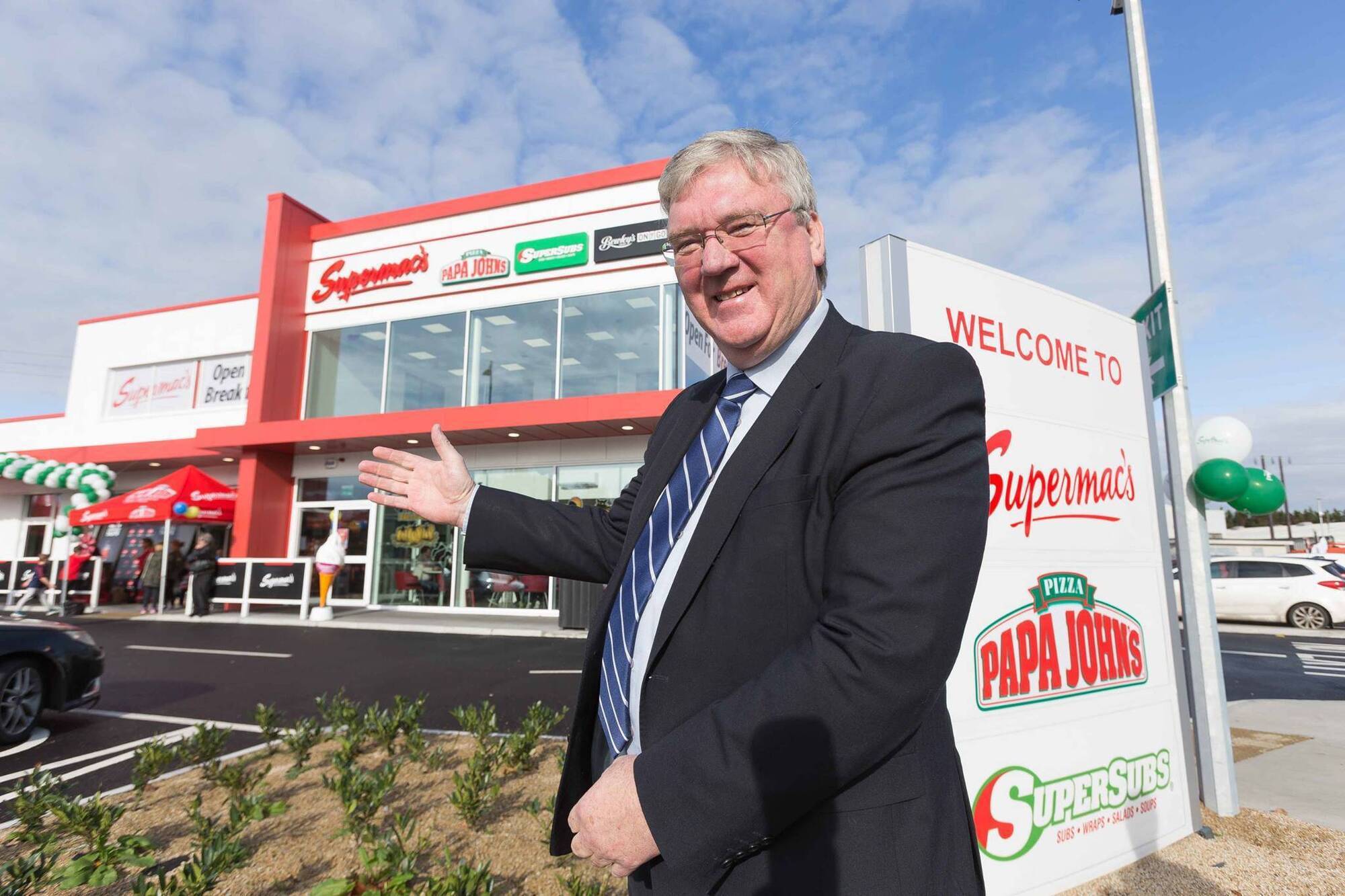
Supermac's boss Pat McDonagh had appealed a EUIPO ruling in June 2025 which found in favour of the McDonald’s International Property Company that allowing “Supermac’s” to be registered as an EU trademark created the likelihood of confusion.
Supermac’s has lost the latest round in its long-running legal battle with McDonald’s over trademarks with the European Union Intellectual Property Office ruling that the Irish fast food chain’s logo is too close to its rival’s “Big Mac” mark.
The finding that there was a likelihood of confusion between the two names for English and German-speaking consumers means “Supermac’s” cannot be registered as a trade mark across the EU.
However, the ruling does not affect Supermac’s ability to trade under its own name in the Republic of Ireland.
In an unreported decision from the end of June, a EUIPO board of appeal rejected Supermac’s claim that there was no reasonable likelihood that the public would mistake a Supermac’s restaurant for a Big Mac.
Supermac’s had appealed a EUIPO ruling in June 2025 which found in favour of the McDonald’s International Property Company that allowing “Supermac’s” to be registered as an EU trademark created the likelihood of confusion.
Read More
The case arose from an application in May 2016 by the Irish company to register “Supermac’s” as an EU trademark for fast food restaurant services.
McDonald’s opposed the application claiming “Big Mac” had been registered as a trademark for meat sandwiches since December 1998.
In its appeal, lawyers for Supermac’s claimed the parties had coexisted in Ireland for approximately 40 years, with no evidence of confusion between them.
Supermac’s noted that the original EUIPO decision had acknowledged that all the relevant factors including resemblance between the signs were low or average but nevertheless concluded there was a likelihood of confusion.
The company said such a ruling lacked “logical and legal basis”.
It added:
The company claimed an adverse finding would require accepting that a consumer might attend a Supermac’s restaurant expecting to purchase a Big Mac even though McDonald’s had argued that it was almost universally recognised as one of its products.
In reply, McDonald’s said any coexistence of the marks in Ireland was irrelevant as the issue to be decided was whether a conflict existed in the EU where Big Mac was a universally famous mark.
It argued that consumers would not inevitably be able to easily recognise that “Big Mac” was designated a food product while Supermac’s was designated a restaurant chain.
The US chain claimed “Big Mac” was “an iconic ‘flagship’ product which was intrinsically linked to McDonald’s for over 40 years and enjoyed “an overwhelming degree of reputation with a very high degree of distinctiveness.” It also maintained that the boundaries between food products and a restaurant name in the perception of the relevant public were “blurred”.
In its ruling, EUIPO’s board of appeal said the goods and services at issue were complementary and targeted the same public so had to be regarded as at least similar to a low degree.
It said the two signs were similar visually and phonetically to a “below-average degree” and conceptually to “at least an average degree”. The board also accepted that there was very high awareness of the trade mark “Big Mac” among the general population and even higher among those who eat fast food products.
It found that the “Big Mac” trademark enjoyed an enhanced degree of distinctiveness for meat sandwiches by virtue of intensive use and recognition in the EU.
The board said the more distinctive the earlier mark, the greater the risk of confusion but also the broader protection that it enjoyed.
The board said the overall similarities between the signs and Big Mac’s enhanced degree of distinctiveness meant the likelihood of confusion could not be ruled out.
“It cannot be excluded that the contested sign may be perceived by the relevant public as a sub-brand or a variant of the earlier mark for another (new/enhanced) line of meat sandwiches,” it ruled.
The board said the analysis of whether there was a likelihood of confusion between the two marks could not be dependent on the marketing intentions of the companies.
Although one is a product and the other a service, it said the signs shared a common semantic reference capable of suggesting a link in the mind of the relevant public.
The board said coexistence needed to be demonstrated for the entire EU as it is the territory where the “Big Mac” mark is protected, while proof of coexisting in just one member state like Ireland was “inadequate”.
The latest ruling follows a setback to Supermac’s following its successful action which resulted in a Court of Justice of the EU ruling in June 2024 which delisted “Big Mac” as a trademarked restaurant and stopped McDonald’s using the name on poultry products.
Supermac’s has been asked for a comment.
CONNECT WITH US TODAY



Be the first to know the latest news and updates