Clodagh Finn: Deirdre Kelly, the environmental campaigner who inspired a generation

When Deirdre Kelly, environmental and community campaigner, died aged 61 in February 2000, she was described as one of Dublin’s greatest champions.

It is impossible to shoehorn the sum of a person into an obituary yet I love the format — still one of the most-read in newspapers — because it gives us an insight into what a life, well-lived, looks like.
That thought struck me with new force this week when reading the many tributes to Frank McDonald, the “campaigning journalist [who] changed how we think about urban planning”, to quote a line from the obituary in his own paper, the .
And here is another, rather beautiful, paragraph which sums up the former environment editor’s work: “Over a reporting career lasting some 50 years, he campaigned for better urban planning and design, and against the sort of corruption that can attend the nexus where swashbuckling construction comes into contact with politics and public administration.”
There were many other tributes, as well as references to his books, in particular (1985) and his memoir, in 2018, which outlined his experiences as a gay man during the 1960s.
He was a Dubliner and wrote extensively about the capital but his work had national (indeed international) relevance because, as he said, every town, village and city in Ireland is affected by its built environment.
HISTORY HUB
If you are interested in this article then no doubt you will enjoy exploring the various history collections and content in our history hub. Check it out HERE and happy reading
As obituaries about Frank McDonald continue to be written, I would like to return to one he wrote himself in 2000. It says much about the man as well as his late friend Deirdre Kelly, “whose name he often evoked as a rallying cry against bad planning and the destruction of Dublin”, as historian Donal Fallon reminded us in his tribute during the week.
When Deirdre Kelly, environmental and community campaigner, died aged 61 in February 2000, McDonald wrote that she was one of Dublin’s greatest champions, an accolade that is now being bestowed on him.
But champions always have champions themselves, and here is a taste of what Frank McDonald had to say about Deirdre Kelly who, like him, believed passionately that urban design should serve people and communities first, rather than developers.

“She was a radical, in the truest sense, in that her ideas and the stances she took were way ahead of their time. Twenty years ago [in the 1980s], she was talking about cycle lanes, traffic calming, better public transport and living over the shop. There was little response at the time, but all of these things have since become part of public policy,” he wrote.
If you ever despair at speaking out about bad planning decisions (Bessborough campaigners, take heart) or urban decline, those few examples might give you some hope.
Indeed, as McDonald put it: “Deirdre Kelly held out a candle for the city during one of its darkest periods; in a way, every new apartment block built in the inner city since the early 1990s is a tribute to her. She was also the guiding light of the Dublin Crisis Conference in 1986; the agenda it set in a time of bleak depression ultimately led to the repopulation of the inner city.”
She had personal experience of the depopulation of central Dublin and, at one point, was told she was even adding to it.
When, in 1979, she decided to move to the suburb of Ranelagh because the basement flat on Fitzwilliam Street had become too small for her growing family, a next-door neighbour said: “Mrs Kelly, do you realise you’re taking the last children out of this area?”
“True to form,” McDonald noted, “she did a survey and found that in the entire southside Georgian core, from Holles Street Hospital to Leeson Street Bridge, there wasn’t a single child left.” (The last remaining ones were her four children, Maeve, Diarmuid, Mahon and Hughie.)
By then, Deirdre Kelly had already established herself as a tireless campaigner who cared deeply about the fabric of the city.
Born on May 15, 1938, she was the eldest of four children born to Mary (‘Mollie’) McMahon and her husband, Thomas McMahon. Growing up, she saw how economic development destroyed communities and the capital's historic core.
She studied history and archaeology at UCD and her husband Aidan Kelly was an architect; between them, they had the qualifications to appreciate the exceptional heritage of the city and imagine a better way of planning to protect it.
Part of that heritage was under threat with plans, approved by Local Government Minister Kevin Boland in 1969, to redevelop Hume Street, the city’s last remaining example of a small Georgian street.
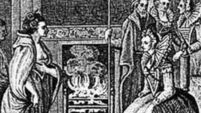
Several students, including one architecture student called Duncan Stewart, engaged in what became known as the Battle for Hume Street.
They organised a sit-in protest at number one Hume Street which lasted for several months.
It gained such support that Charlie Haughey sent in a hamper at Christmas, and the media sent reporters to write regular updates.

Here is one Mary Kenny wrote in the in January 1970: “The architectural students occupying the house at No. 1 Hume Street operate in a rigidly democratic manner and proclaim not to have any specific leader. But a young woman, Deirdre McMahon, is clearly emerging as a spearheading force.”
She went on to describe McMahon — who married and became Kelly later that year — as “a coalescing and inspirational energy behind the present occupation”.
The protest, however, was violently dispersed in June 1970 when, according to the protesters, agents for the developers “arrived like thieves in the night” and smashed the interiors and tore down the roofs.
The sit-in galvanised public support, though, and ordinary people began to question the development decisions being highlighted by Deirdre Kelly and others, including the late broadcaster Marian Finucane, Kevin Nowlan of the Dublin Civics Group, architect Uinseann MacEoin, and Mary Robinson.
When, a decade later, Dublin Corporation (as it was then known) decided to build civic offices at Wood Quay on what turned out to be Europe’s most important Viking site, some 20,000 people, led by FX Martin, chairman of Friends of Medieval Dublin, took to the street in protest.
Some 200,000 others signed a petition calling for the site to be spared. Building went ahead anyway but another sit-in by protesters allowed the archaeological dig to go on for an extra few weeks.
Deirdre Kelly did not live to witness the cruellest twist but the civic building that caused so much controversy may now be demolished, a mere four decades after it opened, because it is deemed too costly to retrofit.
Frank McDonald had something to say about that as recently as March of this year when he wrote a comprehensive piece looking at the issue from all perspectives.
I would love to know what Deirdre Kelly, a woman who stood in front of at least one bulldozer, according to the dib.ie, would have to say about the whole issue.
We can’t say for certain but we can look back at her legacy, from the foundation of the Living City Group in the 1970s to her role in the successful campaign to stop a dual carriageway being built through the Liberties.
She wrote books too, (1976) and (1995), a history of Ranelagh, Rathmines and Leeson St.
The year after she died, Frank McDonald named her in the dedication of one of his books, .
It was a poignant tribute to a woman he said would be remembered as “a bundle of energy, passion and commitment”. We might say the same of him.

CONNECT WITH US TODAY



Be the first to know the latest news and updates