Shona Murray: Trump is weakening Ukraine and the ICC — will Europe finally stand up to Washington?
As Washington targets the International Criminal Court and weakens support for Ukraine, Shona Murray asks whether Europe will challenge Trump
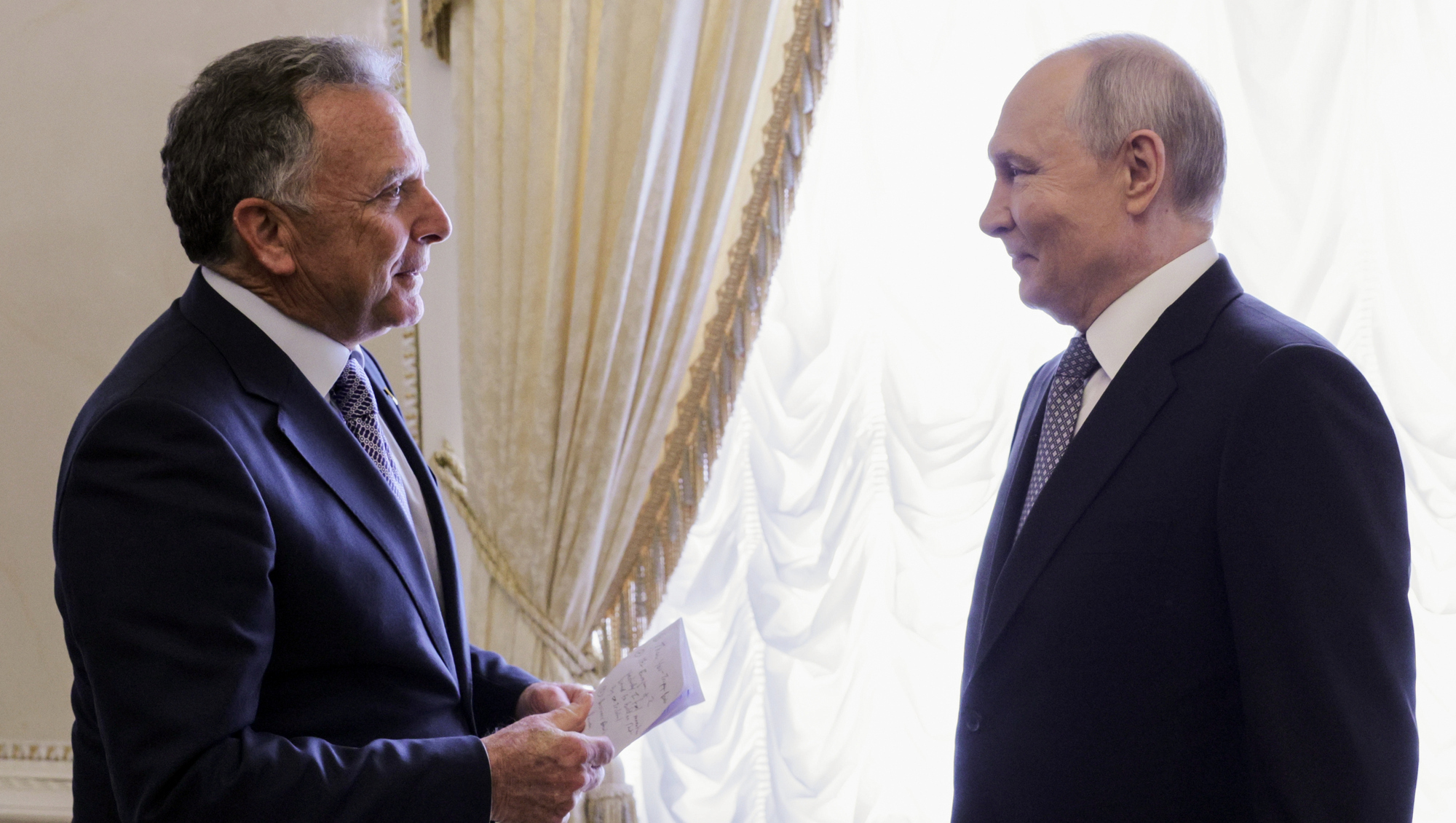
U.S. President Donald Trump's special envoy Steve Witkoff, left, holds a paper while speaking to Russian President Vladimir Putin at the Konstantin Palace in Strelnya, outside St. Petersburg, Russia, on Wednesday, Oct. 21, 2026. (Gavriil Grigorov, Sputnik, Kremlin Pool Photo via AP)

U.S. President Donald Trump's special envoy Steve Witkoff, left, holds a paper while speaking to Russian President Vladimir Putin at the Konstantin Palace in Strelnya, outside St. Petersburg, Russia, on Wednesday, Oct. 21, 2026. (Gavriil Grigorov, Sputnik, Kremlin Pool Photo via AP)

For the US, Putin is a ‘humanitarian’ and the ICC a threat

EUROPE is now facing a situation where the US under Donald Trump is on the side of Russia.

At time of writing, restrictions for Ukraine in using Elon Musk’s Starlink service are ongoing, with much confusion reigning as to who is responsible for the slowdown.

Musk says it was Trump’s decision; US officials deny it. Either way, it’s rendered impotent the fighting power of Kyiv to strike onto the front lines of their own country, and prevented air defence systems that intercept Russian jet-powered drones from working. Scores of Ukrainian civilian casualties have resulted.

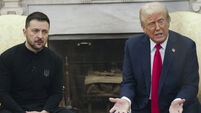
According to Ukrainian president Volodymyr Zelenskyy, the US is also delaying the supply of US-made Patriot interceptors, the best system designed to defend against Russian ballistic missiles — already paid for by European nations and Canada at Nato.

Meanwhile, on Tuesday, Trump’s envoy Steve Witkoff praised Russian president Vladimir Putin in Moscow thanking him for his “humanitarian” values.

“You talk so much about my president, president Trump, being a humanitarian. You are a humanitarian also sir, and I salute that. I commend you,” the mega-wealthy, real estate developer-turned-Trump-envoy told Putin.

These are not the actions of allies. Just days before new sanctions, tariffs and restrictions were due to come into force against Russia as part of the Lindsey Graham Act, Trump waived them using an executive order.

The move was loudly celebrated in the Kremlin: Russian envoy Kirill Dmitriev, posted: “The Trump administration’s suspension of the Graham Act is an important and truly historic moment.”

Meanwhile, Europe is struggling to defend the future of the world’s only court designed to bring to justice individuals charged with the gravest crimes against humanity.

On Thursday, the European Parliament voted to name its human rights award — the Sakharov Prize — to the International Criminal Court (ICC).

There is no doubt about why the ICC is being recognised right now. Since 2025, the US has imposed a wave of sanctions against the court, its prosecutors, judges, staff and partners. And US secretary of state Marco Rubio has vowed to dismantle the court “brick by brick”.

True to his word, on October 9, the US imposed crippling sanctions prohibiting transactions with the court which will come into effect in six months.

After this, companies working with the court can be punished by the US government as they will be breaching America’s sanctions regime.

This is an unprecedented attack on the international justice system, notwithstanding the fact that the US refused to sign up to the court when it was established in 1998.

So, in the space of a few days the US is describing Putin as a “humanitarian” and applying widespread sanctions against the only arm of international law that focuses on individuals accused of the worst crimes known to man.
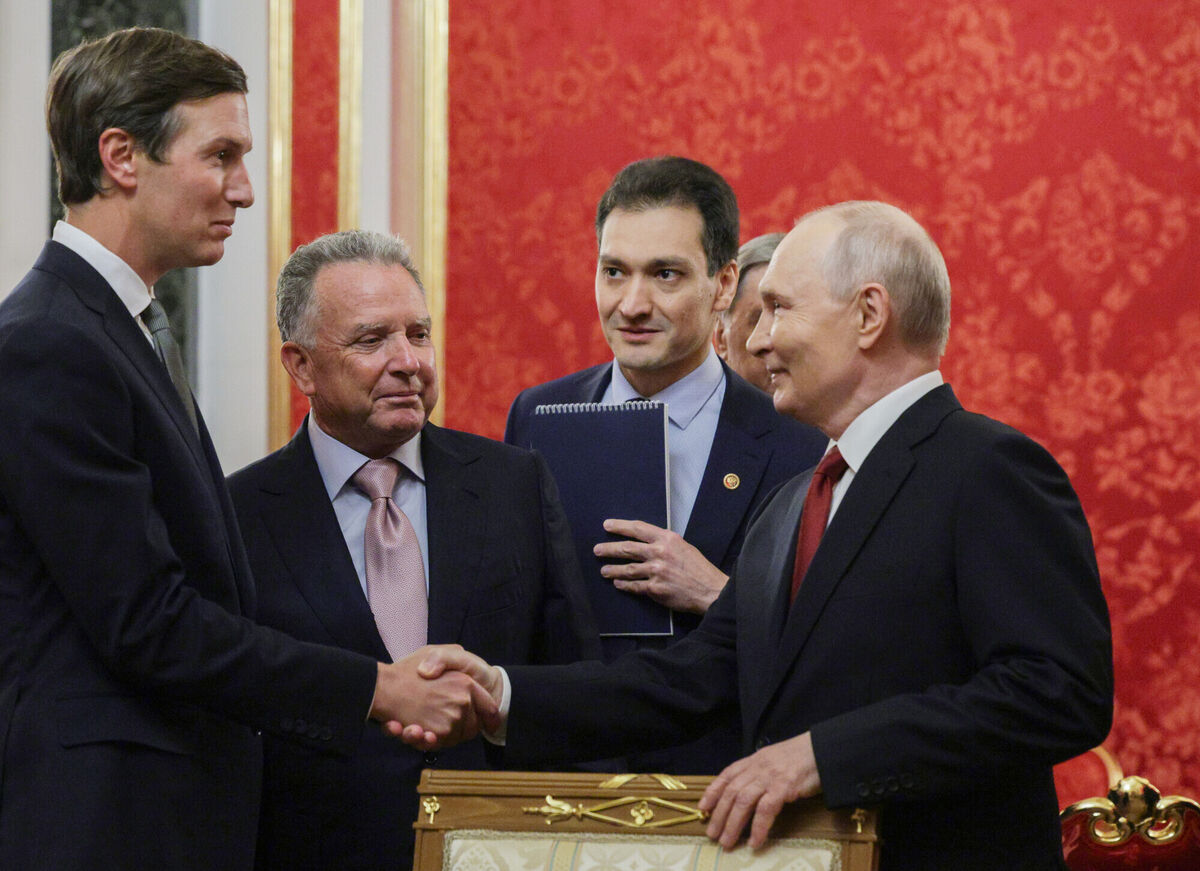
Russian President Vladimir Putin, right, greets U.S. President Donald Trump's envoys Steve Witkoff, second left, and Jared Kushner prior to the talks at the Senate Palace of the Kremlin, in Moscow, on Saturday, Sept. 5, 2026. (Sputnik, Kremlin Pool Photo via AP)

The ICC has issued a warrant for the arrest of the Israeli prime minister and chief ally of the US administration, Benjamin Netanyahu. He is wanted for war crimes against the civilian population in Gaza. A recent independent inquiry by the UN has found that the Israeli state is committing genocide in Gaza as part of its response to Hamas’s October 7 terrorist attack against Israelis.

The inquiry found Israel is responsible for killing, causing serious bodily or mental harm, and deliberately inflicting conditions of life calculated to bring about the destruction of the Palestinians in whole or in part, and imposing measures intended to prevent births.

Recent winner of the Nobel Peace Prize, Navi Pillay was chair of the commission. “It is clear that there is an intent to destroy the Palestinians in Gaza through acts that meet the criteria set forth in the Genocide Convention,” she said.

In establishing genocidal acts, the commission examined Israel’s military assault in Gaza which included imposing a total siege, including blocking humanitarian aid leading to starvation; systematically destroying the healthcare and education systems in Gaza; committing systematic acts of sexual and gender-based violence; directly targeting children; carrying out systematic and widespread attacks on religious and cultural sites.

The US administration wants this evidence and the alleged crimes to be beyond the reach of the law or a courtroom.

Such an assault on the court also renders invalid the ICC’s warrant for Putin and his accomplice Maria Alekseyevna Lvova-Belova for, among other things, kidnapping Ukrainian children and the unlawful transfer of population from occupied areas of Ukraine to the Russian Federation.

The EU can in theory block the sanctions against the ICC. According to the EU’s foreign policy chief Kaja Kallas, Brussels is willing to use its so-called blocking statute to protect companies from US sanctions on the ICC.

The statute is unlikely to be a panacea. Not least because of the deep dependence Europe has on US technology, including financial products such as credit card facilities andemail accounts, which all come under the sanctions. While the EU says it will use the grace period of six months to “negotiate” with the US over the sanctions, it’s hard to see how one can move an inch when it comes to compromising the court.

And does the EU have the mettle for another confrontation with Washington while it pleads for Trump to get back on course and at least attempt to end the war in Ukraine?

More in this section

Revoiced

Newsletter

Had a busy week? Sign up for some of the best reads from the week gone by. Selected just for you.

Cookie Policy Privacy Policy Brand Safety FAQ Help Contact Us Terms and Conditions

© Examiner Echo Group Limited