I heard about an 'utterly badass' Irish pirate — I knew I had to write about her
American author Ariel Lawhon tells Deirdre McArdle how the story of Grace O'Malley captivated her enough to compose a novel on her life
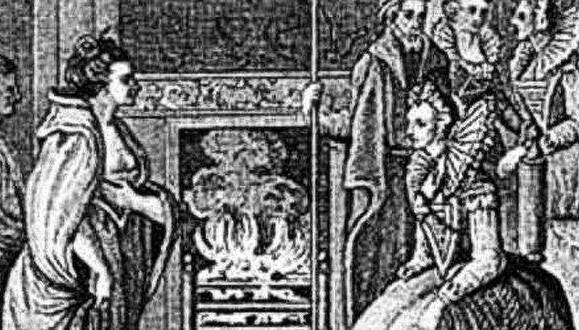
An illustration of the meeting of Grace O'Malley (left) and Queen Elizabeth I

An illustration of the meeting of Grace O'Malley (left) and Queen Elizabeth I

Gráinne Mhaol’s story “was an absolute gift for a writer like me,” says bestselling US historical fiction writer Ariel Lawhon. I’m chatting over the phone to Lawhon, who lives in Nashville, Tennessee with her husband and four children, about her latest book  The Pirate Queen — The Legend of Gráinne Mhaol.

She tells me she stumbled upon Gráinne Mhaol’s story by accident.

“I couldn’t sleep one night so I was reading a book of essays called The Storytellers. One was an interview with thriller writer Lisa Gardner who was asked which five people dead or alive would she like to have dinner with. The last two were Queen Elizabeth I and her arch-rival Grace O’Malley, the Pirate Queen of Ireland.”

Lawhon recalls bolting up in the bed. “All the little hairs at the back of my neck stood up, and I thought, ‘Ireland had a pirate queen? That would make a great novel’.”

Gráinne Mhaol, or her anglicised name of Grace O’Malley, was indeed called the Pirate Queen of Ireland. In 1530, she was born into the O’Máille family, a seafaring clan from Co Mayo. The sea was in her blood.

HISTORY HUB

If you are interested in this article then no doubt you will enjoy exploring the various history collections and content in our history hub. Check it out HERE and happy reading

But she was so much more than the Pirate Queen moniker, says Lawhon. She was a female chieftain in all but name, because of the country’s Tanistry laws of the 1500s; she led her husband’s clan, her father’s clan, and her second husband’s clan.

“She was an absolute force of nature, and wildly entertaining as well.”

The only written record of Gráinne (or Grace) is in English state papers, which call her, among other things, “the most notable traitress,” the leader of “all rebellions these last 40 years”, and “a woman who thinks herself no small lady”.

Author Ariel Lawhon. What fascinates her about Grace O’Malley is how a girl from the west coast of Ireland became confident enough to demand an audience with the Queen of England. Picture: Kristee Mays

Lawhon says O’Malley’s story was “written by her enemies” and she felt like it was her job to “flip that” and write a flattering Irish view. The Irish, she says, have very much kept the folklore and the legend of Gráinne Mhaol alive — in the recent series of The Traitors Ireland, host Siobhán McSweeney says her entire wardrobe took inspiration from Gráinne Mhaol, the Pirate Queen.

It’s in the folklore that some of the most entertaining parts of her story occur, says Lawhon. “For example, she gave birth on her ship while Algerian pirates were boarding it. She had the baby and then went up on deck to help fight the pirates off. You’d think that that story couldn’t possibly be true, but the event is in the written record. She was just utterly badass.”

Chatting with Lawhon, it feels like she’s recounting a friend. “Grace entertained me so much” over the two years of writing, Lawhon says. “By the end, sitting down to write felt like getting to hang out with a good friend.”

Before writing her novel, Lawhon embarked on a research trip to Ireland with her husband and some friends, so she could immerse herself in the land of the story.

“We tromped around the entire west coast, everywhere that we could get to that we were certain Grace had been. We also went to see as many of her castles as we could.”

The O’Malley clan had several coastal castles and fortresses primarily concentrated around Clew Bay, Achill Island, and County Mayo, forming a protective ring around the family’s territory. Gráinne’s fleet of ships patrolled the waters between these castles, collecting “black rent” or “tributes” from ships that needed to pass through or fish there.

In this way, she frustrated the English, blockading ports, raiding English ships, and cutting off vital supply lines. There were consequences for these actions, though, and the English imprisoned members of Gráinne’s family, including her son and brother.

Gráinne wrote a “furious letter” to Queen Elizabeth I in 1593, then sailed to England without waiting for a reply and demanded to see her. Lawhon admits that although this meeting is the best-recorded aspect of Gráinne’s life, she considers it “probably the least interesting thing about her”.

Instead, what fascinates Lawhon is how a girl from the west coast of Ireland became confident enough to demand an audience with the Queen of England. “What kind of woman do you have to be to have that level of confidence?”

The whole novel builds toward that meeting, fleshing out Gráinne’s actions and events in her life to show us the type of woman who possesses exactly that confidence.

Though the book is based on a real person and factual events, it is of course part fiction. To make it feel authentic to history and Gráinne’s life, Lawhon says she sticks to the known facts and uses fiction to fill in what history didn’t record. For this story, that means treating the places where the English record and Irish folklore agree as the book’s spine, then building out from there.

But Lawhon is a multi-million selling historical fiction writer for a reason. And with all of her books, including The Pirate Queen, she says she works to stay with the established facts, and the fiction fills in the gaps — like conversations that happened behind closed doors or innermost thoughts.

But that’s where the real story is, she tells me. “The actual story is inside the things that are not recorded”. Very little of what Gráinne said was written down, so the dialogue and her inner thoughts are Lawhon’s invention. “This is my version of events… my version of her personality.”

She sees embellishment as the whole point of the genre. “That’s why I write fiction instead of non-fiction… embellishment is where the joy comes from.”

Being able to confidently write the fictional aspects requires in-depth study, and Lawhon spent two years researching the life and times of Gráinne.

“I wanted to do everything within my power to make it real and accurate. I laboured over that for a good two years. And I was very gratified when we got the notes back from the historian who said he felt as though I had done a very, very good job doing so.”

She says ultimately her aim was to build a character who is “accurate but also entertaining — a 500-page book asks a lot of readers, so I feel like I owe readers an enjoyable read.”

More in this section

Scene & Heard

Newsletter

From music and film to books and visual art, explore the best of culture in Munster and beyond. Selected by our Arts Editor and delivered weekly.

Cookie Policy Privacy Policy Brand Safety FAQ Help Contact Us Terms and Conditions

© Examiner Echo Group Limited