Clodagh Finn: The remarkable story of Grace Gifford, the artist who kept going — and skating
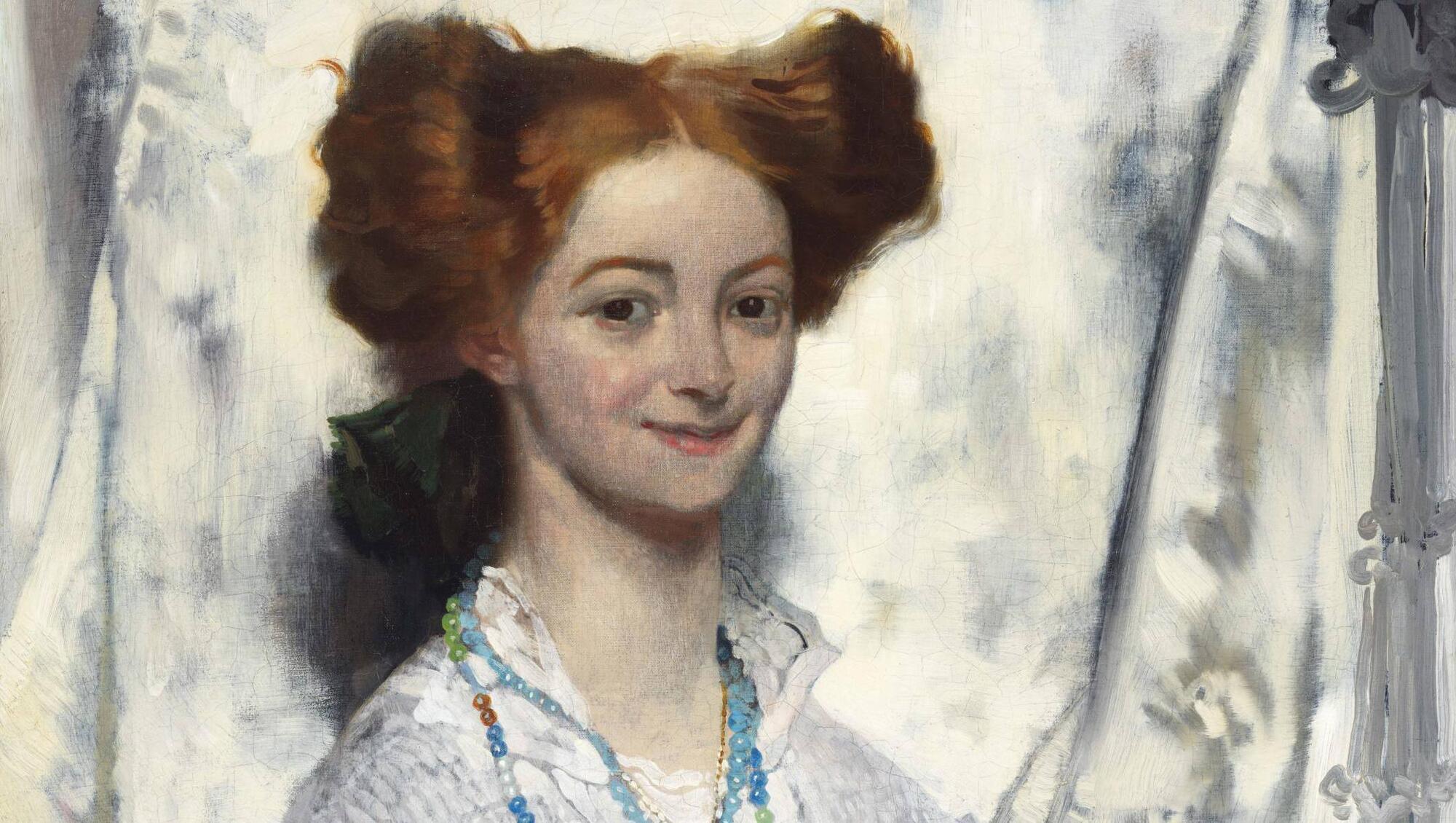
'Young Ireland (1907)' by William Orpen (1878 – 1931), which was recently acquired by the National Gallery of Ireland. Its subject, Grace Gifford, was the bright, confident face of the emerging new Ireland.

I went to see Grace Gifford during the week. At least, that is what it felt like because William Orpen’s portrait, newly acquired by the National Gallery of Ireland, is so vivid it is almost like meeting the woman herself.
Her bright eyes catch you off guard. Then there is that smile: it’s sweet and a little wicked. What has happened? Come on, tell all.
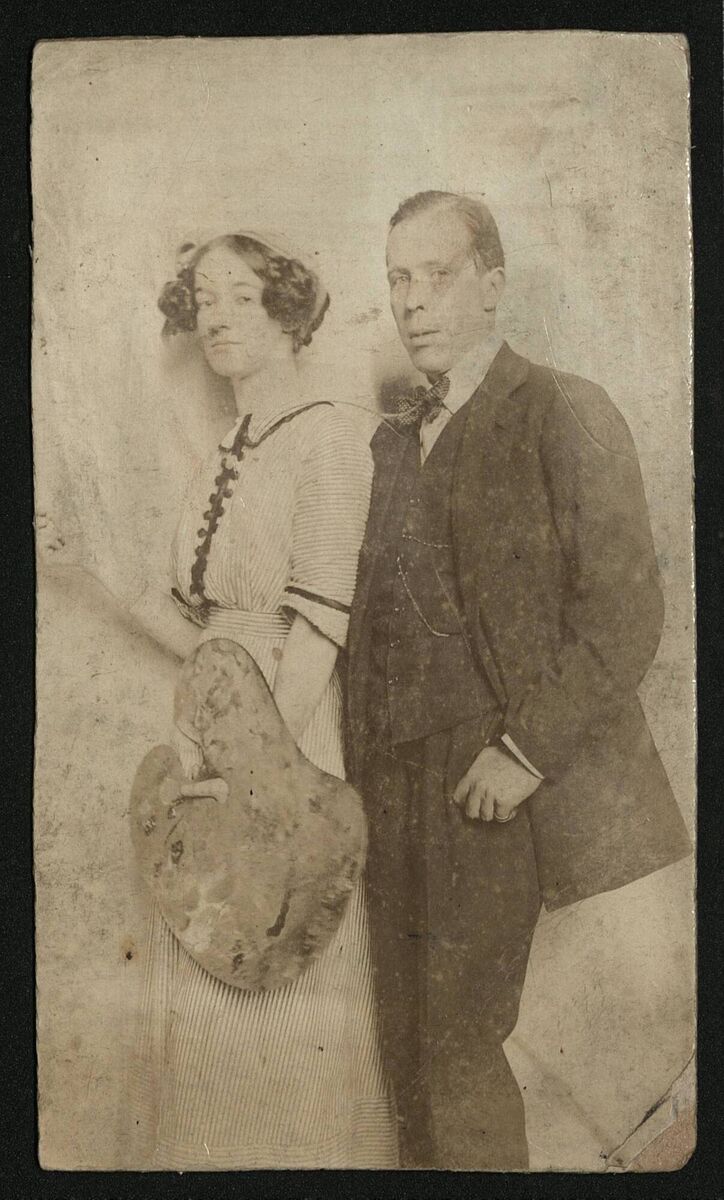
Her red hair is styled high and she is wearing beads and several rings, including one on her thumb. I imagine her at the easel with those hands, under the tuition of the man who painted this portrait.
Orpen is said to have revolutionised teaching at the Dublin Metropolitan School of Art in the early 20th century where he took particular interest in his most gifted students. Grace Gifford was one of them, winning several prizes during her time at art school.
HISTORY HUB
If you are interested in this article then no doubt you will enjoy exploring the various history collections and content in our history hub. Check it out HERE and happy reading
She was just 16 when she enrolled in 1904, having shown early promise in a home where her work was seen — and admired — by painter John Butler Yeats (father of Jack). Grace’s mother, Isabella, was connected to the art world too; she was a niece of artist Frederic Burton whose watercolour was once voted Ireland’s favourite painting.
Forgive me, I’m getting lost in the details, but those early influences and words of encouragement so often explain why some get to follow their dreams while others do not.
There were other factors, too, of course. Though one of 12 children, Grace was born into a wealthy home in Rathmines, Co Dublin. Her father Frederick Gifford was a successful solicitor so there were the means, and the will, to educate all of the children.
He was Catholic but they were raised as Protestants like their mother. Later Grace, influenced by her nursemaids, she said, converted to Catholicism.
Read More
She and her sisters also turned away from the family’s political background to embrace republicanism and imagine a new kind of Ireland.
All of that is captured in Orpen’s portrait, , which the artist named after the Irish nationalist movement of the 1840s. Its subject, Grace Gifford, was the bright, confident face of the emerging new Ireland.
The portrait is full of hope, humour and promise.
I wonder what artist and subject thought of those sentiments a short decade later. In 1917, William Orpen was working on a series of oil paintings of the grim deserted battlefields of the Somme and Grace Gifford was a young widow.
She had married her fiancé, Joseph Mary Plunkett, in Kilmainham Gaol the year before, just hours before he was executed for his role in Easter 1916. On May 3, after a five-hour wait, she was taken into the gaol’s chapel around 11.30pm.
“I was never left alone with him, even after the marriage ceremony,” she recounted in a witness statement in 1949.
“I was brought in and was put in front of the altar; and he was brought down the steps; and the cuffs were taken off him; and the chaplain went on with the ceremony; then the cuffs were put on him again.
It was an unimaginably difficult day, not least because her sister Muriel’s husband, Thomas MacDonagh, had been executed earlier. Muriel herself died in a swimming accident in 1917, leaving the couple’s two children, Donagh and Barbara, orphaned.
Grace and her sisters cared for the children initially but there was a fight for custody between the Giffords and MacDonaghs. The children were later entrusted to their aunt Mary MacDonagh, a nun, who put them into foster care.
There was another legal battle too, in 1934, when Grace fought her husband’s family for her own inheritance. The family settled out of court and she received £700 plus legal costs.
Could the hopeful young woman of the 1907 portrait have imagined such heartbreak?
It had started out so well. Shortly after Orpen painted her portrait, she went to London to study at the Slade School of Fine Art. When she returned to Dublin she became increasingly involved in politics as she gained a reputation as a cartoonist and illustrator contributing to several newspapers and journals.
Even if the work was poorly paid — “I would rather be a servant in Ireland than a millionaire elsewhere” — she and her sisters were upbeat and active.
“It was said of those Gifford girls: ‘Whenever those vivacious girls entered a gloomy Sinn Féin room, they turned it into a flower garden,’” the late Mícheál Ó Doibhilín wrote in .
Indeed, in the public consciousness, Grace Gifford is inextricably linked to that gaol, not only because she was married in it but because she was later jailed there herself and painted a famous Madonna and child on her cell wall.
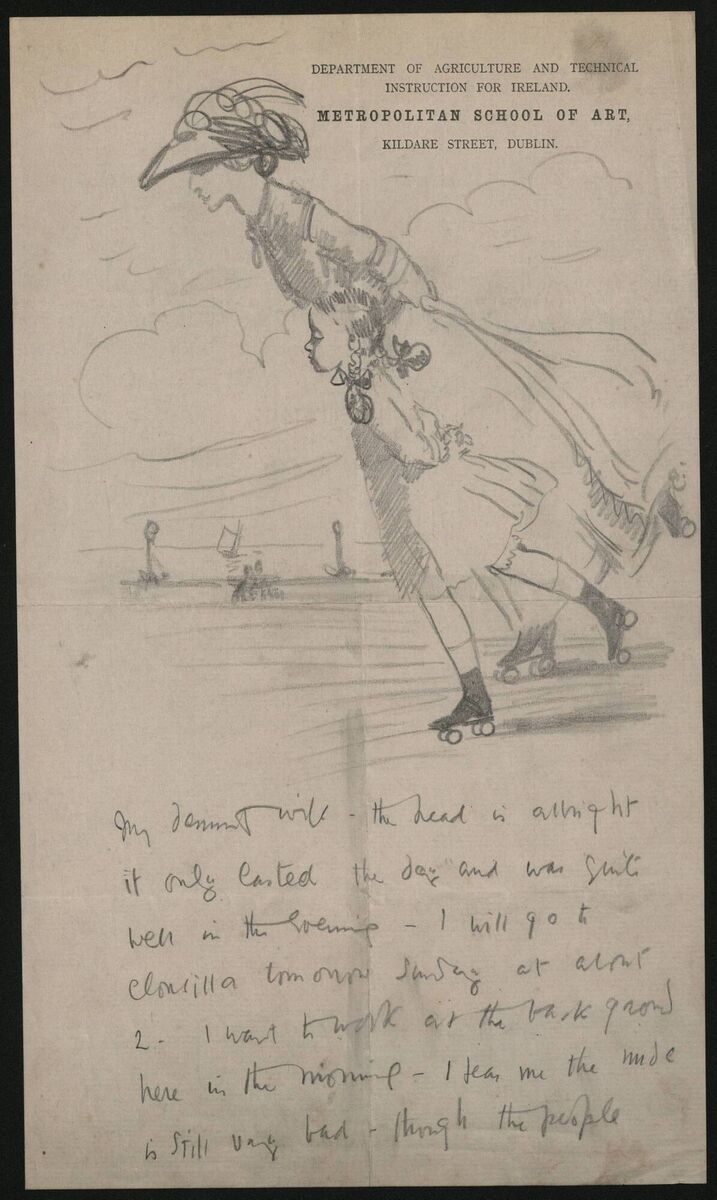
It’s a mistake to think of her as a tragic figure, though. The spirit that shines from her 1907 portrait was still alive and kicking in 1923 when she wrote from prison to her former tutor William Orpen to ask him to send her roller-skates.
Orpen, himself, was a huge fan and there are wonderful roller-skating illustrations in the letters he sent to his wife (also called Grace).
Thankfully, Orpen kept Grace Gifford’s letter which includes this unlikely line: “Could you send me a pair of roller-skates — isn’t that a staggering request — but we aren’t confined to cells all day & sometimes it’s too wet to exercise.”
In block capitals in the margin, she wrote: “The size of my shoes is no 4”. She also asked for some Players cigarettes and anything sweet, “poisonously sweet for preference”.
It’s likely, according to the fascinating notes accompanying the National Gallery’s exhibition of a few years ago, that Grace inherited her love of skating from her late husband.
We know Joseph Mary Plunkett as the poet, editor and republican who played a leading role in the 1916 Rising, but he was also a champion roller-skater who was once offered a job as an instructor in Cairo, after winning a competition there.
He was advised by doctors to travel to warmer countries for health reasons, and here’s a paragraph from that you might not expect: “In late 1911… he spent several months in Algiers, and in between attending mass, visiting museums and cafés, writing poetry and learning Arabic, Plunkett’s diary entries and letters record repeated visits to local roller rinks.”
That just shows how, despite turmoil and hardship, people hold on to their sense of fun. Indeed, it becomes more urgent, although serious history, with its big H, often strips out these wonderful details.
Here we are almost at the end and we have barely touched on Grace Gifford’s work as an illustrator and caricaturist (do look it up). She had a huge sense of fun in that too and her humour is evident in her brilliant caricatures of many of the country’s prominent people.
“Don’t dream of letting your great gift slumber,” theatre critic Joseph Holloway wrote to her. “Keep on making your wonderful distorted mirrors of those you see around.”
She did just that until her death in 1955.
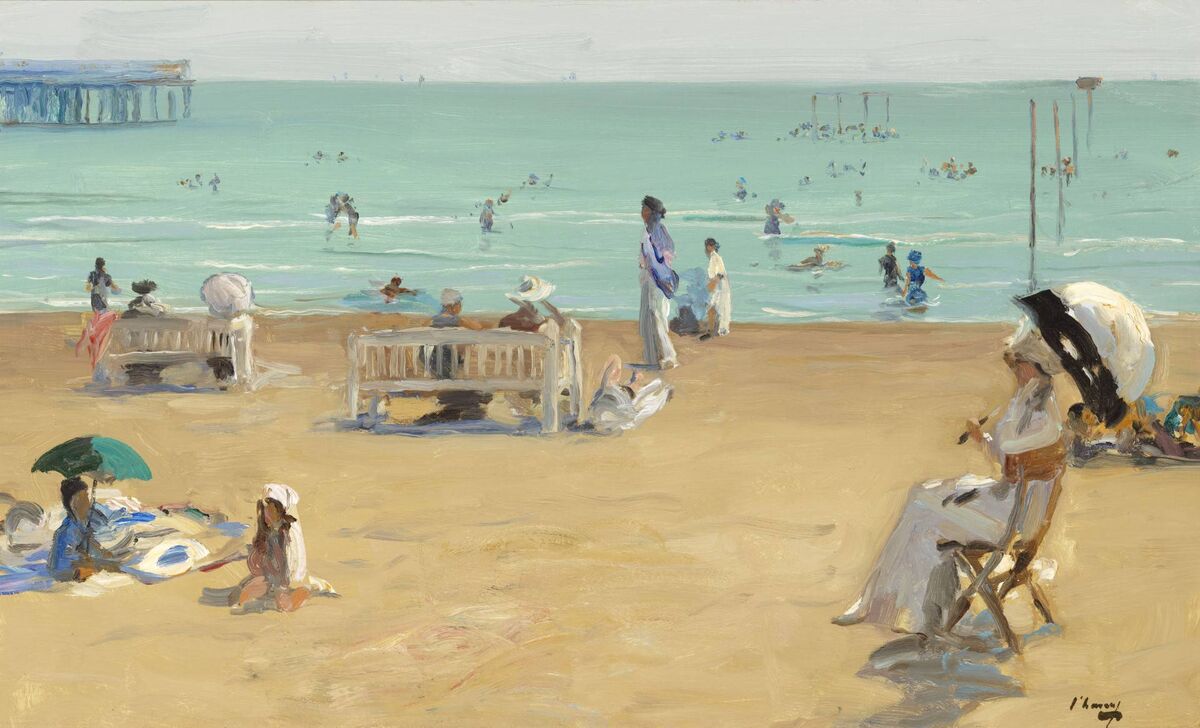
The Orpen portrait, bequeathed to the gallery by Mary and Alan Hobart in 2025, is a real gift to the nation. You’ll find it in Room 16, near a second new acquisition, John Lavery’s .
Drop in to see it and be reminded of the enduring legacy of a talented Irish artist who kept going — and skating — in the most difficult of circumstances.

CONNECT WITH US TODAY



Be the first to know the latest news and updates