Clodagh Finn: The Irish flappers who gave bishops sleepless nights by embracing jazz and fashion
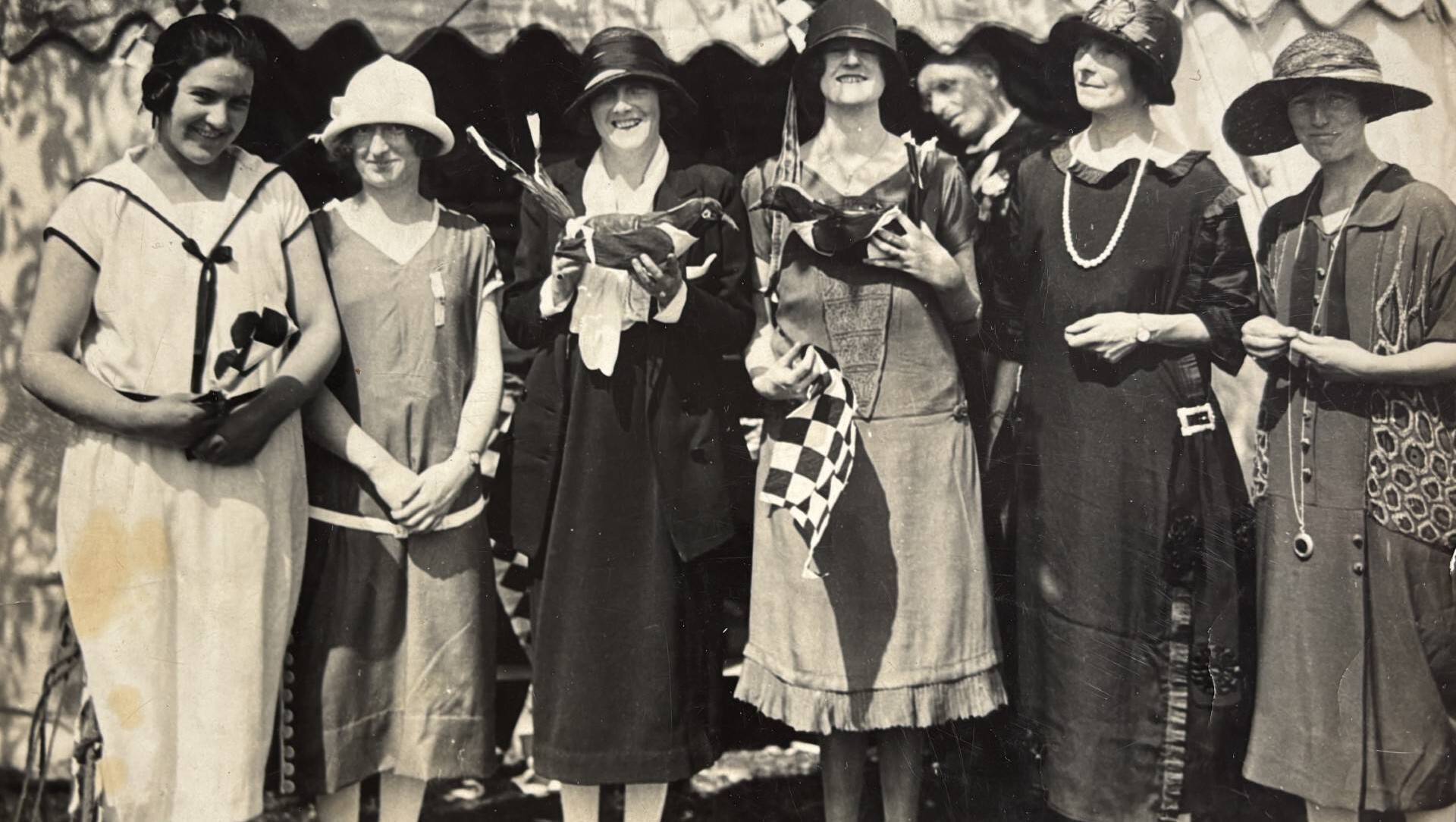
Mary (Mamie) Murphy, known as 'the fairy godmother of Irish boxing' (third from left holding the clay pigeon) with friends at a fundraising event for the National Stadium in 1935. Photo courtesy of her granddaughter Alison Bohan.

Irish flappers? I didn’t think such a combination of words was even possible. Didn’t the Roaring Twenties pass Ireland by? The country was just coming out of a bitter civil war, but that was the least of it. In the 1920s, bishops, north and south, stood sentinel against the moral dangers of the jazz-dancing, cigarette-smoking, short-dress-wearing modern woman.
They were not alone either.
AM Carlisle, a one-time director of the ship-building giant Harland & Wolff, warned ‘modern’ women were “tobogganing down to hell”, while a speaker at the Dublin Literary Society said “the jazz spirit” was responsible for whatever decadence there was in Ireland.
And such decadence. The Catholic Bishop of Derry, Charles McHugh, gave this evocative portrait of what that looked like as early as 1923:
“For a girl to be called modern today is another way of saying she is pagan. She must use the dress of the pagan, disfigure her young face with the paint of barbarism and pretend to take delight in the dance of the savage! She must be prepared to take drink, even to excess, to flaunt her cigarette, and to stifle all the maidenly instincts of modesty.”
Doesn’t that sound like such fun?
Well, it seems many Irish women thought so because the vehement condemnations of the evils of jazz proved there was something to be outraged about.
Read More
As Louise Ryan, co-editor of an astonishing new book on Ireland’s Jazz Age, explains: “There’s a reason why the bishops were losing sleep about all of these evil temptations that were coming into the country. It’s precisely because those things were so popular and so pervasive in rural and urban Ireland that they were jumping up and down, screaming for censorship and prohibition on dance halls.”
Eileen Hogan, fellow co-editor, goes on to describe Irish women, north and south of the border, dressing in the latest flapper fashions, buying magazines, going to the cinema and the dance halls to hear other women musicians strut their stuff.
“Irish female jazz musicians and jazz dancers were highly recognised,” she says. “They were top of the field internationally for their capabilities, but also in teaching and in education.”
Margaret Tisdall, later known as Peggy Dell, is still remembered as the first Irish woman to lead a band. She made her stage debut at nine years old in the Empire Palace (now the Olympia Theatre in Dublin) in 1915. By the time she was 20, she had embarked on a career that would bring her international fame and acclaim.
Saxophonist Josephine ‘Zandra’ Mitchell is, shamefully, less well known, partly because her career took off in Europe. She toured Switzerland and Germany before settling in Berlin, where she led her all-female dance band Baby Mitchell and Her Queens of Jazz.
Ireland’s first female professional saxophonist has, at least, been celebrated in print, on stage and on radio, but very many other jobbing female musicians who toured all over the country have fallen down the black hole of memory.
Until now.
In a series of eye-opening essays, , edited by Eileen Hogan and Louise Ryan (Manchester University Press), presents a narrative-changing picture of the Ireland of those two decades.
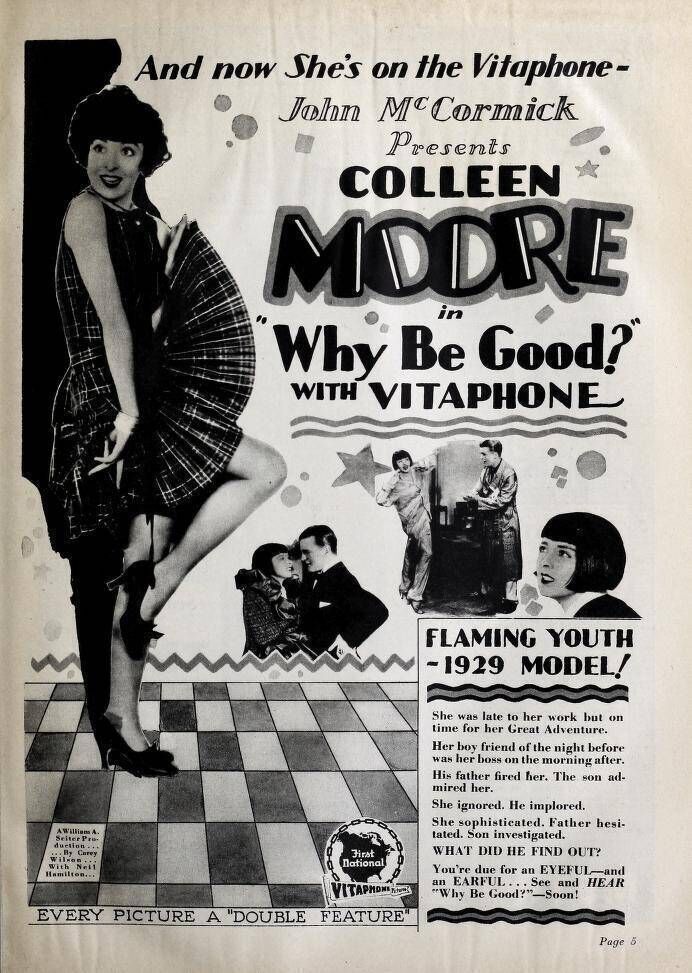
Far from being drab, constricted and dull, many leisure spaces for women were fizzing with energy. There, they danced, sang, listened to music, embraced the latest fashions and went to the cinema, where the celebrated Irish-American silent-movie actress Colleen Moore starred in films with wonderful titles such as
That film promised viewers an “earful” and an “eyeful”, and had these lines on the promo: “She was late to her work but on time for her Great Adventure./ Her boy friend of the night before was her boss on the morning after./ His father fired her. The son admired her…”
Moore, as outlined by Veronica Johnson, famously adopted an Irish-sounding name and often played Irish flapper characters which would have been seen by huge numbers of Irish people attending the cinemas that had popped up all over the country.
But why didn’t we hear about it?
The history books have tended to focus on war, its aftermath, the economy and the Gaelicisation of the country under Eamon de Valera.
“It was almost as if the popular music that was exploding across the world just never impacted in Ireland at all, which is entirely untrue, of course,” says Hogan, lecturer in social policy at University College Cork.
She and Louise Ryan, professor of sociology at the University of Greenwich, had both written on the subject previously — in the latter’s case, a book — and they came together to edit this collection to mark the centenary of the Jazz Age.
Their work opens the most surprising — and utterly delightful — window on the rich social and cultural life of Irish women in the whole of the island of Ireland in the early part of the 20th-century.
Despite strenuous attempts to stem the tide of immoral influence, the exchange of ideas, music and dance styles moved freely across borders. With them came job opportunities for female musicians who performed for ordinary women eager to embrace all that flapper culture had to offer, from music and dance to cinema and fashion.
Eileen Hogan offers this stereotype-shattering fact: “Both married and unmarried women worked as professional dance instructors, directing classes in the latest dance steps, sometimes to the accompaniment of a live dance band, such as that led by Miss Vic Clarke-Barry.”
There’s a review of Miss Vic’s dance band which had a seaside residency at the Marine Hotel in Kilkee, Co Clare: “People who were never known to hum sing it here in a lusty fashion to the astonishment of their friends,” the reported in August 1936.
Indeed, the story of this largely forgotten vibrant scene is told in the review sections of newspapers rather than on the news pages which contained the thundering outbursts of church and State.
Our gaze has fallen on that vitriol for the longest time but here, a century on, is a study of the back pages which reveal accounts of lusty singing and gleeful throngs on the dancefloor ( ). There were also myriad adverts looking for women and men to play in bands.
There’s a fascinating chapter in the book on Mary (Mamie) Murphy written by her granddaughter, independent researcher Alison Bohan. Here is the barest outline: “Her life as an Irish modern woman was multi-faceted. She was a talented musician, a women’s column writer, fundraised for both charitable causes and state-building, and participated with agency in the male-dominated world of the Irish Free State.”
But all Irish women could partake in the ‘forbidden’ cultural life of the Jazz Age.
The co-editors were determined to show even women with quite a modest income — those working in factories, or shops — could afford to go to the cinema. They could afford the magazines too and often sent away for patterns to make their own 1920s and 1930s fashionable clothes.
We wouldn’t know about them without this enthralling book.
It is an academic work, though, so it comes with a price tag of £90, although there will be 50% off around the time of the launch next week, and a cheaper paperback will come out next year.
Meantime, you can celebrate the launch on Friday (6.30pm to 8.30pm), September 4, at The Pav, the recently renovated Art Deco building on Carey’s Lane in Cork City. You are invited to dress in 1920s-style, so wannabe flappers, find those feathers and get ready to celebrate the centenary of the unheralded Irish Jazz Age.
The event is free but pre-booking on Eventbrite (Book celebration: Flappers and the Jazz Age) is essential.


CONNECT WITH US TODAY



Be the first to know the latest news and updates