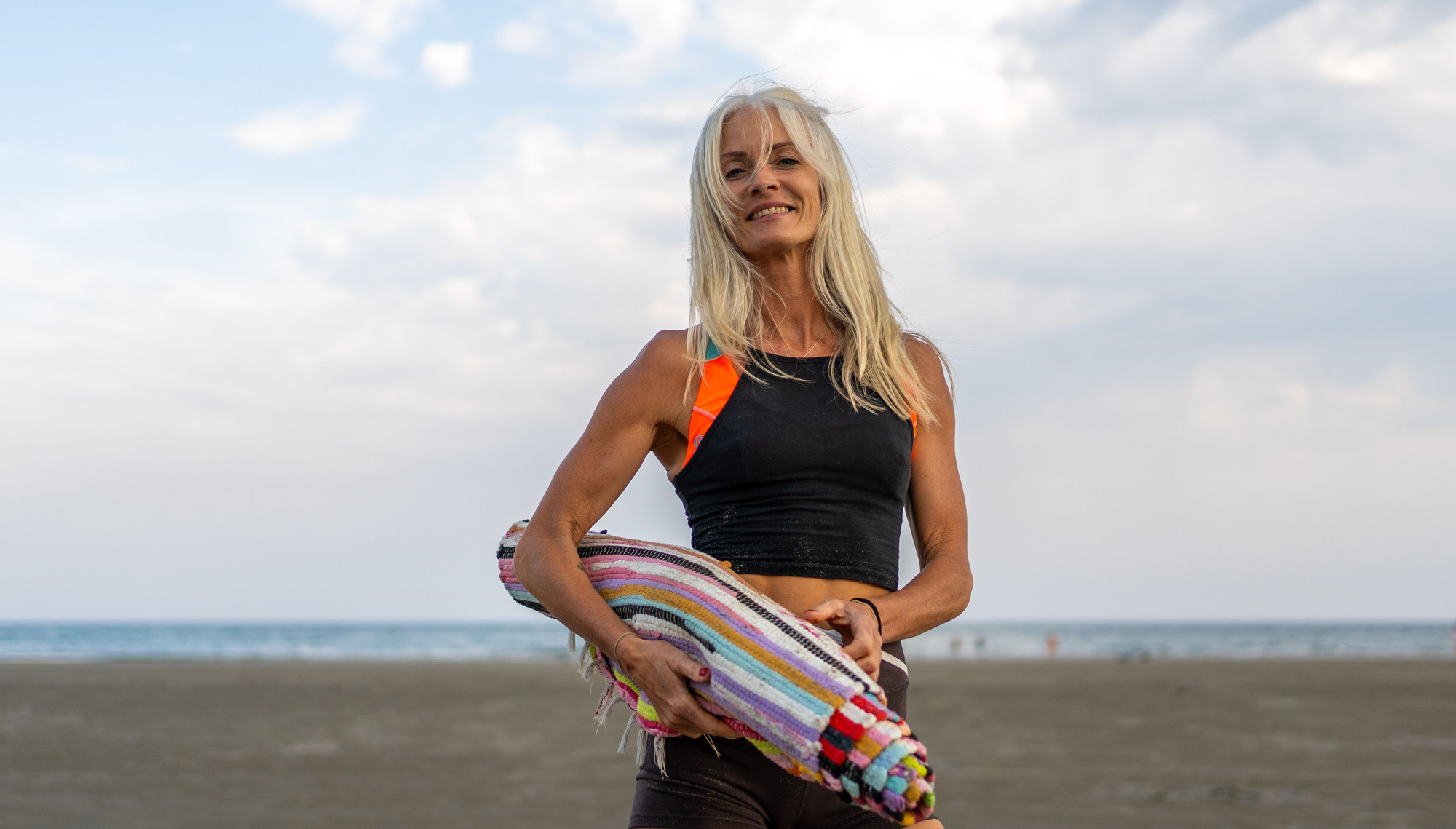
Beach yoga: 'Reclaiming our connection with water is essential to our sense of wellbeing'

Tap into the feel-good vibes this season by exercising outdoors. Esther McCarthy joins a beach yoga class at a local beach to get the lowdown on the Downward Dog
Odette Norman's yoga classes run four times a week, offering a pressure-free environment and expansive sea views. Picture: Noel Sweeney

Odette Norman's yoga classes run four times a week, offering a pressure-free environment and expansive sea views. Picture: Noel Sweeney

“Well, I’ve done classes in the rain, in the wind, in the sun, but this is the first time with thunder.”
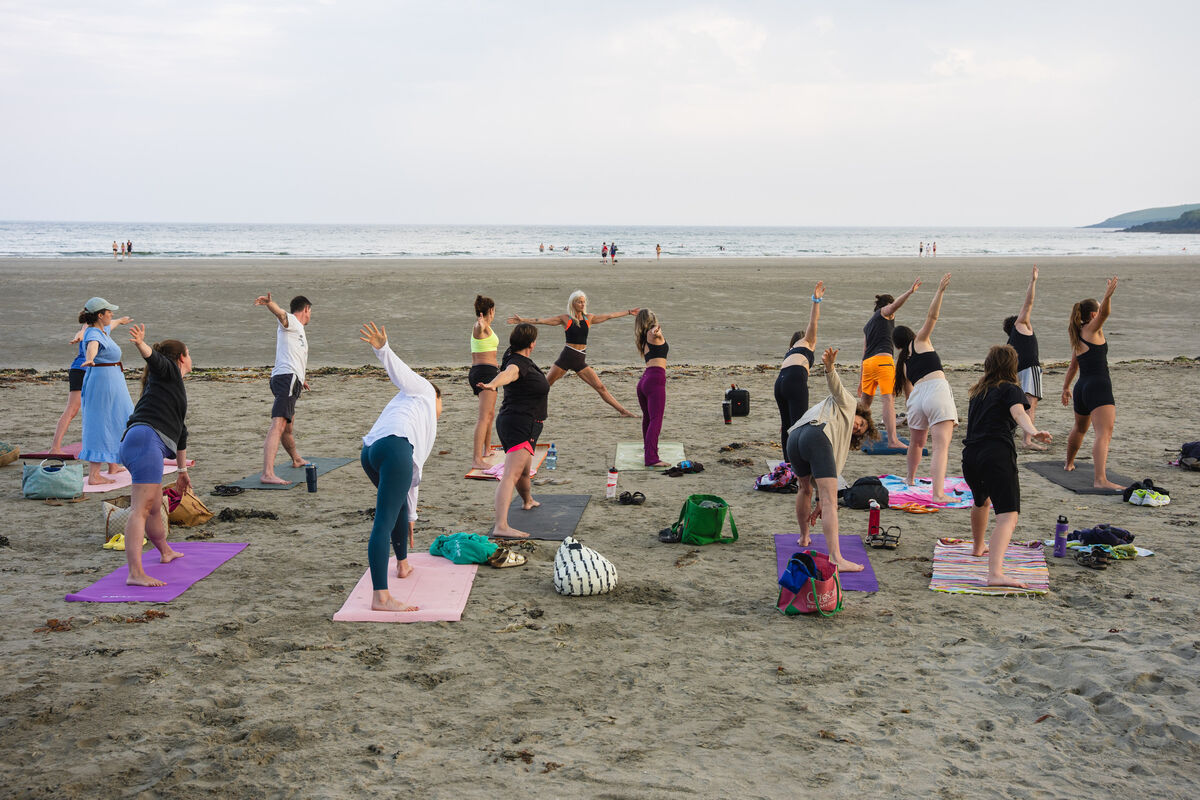
Odette Norman laughs, unrolling her mat on Inchydoney Strand as thunder growls somewhere out over the bay.

“We’re all part of this landscape; it’s part of us,” she says. “Let’s begin.”

I join the group of about 15 people: There are five guys, and the age range goes from what looks like early 20s up to bus-pass age and beyond. I plant myself facing the sea, and take the deepest breath I’ve experienced all day — maybe all week. Sand works its way between my toes, gulls complain overhead, a Jack Russell tears past chasing a frisbee, and a trio of surfers amble by in wetsuits, boards tucked under their arms, despite the small waves.

This, it turns out, is what yoga on the beach actually looks like: Not the airbrushed, sunset-silhouette version you’ll find on social media, but something scrappier, saltier, and considerably more alive.

It’s also increasingly what a lot of people are choosing to do with their free mornings. Outdoor wellness has quietly become one of the biggest shifts in Irish life since the pandemic. Think about all those running clubs, open-water swims, forest bathing and park Pilates. All of it is powered by the same instinct: Get outside, move your body, breathe.

Beach yoga sits neatly at the meeting point of that trend and something older and more specifically Irish —our relationship with the sea.

A growing body of research lies behind that instinct, and Donegal surfer-turned marine social scientist, Easkey Britton, has spent much of her career gathering the evidence.

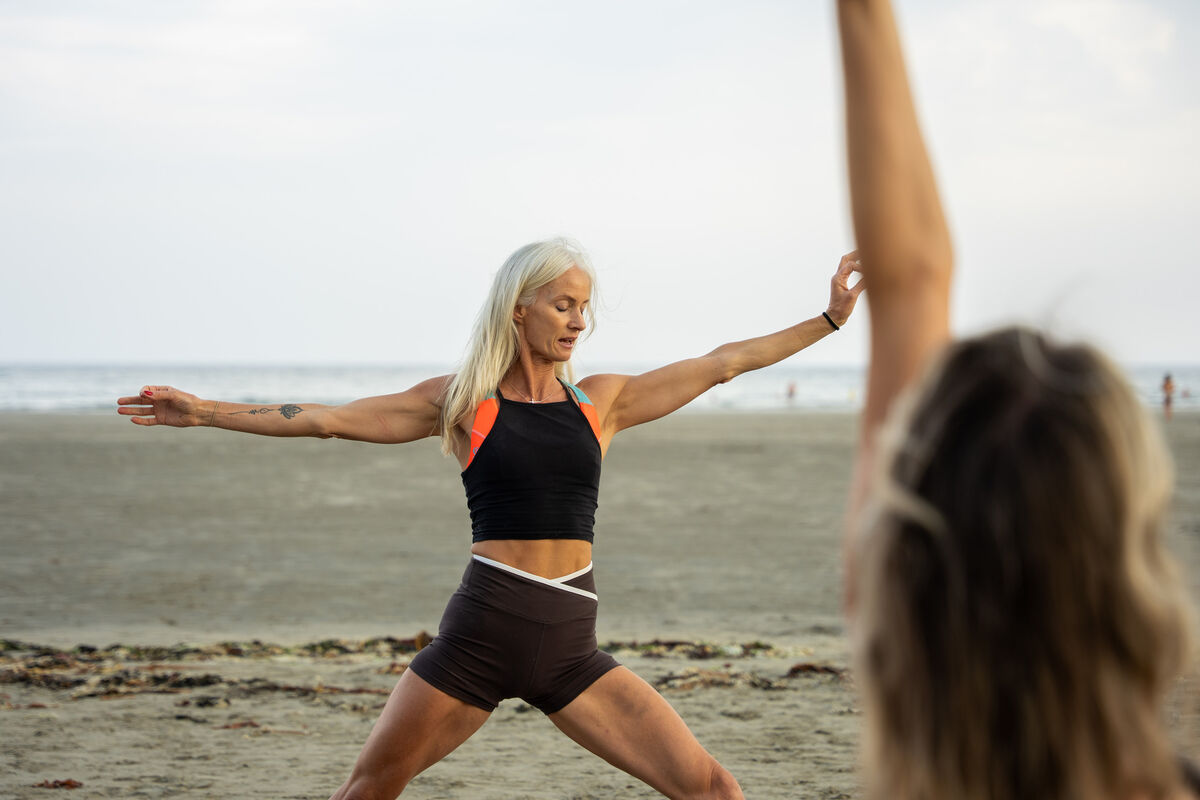
Odette Norman leading a yoga class on Inchydoney beach in West Cork. Picture by Noel Sweeney

Britton, based at the University of Galway, has helped lead international research into “blue health” — the study of how time spent in and around water affects our wellbeing. She has also written extensively on the subject, including in her books Saltwater in the Blood and Ebb & Flow.

She argues that reclaiming our connection with water is essential to our sense of wellbeing and belonging as islanders, and her research has found that wave-exposed coastlines are thought to release negative ions that can lift mood and ease stress. It’s the science behind what anyone who has ever stood at the edge of the Atlantic already instinctively knows: The sea does something to us.

Odette Norman didn’t set out to test that theory. Her first brush with beach yoga, on a grey, coat-wearing holiday in Lanzarote four and a half years ago, left little impression.

The idea that stuck came later, when a former colleague asked her to teach a one-off class on Inchydoney Beach. Rather than a fee, Norman suggested donations to Marymount Hospice, in memory of a close family member who had spent his final days there. Around 50 people turned up.

There was something incredibly special about practising together by the sea while supporting such an important cause

“The sense of connection, kindness, and community stayed with me long after the class had ended.”

She moved her own Saturday class outdoors soon after. Five people came to the first practice.

“But week by week, more people arrived,” says Norman. “By the end of that first summer, some mornings welcomed around 30 people.”

Now, four years on, Beach Yoga Inchydoney runs four classes a week, alongside Norman’s indoor classes at The Studio in Clonakilty and an annual charity fundraiser that’s never stopped.

Odette Norman: “Week by week, more people arrived, by the end of that first summer some mornings welcomed around 30 people.”

What strikes me most as I pause halfway through the class and reset for a ballerina pose is the complete absence of pressure. I haven’t practised in a while, but I feel immediately connected to the group and the flow. The thunder rumbles around the sky for the whole hour. I learn later that it is raining in nearby Clonakilty, but Zeus decides to keep us dry.

Practising on sand is unexpectedly humbling; the shifting surface challenges balances I would normally take for granted. My tree pose is more wilting willow than mighty oak, while the steady thrum of the tide makes it almost impossible to think about anything beyond the next breath.

Norman’s approach, informed by her own Ashtanga background but softened over years of teaching outdoors, is to meet people exactly where they are.

“I encourage people to move with awareness rather than striving for perfection,” she says. “When people feel they have permission to adapt a pose, rest when they need to, or simply breathe, they often have a much richer experience.”

There’s no competitive energy, no sense of anyone watching anyone else; this is just an hour of expertly-guided vinyasa flow, poses that can be adapted depending on your practice, and invitations to lift our gaze to the horizon.

Norman, who also holds a science degree from University College Cork, is quietly persuaded by the blue health research too. One of her regular students sums it up neatly: Resting your eyes on the horizon and breathing in time with the waves helps you relax deeply, while the breeze and smell of salt draw you back into your body.

Whatever the mechanism, the water, the movement, the community, or simply permission to stop and be for an hour, Norman says people consistently arrive frazzled and leave lighter.

I can attest to that. I practically float off the beach.

The social side matters just as much as the stretching. Nobody rushes off afterwards; some head straight into the sea for a dip, others linger over coffee — the Coffee Dock at Inchydoney offers a discount for class attendees, more West Cork soundness — and four years in, they tell me real friendships have formed.

If you fancy trying it yourself, it’s refreshingly low-cost and low fuss. Norman charges €10, and all you need is a mat (or even just a towel), water, and a layer for when the Irish weather does what Irish weather does (Odette_pt on Instagram or just send her a message on 087-0577695). Beyond Inchydoney, beach yoga is flourishing across Munster, with classes and retreats taking place on beaches from Garrylucas in Cork to Kilkee in Clare.

As our final savasana ends, the thunder rolls away, leaving a clear, salt-washed sky. I leave the beach feeling energetic, mentally reset, and far more in tune with myself than when I arrived.

Norman explains: “It’s not because yoga magically fixes everything, but because it creates space to pause, notice how we’re really feeling and reconnect with ourselves.”

One classmate describes the experience as “elemental”. Looking out across the Atlantic, with the last of the thunder disappearing over the horizon, it’s hard to think of a better word. By the time I pack up and start the climb back to the road and reality, I’ve already decided I’ll be back.

More in this section

Lifestyle

Newsletter

Eat better, live well and stay inspired with the Irish Examiner’s food, health, entertainment, travel and lifestyle coverage. Delivered to your inbox every Friday morning.

Cookie Policy Privacy Policy Brand Safety FAQ Help Contact Us Terms and Conditions

© Examiner Echo Group Limited