'I’ll never be able to eat a packet of crisps again' – Cork man diagnosed with tongue cancer

A painful mouth sore led to a tongue cancer diagnosis for Tim Madden, who reminds people to visit their dentist regularly
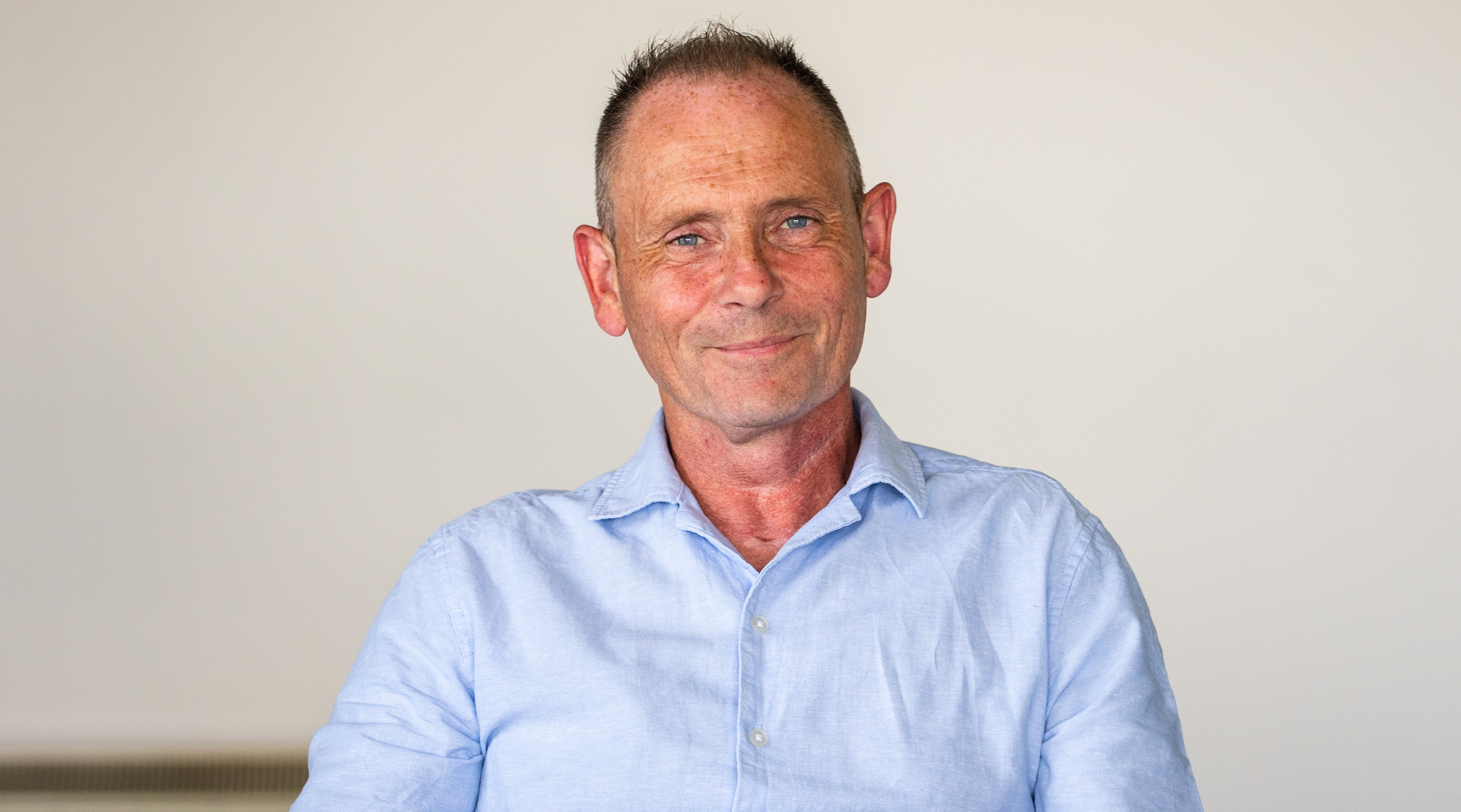
Tim Madden had tongue cancer and made a full recovery after a complete tongue reconstruction. Picture: Noel Sweeney

Tim Madden had tongue cancer and made a full recovery after a complete tongue reconstruction. Picture: Noel Sweeney

Tim Madden: was 33 when he was first diagnosed with tongue cancer. On a family holiday with his wife and three young kids at Disneyland Paris in 2014, he remembers noticing a painful sore in his mouth. He thought he might have bitten his tongue or that it may have been rubbing against one of his back teeth.

When he got home, the pain got worse. “It got to the point where it was affecting my sleep,” he recalls. “But men being men, I put it off for another week. It was close to Christmas, and I was organising the company Christmas party. I tried to put the pain to the back of my mind.”

Eventually, though, the Corkman made an appointment with his dentist, who measured the sore on his tongue. “Then he started writing a letter. He said to me, ‘I’m not too sure about this right now, Tim, but you need to get this checked in the hospital’. Because it was close to Christmas week, he said he wouldn’t put the letter in the post — instead, he told me to go to the hospital myself and hand it in.”

Madden says that at that point he “knew there was something very wrong”. He dropped the letter at the A&E in CUH on that Friday evening and left. He rang his wife to tell her what was going on, and while on the phone, he missed three calls from the hospital.

“They wanted me in straight away, so I was in there first thing on Monday morning for a meeting with the doctors. They knew it was cancer, but they had to do the biopsy to confirm it.”

The confirmation came a few days later.

A common cancer

Just under 800 people are diagnosed with head and neck cancers each year in Ireland. The cancer, which includes all cancers affecting the organs and tissues of the mouth, head or neck, is twice as likely to affect men as women and is the seventh most common cancer in the country.

Typically, it has been associated with smoking and alcohol use, but more recently, the human papillomavirus (HPV) has emerged as one of the fastest-growing risk factors for oropharyngeal cancer (cancers of the tongue and tonsils).

“HPV infection now accounts for over a fifth of oropharyngeal cancers, and over 3% of oral cavity cancers,” says Dr Eleanor O’Sullivan, ENTO Research Unit, Cork University Dental School and Hospital.

She explains that cancers caused by HPV have a different histological appearance and patient or tumour profile.

“They tend to occur in younger adults, and do not show the same male-dominant pattern. Also, they tend to present at late stage but have a relatively good prognosis as they respond well to combined radiotherapy and chemotherapy.

“HPV vaccination is our best hope for getting control of these cancers, along with awareness and regular screening.”

For Madden, who was a smoker, the diagnosis happened so quickly he didn’t have time to “think too much about what was happening”. He was told he would require surgery to remove the affected tissue of his tongue, followed by radiotherapy.

Telling his two eldest children, aged seven and five at the time, was difficult. The couple's youngest child was still a baby. “It was a hell of a Christmas,” he says. “Over the holidays, I was booked in for a series of scans — CTs and MRIs — to prepare for the operation, which was scheduled for early January in the South Infirmary.”

The operation in January 2015 successfully removed a small groove on the left side of his tongue, with no reconstruction necessary. This was followed by eight rounds of radiotherapy, which caused several months of mouth sores and infections.

Madden works as a rep for HB, so talking is part and parcel of his job. In the aftermath of his treatment, his speech was affected, but he says everyone he encountered, from colleagues to customers, was incredibly supportive.

Swallowing and eating solid food also took time to get back to normal. “I was drinking all these shakes and drinks to try to build up my weight, but I was missing the normal act of eating.”

Over the years, Madden experienced pain in his tongue occasionally and returned to the hospital each time to have it checked out. The results were always clear, until 2021, when he experienced severe pain.
He was diagnosed again with tongue cancer in December 2021. This time, the cancer was “aggressive”, and the surgery was scheduled in early January to remove half of his tongue.

“So there I was again, almost a mirror image of that Christmas six years before. Actually, I had the surgery on the same day in January as my previous surgery.”

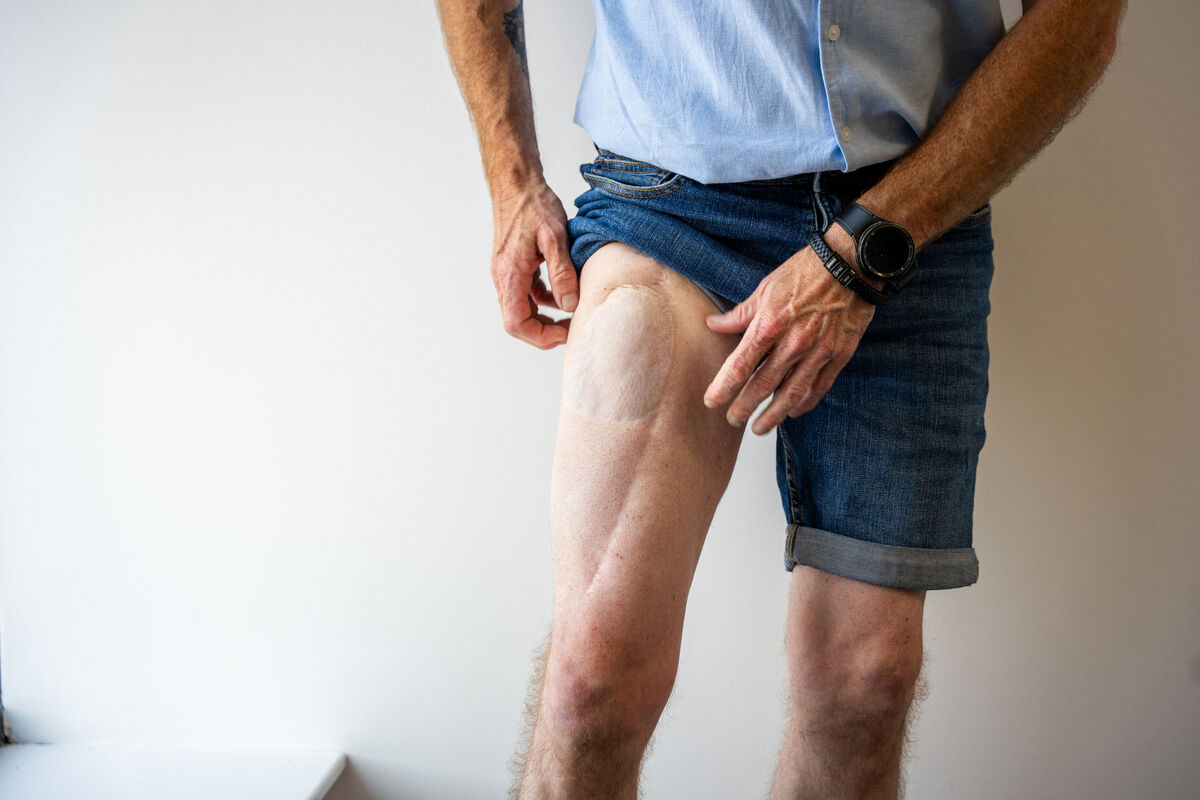
When he came to after the operation, the doctors told him that they had had to perform a complete glossectomy,  which entailed removing the entire tongue and its base. It was a major surgery that took 12 hours. The surgeons performed a free flap reconstruction, transferring healthy muscle, skin and blood vessels from Madden’s thigh into his mouth.

Tim Madden shows us scarring on a section of his upper leg where muscle was extracted and used to reconstruct his tongue. Picture: Noel Sweeney

Because they’d removed his entire tongue, further treatment was not necessary, but after such a life-changing procedure, recovery took longer.

“I had to learn a whole new way of doing lots of things. Yes, I had a ‘tongue’, and it helps a small bit, but it’s not going to do what a normal tongue will do. Simple things like licking your lips, for example,” explains Madden.

Road to recovery

He worked with a team including dieticians, speech therapists, and physios to regain some of his original functionality, but some things will never return to “normal”.

“I’ll never be able to eat a packet of crisps again,” says Madden, who says that eating in general is difficult due to the swallowing process. He knows what he can eat, mainly soft food, and sticks with that.

Most remarkably, his speech has recovered almost totally. Though he still has a mild lisp and needs to pause on occasion to suck back saliva, he is comfortable speaking and knows he can be understood. He puts it down to the amount of talking he does every day for his job, which he says acts as a kind of physio or training.

“I’m constantly talking and yapping, and that has stood to me.”

Madden, 41, who lives in Watergrasshill in Cork, says that although what he went through was traumatic, and at times “hellish”, he takes the view that “at least I’m alive”.

“I get to get up in the morning. I get to see my children and my wife every day.”

His advice to anyone is to “visit your dentist”.

“I know people are scared of going to the dentist, but it could save your life. I was just 33 when my dentist discovered my cancer, so it can happen at any stage.”

  • World Head and Neck Cancer Day is on July 27. The Irish Head and Neck Society’s annual Information Day will take place on November 22 in the Maryborough Hotel.

x

More in this section

Lifestyle

Newsletter

Eat better, live well and stay inspired with the Irish Examiner’s food, health, entertainment, travel and lifestyle coverage. Delivered to your inbox every Friday morning.

Cookie Policy Privacy Policy Brand Safety FAQ Help Contact Us Terms and Conditions

© Examiner Echo Group Limited