I've had two heart attacks — could gene editing help my chronically high cholesterol?

Christos Soteriou and his son Jade. Familial hypercholesterolemia, a genetic condition which causes high cholesterol levels from birth, has long plagued Soteriou’s family
When the chance came to participate in a clinical trial testing a novel way of lowering dangerously high levels of blood fats, Christos Soteriou, a 51-year-old from South Australia, jumped at the opportunity.
Familial hypercholesterolemia, a genetic condition which causes high cholesterol levels from birth, has long plagued Soteriou’s family. His father died of heart disease at 46, while Soteriou himself required a quadruple bypass in his late 20s. “I always suspected that I was at risk, but I didn’t think it would hit me so young,” he says.
Heart disease remains Ireland’s leading cause of death. According to the Irish Heart Foundation, approximately 10,000 people in Ireland are thought to be living with familial hypercholesterolemia. A number of cholesterol-lowering options already exist, ranging from statins to injectable medications. However, research suggests that between 25% and 50% of statin users stop taking the drugs within a year, while in some cases of familial hypercholesterolemia, the medications simply don’t work.
“I’ve been on every cholesterol tablet, on injections, absolutely every medication, and my cholesterol was still quite high,” says Soteriou. “And it’s not just the risk of heart disease; it really affects your quality of life. I’ve had blocked arteries in my legs, which has affected my mobility, just being able to walk the dogs, and then that affects your mental health.”
But a new way of managing cholesterol has begun to emerge in the form of novel gene-editing treatments that aim to lower cholesterol and other harmful blood fats by inactivating or suppressing key genes in the liver. The basis of these new treatments is Crispr, a technology which uses an enzyme called Cas9 to make precise and permanent alterations to the DNA of cells.
Along with 14 others, Soteriou was invited to participate in a trial funded by a US-based company, Crispr Therapeutics. It saw them receive an enzyme infusion to permanently switch off a liver gene called ANGPTL3, which helps regulate LDL cholesterol and triglyceride levels in the blood. When the trial’s results were published in The New England Journal of Medicine last November, they revealed that all had gone to plan. Within two months, patients who had received the highest dose saw LDL cholesterol and triglyceride levels fall by 49% and 55%.
“I’d been on the same medications for so long, and they hadn’t done anything,” says Soteriou. “But six months after I had this treatment, I got a blood test and for the first time, my cholesterol had dropped significantly.”
Steven Nissen, a cardiologist at the Cleveland Clinic who led the trial for CRISPR Therapeutics, described the approach as being potentially transformative for patients with familial hypercholesterolemia. “If you’d asked me 15 years ago if we could fix somebody’s genes, I would have thought you were crazy,” says Nissen. “We used to say to patients, we can change anything about you, except your parents. Now, in fact, that’s not true anymore.”

This initial study is also merely the beginning of bigger things to come. Crispr Therapeutics is now planning a much larger clinical trial, while another company, Verve Therapeutics, has another trial in progress with the aim of lowering LDL cholesterol by turning off a different gene called PCSK9. Preliminary evidence indicates that this has led to significant reductions in cholesterol.
The major advantage of gene editing over any other kind of cholesterol treatment is that, rather than requiring daily tablets or regular injections, it could permanently reduce a person’s risk of heart disease with a single, one-time treatment.
“For the right population, the elevator pitch is that with a single infusion, they would never have to take a [cholesterol-lowering] medication again,” says Priscilla Hsue, a cardiologist at UCLA Health in California. “So it’s lowering cholesterol for the rest of your life. That could be transformational for some people.”
While the first groups of patients being offered these new gene editing treatments are either those with familial hypercholesterolemia or those who have already had heart attacks, one cardiologist believes that their application could be expanded, should trials show that they are both safe and effective.
Kiran Musunuru, a cardiologist and professor of medicine at the University of Pennsylvania who co-founded Verve Therapeutics, believes that gene-editing treatments could also benefit high-risk groups for heart disease, such as those with type 2 diabetes, a condition that affects one in 10 people over 50 in Ireland.
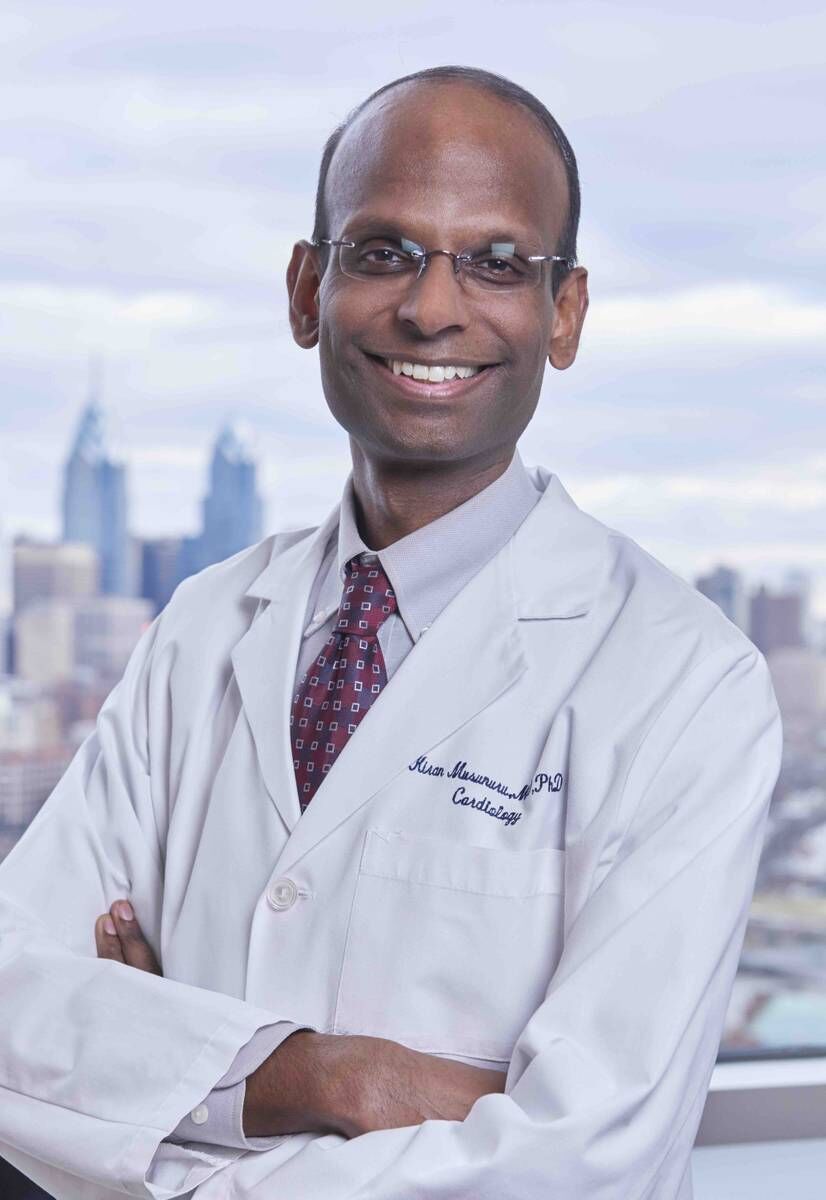
Diabetes and high cholesterol often occur together – creating a condition called diabetic dyslipidemia, with high blood sugars and elevated levels of these blood fats combining to greatly increase risk of heart attacks. Using gene editing to lower cholesterol levels in these patients, along with standard approaches for managing blood sugar, could offer a new means of improving short and long-term health.
In the coming decades, Musunuru predicts that anyone with a family history of heart disease, not just those with familial hypercholesterolemia, might ultimately be considered eligible to receive gene editing in early adulthood.
“It’s not really a vaccination, but it’s conceptually similar,” says Musunuru. “It’s like a one-time preventative that will protect you for a lifetime. If enough people in the population took this at a young age, it would improve life expectancy because cardiovascular disease is the leading cause of death.”
At the same time, the treatment’s permanent nature requires caution. Gene-editing treatments for cholesterol and other blood fats are unlikely to become available outside specialised clinical trials until at least the 2030s, as regulators need to ensure there are no unexpected side effects.
In the Crispr Therapeutics trial, the only short-term side effects reported were minor back pain, nausea and some temporary indications of liver stress, all of which subsequently resolved.
“For me, it was pretty easy,” says Soteriou. “I haven’t felt any side effects whatsoever.”
Musunuru is optimistic that the long-term safety profile will be favourable, not least because some people are born with mutations in their DNA that disable either the PCSK9 or the ANGPTL3 genes. Research suggests that, while these mutations do not appear to have harmful health consequences, they may naturally protect against heart disease.
“About one in 300 people in the population have ANGPL3 partly or entirely turned off,” says Musunuru. “The conclusions are very clear. It’s all upside, no downside.”
Still, when it comes to artificially modifying a person’s DNA, there is a theoretical risk that tools like Crispr could mistakenly edit a similar but different location in the genome. While such “off-target effects” have never been observed in either humans or animals, researchers believe it is vitally important to rule them out.
To minimise the risk of mistaken edits, some companies are exploring a newer, more precise method of tweaking liver genes, known as base editing.
While Crispr disables genes by cutting the two strands of DNA at a specific point in the genome, base editing alters a gene’s function by substituting a chemical letter in one strand of DNA. Put simply, Crispr is sometimes likened to scissors, and base editing to an eraser.
But whether through Crispr or base editing, Musunuru says that in the years to come, these new technologies will mean the field of cardiovascular disease prevention becomes even more personalised.
He highlights a type of cholesterol called LP(a), which can “drive” the risk of heart disease and is largely determined by genetics.
“There’s a possibility that down the road, depending on what a patient’s particular risk is, you could be targeting specific genes, or if needed, you could even turn off multiple genes.”
For Soteriou, who has already endured two heart attacks, the hope is that by finally having a way to keep his cholesterol in check, the treatment will prolong his life.
“It’s a massive breakthrough,” he says. “Before, I was worried about not having long to live, and I just think that it’s given me a little bit more hope for a few more years.”

CONNECT WITH US TODAY



Be the first to know the latest news and updates