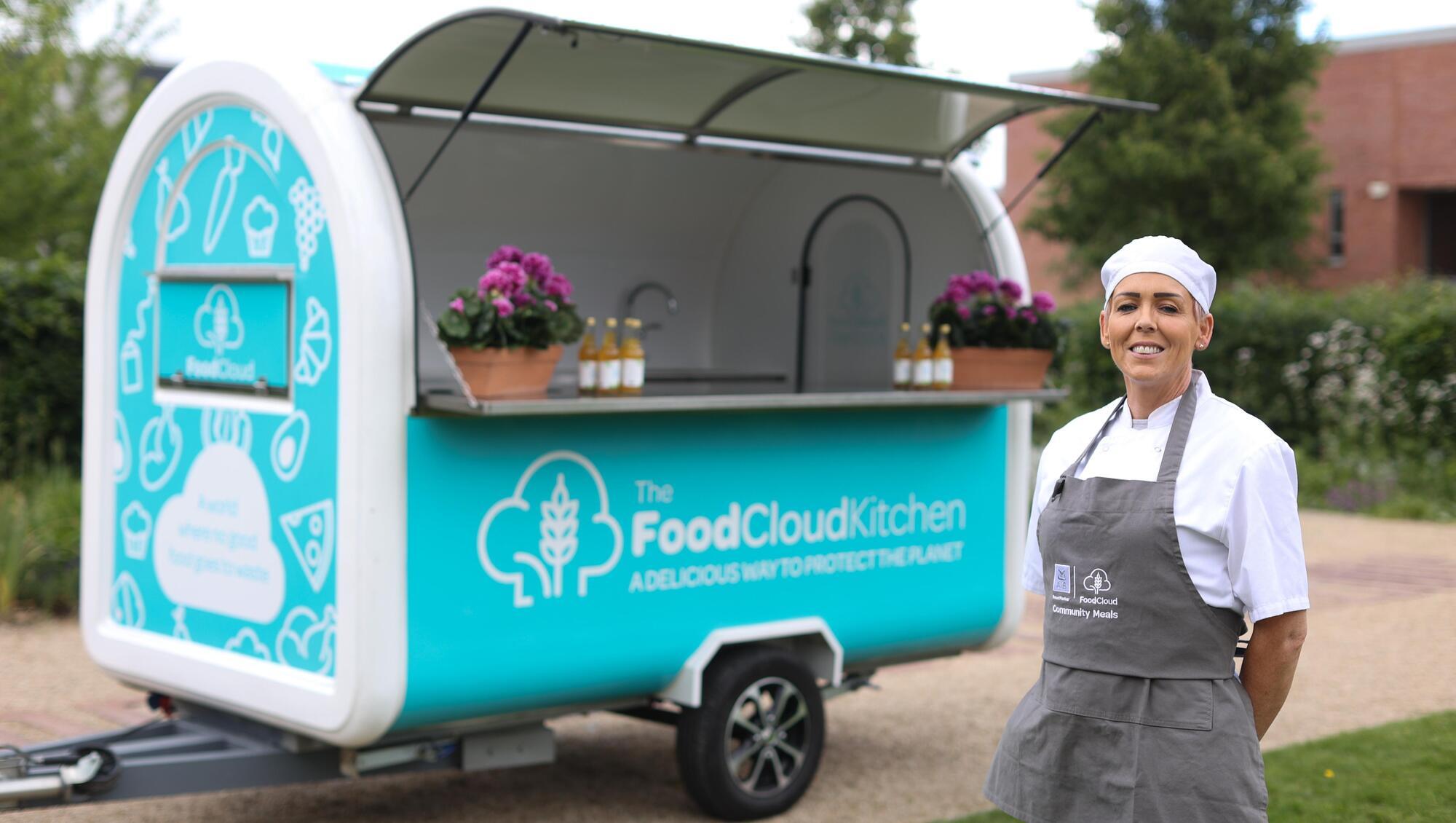
Putting rescued food on a festival footing: the FoodCloud Kitchen food truck
Food Cloud has three Hubs — the first was established in Cork, followed by Dublin and Galway — dealing with large volumes of surplus food which they can redistribute to charities around the country. Picture: Kenneth O'Halloran
Homemade chickpea burger with lime and coriander salsa, pan-fried Thai chicken on sticky coconut and pineapple rice, crispy nacho bowl with spiced Irish minced beef: a tempting food truck festival menu or a food waste solution?
It’s both.
Over the last couple of years, you might have noticed the bright blue FoodCloud Kitchen food truck popping up at festivals and events, serving up delicious dishes made from surplus food that would otherwise end up as waste, along with a side helping of consumer awareness.
“It's a really good conversation starter to say, ‘did you know that this is food which would have otherwise been wasted?’” says Aoibheann O'Brien, co-founder of the Irish social enterprise that is FoodCloud. It also challenges people’s perception of what they might think of as waste food: there’s a big difference between the idea of those few salad leaves composting themselves at the bottom of your fridge and the delicious bacon butty that you’re just about to tuck into.
“Sometimes it’s food that has been over produced or there’s been a mistake in ordering or it’s after Christmas or Easter but the food is never out of date. It’s not waste. It’s a really valuable and delicious resource,” says O’Brien. She adds that all proceeds raised by the food truck “go back to help us to create more and better solutions to food waste,” so customers can be happy about supporting the work that FoodCloud is doing while also enjoying a good feed.
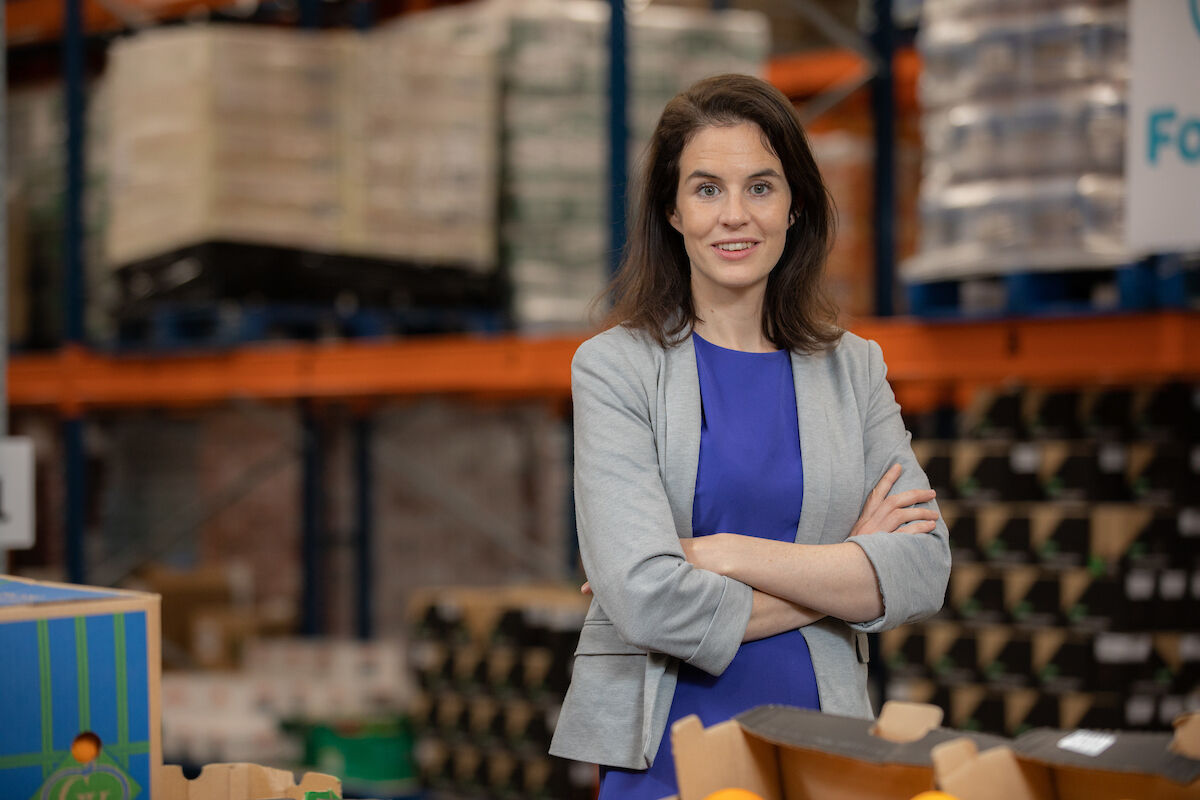
The sheer scale of food waste can be hard to grasp. “If it was a country,” says O’Brien, “food waste would be the third biggest emitter of greenhouse gas after China and the USA.” That’s not a statistic any of us want to be contributing to. It’s something that FoodCloud has been working on reducing since O’Brien and co-founder Iseult Ward embarked on a student project to create links between businesses that had food and communities that needed it in 2013 while they were still at Trinity College, Dublin. “It was an idea whose time had come,” explains O’Brien simply. Eleven years later, they have reached a significant milestone, having saved 300 million meals from being wasted.
By using technology to solve this problem of plenty and scarcity — connecting retailers with surplus food to local charities that need that food — they created a straightforward and scalable solution to a complex issue. Now FoodCloud has two core strands. Firstly, their tech platform works to directly connect retailers and food businesses with local charities. For the second part, they have three Hubs — the first was established in Cork, followed by Dublin and Galway — dealing with large volumes of surplus food which they can redistribute to charities around the country.
Ireland is not the only country that FoodCloud operates in: they also work with international partners who use their technology to prevent food waste in Britain, Czech Republic, Slovakia and, more recently, Kenya. “On any given evening,” says O’Brien, “on our platform we can see donations coming in from Nairobi to Newbridge. The technology enables local connections, it doesn’t matter where they are. That's the power of technology to create and accelerate change. It's very exciting to see the opportunities for us to share what we've done here in Ireland.”
By redistributing surplus, FoodCloud can reduce the environmental impact of food waste along with alleviating food insecurity. “Food waste is an environmental issue, it’s an economic issue and it’s a moral failure,” says O’Brien.
“On one side, you’re producing so much food that’s not consumed and on the other side you have people who can’t access food and are experiencing food poverty.” This imbalance is an international issue: O’Brien notes that up to 40% of all food produced worldwide is wasted and this happens all along the supply line, from agricultural production to those Sunday dinner leftovers that you put straight into the bin. Along with wasting resources devoted to cultivation, harvesting, processing, packaging and marketing, food waste also has a significant greenhouse gas footprint, especially when it ends up in landfill.
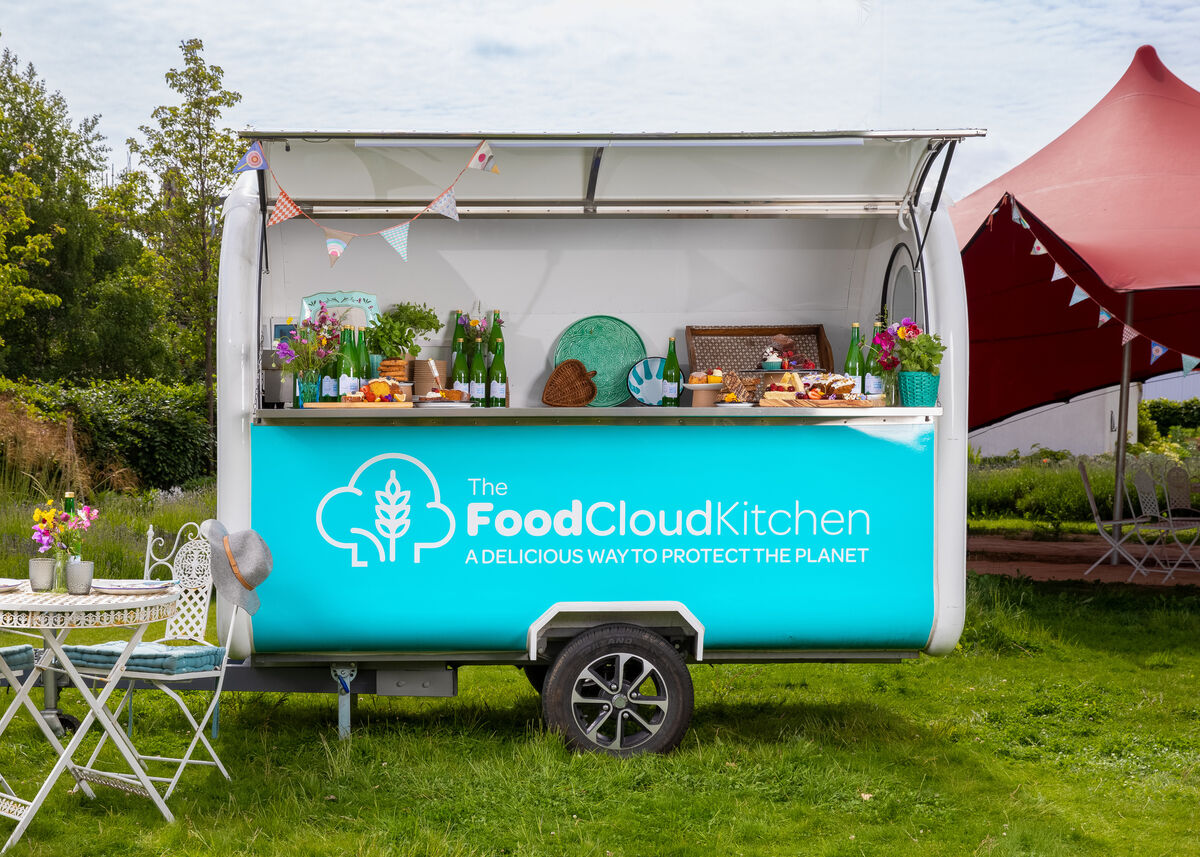
In 2022, FoodCloud launched their Clondalkin-based FoodCloud Kitchen, “a solution we created to address the food that we can’t give directly to charities,” explains O’Brien. Sometimes FoodCloud finds itself with a surfeit of food that their partners can’t use and in their own kitchen it gets “turned into meals for charities and used for catering events or corporate catering, helping us to further reduce waste.” This is also the food that supplies the food truck, the mobile catering, public-facing aspect of FoodCloud Kitchen which has brought its unique zero-waste take on festival dining to events like Ballymaloe Festival of Food, Bloom and the Durrow Scarecrow Festival.
The food truck enables people to engage with the issues around food waste by showing them what can be achieved with surplus food. “It’s about inspiring through action,” says O’Brien. “People are intrigued when they see the truck. Our chef Janice Downes has been working with surplus food for years, she’s very creative, and she can describe how the whole thing works. People come and talk and ask for advice on avoiding food waste, especially for things like lettuce and bread. They’re extremely supportive. People also want to share their stories of when they were growing up and nothing was wasted!”
“Food is a really powerful and important way of connecting people,” says O’Brien, “and the food truck is just another aspect of this.” It certainly is a delicious means of opening up the converstation about food waste.
Store strawberries in a glass jar or lunch box. Don’t wash berries until you are ready to eat them to prevent them from going soggy.
There are a couple of ways to store coriander [and other herbs] to ensure it lasts longer, but one of the best is to dampen a piece of kitchen roll and wrap it around the herbs, then store them in an airtight container or bag.
When you bring home spinach from the shop, take it out of the bag and put it directly into an airtight container with a piece of kitchen roll on top and put the lid on. This will help absorb moisture and keep spinach from wilting so quickly. If the kitchen roll gets too damp before you finish the spinach, replace it. Alternatively, wash, chop, freeze and add to stews as required, it only takes a minute or two to cook.
Root veg: Put wilting carrots or stalks of celery in a glass or bowl of water in the fridge to bring them back to life.
When you buy fresh ginger, peel it and place it in the freezer whole to take out and grate into recipes as you need it. Same with chillies: if you end up with more than you need, chop them finely and pop them in an airtight container in the freezer for when you need them.
- The FoodCloud Kitchen food truck can be hired for private events and also pops up at festivals like Fingal County Climate Action Festival on 14 September.
- Find out more at https://food.cloud/ or @foodcloudkitchen on Instagram


CONNECT WITH US TODAY



Be the first to know the latest news and updates