Finding a good home for leftover food
Nonprofit Social enterprise FoodCloud works with industry partners to support community groups by distributing surplus food and providing nutrition education
Finding a good home for leftover food

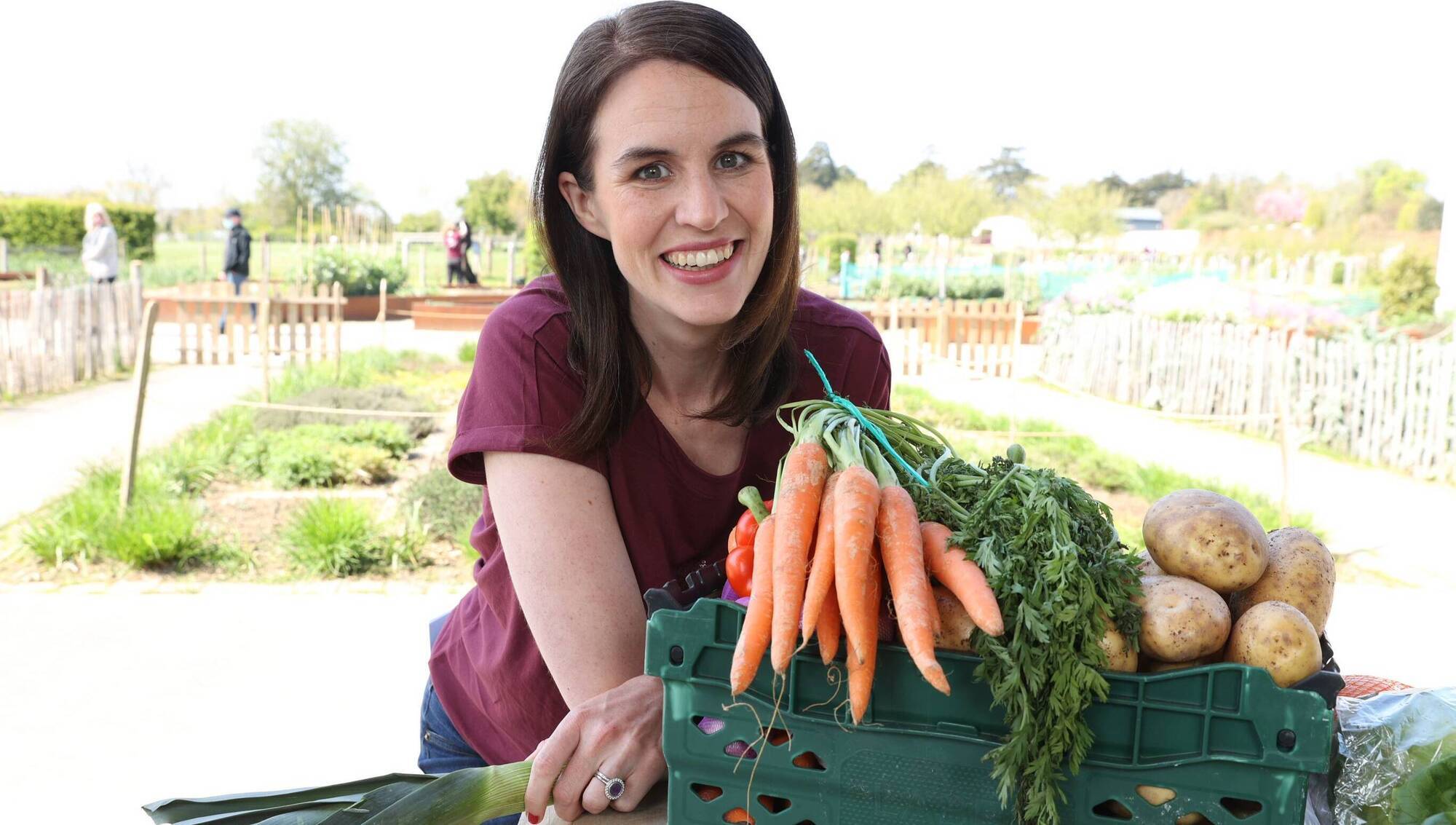
Aoibheann O’Brien of FoodCloud.

In Ireland, we waste approximately 835,000 tonnes of food every year, according to the Environmental Protection Agency, and this has consequences for everyone. It’s an economic issue — we’re literally throwing money away; it has environmental repercussions as food waste accounts for up to 10% of global greenhouse gas emissions; and it has a social impact — 9% of the Irish population lives in food poverty.

FoodCloud has been working to bridge the gaps by connecting food businesses with local charitable partners and ensuring that surplus food — perfectly good food that would be thrown away due to overproduction or short shelf life — finds a good home. The nonprofit social enterprise was started by Aoibheann O’Brien and Iseult Ward when they met as students at Trinity College in 2012. The beginning was simple: they connected a farmers’ market with surplus food to a teenage residential care centre that needed it.


Fourteen years later, FoodCloud has had a global impact. Their purpose-built tech platform enables the distribution of surplus food from food companies, retailers, and producers in Ireland, along with Britain, the Czech Republic, Slovakia, and Kenya. Starting with the FoodCloud warehouse in Cork’s Little Island in 2014, it now has three physical hubs in Ireland. Last year, the equivalent of more than 10m meals were redistributed, supporting 360,000 people in Ireland. This meant that almost 10,000 tonnes of CO2 from rotting food were prevented from entering the atmosphere. That’s a global impact.

While FoodCloud distributed surplus food to almost 600 organisations, from community centres and youth services to community cafés and university food pantries in 2025, it’s not a one-size-fits-all operation, as O’Brien explains. “We work with a network of charity community groups across the country,” she says.

“They’re all using food in different ways. In some areas, you could have a lot of family resource centres, you could have homeless accommodation, you could have education organisations that are providing lunch or… Meals on Wheels. So it’s very different in how they’re using the food.”

Getting food is one thing, but the challenge for many community groups is knowing how to use it effectively and nutritiously, especially as they often don’t fully know what they will get. “It’s not like ordering exactly what you want,” says O’Brien.

The recent renewal of a partnership with Danone Ireland, which has production facilities in Macroom, Co Cork, and Wexford town, has enabled FoodCloud to make the most of that company’s nutrition expertise. “We spoke to the community groups that we’re working with, and they said ‘we’re getting all this food and we’d love to get a little bit of guidance for the staff and the volunteers [about] what we could do with it’,” says O’Brien.

The recent renewal of a partnership with Danone Ireland has enabled FoodCloud to make the most of that company’s nutrition expertise.

Working with Danone’s nutritionists, FoodCloud has developed recipes for these community groups using the products most likely to be donated.

“The partnership has also allowed us to do webinars to leverage the expertise of qualified nutritionists working within [Danone], to share that with our network of community partners and build their capacity to maximise the potential of these surplus foods.”

Partnerships come in different formats: “Danone donates food, and they donate funding, and they volunteer,” explains O’Brien, while a recent event at Cork’s Northside Community Enterprises (NCE) showcased a collaboration between NCE, hospitality group Trigon Hotels, and FoodCloud.

Based in the former Farranferris boarding school, NCE trainees worked with Trigon group executive chef Alex Petit and director of operations Carmel Lonergan to create and serve a three-course, family-style meal from surplus ingredients sourced from FoodCloud. Tinned water chestnuts, pot noodles, and Advent calendar chocolates all made an appearance on the menu that night, showing guests that surplus food can also be delicious and nutritious.

Food is also a means of encouraging participation, O’Brien explains. “A lot of the services report back that they’re using it as a tool to engage people in a wider way around food education and sustainability. Food is that thing that brings people together, and for a lot of the community groups, it’s an enabler to start conversations and to explore new ways of doing things.”

While FoodCloud ensures that surplus food gets redirected and used by community partners, can more be done to reduce food waste at the corporate level? O’Brien believes the food industry wants to reduce food waste. “But there is an inevitability with the food system as it currently is, with [food] manufactured somewhere, distributed somewhere else and then it makes it to the shops,” she says. “It does mean that there is a lot of waste along the chain. I would say that the food industry is most focused on reducing it in the first place, but the nature of the food system means that it’s a big problem to tackle and it has to be done together,” she says. “It’s not one element or one manufacturer...To try and design out waste in the first place is very complex and it will take time.”

In line with the United Nations Sustainable Development Goals, Ireland is committed to reducing food waste by 50% by 2030, which could potentially put FoodCloud out of business. “It would be great,” says O’Brien. “We would be delighted to say ‘we played our part and now actually there isn’t as much food out there and we’ll wrap up.’ That would be ideal, but we still feel like we’re only scratching the surface of what’s available.”

  • The FoodCloud Food Truck will be serving rescued surplus food at Bord Bia Bloom in Dublin’s Phoenix Park from Thursday, May 28, to Monday, June 1.

More in this section

Lifestyle

Newsletter

Eat better, live well and stay inspired with the Irish Examiner’s food, health, entertainment, travel and lifestyle coverage. Delivered to your inbox every Friday morning.

Cookie Policy Privacy Policy Brand Safety FAQ Help Contact Us Terms and Conditions

© Examiner Echo Group Limited