Home Q&A: The sustainable way to enjoy a fire pit or chiminea in your garden this summer
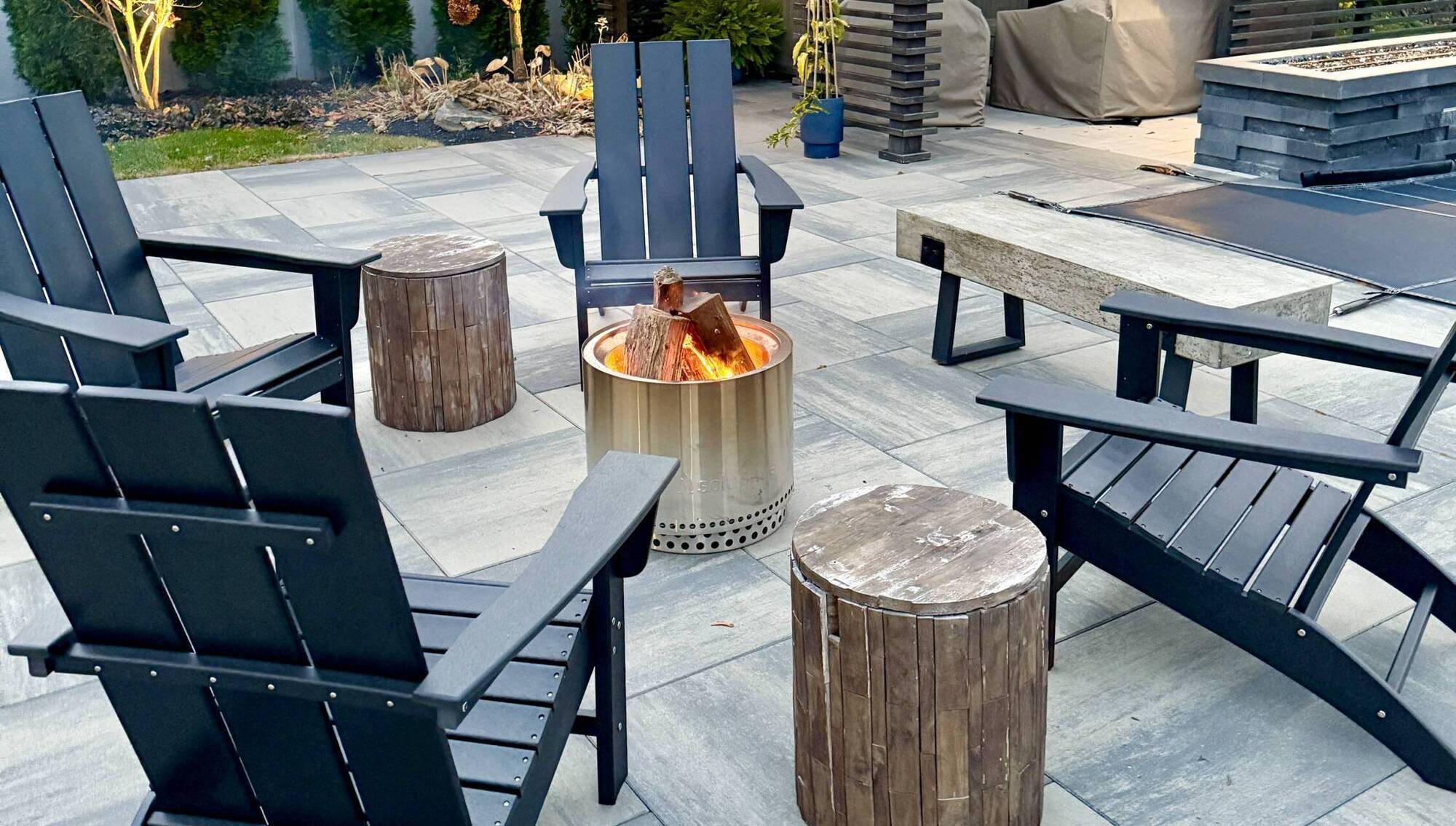
Cooking is possible using chimineas, fire pits and bowls. A base of kiln-dried logs finished with charcoal to the top can produce delicious results. Never use accelerants on a fire intended for cooking. File picture
We all adore the primal draw of an open flame outdoors, and with cool summer evenings in Ireland, a well-managed, enclosed fire provides a blessed point of direct heat after the sun goes down.
If you fancy the ultimate nostalgia experience, cooking over a grate, suspending a pot, or spinning up a joint or chicken on a rotisserie, a fire pit, basket, or chiminea fuelled by logs — or a combination of logs and charcoal — can perform multiple duties.
Let’s look at what’s legal, safe, Earth-friendly and possible before you light up.
Using backyard burning to dispose of household or garden waste is prohibited by law. A barrel even for burning leaves could draw the attention of your local authority if it’s noticed or a neighbour decides to shop you for lack of consideration.
The trouble with fires is that people often start with a happy-clappy, safe, small fire on a summer’s evening and then pile on plastic, paper, and general rubbish. The evening is over. Why not make use of the blaze? A reasonable amount of wood smoke becomes heavy, black, toxic fug carrying a heavy carbon burden, gases, dioxins, and various particulate matter.
We all know that person who burns waste not just outside but also uses their indoor fire or stove to dispose of small amounts of flammable garbage, including disposable nappies. It’s quite prevalent. The fines for doing this in the garden or yard are as much as €5000, and this includes any indoor open fire, range, or other solid fuel appliance.
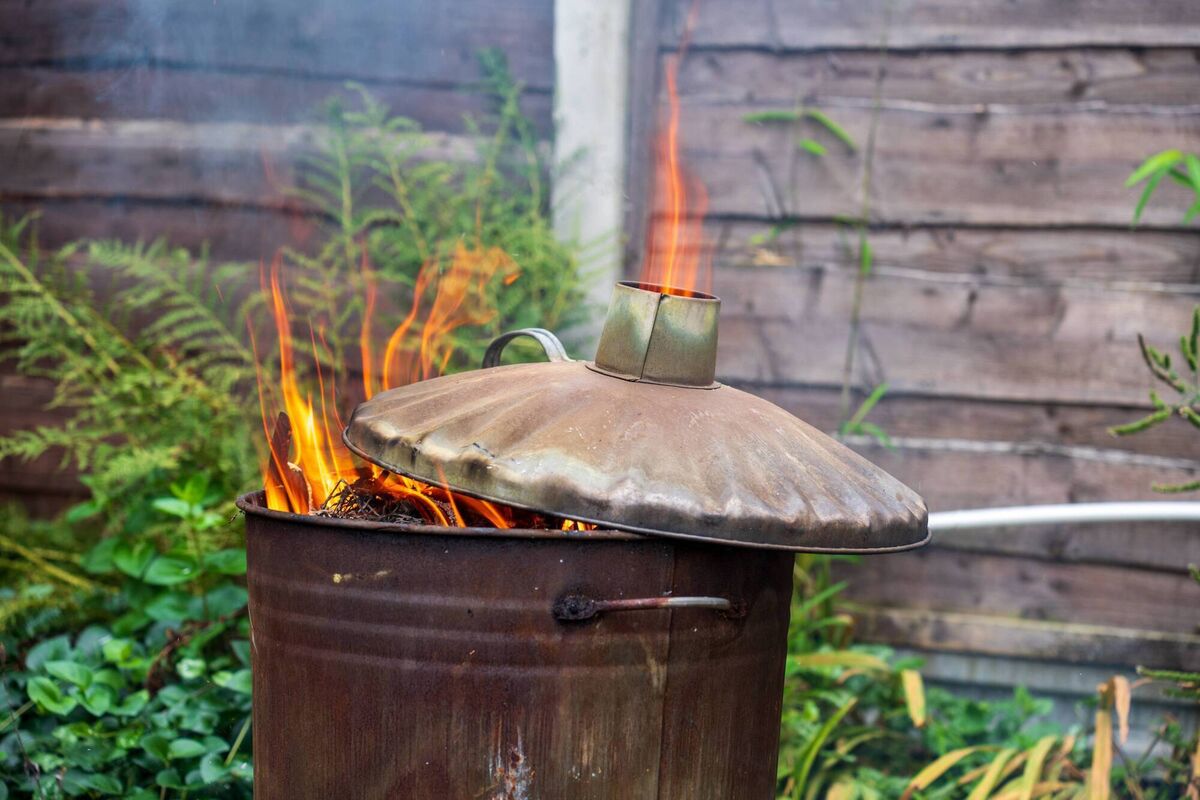
Though they’re available widely throughout Ireland, the use of mini-incinerators to burn rubbish, treated wood or garden waste (a fire box or galvanised dustbin often with a flue) is illegal in residential gardens.
If you have the confidence to approach your neighbour and an illegal burning issue remains unresolved, contact the National Environmental Complaints Line on 1800365123. You can also use the mobile app See It? Say It, available free on Google Play.
When planned and managed properly, you shouldn’t have any issues. We’re looking for kiln-dried wood logs or appropriate eco-fuels and kindling with a moisture content of 20% or less, as this will combust with the least amount of smoke and will burn most efficiently.
Fire pits and burners are not suitable for all settings, according to Dublin Fire Brigade, which advises: “Before setting up a fire pit, you should always make sure there are no hazards nearby.
“Place the pit away from anything flammable, such as trees, bushes, and fences. Do not place a fire pit on wooden decking. Never use a pit on an apartment’s balcony...make sure you check for anything flammable situated above your fire pit.
"Do not place your fire pit on dry grass. Don’t use lighter fluid or petrol to light the fire. Be careful immediately after using alcohol hand sanitiser, as your hands could be flammable until the alcohol evaporates.
"Have a bucket of water or a hose nearby. Be careful when moving around the fire pit. Avoid wearing loose-fitting clothes and scarves as they can catch fire if they come into contact with the flame. Allow the fire pit to cool overnight. The fuel could still be warm in the morning, so double-check the ashes are completely cool before you dispose of them.”
If you fancy building a pit, thank you to Eco Fuels Ireland for this vital tip to handle our rainy summers: “Drainage is extremely important for your fire pit, especially if you’re building it in Ireland. For your pit to drain appropriately, we recommend digging your foundations a little deeper (one-two feet) in the centre of your pit. Fill this with gravel and sand so water can flow through it.”
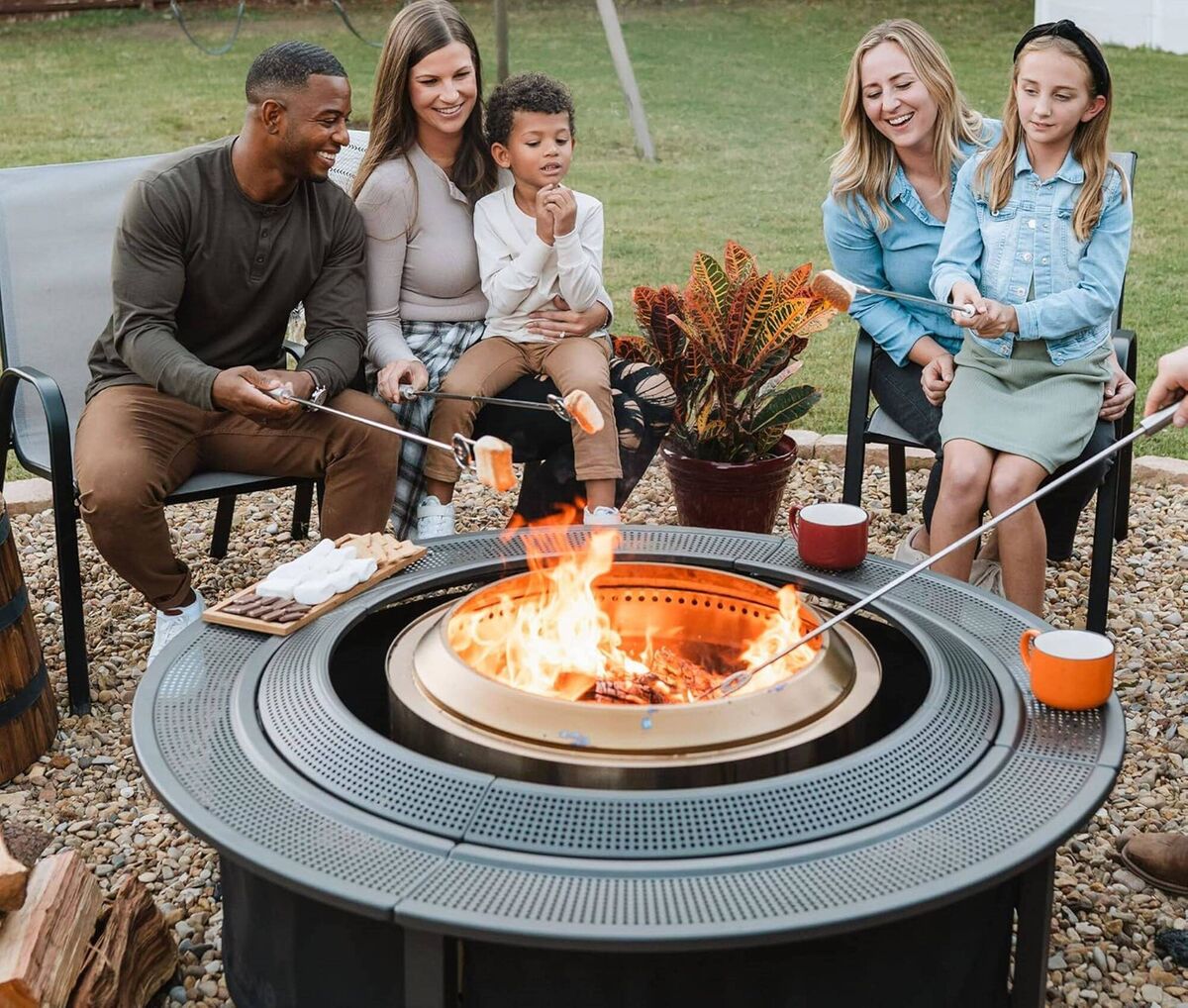
This season, look into the smokeless fire pit, available with a double-wall design with bottom vent holes serving the fire from below, creating a burst of hot air over the fire and reducing the smoke. The Solo Stove Yukon 2.0 is €392 on Amazon.ie. A fire pit can be assembled with clay bricks or landscaping blocks to surround a metal fire ring, without using any mortar.
Chimineas also have a housing which prevents them from being buffeted by the wind as fully as an open pit or basket, but this does mean that logs must be cut to size. A fire pit should be fitted with a spark-screen for ultimate safety, and not every outdoor burner will suit cooking. Prioritise this when shopping around.
For portable bowls or anything with a vertical flue, always use the stand provided and check its position and stability before every use.
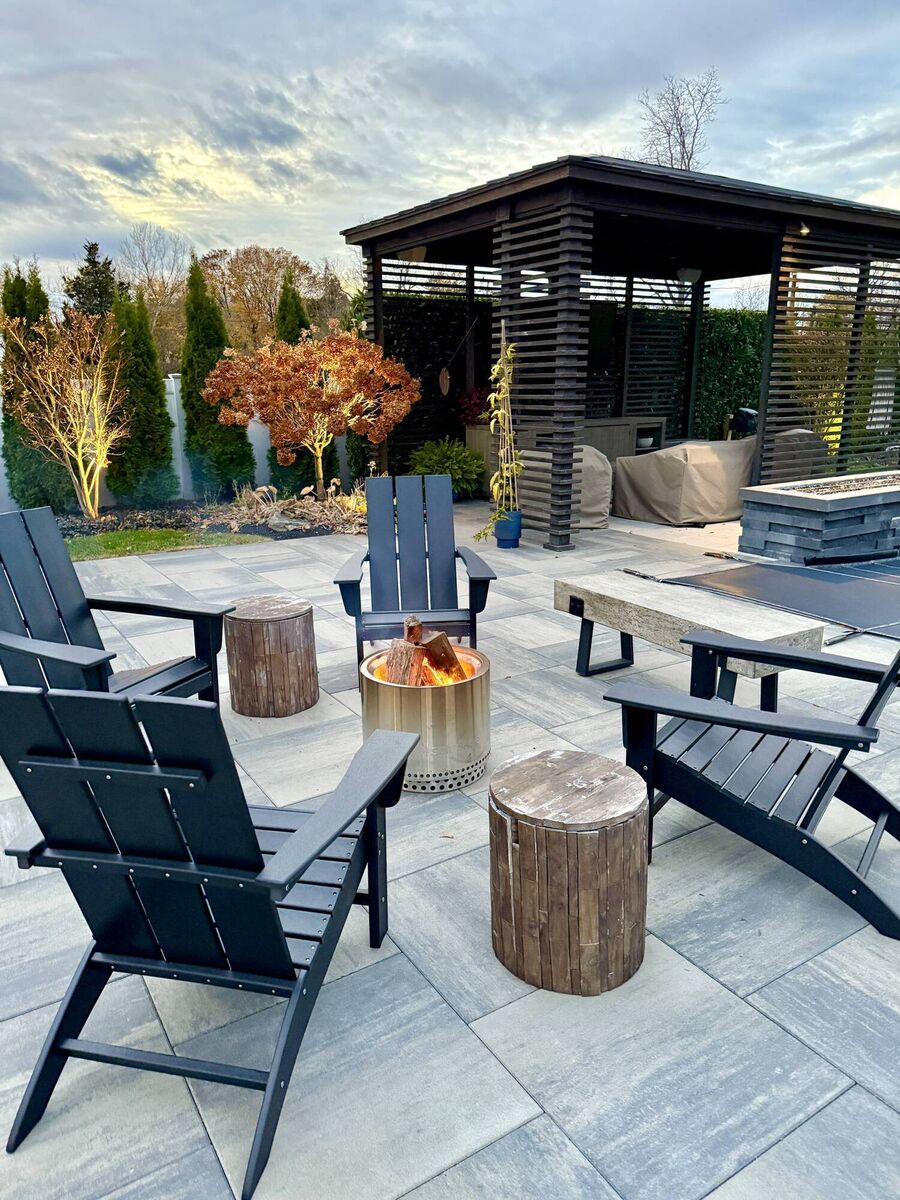
Obviously, we want an evening without stiff or blustering breezes that will fan flames and spread the smoke rather than letting it rise.
If you do create a lot of smoke, using wet wood, you could face a fine or warning under the Air Pollution Act of 1987. You might not be aware that someone living nearby could have a serious respiratory condition that may be worsened by wood smoke at near-ground level. At least give close neighbours a call so that they can close their windows if necessary.
For cooking on or over the fire, the delicious combination most people favour is kiln wood with a layering of charcoal on top. So long as you don’t spit any accelerant on the fire, this natural blend won’t taint the foodstuffs. We want the fire to be slightly dying back, with brightly glowing embers and coals, not licking up to our fingers.
We’re cooking in the super-hot air, not incinerating the foodstuffs down in the flames. For a fire pit or chiminea, a suitable grill-rack is suspended in a fixed position over the fire — job done.
If your fire pit doesn’t feature a rotisserie, you can pick these up as a full accessory kit to cook meat or vegetables (turning for an even lip-licking finish).
The true enthusiast can add a metal tripod to hang a cast-iron pot with a robust handle for stewing over a fire.
Some offer an optional hanging grill-rack. Pot cooking takes some skill, coordination, and heavy gloves to the elbow to pull off without screams, scalds, and burns. Ensure children are kept well away, and watch even teens toasting marshmallows, as high spirits can lead to serious accidents.
- Got a question for our Home team? Email home@examiner.ie
CONNECT WITH US TODAY



Be the first to know the latest news and updates