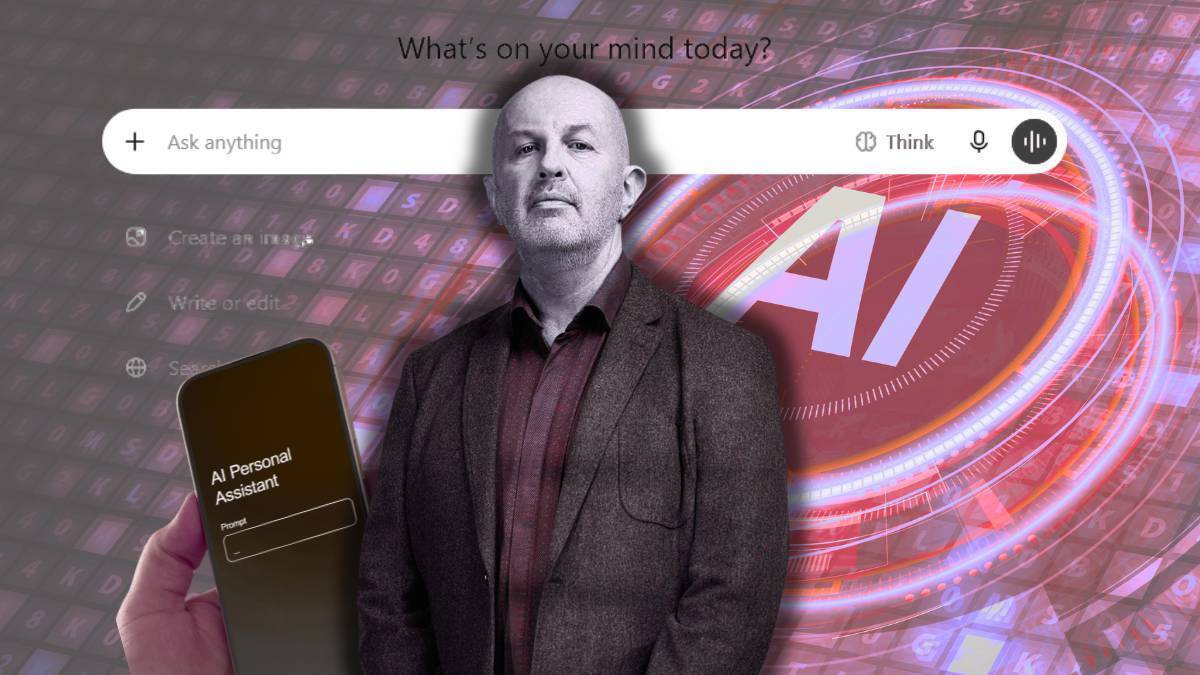
The email provided a little boost to my ego. It was from a person identifying themselves as Felix, who was a moderator for an online book club. They wanted to talk about my book, Who Killed Una Lynskey?.
The book was published in 2024 and in the nature of the short shelf life of books these days I had assumed it was practically forgotten about. But no, here was this person writing from the USA, inviting me to discuss the book with its members. And get this. It has a total worldwide membership of 120,000. Look at me now, ma. The world has finally recognised my genius.
“Through our Author Spotlight series, we introduce our members to exceptional books and create opportunities for engaging conversations with the authors behind them,” Felix wrote.
My eyes raced down through a long email in which it was obvious that Felix was across the details of the book.
“There is a contribution fee associated with participating,” he wrote. So I’m going to get a few bob as well as a chance to publicise the buke?
“To prepare the feature, we kindly ask participating authors to provide a PDF copy of the book, the official book cover, a brief author biography, and a professional headshot. These materials allow us to create a polished presentation and introduce your work properly to our audience.”
Then, concluding, a detail that a more sober, less excited person than I was in that instant, might have found the tinniest bit unsettling.
“If this sounds like something you would be interested in, simply reply “I’m interested”, and I will be happy to send you the participation details and next steps.”
I replied that I was interested and then the details were forwarded. This time there was no mention of the fee from the first mail but plenty of other stuff, including this fob to my ego.
“One question I’d love to ask before we begin planning: After spending so much time researching and writing Who Killed Una Lynskey?, was there one discovery or moment that changed the way you personally viewed the case?”
Obviously, Felix dug my exceptional work.
I began assembling what was required, but in the nature of authors the world over, a few doubts began to surface. For instance, the fee mentioned in the opening email was nowhere to be found in the follow-up. What’s the story. I got onto Felix again.
“The contribution fee for the complete Author Spotlight feature is $123.07 USD.” Oh, so I’m to pay the fee, not receive it. Asking for a fee. Asking for a PDF of your book? Red lights began flashing.
I can’t state definitely that Felix was perpetrating a scam. In subsequent mails, he repeatedly claimed to be on the level. But anybody I asked told me to run a mile from Felix.
Online scams are as old as online, but AI has opened up new possibilities. It now takes minutes to craft a scam whereas it might once have taken hours. Casting the net wider is now much easier and AI is particularly useful to scam people like writers and musicians because their work is digitally available and can be easily harvested.
Read More
George Walkley has seen it all with AI but when I told him about the request for the PDF, he hadn’t heard that before. Walkley is an author himself and works as a consultant in AI in publishing and media.
“There has always been the business model for internet fraud,” he said. “You send out millions of emails and a tenth of 1% will respond but if your cost is nothing and it takes none of your time and effort and you make a few hundred euro fraudulently from each one that responds, you have a business. It’s unprincipled and appalling for authors but you can see how AI is making it more viable.”
He finds it particularly offensive when authors or other creatives are preyed on in this manner. For my part, writing books is a sideline, but for others it is their main crust. Most creatives struggle to make a living. They invest huge time in the work and the work is part of who they are. That, Walkley says, is used by scammers.
“The thing I dislike most about this is that they are playing on the emotions of authors,” he says. “It’s a lonely experience. We hope and pray the work will go out into the world and be popular. Then it is flattering to be contacted by a group who want to laud the work. The first human instinct in that instant is to reflect on how wonderful that this is happening after all that was put into the work.”
Book club scams are just one way in which authors are being scammed. There is a huge market in “scraping” the contents of books, reworking it slightly and putting the resultant “new” book on a platform like Amazon to make some money.
This is precisely what happened to author Vanessa Fox O‘Loughlin, who writes best-selling crime novels under the name Sam Blake. She was contacted by a reader in Australia, who asked about her latest book, a “dark romantasy novel”. She hadn’t written it. Her identity as an author had been stolen, and the book entirely AI-generated.
“Disbelief and confusion, that was how it hit me,” she says. “I felt really sick. My readers had been notified by Amazon that I had a new book out and while I’m blessed that I’m an autobuy author, that means people would have bought it assuming it was me.
“And if they were new to reading Sam Blake, I could lose them forever as the AI book generated by Sam Fake was absolute rubbish. It felt like a seriously career-threatening moment.”

The author discovered that 10 of her books had been scraped for use in AI vehicles. It’s not just fiction that is impacted by the new form of piracy. One publishing executive that I spoke to, who wishes to keep identities confidential, had a recent case in this vein. A true crime book they published about a high-profile incident in this country was scraped and repackaged with a false author’s name.
“We got onto Amazon and it was removed soon after,” the executive said. “But then a few days later it was back up there. Apart from the financial loss there was also the issue of a family who had been close to this incident and their story was being used in this way, pirated in a form over which they had no control.”
Fighting back against the piracy of wealthy tech companies from often impoverished creatives has not been easy. One serious development has been an investigation by the American magazine, The Atlantic, which has produced a database of all the books, songs, videos and media articles that tech companies have used without explicit consent. The Atlantic watchdog has become a highly useful tool for people across the world.
For instance, the search engine threw up for me two books that I have written, including Who Killed Una Lynskey?.
Another small blow on behalf of authors occurred recently in the US, where a court settlement of €1.3bn was agreed by AI giant Anthropic for infringement of copyright.
The settlement will benefit possibly hundreds of Irish writers to the tune of €3,000 per any book that was pirated. However, the lawsuit only applied to books registered in the USA for copyright by 2022.
“I’m hoping a similar action will happen in the UK at some stage,” Fox O’Loughlin says. “And for it to include all the books scraped by UK and Irish authors, including the 10 of mine I know about. That said, I don’t think we can ever be fully compensated for the unlawful abuse of copyright to train these machines.
“No one can track to see how many million times a phrase or idea from one of my books has been used, or combined with someone else’s to give an AI answer.”
AI challenges for musicians
AI presents similar challenges for those who work in music. For instance, a friend recently sent me an album by an artist he had recently discovered on Spotify. Benny Rivers was the artist’s name and when I began listening to the album, I heard strains of JJ Cale and BB King. The cover showed a middle-aged black man dressed in a tuxedo. How had I missed this guy?
A little research threw up that he is an invention, an AI creation who arrived fully formed from Silicon Valley rather than rising note by note from the reeds of the Mississippi Delta. Benny Rivers was custom created by AI. If you just happened across him on Spotify you might well have wondered whether he was John Lee Hooker’s first cousin, twice removed.
More to the point, it is entirely unknowable whether the music he emits — known as slop — includes the work of real people who haven’t a clue their work has been pirated.
Spotify is making moves to crack down on the Benny Rivers of this world. The platform is to introduce a flag on such beings to notify they are “AI personas”.
The label is designed to tell listeners that an artist’s identity “may be AI-generated and does not represent a real person,” according to Spotify.
Music from profiles carrying it will be kept out of Spotify personalised recommendations by default.
Sean Donegan chief commercial officer with the Irish Music Rights Organisation (IMRO) says that the biggest thing with their members is consent.
“There are creatives who want to have a choice on whether AI platforms use their work,” he says.
“These platforms need to train more songs all the time. People go to an AI tool and say they want a sound like this or that. So the platforms need to keep feeding the machine. There is an opportunity for creatives but they have to have a choice as to whether their work is being used.”
Small steps have been made in this area also. On July 31, a German court ruled that AI music generator Suno infringed copyright by using tracks represented by GFMA — Germany’s equivalent of IMRO — without authorisation. The tech giant was order to cease doing so and pay compensation.
There are, IMRO’s Donegan says, four principles which must be adhered to in this area if creatives and authors are to have their work and livelihood protected.
“Transparency, consent, licensing, and labelling,” he says. “That’s what we want to get across. A lot of creatives earn less than the average industrial wage.”
So in goes in the scary new world of AI for artists, authors, creatives, songwriters.
Their work, for which most of them scrape by, is out there on the high seas of cyberspace, ideal prey for piracy. And ultimately the beneficiaries are the tech giants who are today’s masters of the universe, dictating how we live, cheapening the precious societal gem of artistic endeavour.
CONNECT WITH US TODAY
Be the first to know the latest news and updates