Letters to the Editor: Caring for children with disabilities
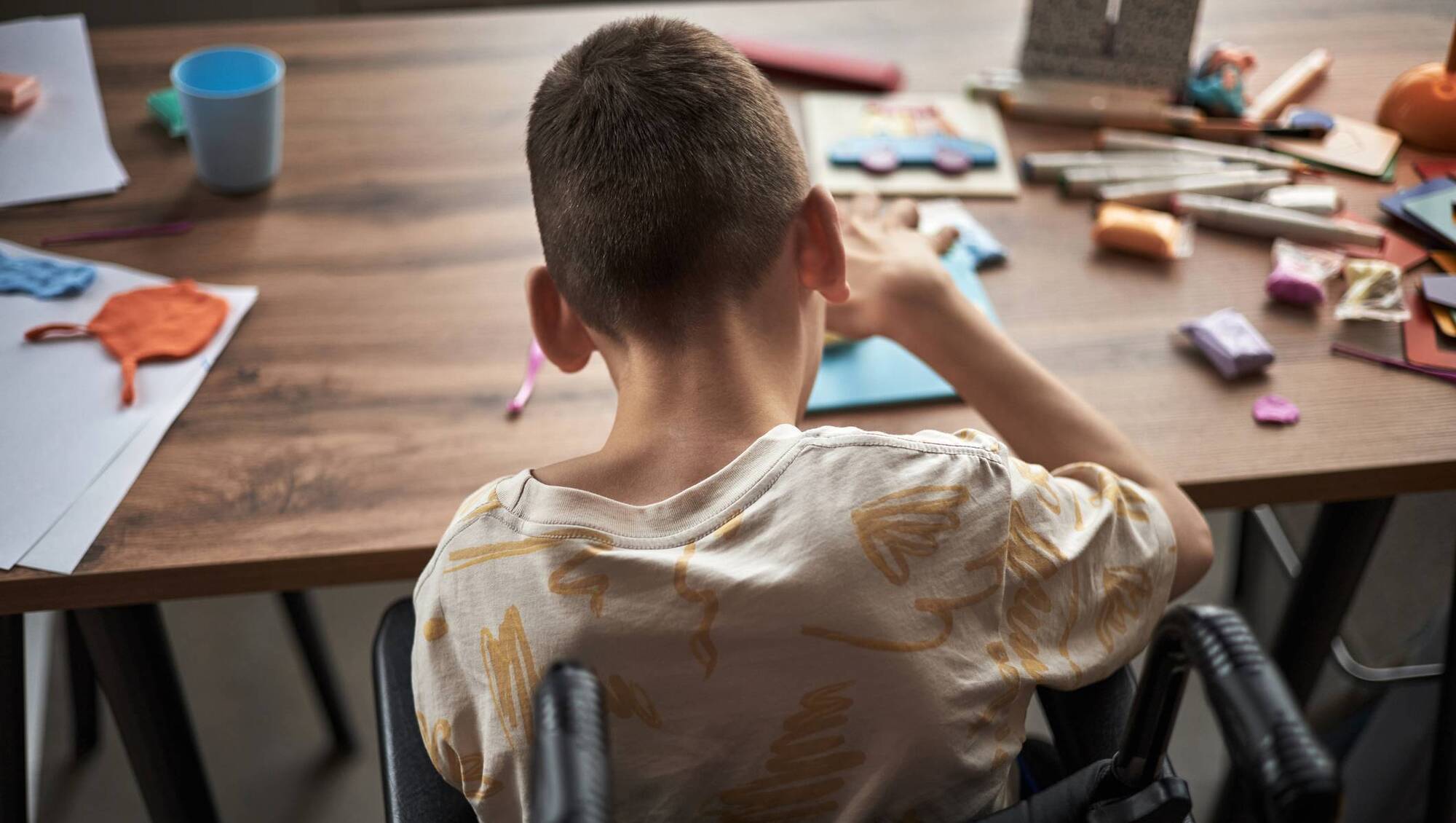
'A certain type of child, especially with profound autism, will always require a high level of support and parents should not have to exhaust every aspect of the HSE in order to get the right one'. File picture
He was 12 years old and my only regret is that we didn’t try get this place sooner.
My son, who presents with profound autism, received an extensive amount of supports through the HSE early intervention, special school, home support, behavioural support, respite, and therapeutic interventions — from a very young age.
The narrative that still exists in society, and among advocacy groups and the Government, is that if an individual receives adequate support they won’t need residential care.
This is not true and my son, and many others, are examples of this.
None of these supports even remotely helped the level of care that we were trying to provide at home.
Therapists can help advise with strategies at a very young age but they do not take from the high level of care that will always be required, which again places the sole responsibility on the already exhausted carer.
A certain type of child, especially with profound autism, will always require a high level of support and parents should not have to exhaust every aspect of the HSE in order to get the right one.
For someone to say that residential care should be the last resort is misleading and incorrect.
It makes out that somewhere along the line there has been a failing of adequate support. And yes, in some cases, this was true but in many it was due to the nature of the diagnosis.
Parents all over Ireland are fighting for full-time places while desperately trying to avoid crisis placements.
I am glad to see an increase in residential places but it’s still not enough.
We need the message to be clear and create a clear pathway to these supports.
If this support is what would suit the individual’s needs — and families’ needs — then why put it last on the list?
Why have to exhaust every aspect of a service in order to get what is needed?
Resources that could possibly help individuals who don’t have the same support need are wasted.
You simply cannot replicate the care an individual receives in a residential setting in the home environment.
It’s like placing a band aid on an open wound and the sooner we accept this we could make real changes to support families in this country caring for children like mine.
I read with interest the thoughts of Kieran Shannon, Patrick Horgan, and John Fogarty on hurling in Tuesday’s
All are of the opinion that ‘all is not right in the house of hurling’ and I concur.
What I found amazing for three such hurling men was that not one of them recognised the obvious (to me at least) ‘elephant in the room’ — that is the split season.
I was appointed secretary of my GAA club in 1975 so I have some experience in the way our national game has progressed — or otherwise — in the last half-century.
Back then things were pretty straightforward as all championships were straight knockouts — no back-doors, losers group, or round robin —and this applied to both club and inter-county championships.
In the 1970s and 1980s players could play with their club up to a week before an inter-county game.
Gradually then we saw greater demands being made on inter-county players — they were debarred from club activity for two or three weeks before togging out with a county team.
This led to the woeful disruption of club championship schedules.
A player playing with Cork might be scheduled to play with his club the following week, then if Cork drew and a replay was fixed for two weeks later the club game went off. So the county team got precedent and clubs were often 10 or 12 weeks waiting between championship games.
With the advent of the back door, losers group, etc, the situation got even worse for club players — remember only less than 5% of hurlers and footballers ever get to play with their county team, so club championships had no certainty.
The obvious solution was to curb the powers of inter-county managers and ensure club and inter-county fixtures programmes dovetailed with each other thus ensuring players — both at club and county level — got meaningful hurling games from April until at least September.
But the GAA introduced its own version of what can only be termed Gaelic sporting apartheid.
As long as this split season regime is in place, club hurlers will be mainly confined to the autumn months with no summer hurling. The inter-county season will end in mid July.
As regards promotion — what a laugh — do we in the GAA even know the meaning of the word? I doubt it. Not even a top class hurling game, with the stars of our sport, in the month of August when every child in the country is on holidays.
Clueless planning — why wasn’t there a mini game at half time last Sunday?
The old system of clubs getting games put off and off didn’t work.
Neither does this spilt season model. It’s time for the GAA to look at a dual, hybrid system — both to promote hurling and ensure the ending of this condensed, squeezed and idiotic so called ‘system’.
Patrick, John, and Kieran should wake up and not be afraid to tell the truth about the way hurling is going. The split season is not working.
For many years we have holidayed at the River Lee Hotel in Cork.
Often during our stay we are asked, “how long are you staying in Cork?”
When we say “three weeks”, the response, offered with more than a tinge of incredulity is, “why?”
Why indeed.
While our visits coincide with the wonderful Cork Midsummer Festival and the Bantry Music and Literary Festivals we feel that West Cork offers what is best about Ireland, its people, culture, and history.
As Scots we thank you for your welcome.
We hope that Ireland, while continuing to be internationalist in outlook and citizens of the world, never loses that special identity as a unique and special place to visit.
Louise Burne reports the Taoiseach’s confirmation that Ivana Bacik’s bill to help child sexual abuse survivors in securing redress from religious orders ‘aligns with Government policy’ — ‘Six-month delay for redress legislation’ ( , June 24).
Apparently, in the same breath, he announced that he would delay the bill by another six months.
Fianna Fáil negotiated the infamous indemnity for religious orders, insulating them from paying anything approaching their fair share towards redress.
Meanwhile, your readers and I are carrying the burden of compensating those abused in institutions.
Church-State collusion in the 20th century ruined thousands of lives.
Neither could have done so without the complicity of the other.
So, why is one party being let off the hook for another six months?
The bill concerned was referred to the Attorney General nearly two years ago. Justice delayed is justice denied.
The Fianna Fáil leader should learn from the mistakes of his predecessors.
I welcomed the call from Norma Foley in her most recent article — ‘We must listen to young voices regarding social media ban’ ( , June 22).
When a ban, that if introduced, would mean contravening substantial articles of the United Nations Convention on the Rights of the Child, then listening to young people is not just recommended, it is a necessity in a pivotal human rights issue.
Indeed, the Government did invite young people, along with a number of expert witnesses across research, advocacy and clinical practice, to provide their views at a recent Oireachtas subcommittee hearing.
Not one expert witness recommended the ban.
The Government also commissioned the Online Health Taskforce, including the voice of young people in the process, and published a very considered and well-informed set of recommendations.
Jigsaw published a co-designed policy brief with young people, the outcomes broadly aligned with the Online Health Taskforce report.
Both recommending evidence-informed ways of embedding safety by design and not recommending a social media ban.
It is a pity, with all of the time and insight that young people have already given to this debate, that the minister and the Government have not yet seen fit to listen to them.
It appears they will continue to be asked until they give the ‘correct’ answer.
Meanwhile, the technology companies that to-date have failed to protect children adequately online stand to profit most from the very age verification processes being proposed by the Government.
Something our ministers should be conscious of. Regardless of our views on the ban, most of us would not allow our children to upload a photo of themselves alongside their personal information online and yet this is the very process that the Government is set to implement.
If only we had bold, courageous, leadership.
If we could have even one politician who was willing to think beyond potential economic benefit, choose not to feed into a moral panic for the sake of short-term popularity, and actually stand up for children.
If only we had a leader who was willing to make difficult decisions that are rights-based, grounded in youth voice, and hold social media companies properly to account.
It is entirely disingenuous to ask young people yet again to share their views on the social media ban when the Government has consistently refused to listen to what they have to say.
Donald Trump was going to “drain the swamp” but that didn’t work too well with the green Lincoln Memorial Reflecting Pool.
Maybe Abraham Lincoln had turned green in anger at what was being done to his memorial pool.
The latest oddity in this enterprise is using the US National Guard to patrol this algae filled swamp.
Sometimes I think politicians don’t live in the real world but rather a swamp, now green, of their own making.