Letters to the Editor: Restore medical card for all aged 70 and over
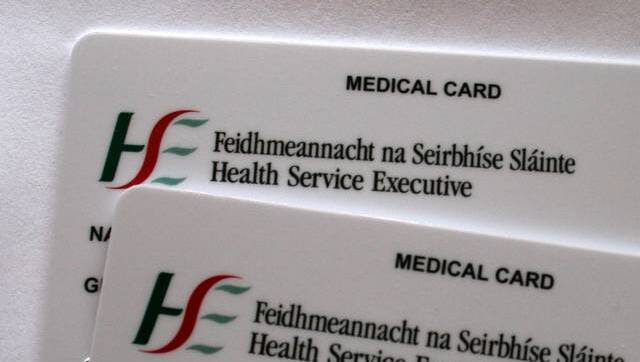
A reader points out that pensioners who lose their medical card may face prescription costs of up to €80 per month under the drugs payment scheme.
Before the financial crisis of 2008, every person aged 70 and over was entitled to a general medical card, regardless of income.
It was a recognition that older people should not have to worry about the cost of essential healthcare in later life.
Addressing the Irish College of General Practitioners in 2008, Dr John McManus described the universal over-70s medical card as “probably the most equitable tax-funded health scheme ever introduced in the State”.
That changed in the 2009 budget when, in response to the banking crisis and the EU/IMF financial rescue programme, the government introduced a means test for those over 70.
Many pensioners lost an entitlement they had believed would remain with them for life.
Seventeen years later, the emergency that justified those cutbacks has long since passed, but the means test for over-70s remains.
Today, a pensioner who has worked all their life, paid taxes and PRSI, and receives a modest occupational pension alongside the State contributory pension, can lose their entitlement to a general medical card simply because they made provision for their retirement.
These occupational pensions are not a windfall; they are deferred earnings accumulated over decades of employment.
The consequences are significant.
Pensioners who lose their medical card may face prescription costs of up to €80 per month under the drugs payment scheme.
For many, the financial pressure comes at precisely the stage of life when healthcare needs are increasing, and fixed incomes leave little room for unexpected expense.
The means test also sends an unfortunate message: That those who acted responsibly by saving for retirement are penalised for doing so. That cannot be the hallmark of a fair and equitable health system.
The universal medical card for people over 70 was introduced because healthcare in older age should be based on need rather than financial means.
That principle remains as valid today as it was then.
The Government should now review the policy introduced as an emergency measure in 2009 and restore the universal entitlement to a general medical card for everyone aged 70 and over.
It would acknowledge the contribution older people have made throughout their working lives,
reduce inequalities in access to healthcare, and demonstrate that the State values those who built the society we enjoy today.
We certainly are living in an ever-changing and capricious world.

I was flabbergasted to learn that the family of former Republic of Ireland manager Jack Charlton have said they are facing a £200,000 (€233,000) inheritance tax bill if they want to keep his 1966 World Cup winner’s medal within the family.
Charlton died in 2020, aged 85, and was part of England’s World Cup-winning team that defeated West Germany 4-2 at Wembley in the 1966 final.
I am bewildered and befuddled as to why the family have to pay tax on this most-treasured medal.
It’s stomach-churning to think that his family cannot enjoy his 1966 success without the avarice and greedy claws of a government endeavouring to get their pound of flesh from Charlton’s memory, which no doubt must be causing family members undue stress.
Shashi Tharoor’s account of what has now become known in India as the ‘cockroach movement’ shows once again that the reins of power can change very quickly when young people organise en masse and challenge the status quo.
Reading the article (‘Triumph of India’s cockroaches show power of youth’), I’m reminded of David Miles Hogg, one of the survivors of the Parkland high school shooting in Florida in 2018, which killed 17 people.
Hogg, 26, is now a well-known political activist in the US and, after being kicked out of the Democratic National Committee last year, has put all his energies into helping young, progressive candidates around the country get elected to state legislatures and the US Congress under his new political action committee Leaders We Deserve.
The narrow win by Abdul El-Sayed in the Michigan Senate race last week to take on the Republican contender in November’s mid-term elections has sent shockwaves through the Democratic Party.
Hogg did not hold back after El-Sayed, the child of Egyptian immigrants, won, despite almost $32m from the American Israel Public Affairs Committee being spent on supporting the more moderate Haley Stevens.
Hogg said moderates and centrists “don’t have the right values anymore”, particularly in relation to their stance on Gaza, and that the “geriatric” Democratic Party needs to change to reflect a new generation of up-and-coming party representatives.
No doubt lessons that could be taken on board by some of the older, centrist members of the political establishment in Ireland.
How ironic that children’s minister Norma Foley is going to spend millions on a three-year plan to counter the rise of ‘tradwives’ instead of spending taxpayers’ money to support those parents — be they male or female — who freely choose to rear and educate their own children instead of outsourcing it to others.
Does the Government view such parenting as a negative?
So much for diversity, equality, and inclusion.
It is positive that the Defence Forces — land, sea, and air — are upgrading their Unmanned Aerial Systems (UAS) and counter-UAS capabilities.
This is not a short-term solution, but the reality of defence in the future.
By way of example, during Nato’s 2025 Hedgehog exercises in Estonia, a group of several thousand troops were “destroyed” by a team of 10 Ukrainian drone operators, as reported in The Wall Street Journal, a salutary signpost.