Ireland's Atlantic coastal clans were not isolated, purely Gaelic societies in the Middle Ages
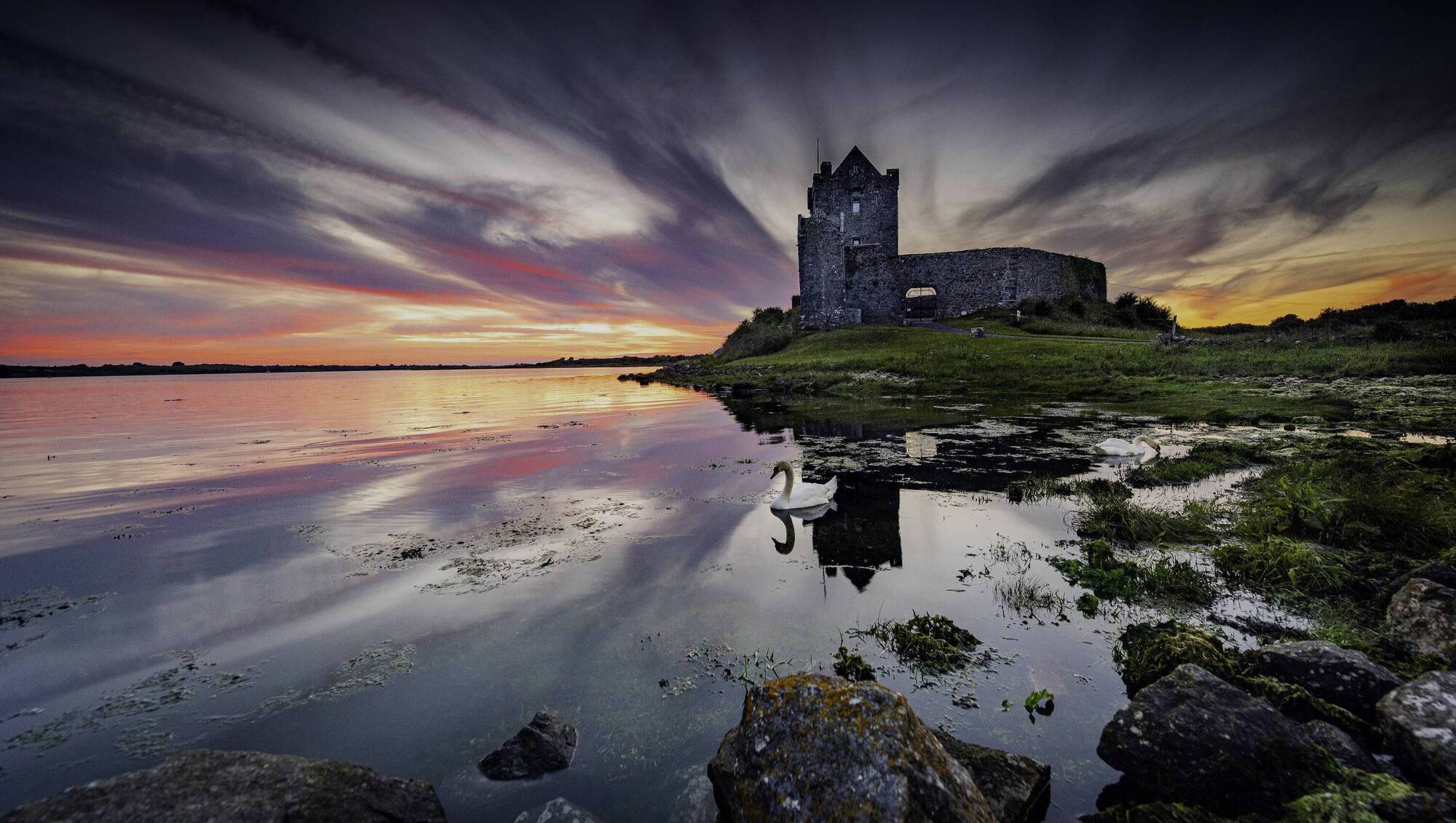
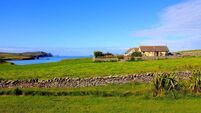
Dunguaire Castle, Kinvara, Co Galway. Far from being a Gaelic idyll, the peoples who lived on the Atlantic coasts of Ireland and Scotland in the past had short, hard and often brutal lives, defined by a continual struggle to survive in difficult physical environments. Picture: Enda O'Loughlin
Our western seaboard was once thriving and cosmopolitan. In my three decades investigating the history of the complex Atlantic coastal communities of Ireland and Scotland, what has become apparent is how complex, cosmopolitan and linked to European society those pre-colonial Gaelic communities once were.
During the period from the 11th to 17th centuries — what we know as the Middle Ages — a series of lordships existed along these coastlines that were largely independent political territories lying beyond the control of the English and Scottish crowns. Kin-groups such as the O’Sullivans, O’Malleys, O’Donnells, MacDonalds or the MacLeods were among the septs or clans that controlled these territories.
This was a maritime society bound to the sea and their island and waterfront castles, settlements, churches, and often finely carved funerary monuments all bear testimony to the vibrancy and durability of this society until the old Gaelic order collapsed in the early 17th-century through crown-sponsored colonial enterprise.
To the modern visitor, these are beautiful places with dramatic coastal scenery stretching along the Wild Atlantic Way to Ulster’s north coast and across the channel to the west coast of Scotland and the Hebrides.
Even the landscape would have looked very different to our medieval ancestors, with its current rocky barrenness owing more to modern intensive agricultural practices and the forced movement of people off the land, to be replaced by sheep and commercial woodland plantations, than any medieval activity.
HISTORY HUB
If you are interested in this article then no doubt you will enjoy exploring the various history collections and content in our history hub. Check it out HERE and happy reading
To many 20th-century writers and artists, the peoples that lived along the western seaboards of these islands represented the living embodiment of a purer Gaelic society, living simple but full lives. Yet my research directly challenges many of these simplistic and overly romanticised constructs.
Far from being a Gaelic idyll, the peoples who lived on these coasts in the past had short, hard and often brutal lives, defined by a continual struggle to survive in difficult physical environments. Their histories were marked largely by violence, by early death and by near-continual insecurity.
Contemporary visitors may also perceive these places as being marginal and on the edge, with many attracted to their perceived isolation. Yet they were not isolated places in the past — maritime communities created a series of political alliances and socio-economic connections with other groupings along the sea routes of the region from West Cork to as far north as the Outer Hebrides.
These peoples were intrinsically bound to wider European society through trade, fishing, pilgrimage and learning. Large fishing fleets were a common sight off the west coast throughout the medieval period, although fluctuations in fish population size due to climate changes meant this was not consistent.
Similarly, there was extensive movement of peoples from this coast to Europe as part of pilgrimage activities but also in pursuit of knowledge at many European centres of learning. Their lords and social elite were not isolationist leaders overseeing local, petty kingdoms but were instead often well-versed in contemporary European cultural practices through their travel and engagement with continental Europe.
Certain contemporary commentators have again begun to promote the concept of a past Gaelic political nation that is now being diluted by modern arrivals. Such a singular nation never existed.
Instead, Gaelic maritime society consisted of a loose informal federation of familial groupings spread across these territories that shared traditions and cultural characteristics. These were effectively autonomous entities and were not part of a singular, politically bounded nation but were instead tied together through cultural practice and elements of a shared identity.
Many of the lordly groups retained political and territorial expansionist ambitions but their ultimate interest was the promotion and survival of their immediate kindred and associated land holdings.
These were also groups that constantly navigated their standing in society and were continually engaged in negotiations and alliances with other groupings often manifested through marriage, fosterage and kinship. This complex mosaic of intermarriage and fosterage was embedded within established cultural practices and was used as a form of diplomacy between the septs.
What may surprise is the proactive role for individual women in society who came to these arrangements as powerful people in their own right, enjoying considerable agency and voice. While many of these women are relegated in the historical sources it is clear that many had a strong, independent voice and were regarded as leaders across both the secular and religious world.
The medieval Gaelic peoples did share a common language and aspects of a cultural tool-set, but this did not represent a deep lineage. It was instead something that was continually renegotiated and subject to local change before it diverged across the regions by the 17th century.
Ultimately there was a degree of interdependence between the Gaelic regions of Ireland, Scotland and the Western Isles, but this was never a Gaelic state. Instead, the peoples who lived along the western seaboard were part of a culturally dynamic society that was firmly embedded within the wider western European social world of the time.
As ever, history has lessons for the present.
- Colin Breen is deputy head of the School of Geography and Environmental Sciences at Ulster University in Northern Ireland, and is an advisor to UNESCO on culture, heritage and climate adaptation. His book will be published by Cork University Press on Monday, May 18, 2026 corkuniversitypress.com

CONNECT WITH US TODAY



Be the first to know the latest news and updates