From tenements to today: How 1926 housing data reflects modern Ireland’s property challenges
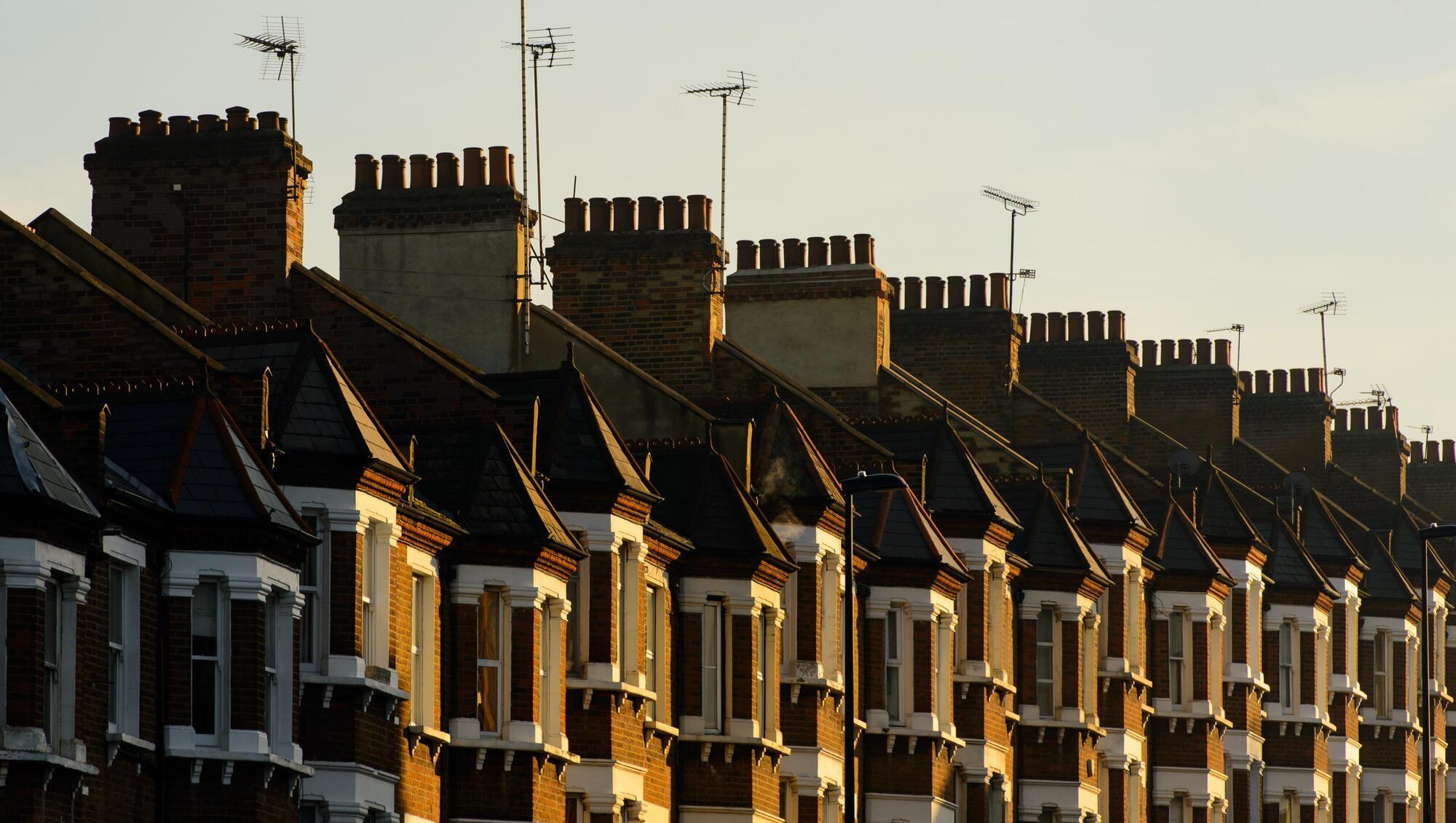
In the 1920s, large-scale housing developments typically featured small terraced houses with gardens, designed to balance affordability with basic standards of comfort and hygiene.
In a country where housing perennially dominates political debate, the records of the 1926 census offer a rare opportunity to look back — not just at how people lived, but at what kind of housing system Ireland was trying to build a century ago.
The findings are both distant and familiar. If today’s crisis is defined by scarcity, affordability and political urgency, the Ireland of 1926 was grappling with many of the same pressures — albeit in a very different social and economic landscape.

The 1926 census is the first comprehensive snapshot of housing conditions in the newly independent state. Much earlier census material had been lost, making this a foundational document. What it reveals is not only a country still overwhelmingly rural, but one in the early stages of grappling with housing as a public policy issue.
It is, as lecturer and housing policy analyst Lorcan Sirr puts it, “fantastically rich material”.
Read More
HISTORY HUB
If you are interested in this article then no doubt you will enjoy exploring the various history collections and content in our history hub. Check it out HERE and happy reading
The census captured 28 separate categories relating to housing alone — from the number of rooms and bedrooms in each dwelling to the prevalence of boarding houses, institutions, and tenement living. It also recorded detailed distinctions between urban and rural life, allowing us to see clearly how unevenly housing conditions were distributed across the country.
At first glance, the headline figures are striking. In 1926, there were just over 630,000 houses in the State.
Of these, approximately 583,000 were occupied, more than 44,000 stood empty and just over 2,000 were under construction.
That equates to a vacancy rate of 7.6% — almost identical to Ireland’s vacancy rate a century later.
For Sirr, that parallel is one of the most revealing aspects of the data.
“We tend to assume today’s crisis is purely about supply,” he says, “but when you see a vacancy rate in 1926 that’s almost identical to now, it forces you to think more carefully about distribution, economics, and where people actually want or need to live.”
The reasons behind those empty homes, however, were very different.
Emigration, rural depopulation, and economic stagnation left houses vacant, particularly in the west of the country.
The issue was not simply building more homes, but where those homes were — and whether people could sustain a life around them.
Ireland in 1926 was still predominantly rural, with a large proportion of the population living on small agricultural holdings.
In many western counties, families occupied modest cottages on relatively poor land, often in scattered settlements. These homes were rarely overcrowded, but they could be isolated and economically precarious.
By contrast, urban areas told a different story.
If rural Ireland struggled with underdevelopment and dispersal, towns and cities were already showing signs of pressure.
The census makes clear that households in urban areas were twice as likely to be overcrowded as those in the countryside.
Overcrowding was typically measured by the number of people per room. In cities like Dublin and Cork, it was not uncommon for multiple family members, and sometimes multiple families, to share a small number of rooms.
Tenement living, particularly in Dublin, remained a defining feature of working-class life.
Family sizes were also larger than today, adding to the pressure on limited space.
Extended families frequently lived together, and the census shows a high number of households with several children sharing bedrooms or sleeping spaces.
Was housing the political “hot potato” in 1926 that it is today? It was, argues Sirr, but one that was far more likely to force politicians to act, given their fear of social rebellion.
In the years following independence, there was significant political pressure to improve living conditions, particularly in cities. The legacy of poor housing — especially the tenements — was well understood, and there was a growing expectation that government should intervene.
“The language might be different, but the arguments are very similar,” Sirr notes. “You see the same debates about cost, about viability, about how you deliver housing at scale. It’s all there in the 1920s.”
Efforts to deliver housing were often constrained by the need to keep building costs low, leading to compromises in design and specification.
Even at this early stage, housing policy was being shaped by tight budgets and competing priorities.
One of the most significant developments of the period was the emergence of large-scale public housing. While earlier efforts had been piecemeal, the 1920s marked the beginning of a more systematic approach.
Influenced in part by British models and the Garden City movement, new housing schemes sought to provide modest but decent accommodation for working families.
These developments typically featured small terraced houses with gardens, designed to balance affordability with basic standards of comfort and hygiene.
A key figure in this transformation was Herbert Simms, who began his career with Dublin Corporation in 1926. Over the following decades, Simms would design thousands of homes, helping to shape the physical landscape of the capital.
For Sirr, this moment marks a turning point.
He says:
“You’re seeing the beginnings of large-scale local authority building, and you’re also seeing the emergence of a kind of standard model — modest, functional housing that could be delivered in volume.”
Simms’ designs — typically two- or three-bedroom houses of relatively compact size — became a template adopted by councils across the country.
These homes were a significant improvement on the overcrowded and often unsanitary conditions of tenement life.
Interestingly, the mechanisms of housing delivery in the 1920s bear a strong resemblance to those used today. While the State played a central role in funding and planning, construction was typically carried out by private contractors.
“It’s essentially the same model we have now,” Sirr observes. “The State sets the framework, but the actual building is done by private firms. And even then, there were concerns about costs and capacity — those issues haven’t gone away.”
At the same time, homelessness — while certainly present — was not addressed in the same systematic way it is today. Instead, it was largely left to religious organisations and charities.
“It was always there,” Sirr says of homelessness, “but it wasn’t something the State dealt with in a structured way. It was assumed to be taken care of by charities and the Church.”
What, then, does the 1926 census tell us a century later?
Perhaps the most striking lesson is that housing has long been a site of tension between economic reality and social need. The balance between affordability, quality, and supply — so central to today’s debates — was already being negotiated in the early years of the State.
It also highlights the importance of geography. Ireland’s housing challenges have always been uneven, shaped by the distribution of population, employment, and land.
“If you look west, you see small holdings, marginal land, and very different living conditions,” Sirr notes. “In the east, farms are bigger, more viable, and that feeds into the kind of housing people have. That divide is really important.”
Finally, the census reminds us that housing policy can change lives — but only when it is backed by sustained political will.

“There was huge pressure on politicians in the 1920s to deliver housing,” Sirr says. “In some ways, arguably more direct pressure than today. And that did drive action.”
A century on, as Ireland once again wrestles with how to house its people, the questions posed in 1926 remain unresolved. How do we build enough homes? Where should they be located? And how do we ensure they are affordable?
The answers, then as now, are not simple. But the census offers a valuable starting point — a reminder that today’s crisis is part of a much longer story.