Catherine Conlon: Hantavirus hell on a cruise ship – has covid taught us anything?

The hantavirus outbreak highlights the key challenges of containing infection transmission on a ship in international waters 
Catherine Conlon: Hantavirus hell on a cruise ship – has covid taught us anything?

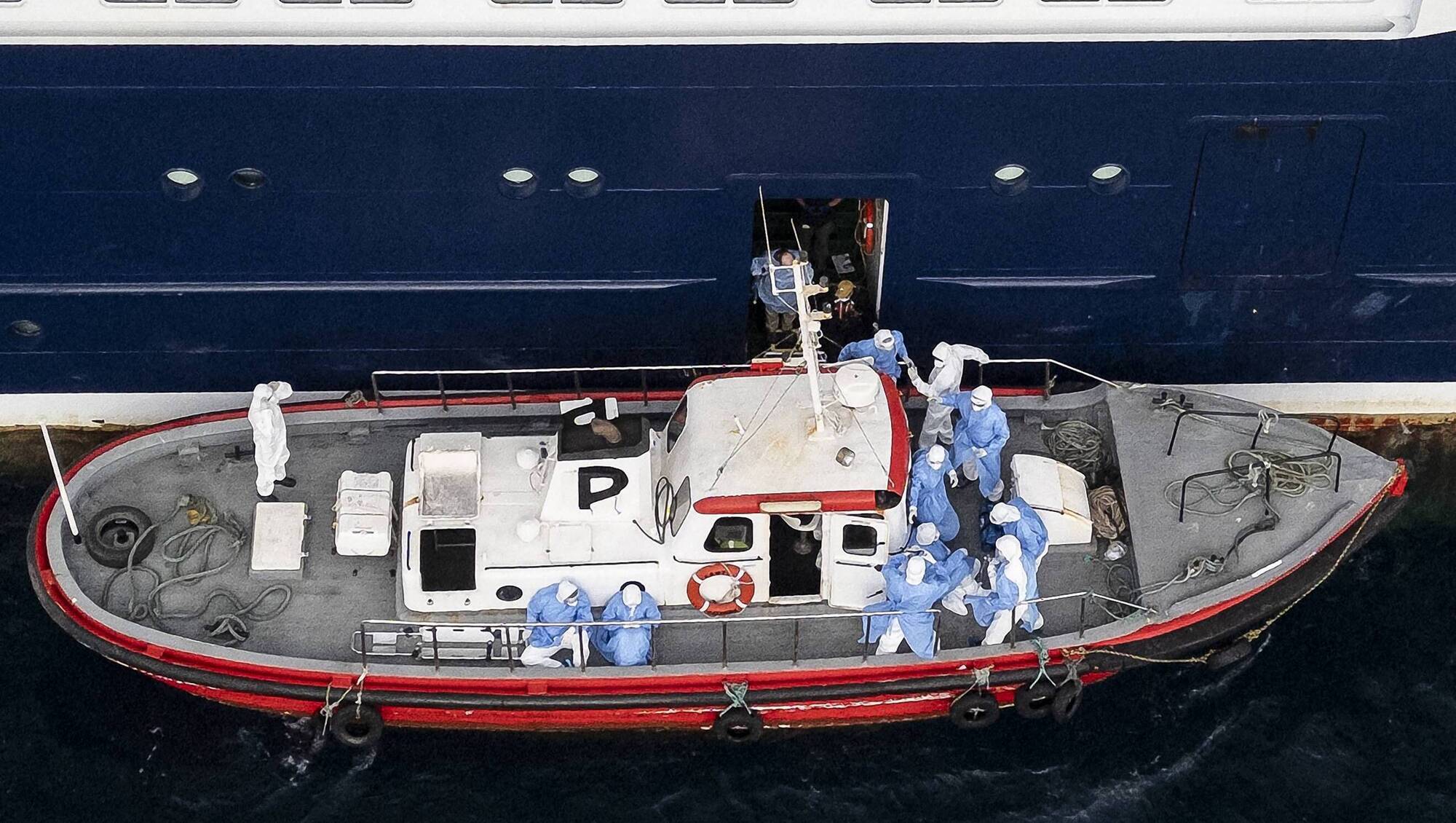
Health personnel assisting patients onto a boat from the cruise ship MV Hondius, while stationary off the port of Praia, the capital of Cape Verde. Picture: AFP via Getty Images

So, health authorities are scrambling to track the movements of dozens of people who disembarked the cruise ship at the centre of a deadly hantavirus outbreak before isolation measures were put in place — that's the bad news.

The good news? Well, the World Health Organization (WHO) is playing down the risk to public health and said it is not expecting a global epidemic — although Dr Tedros Adhanom Ghebreyesus, director-general of the WHO, did admit there could be more cases due to the incubation period of the Andes virus — the variant of hantavirus linked to the outbreak.

“Given the incubation period of the Andes virus, which can be up to six weeks, it’s possible that more cases may be reported. While this is a serious incident, the WHO assesses the public health risk as low.”

And as for the wider risk? He highlighted a similar outbreak in Argentina in 2018/19 which led to 34 cases.

“If we follow public health measures, and the lessons we learned from Argentina are shared across all countries… we can break this chain of transmission and this doesn’t need to be a large epidemic,” said Dr Abdirahman Mahamud, director at the alert and response co-ordination department of the WHO emergencies health programme.

“We don’t anticipate a large epidemic. With the experience our member states have, and the actions they have taken, we believe that this will not lead to subsequent chain of transmission.”

WHO director-general Tedros Adhanom Ghebreyesus speaking during a virtual press conference on the hantavirus cluster. Picture: AFP via Getty Images

All sounds depressingly familiar. So what has covid taught us, if anything, and why do cruise ships continue to be at the centre of these deadly outbreaks?

This emerging outbreak is clear evidence of how quickly infectious disease can erupt and cause concern across nations — rapidly evolving from an incident of concern to an international emergency.

South African scientists confirmed on Wednesday that the strain is Andes — which is the only strain where human-to-human transmission has previously been confirmed between close contacts.

With a high mortality rate of up to 40%, no specific treatments, no vaccination, or rapid diagnostics — the initial response, as with the covid pandemic, is effective containment. The hantavirus outbreak also demonstrates the particular challenge of managing outbreaks on cruise ships.

So what is hantavirus and what are the risks?

Hantavirus is a family of viruses that cause three different types of illnesses. Two of them affect the kidneys: Haemorrhagic fever with renal syndrome (HFRS), and nephropathia epidemica (NE); and one which affects the lungs: hantavirus pulmonary syndrome (HPS).

Hantaviruses found in Europe and Asia usually affect the kidneys, while hantaviruses circulating in the Americas, as is the case in this outbreak, usually affect the lungs — with mortality of up to 40%.

The Health Protection Surveillance Centre (HPSC) reports that, commonly, people are infected with hantavirus when they breathe it in. This can happen when rodent urine or droppings of rodent nest materials are stirred up in the air. Rodents that can be infected include mice, rats, shrews, and voles.

Infection in humans can also occur when people touch their eyes or mouth after touching rodent urine, droppings, saliva or nesting materials.

So far, the only hantavirus shown to spread from person-to-person is the Andean hantavirus, found in Argentina and Chile.

Health authorities confirmed the Andes strain of hantavirus is the one affecting passengers on the MV Hondius. 

Although uncommon, limited human-to-human transmission of infection due to Andes virus has been reported in settings involving close and prolonged contact.

Health authorities confirmed the Andes strain of hantavirus is the one affecting passengers on the MV Hondius. PIcture: Arilson Almeida/AP

As mentioned by the WHO, in 2018, there was an Argentinian outbreak that was traced back to people who had attended a party — a single person with the virus is thought to have spread the virus to 34 confirmed cases, with 11 deaths.

The current outbreak, which has been linked to three deaths, has been connected to a birdwatching expedition in Argentina which two of the passengers went on before boarding the ship.

The confirmation of the Andes virus make social distancing — so familiar to us from the covid pandemic — all the more paramount while confined within the tight constraints of a cruise ship.

Cruise ships — some as big as small cities — are ideal environments for infectious disease transmission. They are carefully designed to allow large numbers of people to eat, drink, socialise, and move through the same shared spaces for weeks at a time. Ideal for transmission of infection with sometimes thousands of people packed into a confined space.

Buffet dining, shared tables, and many people touching the same surfaces make it an ideal environment for stomach bugs such as norovirus to spread like wildfire while respiratory illness can travel easily through the confined spaces of dining rooms, ballrooms, and bathrooms.

Crew members also travel through these spaces, often living in shared accommodation, making person-to-person spread all the more likely. Mounting research has demonstrated the ease with which illness can spread in crowded enclosed spaces, like restaurants, games rooms, and confined cabins where ventilation systems are less than ideal.

The current outbreak, which has been linked to three deaths, has been connected to a birdwatching expedition in Argentina which two of the passengers went on before boarding the ship. Picture: Misper Apawu/Ap

Water systems — jacuzzis, hot tubs, and showers — risk the spread of Legionnaire’s disease, a serious bacterial lung infection caused by people breathing in aerosolised bacteria from contaminated water systems.

Passengers on cruise ships may be particularly vulnerable if they have long-term health conditions or are immunocompromised, both conditions common in older people that form a large part of the clientele of many cruise holidays.

Infection prevention control is challenged by the tight confinement of a cruise ship — the crowded indoor setting, enclosed air, crowds, and contaminated water systems. 

The bottom line is that germs in close quarters find it much easier to spread. 

Medical facilities may be limited compared to a tertiary hospital and may be particularly limited in the management of a fast-moving outbreak with large numbers of people falling ill simultaneously.

So have we learned anything from covid?

Covid taught us many lessons. Who can forget the Diamond Princess, the cruise ship with more than 3,700 passengers in February 2020, when an outbreak was detected on board and 619 passengers tested positive for the disease?

Subsequent research found that the ship conditions allowed for easier travel of the virus, that public health measures such as isolation and quarantine helped but also that an earlier response would have limited the outbreak.

The pandemic did transform the approach to infectious disease and cruise ships, with the industry shifting from a reactive to a proactive and technology-driven response. 

A review in Population Medicine (2025) highlighted the importance of continuing control measures after the outbreak voyage, and the importance of international public health collaborative efforts to achieve this.

Medics escort patients evacuated from the MV Hondius cruise ship to an ambulance after being flown to Schiphol airport, Amsterdam, Netherlands. Picture: Peter Dejong/AP

More specific learnings and advancements include: Digital contactless processes for check- in and dining; technology driven air quality improvements including the retrofitting of fleets with medical grade HEPA filters capable of removing almost all airborne pathogens; ultraviolet germicidal radiation to neutralise viruses and bacteria in the air and on surface; and fresh air exchange systems.

Other measures include the comprehensive sanitisation of cabins and public rooms and the use of twice daily temperature checks for staff to reduce the risk of infection transmission.

Onboard medical facilities are better equipped to handle infectious disease outbreaks including basic laboratory testing and access to antiviral agents. 

Ships also use wastewater surveillance to test for early warning pathogens such as covid-19 before symptoms appear in guests.

Protocols for prompt isolation and management of symptomatic passengers and crew in designated cabins is also acknowledged to reduce risk of transmission.

However, the core challenge of managing infectious disease in a crowded, confined space in vulnerable often elderly passengers remains an ongoing challenge, necessitating constant vigilance.

This latest hantavirus outbreak highlights the key challenges of containing infection transmission on a ship in international waters with multiple countries involved.

The WHO said it is working with all the countries who have passengers and crew on board the MV Hondius to get them home.

Dr Maria Van Kerkhove, director of the department of epidemic and pandemic threat management at the WHO, said: “It needs to be very carefully done, but we are working with the countries about that onward passage home.”

Health authorities here are drawing up plans to manage the care of two Irish passengers on the cruise ship on their return to Ireland.

  • Dr Catherine Conlon is a public health doctor in Cork

x

More in this section

Revoiced

Newsletter

Had a busy week? Sign up for some of the best reads from the week gone by. Selected just for you.

Cookie Policy Privacy Policy Brand Safety FAQ Help Contact Us Terms and Conditions

© Examiner Echo Group Limited