Clodagh Finn: The forgotten heroine who passed on life-saving information to IRA leader Liam Lynch
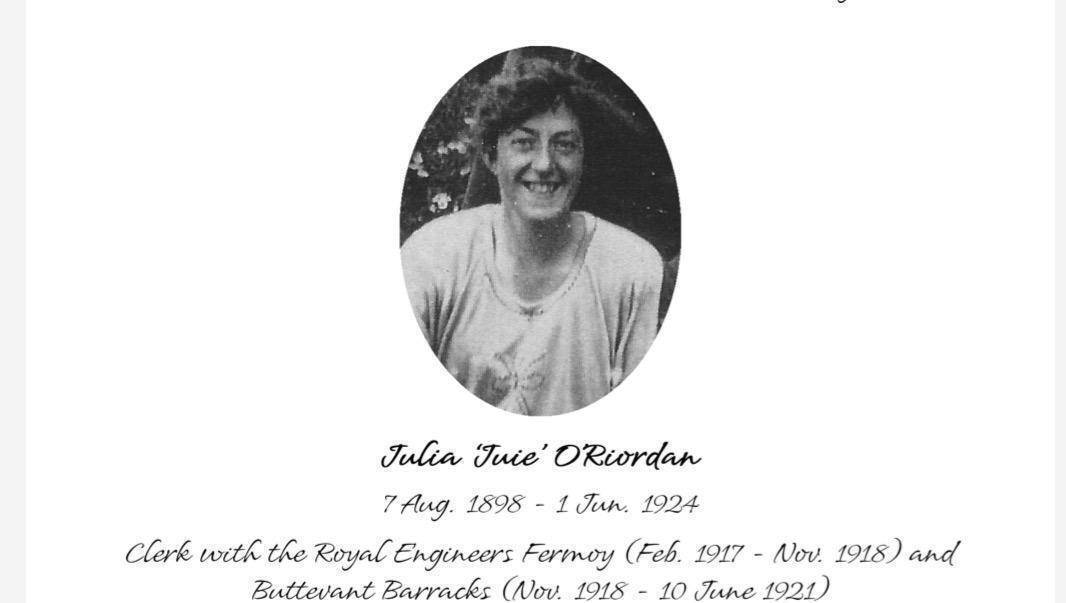
For decades, the account of Julia ‘Juie’ O’Riordan’s wartime bravery existed only as a family story
Clodagh Finn: The forgotten heroine who passed on life-saving information to IRA leader Liam Lynch

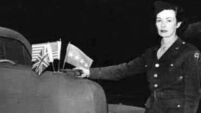
Julia 'Juie' O'Riordan cycled out into the night on March 9, 1921, to give crucial intelligence to Liam Lynch, who was hiding high up in the Boggeragh mountains, above Nadd in Co Cork, with a large group of volunteers.

Beside the date of her birth on August 7, 1898, Julia O’Riordan wrote in her personal pocketbook: “Glorious day for Ireland, to be remembered in History”.

It is heartening to see such confidence (and, we might add, humour) in a young Corkwoman who would indeed be remembered in history, even if it took some time and considerable digging by her relatives before her contribution to the Irish War of Independence was recognised.

For decades, the account of Julia ‘Juie’ O’Riordan’s wartime bravery existed only as a family story. 

There was documentary evidence of her work as a clerk with the Royal Engineers in Fermoy and later as a typist at Buttevant Military Barracks in Co Cork but nothing to prove that she passed vital information to IRA chief of staff Liam Lynch in 1921, effectively saving him and his brigade from capture.

Her grand-niece Mary Jones (née Reid) recalls that her dad (Tom Reid) told them Julia cycled out into the night on March 9, 1921 to give crucial intelligence to Lynch, who was hiding high up in the Boggeragh mountains, above Nadd in Co Cork, with a large group of volunteers.

HISTORY HUB

If you are interested in this article then no doubt you will enjoy exploring the various history collections and content in our history hub. Check it out HERE and happy reading

She warned them that heavily armed British forces were on their way. 

A large contingent of troops had been drawn from a number of locations — Cork, Ballincollig, Buttevant, Ballyvonaire, Fermoy, and Kanturk — as part of a well-planned operation designed to surround and capture Lynch, his brigade staff, and the Mallow and Kanturk columns of the IRA.

Con Tarrant provided this evocative description of the operation in an 1989 article in the historical chronicle, Seanchas Dúthalla: “Shortly before midnight… in the driving rain and fog of a raw March morning… these forces in their armoured vehicles had been moving out from distant posts armed with rifles, machine-guns, mortars and grenades, and converging on this high, bleak upland on the northern slopes of the mountain.”

But the targets of the co-ordinated round-up were forewarned thanks to Julia. 

Acting on her information, Lynch immediately ordered that the Eel Weir Bridge, on the main Mallow-Ballyclough-Buttevant road, be blown up. 

That broke the British ‘ring of steel’ and provided the route of their escape.

Four men were killed during the raid — a commemorative monument at Nadd honours them — but the casualties would have been much higher without Julia’s tip-off. 

Her information and Lynch’s subsequent action “saved Nadd from being a major disaster”, as Tarrant put it in his article.
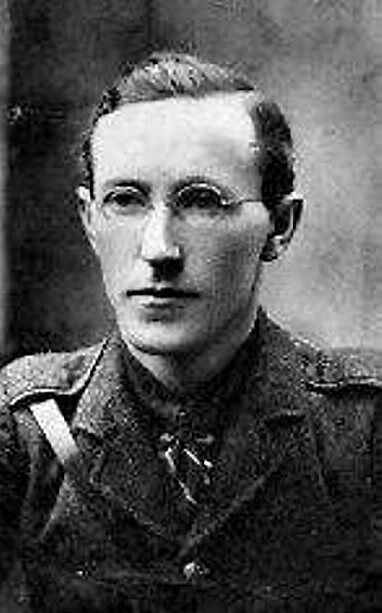
Liam Lynch, Irish Volunteers.

Meanwhile, while the men made their escape, the 22-year-old Julia spent much of the night in hiding. 

On her way home, she heard the rumble of British armoured vehicles close by and hid out of sight under a small bridge. 

She stayed there, with her feet in water, for many hours before she considered it safe enough to cycle home to Cecilstown, Mallow.

She saved the lives of countless volunteers that night but her courage took a terrible toll on her health. She caught a chill and never fully recovered.

But there was a more pressing issue. A few months after the raid, she was summarily dismissed from her job.

The division officer of the Royal Engineers, Major G A P Brown, wrote her a reference with this opaque line: “She is the most reliable and efficient clerk and typist and I regret that owing to Official Regulations I have to dispense with her services.”

“Official Regulations?” What on earth did that mean?

Well, Julia was having none of it. She wrote a spirited letter to the commander-in-chief at HQ calling for an investigation into her “unfair treatment” by the military authorities.

She outlined her employment up to then, explaining that she had started work as a typist and general clerk in the Division Officer Royal Engineers’ Office in Fermoy on February 26, 1917. She stayed there for a year before taking up a post in Buttevant.

“As Buttevant was within reasonable cycling distance of my home where my parents [Kitty Holey and William O’Riordan] and sisters [Hannah, Mary, and Kathy] resided was the reason I accepted the offer,” she explained.

Her idea of a ‘reasonable’ distance was a daily round-trip cycle of about 30km. No surprise then that she was able to cycle into the mountains in search of Lynch.

She didn’t like that post much, though, and confided in her pocketbook that she was “very lonely and fed up”.

We have that detail thanks to the committed research of a grand-nephew Peadar Cremin, later distributed by his sister Phil. 

In their family, Juie was remembered with great affection for her courage — “she was not faint-hearted from what we know” — and her humour.

Both are evident in the letter she sent to the military authorities. 

She stood up for herself and her ability to do a good job, arguing that her competence could be easily corroborated. 

Then, she delivered these killer lines: “From information I received or gathered in the town of Buttevant I was led to believe that the reason I was discharged was that my brother was in sympathy with the Sinn Féin movement. This does not require much contradicting having in mind the fact that I had no brother.”

She went on to outline the effect of her dismissal: “Needless to say this discharge caused a great stigma to be placed on my character and although always considered well qualified, I was disbarred from obtaining similar employment in any Government Office.”

She did find another job but was also dismissed from that post.

She finished the letter with a renewed plea for an enquiry so that she might be allowed to follow her occupation.

Her argument was robust, clear-eyed, and irrefutable. The letter is also quite remarkable given that it was written by a woman who had used her position to gather information to pass on to the IRA.

Although there was no hard evidence of that until now.

Thanks to the patient, methodical research of Mary Jones, a relative and genealogist, there is now documentary proof of Julia’s role. 

In a witness statement, Michael O’Connell mentions that information Lynch received from Judy O’Riordan — the shortened version of her name, Juie, sounds a bit like Judy — indicated the probability of large-scale raiding by British forces.

And in a gem of a letter written by O’Connell uncovered only this week, Mary discovered that Seán Moylan, republican and later Fianna Fáil politician, also knew of Julia’s work.

He told O’Connell during a visit: “There was a typist Miss Riordan employed in Buttevant Barracks who used to sent [sic] out anything important that she heard about. It was this lady who sent the information from Buttevant that a large scale round up was to take place around Lombardstown.”

When she went out that night to warn Lynch it was clearly not the first time Julia passed on intelligence although, for now, we don’t know the full extent of her work.

We do know, however, that the chill she caught that night badly affected her health. She had ongoing lung issues and three years later, in 1924, she died at home 10 days after contracting pleurisy and bronchopneumonia.

Her death cert records the poignant detail that her sisters were present when she died. She was just months away from her 26th birthday.

There is another little twist in the story. Juie O’Riordan’s aunt, Bridget O’Riordan (later McDonnell) was my great-grandmother, a connection I discovered thanks to Mary Jones.

As it happens, I ‘met’ Bridget only last month through the 1926 Census when I saw that she was visiting the house where my infant mother Una had just been joined by a baby sister Kathleen.

I have gained a great-grandmother and a cousin but the acquisition is not just personal because Julia O’Riordan deserves to be remembered on a national level.

We have missed the 100th anniversary of her death on June 1, 1924. Perhaps we might mark her 102nd anniversary when it comes around in a few weeks’ time.

x

More in this section

Revoiced

Newsletter

Had a busy week? Sign up for some of the best reads from the week gone by. Selected just for you.

Cookie Policy Privacy Policy Brand Safety FAQ Help Contact Us Terms and Conditions

© Examiner Echo Group Limited