Colin Sheridan: Pressure grows on university over partnership with Israeli military-linked institution
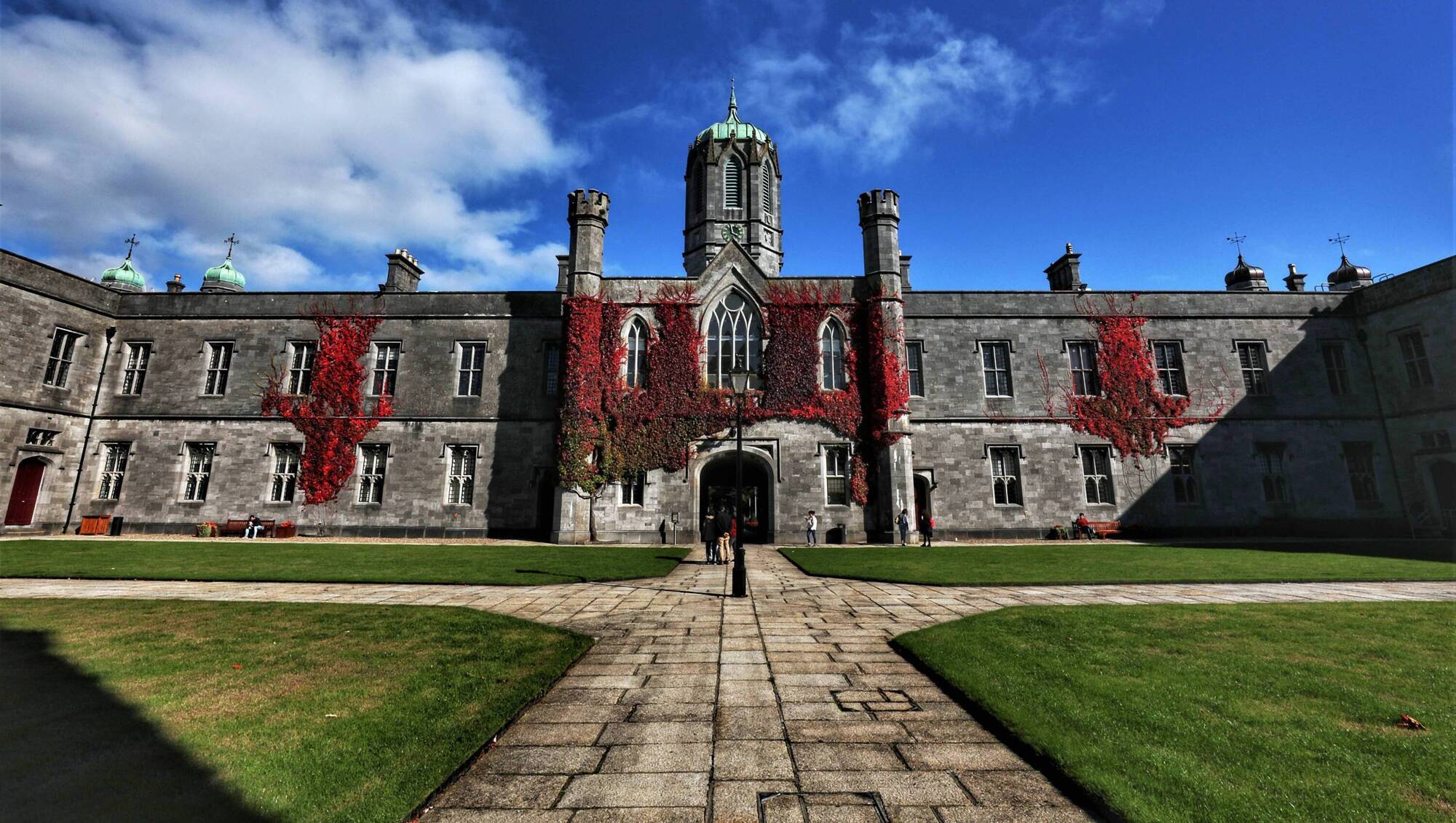
The University of Galway’s research partnership with Israel’s Technion has caused anger among students, staff and human rights scholars.

Pressure is intensifying on University of Galway as anger deepens across campus over its continued research partnership with Israel’s Technion - Institute of Technology.
What began as a student-led campaign has evolved into a Campus Anti-Genocide Coalition (CAG), drawing in staff, trade unions, alumni and internationally recognised human rights scholars.
At its centre is the ASTERISK project, an EU-funded green hydrogen initiative led by Galway, with Technion among its partners. The university has repeatedly said it is bound by contractual obligations under the Horizon Europe programme and cannot withdraw. For the CAG coalition, that position is no longer tenable.
“This is not just about one project,” one coalition member said this week. “It’s about whether a university that teaches human rights is willing to act on them.”
That tension is particularly acute in Galway, home to the Irish Centre for Human Rights, one of the State’s leading institutions in international law. On September 24 last, a group of academics from the centre wrote to university president Professor David J Burn expressing “very serious concern” at the refusal to end the Technion collaboration. The letter was later published publicly in December.
Their intervention was unusually direct. The letter warned continued collaboration risked placing the university in breach of its duties under international law, particularly in light of findings by UN bodies and ongoing proceedings before the International Court of Justice relating to Israel’s conduct in Gaza.
It also challenged the university to publish the legal advice it has repeatedly cited — advice that has not been made public — raising further questions about transparency and governance at senior management level.
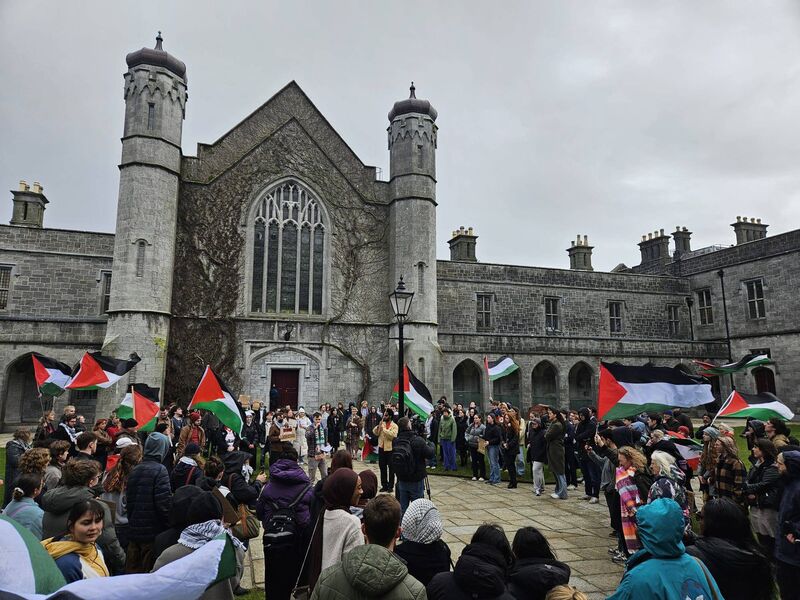
The controversy has steadily escalated. Honorary degrees have been refused. Awards returned. Weekly protests now form part of the rhythm of campus life.
The CAG Coalition has written to public representatives, the European Commission, UN officials and the president of Ireland, urging them to demand transparency and action by university management.
President Catherine Connolly added her voice to the debate last week, saying the concerns “cannot be ignored” given Ireland’s obligations under international law.
At issue for critics is not the stated environmental aim of the ASTERISK project, but Technion itself. The Israeli institute maintains formal links with the country’s defence sector through its Advanced Defense Research Institute, which explicitly positions itself as a bridge between academia, security organisations and defence industries, and includes programmes for selected Israeli Defence Forces officers.
The CAG coalition argues this is not incidental, but structural — pointing to Technion’s long-standing integration with Israel’s military-industrial ecosystem, including collaborations with major defence firms such as Elbit Systems, Rafael Advanced Defense Systems and Israel Aerospace Industries.
They say this raises unavoidable questions about whether any partnership with the institution can be meaningfully separated from its role in defence-related research and development.
That broader concern is amplified by growing scrutiny of the technological ecosystem in which Technion operates. Investigative reporting by outlets including has described the use by Israeli military intelligence of AI-assisted targeting systems such as “Lavender” and a tracking tool known as “Where’s Daddy?”, designed to monitor individuals and trigger strikes when they return to family homes.
The Israeli military has disputed these claims, saying human verification remains central to targeting decisions. While these systems are attributed to Unit 8200, the IDF’s elite signals intelligence unit, critics point to Technion’s role as a key pipeline of expertise and research underpinning Israel’s defence and surveillance capabilities.
With many Unit 8200 engineers trained at Technion, and with the university maintaining institutional links that connect academic research with defence structures, campaigners argue such relationships place it within a wider architecture of AI-enabled warfare that has raised alarm among UN experts over civilian harm.
For many involved in the coalition, the issue has become inseparable from wider legal and moral developments. The International Court of Justice has issued provisional measures warning of the risk of irreparable harm to Palestinians, while UN experts have called on states and institutions to avoid economic, academic and research relationships that may contribute to unlawful occupation or apartheid.
These concerns have also been echoed at political level in Ireland. Taoiseach Micheál Martin has described the situation in Gaza as “carnage”, while outgoing President Michael D Higgins — a one time lecturer at the University of Galway — has repeatedly warned a failure to act risks normalising impunity and undermining international law.
Such statements, campaigners argue, make it increasingly difficult for Irish public institutions to justify business-as-usual relationships with Israeli state-linked entities.
University of Galway has acknowledged the humanitarian crisis and, in a February statement, described the situation using the term “genocide” for the first time. It also committed to avoiding any future direct institutional research agreements with Israeli partners.
For CAG members, however, that only sharpens the contradiction.
“If it’s wrong to enter new partnerships, how can it be right to continue this one?” a member of the coalition asked.
The coalition argues that, as a public body, the university cannot rely solely on contract law where wider obligations under international law may be engaged. It has also pointed to precedents elsewhere in Europe — including a high-profile withdrawal by Ghent University from a Horizon Europe project — as evidence disengagement is possible where ethical and legal concerns arise.
More broadly, critics say the university’s position risks setting a troubling precedent: that contractual commitments can override human rights considerations, even in circumstances described by international bodies as among the gravest violations of international law.
The dispute has also exposed deeper frustrations about governance and accountability within the university. In June 2024, University of Galway published its Report on the Review of Links with Israeli and Palestinian Institutions and Industry, following extensive consultation with staff and students and amid public commitments that future partnerships would be subject to human rights scrutiny.
CAG members say those recommendations were effectively ignored just six months later when the ASTERISK contract involving Technion was signed in December 2024, without any apparent human rights impact assessment being applied.
For critics, the speed with which the university moved from publicly reviewing Israeli institutional links to entering a new partnership with an Israeli university at the centre of defence-related research has become one of the most troubling aspects of the controversy, raising serious questions about internal governance, oversight and accountability.
Meanwhile, protests have continued to escalate. Demonstrations at governing authority meetings, weekly pickets at campus gates, and high-profile cultural interventions have kept the issue in the public eye.
In April, an alternative Nelson Mandela-themed event saw award recipients return honours in protest, underscoring the symbolic weight of the dispute and the growing reputational risks facing the institution.
Despite repeated engagement requests, coalition members say dialogue with senior management has stalled, with months of what one organiser described as “deafening silence”.
University of Galway, in previous statements, has defended its position, pointing to its contractual obligations, its support for Palestinian students — including scholarships and evacuation assistance — and its broader commitment to human rights and equality.
But for many on campus, those measures no longer address the core issue. The focus has narrowed to a single demand: end the Technion link.
For a university that has built part of its identity on human rights leadership, the stakes are now reputational as much as legal. As one academic put it privately: “This is no longer a question of policy. It’s a question of credibility.”
With protests showing no sign of slowing, the issue is unlikely to fade. Campaigners say they will continue until the partnership is brought to an end.

CONNECT WITH US TODAY



Be the first to know the latest news and updates