Clodagh Finn: Attempt to solve ‘cold case’ could cast new light on centuries-old mystery
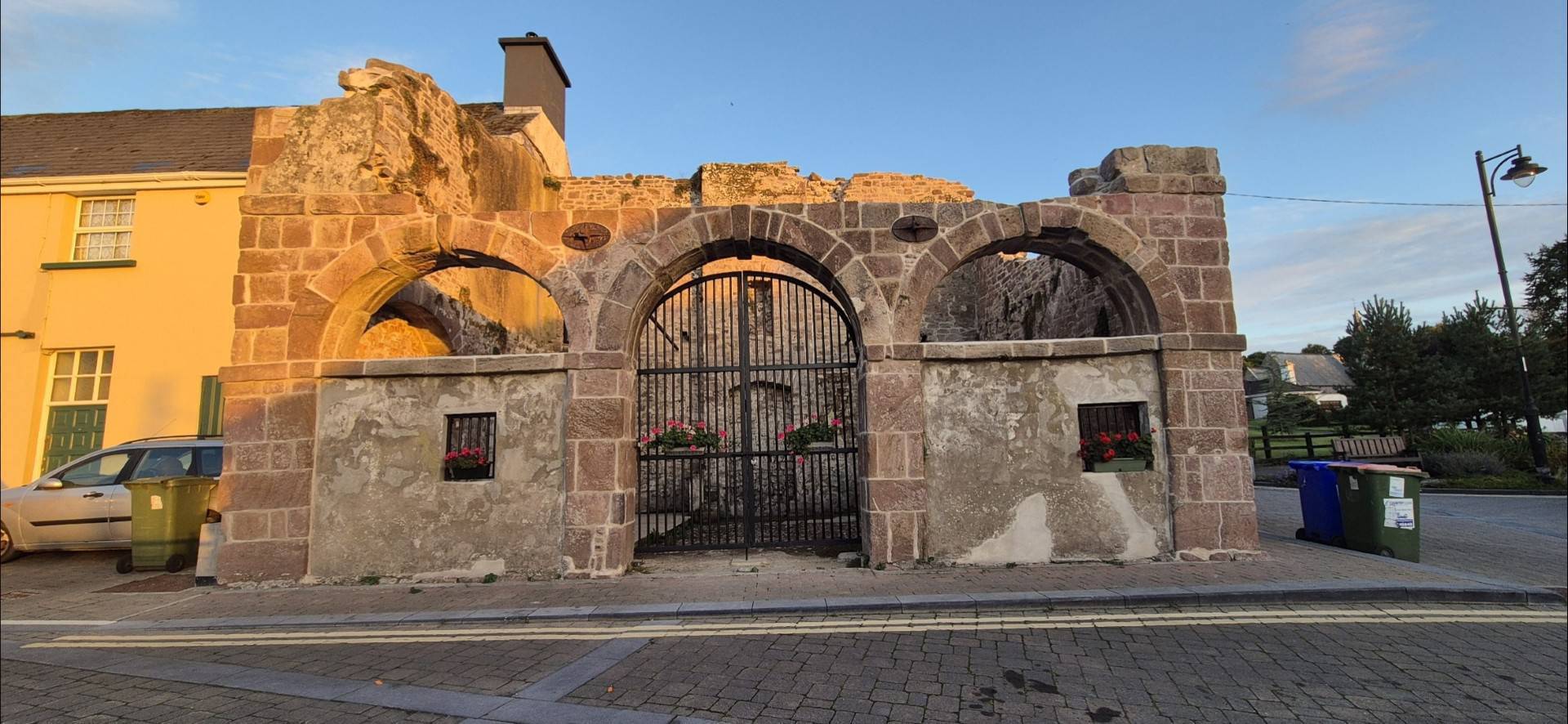
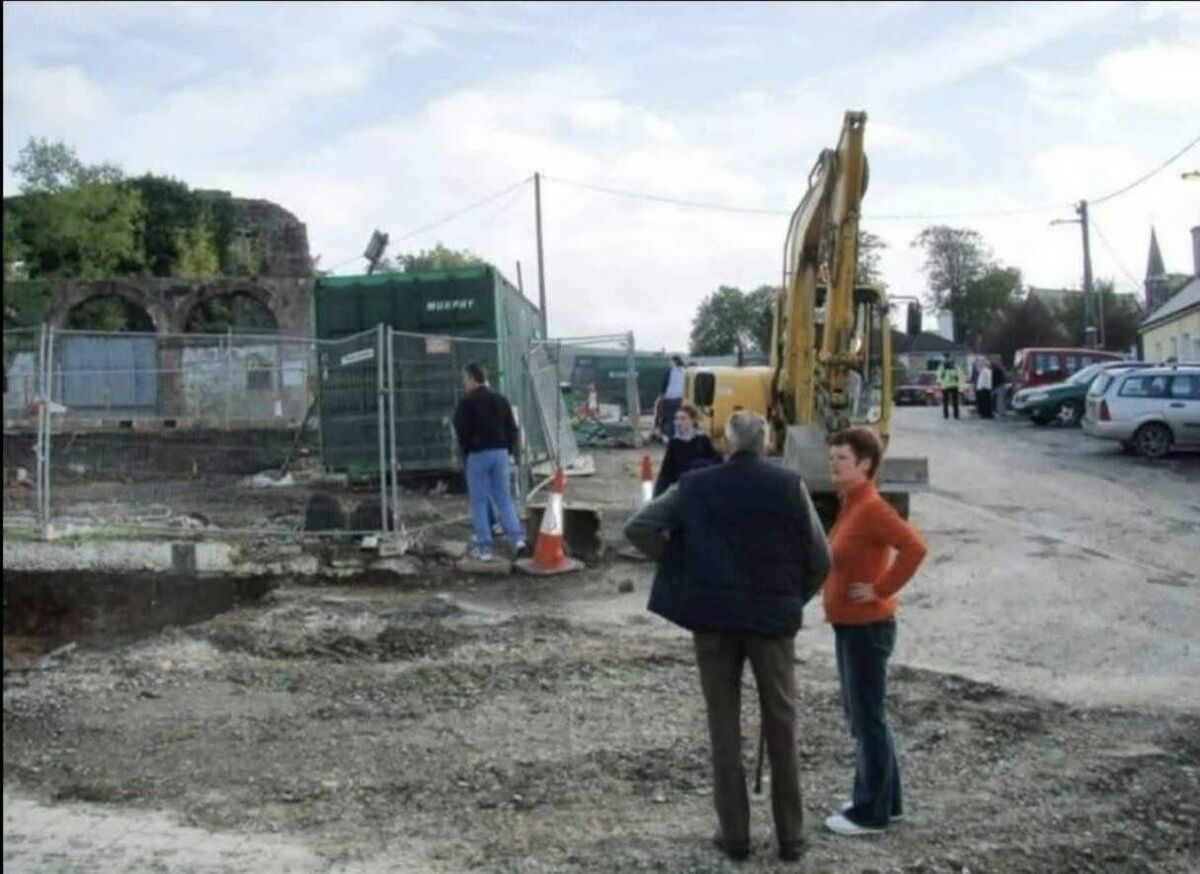
The remains of the Market House in Kilfinane, Co Limerick. In a section of the town's square the local historical society has done all it can to preserve, date, and identify remains discovered in a ‘croppy hole’, or mass grave there.

We might call it a 228-year-old cold case, but this one is being conducted by a local community rather than the police.
Indeed, ever since human remains were discovered in a ‘croppy hole’, or mass grave, in the centre of Kilfinane in Co
Limerick, the local historical society has done all it can to preserve, date, and identify those thought to have been executed around 1798.
At a time when archaeologists are excavating much more recent juvenile remains at the former mother and baby site in Tuam, Co Galway, it is striking to see volunteers in Co Limerick treat the bones of people they never even knew with such care and attention.
And it is hard not to be moved by the efforts of the Kilfinane Coshlea Historical Society which has done so much to ensure the seven adult men, and possibly one woman, treated so harshly in life, now get the honour due to them in death.
HISTORY HUB
If you are interested in this article then no doubt you will enjoy exploring the various history collections and content in our history hub. Check it out HERE and happy reading
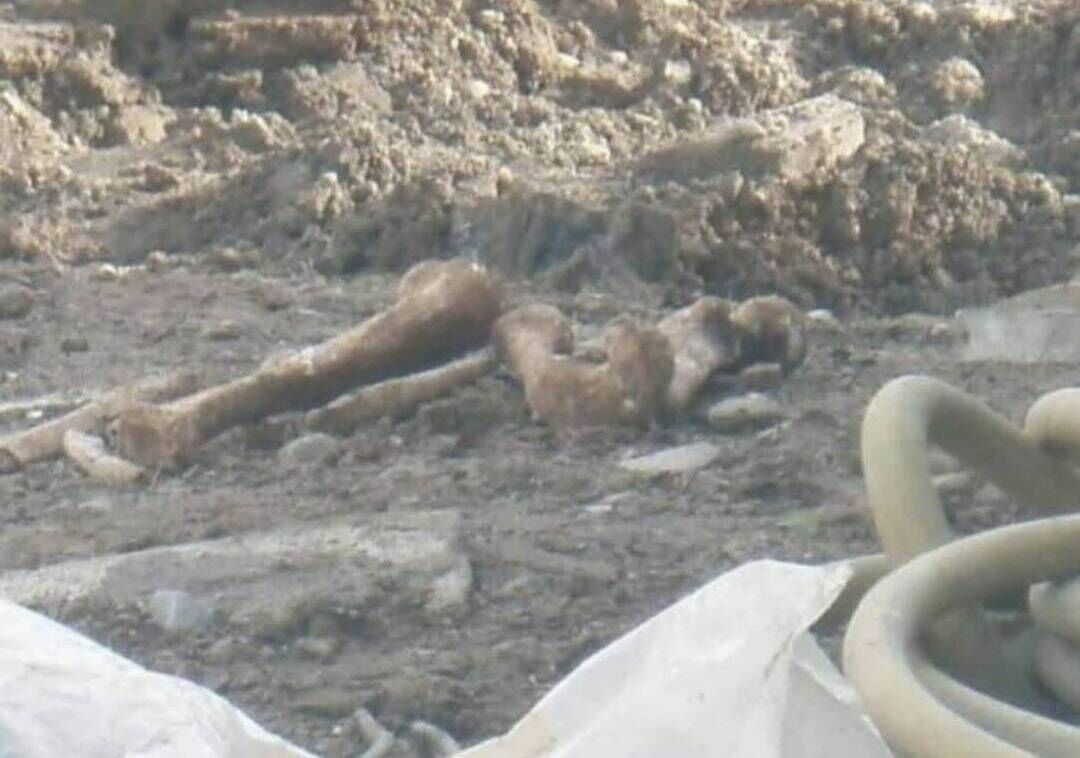
The remains were discovered around this time of year, October 12, in 2006, when a digger unearthed a section of the square on Main St in Kilfinane during urban renewal work.
Gardaí from Bruff sealed off the scene while an archaeologist from Limerick County Council carried out a preliminary investigation of the site, which had lain undisturbed since 1928.
It was soon clear that the fragments of some 3,332 bones and teeth, unceremoniously dumped in a hole, were historic remains.
The discovery prompted much excitement. Could Patrick ‘Staker’ Wallis (also Wallace), a United Irishman executed in 1798 for plotting to kill local sheriff and landlord Captain Charles ‘Silver’ Oliver, be among them?
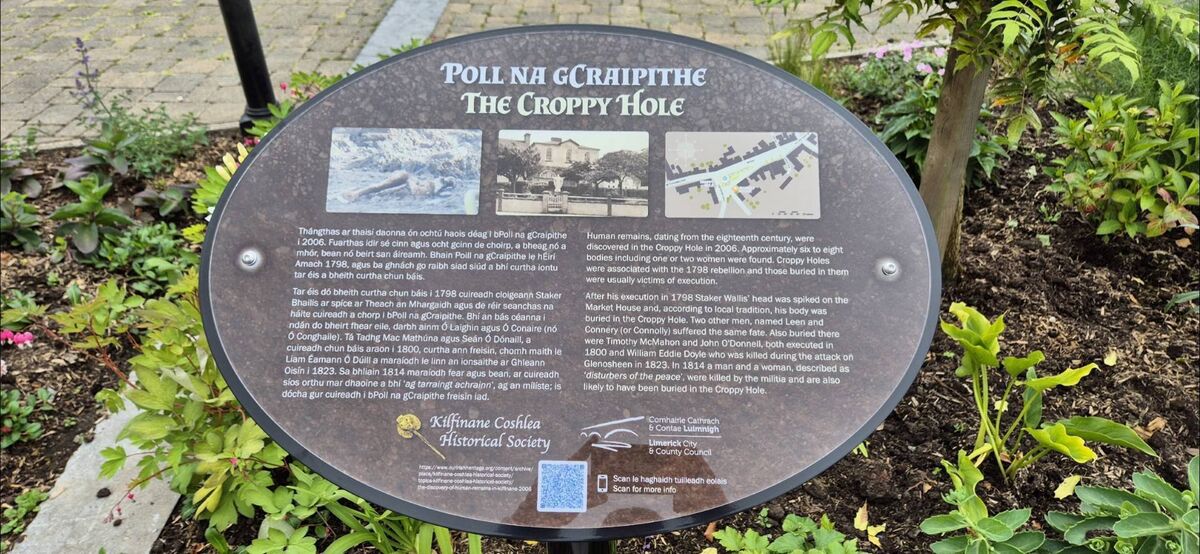
‘Staker’ is widely commemorated in the area, thanks in no small part to the Kilfinane Coshlea Historical Society which ran a week-long programme of events in July 2023 to mark his 225th anniversary.
As part of that, a short film — featuring members of the town’s West End Drama Group — re-enacted the pursuit, arrest, public flogging, and execution of the famous local man.
, still available on YouTube, is a singular example of one community’s creativity and deep sense of pride in its own place.
That same sense of place informs the historical society’s most recent plea for help in identifying the croppy-hole remains.
“We are looking for the missing pieces by asking people to tell us if they remember any family stories about what happened in Kilfinane in the late 18th and early 19th century,” says society PRO James O’Brien.
Scientific analysis of the bones, completed just last year, found that eight adults, possibly including one woman, aged between 25 and 45, had died around the same time as Staker Wallis.
Although there were no signs of trauma, given the location of the burial, it is possible they were executed.
Staker Wallis was believed to be in his 60s when he was hanged and then beheaded. The gruesome account which comes down to us is that his head was put on a spike on top of the Market House on Captain’s Lane in the centre of the town. It was left there for a number of weeks.
His age, referenced in a single source, may not be correct and the historical society believes it is possible that some of his remains, at least, are in the croppy hole.
The society has spent the last two decades trawling all available sources to try to identify those buried in such an undignified way.
They have identified at least eight possibilities.
The female bones might belong to a woman (unnamed) killed along with an unnamed man by the Sligo Militia in 1814 after a scuffle broke out during a disturbance in the town.
The names of the others (Leen and Connery, or Connolly, Timothy MacMahon and John O’Donnell and Eddie (William) Doyle from Doneraile, Co Cork), along with the circumstances of their deaths, are outlined on the historical society’s Facebook page.
There, you’ll also find the appeal for information which gets straight to the point: “Were your ancestors executed in Kilfinane in the late 18th/early 19th century?”
And, in a statement echoing more traditional cold-case procedure, the society is calling on family members, historians, genealogists, or anyone with information, however small, to email kilfinanecoshleahs@gmail.com, assuring them any information will be handled discreetly.
James O’Brien sums up: “While it would be a nice ending to the story to discover that some of the bones belong to Staker Wallis, the society is keen to give the people who died in the most turbulent times some dignity. We’d like their future treatment to be part of a considered process and consultation.”
Whatever emerges, the ongoing work of the Kilfinane Coshlea Historical Society provides an impressive template in how to unearth the past and bring it back to life, in context.
Its members followed the discovery of these human remains 20 years ago with keen interest and advocated for expert analysis when there were delays in the process.
If the woman in the croppy hole has yet to be named, Angela Hennessy, the society’s secretary, sought out the names of local women from a later period who were all but forgotten.
Her book, , returns the names and efforts of 17 overlooked women to the record.
That is a story for another day, but her book represents another important contribution to the still-emerging history of the women who helped form the Irish State, but were let down so badly afterwards.
On the subject of bones and the assiduous care taken of them by communities, another YouTube documentary (Lemanaghan after the Storm of 2025) shows how local people ensured that medieval remains, uncovered by Storm Éowyn, were properly surveyed, analysed, and recorded.
For some time now, the Lemanaghan Bog Heritage and Conservation Group has worked tirelessly to oppose BnM/SSE proposals to build wind farms near the monastic complex established by St Manchán in Offaly in the 7th century.
But, in 2025, they were surprised (and delighted) to discover Storm Éowyn was not just an ill wind; it also led to the very welcome discovery of early medieval remains dating from the 7th to 10th centuries.
One of the burials dated to between AD662-817, offering the exciting possibility that the person was alive at the same time as monastery founder himself, St Manchán.
There were more fascinating revelations. The bones, in as far as experts can establish, were all female; tentative evidence of a nunnery on the site. They were found near an oratory named St Mella’s Cell, after the saint’s mother, a little bit of placename support for the view that this was a female space.
At this time of year, it seems fitting to remember the dead, but it is also important to remember the local people who do so much to help us do that.
As Aoife Phelan of the Lemanaghan Bog Heritage and Conservation Group says: “It is local people who understand the importance of protecting the places, history and roots that have shaped Ireland.
“This is far more than a civic duty. It is a moral responsibility, one that runs deep in those who feel a true connection to the land and to those who came before us.”

CONNECT WITH US TODAY



Be the first to know the latest news and updates