Gareth O'Callaghan: A recent conversation with an old friend knocked me for six
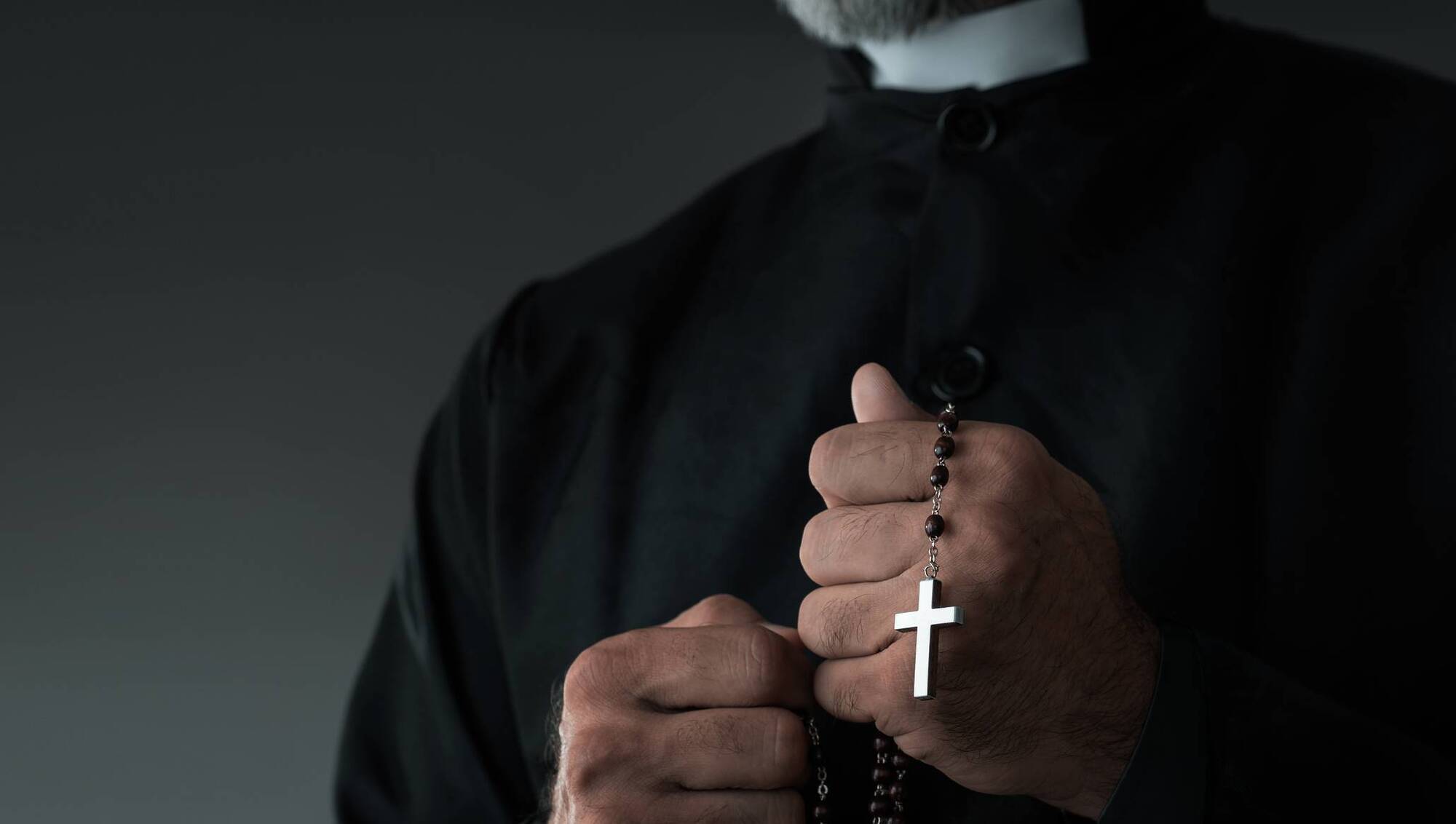
John became known in the rural town he came from as the 'spoilt priest'. So he left for London with his sweetheart where they lived for seven years, eventually returning home when the first of four children was ready to start school. File picture

It was Russian author Aleksandr Solzhenitsyn who said nothing is more boring than a man with a career. In fairness, it all depends on what that career is. There are plenty of exceptions, as I was reminded this month.
I met an old friend for lunch and an unexpected chat recently — so unexpected, in fact, that I asked him if I could write about his intentions at the age of 65 to launch a new career — if that’s what you could call it. He agreed if his identity remained private; so I’ll call him John, after the biblical figure and author.
He had called the day before and asked if he could chat to me urgently. If the conversation didn’t take place as soon as possible, it might never happen. I was both worried and intrigued.
John’s wife (whom I’ll call Diane) died 10 years ago following a long and bravely fought battle against cancer. She was the love of his life multiplied by thousands. In all their years together, he was always visibly smitten by her whenever I met them. It was a match made in heaven.
For a year after her death, he cried whenever her name was mentioned. It was heartbreaking, but that’s what love demands — it’s either all or nothing, and they gave all of their lives to each other.
We became friends years ago while training for the priesthood. He wanted to be a missionary, while I was drawn to the idea of parish life here at home. I barely stayed the course for what felt like a very long and confusing first year before relinquishing the notion that my vocation could stretch to a second.
John battled on for another three. He left because the love he felt for Diane was stronger than anything a religious vocation could persuade him to stay for.
Back in 1980s Ireland, before the clerical scandals finally erupted, vocations were still big business. Families that yielded a priest or a nun became pillars of their parish. Leaving the priesthood was mostly unheard of, while dropping out of seminary carried its own gossipy retorts.
John became known in the rural town he came from as the “spoilt priest”. So he left for London with his sweetheart where they lived for seven years, eventually returning home when the first of four children was ready to start school.
During my own time in England in the 1980s, we often met at weekends. I would stay with them in Islington whenever I travelled down from the Midlands where I worked. Our music sessions and card games became the highlight of our simple social lives, while they never missed Mass on Sunday mornings.
Once settled back in Ireland, contact between us would usually come in the form of a birthday card or a phone call, until we lost contact through the vicissitudes of life. I would chance a text occasionally, but there was never a reply.
We got to chat in the weeks following Diane’s death, but then the exchanges stopped again. Until last month, when he rang and told me we had to meet and talk. We had a lot of catching up to do, but it fell gently into a stride that left me feeling as though we had never lost contact; still, I got the sense he was holding back.
And then, just as we finished the coffee and toasted sandwiches, he pushed his plate aside and stared intently at me across the table. “I have some news I want to share with you,” he said almost reluctantly. First thing to cross my mind was cancer. I’ve heard that awful word too many times. I held my breath and waited.
“I’ve been doing a lot of soul searching lately, and…” I couldn’t let him finish. “You’ve met someone?” I blurted out. He laughed and shook his head. “No, there can never be another Diane.”
What he said next knocked me for six. “I’m thinking of going back to finish training for the priesthood.” It was as though someone just pulled out a plug and the animation stopped. It felt like silence had fallen across the entire pub, as though everyone had heard what he had said.
“I’m speechless,” I replied.
“You think I’m mad, don’t you? Go on, admit it. I’ve entertained that notion too.”
And then he teared up. I reached across and put my hand on his shoulder, and smiled. “Have you told the children?”
He laughed. “I’m a grandad,” he replied. “They’re all in their late thirties.”
So what do they make of this? I was dying to ask him, but he beat me to it.
We ordered more coffee. We would have ordered pints if neither of us had been driving.
“So why do you want to do this? Why now?” I felt I had to ask.
“Diane and I spoke about it during her final weeks. She was the one who brought it up. ‘Why don’t you go back and finish what you once started, finally? We’ve had a great life together,’ she said. ‘Now I want you to think about doing something special with the remainder of yours…and I think you would make a great priest’.”
I’m rarely lost for words, but there just weren’t any to follow that. “I don’t know what to say,” I think I heard myself saying.
There are times when time itself stands still, as though it creates a sacred space for conversations that need to be had because they hit us hard in a place within that needs to be nurtured more than we realise. That afternoon was one of those times and spaces.
I asked him if he still wanted to be a missionary. He nodded. “More than ever. What has happened in Gaza and beyond has devastated me. Our world is slowly dissolving violently, and most people just turn a blind eye. I can’t, not any longer for what my life’s worth.”
“Do you feel a calling?” I asked rather sheepishly. I thought I felt that when I was in my late teens, and the impact it had on me back then is still something I occasionally find myself thinking about.
“I’m being drawn back. That’s the only way I can explain it,” he said pensively. “I think — even if Diane had never mentioned it before she died — I would still be sitting here having this conversation today.” And that was when he squeezed my hand. “I’ll never stop loving her.”
Empathy is being sensitive to the pain of others and standing side by side with them when that pain becomes unbearable, while altruism is the unconditional selflessness of focusing on the needs of others rather than on your own. Within these rare traits I see John, and I can understand what’s drawing him back.
When I first met him in October 1981, I just knew he would make a great priest — one whose life was driven by empathy and altruism. But back then, of course, I had no idea what empathy and altruism were. How could I?
It takes years, sometimes an entire lifetime, to figure out just how important they are. More so than ever now if we’re going to prevent our society from destroying itself. Without empathy and altruism, hope doesn’t stand a chance.
John and I are back in regular contact. We intend to stay that way — no matter where his postponed career takes him in years to come. There’s no shortage of space in life for a good priest, so it’s time again to make room if that’s what he finally decides on.
I wish him only the best. He is some man for one man, as they say, and I have no doubt Diane would be so proud of him.
- In last week’s column, I accidentally omitted to credit Doug Selwyn, former professor of education, for his excellent article in Greenfield Recorder’s online publication. He offers a great insight into Howard Gardner’s multiple intelligence theory. It’s well worth a read

CONNECT WITH US TODAY



Be the first to know the latest news and updates