Jennifer Horgan: To celebrate life, I'm going to think about the challenge of living with death
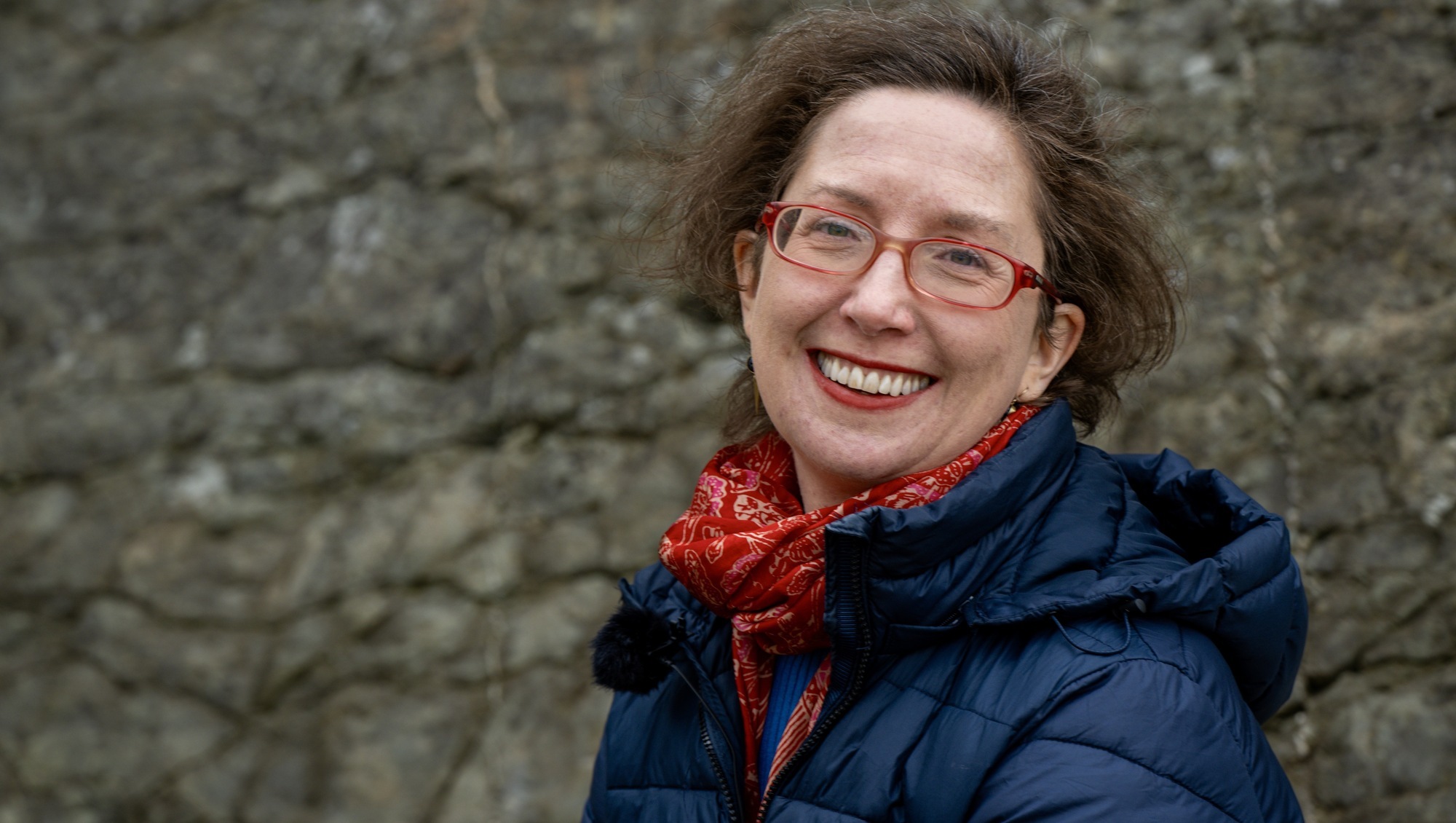
Dr Sarah Fitzgibbon, who died of colorectal cancer last month, hoped her story will encourage others to take action on their health. Picture: Chani Anderson

“What if you’re talking to me, but you’re also being born, and you’re also dying,” he said, lifting his beer to his lips.
I was in the pub, chatting to a poet after a book launch. I can’t tell you how the topic of death came up. Perhaps we were influenced by the time of year. As we huddled in and he continued, Storm Austen battered the city.
“I like the idea that my whole life is happening at the same time. We think the past is behind us, the future up ahead, but I imagine that every single version of me is happening all at once. I don’t worry about dying because it is already happening.”
The next day, I was walking my dog down the steps to the pond by the Marina. The marble-green water was clear enough that I could see the rocks beneath.
I turned to catch the steel salute of Páirc Uí Chaomh in a salmon sky. I saw myself from a distance, then aged three, in a pair of red boots, scaling the rubble that would be the house I’d grow up in — built by my two uncles, giants of men, one gone.
I saw my firstborn, his forehead caked in that white chalkiness, his fists as tight as the buds of a peony. My husband, on the street, in our many kitchens. That first time I saw him in college, his Liverpool scarf wound about his neck, his hair dark then, now grey.
Read More
I imagined all of my life happening at the same time. An older me, maybe with grandchildren.
By the time I reached the end of the steps I had seen a whole life, an entire block. I understood the comfort in the poet’s approach — treating your life as a vibrant painting, all the parts happening at once to make the whole.
That evening, I watched — a masterpiece of a film written by Charlie Kaufman about love, memory, and loss. Every day since I’ve been thinking about how we cope with death.
All Souls’ Day is approaching — a day for us to think about the dead.
I wonder if we’re more in need of a day to acknowledge what a terrifying project living with death is.
How to cope? Modern life leans into denial. Instagram is full of it.
Every person being injected and ‘maxxed’ to stay young — that’s coping.
Smashing Pumpkins’ Billy Corgan starting a relationship with a 19-year-old because she wasn’t, he claims, destroyed by the patriarchy like us middle-aged women (vomit) is also a form of coping.
People do all sorts to cope with the inevitability and proximity of death. Biohacker Bryan Johnson received a litre of blood plasma from his own teenage son as part of an anti-ageing experiment.
But the best advice I ever got about death and grief and all that ditch-of-life stuff is that you have to face it head on.
Much like the kids’ book by Michael Rosen and Helen Oxenbury about going on a bear hunt, you can’t go over it, you can’t go under it, you have to go through it.
I came across a very different book this week that does this beautifully. What you find in the poetry collection, , is not just death. What you find is an abundance of life and love and beauty and connection too.
I discovered the book on the shelves of Ardmore Pottery and Gallery in Ardmore — itself a kind of dreamscape, deathscape place. In fact, I said to my husband as we strolled along towards it that I want my ashes to be spread over the lip of that coastline.
The salubrious Cliff House Hotel won’t mind a little death dust on their windows, surely!
Anyway, there on the shelf was this book. I brought it to the counter, and the following morning, I read.
It is a very special book and I’d love to see similar books being written all over the country. Some of the poems are written by poet Lani O’Hanlon, who works as a poet in palliative care. Others are co-created by the poet and people struggling with loss and willing to share memories of their loved ones.
O’Hanlon characterises the project as “a circle of voices” that she hopes will “ripple outwards and join in a greater poetic and embodied conversation about grief and love, and the challenges we all face at this time in the world”.
She hands the book to people suffering, points them to a story similar to their own — as a companion, a comfort.
The memories are both specific and universal. A father is remembered, a mother, a sister, a child. People caring for the dying are included too, Waleed from Sudan, Premji from Kerala, and nature is a constant throughout the book, as are poems from Rabindranath Tagore, winner of the Nobel Prize in 1913, and the first poet O’Hanlon ever read.
In the introduction, O’Hanlon makes a distinction between deaths, contrasting the death of an elderly person who has lived well, and the death of a child, an unexpected death, a death by violence.
Reading, I thought of the family of Philip Cairns, who was abducted around this time of year 40 years ago. A report by Barry Cummins on RTÉ last week brought his story so chillingly to life.
He had come home from school for lunch. He had a cheese sandwich while doing some homework. “Cheerio, Gran,” he called and he was gone, never to be seen. His mother Alice died last year after decades of searching.
How horrendous, to know your child has probably suffered a brutal death without knowing how or where or why. Some deaths are unbearable.
I also sat down to watch the new Matthew Perry documentary on Netflix this week — the heartbreaking story of a slow and painful death over years, shared by those who loved and lost him.
There is certainly a distinction to be made between deaths, isn’t there? The wonderful Dr Sarah Fitzgibbon wrote about this in her blog before she died just over a month ago. She wrote about cancer as ordinary, questioning its special status as an illness.
“Bad things happen to people all the time,” she wrote in her blog. “Dying of natural causes is one of the least worst things that can happen.”
She called on us to talk about death more casually, to acknowledge it as ordinary and in doing so, she celebrated life.
“I want people to watch dying happen. Call the Deathwife. Come Die With Me. MasterDeath. The Great British Die-Off.” She was a great wit, as well as being a great person, mother, wife, daughter, friend, and a beloved doctor.
This All Souls’ Day, I’m sticking with her wisdom. I’m devoting my thoughts not to death, but to the challenging project of living with it.
Talking about death, writing about it, sharing our fears of a bad death, our hopes of a good one — none of that is morbid.
It’s life. It’s living.

CONNECT WITH US TODAY



Be the first to know the latest news and updates