Gareth O'Callaghan: The aftermath of the M9 crash is a darkness very little can penetrate
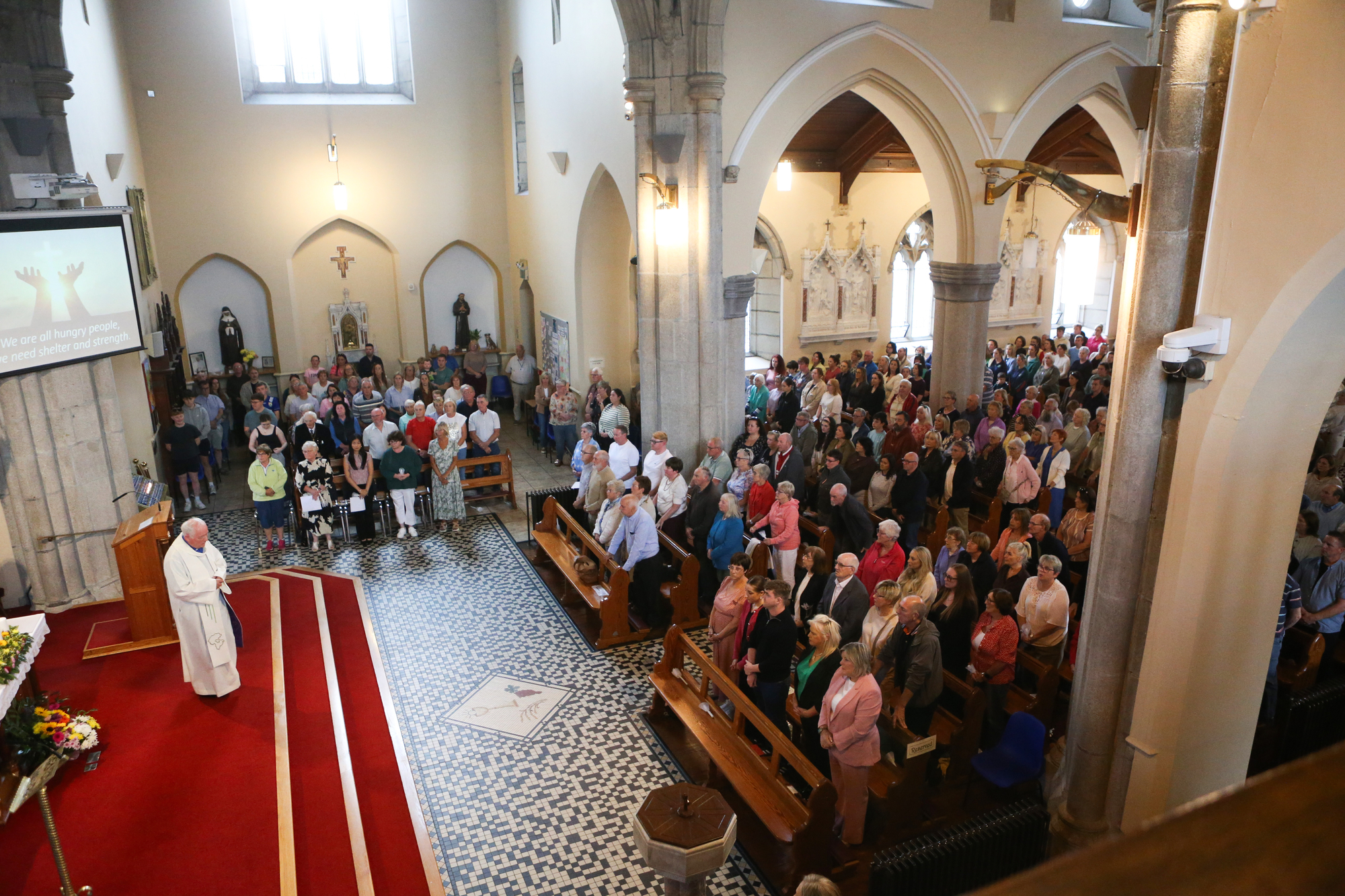
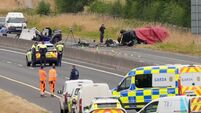
Hundreds of people gathered at St Clare's Church in Graiguecullen last Friday evening for the prayer vigil at for Niamh and Alma Kinsella who were seriously injured alongside their sister Ella Hendricken, and a seven-year-old boy in the M9 crash. Picture: Evan Treacey/PA

Hello darkness, my old friend. I’ve come to talk with you again. Simon and Garfunkel’s words were playing somewhere in the distance when the news alert pinged on my phone. Five dead, four critically injured.
It’s been two weeks now since the M9 carnage and I can’t get the words of that song — “and the vision that was planted in my brain” — out of my head. Like so many, I’ve lost count of how many times I’ve asked myself what was it all about? What were those five teenagers thinking?
Much has been written about what happened in the dark hours of that Sunday morning, but has anything positive come from all the political discussion and public outrage that followed?
It’s fair to say it hasn’t. How can it? So it’s understandable why people feel so angry, considering the saboteurs are dead, leaving in their wake an innocent family to fight for their lives.
Human tragedy on such a scale illuminates the darkest corners of life. In those shocking circumstances, we realise what truly matters. It’s called survival and a deep desire to live. If only we could act on that realisation and drive it forward productively, rather than let it sit below our conscious awareness, as a reminder of the importance of life and how we feel so disempowered by its precariousness. But drive it forward to what?
Following the horrors of two weeks ago, most of us feel utterly helpless to understand what can be done to avoid it happening again. Anyone of us could be a victim the moment we next sit into our car. We have a sad blighted history of road safety. Nothing the authorities do seems to be effective.
Our gardaí don’t have a solution. They’ve had more than their fair share of criticism and verbal online abuse in recent times. They’re easy targets, just as their own lives are every time they sit into a patrol car.
Three members of my extended family are gardaí. Few of us know much about the sort of carnage these men and women have to deal with on the roads, only then to go home at the end of a damning shift and be strong spouses and parents as though it’s just another day at the office.
Read More
Without respect and a willingness to support them in their work, how can they hope to succeed? Some of them don’t even make it home.
In 2002, Tony Tighe and Michael Padden were both killed in Stillorgan in Dublin when their Garda car was struck by a stolen Mazda sports car which was being driven “at horrifically high speed”. They were trying to ensure innocent drivers didn’t stray into the path of the stolen car when they were struck side on.
Last weekend, in the UK, Cleveland police officers Matthew Blades and Tom Clough, both in their 30s, died instantly when the armed response vehicle they were driving was struck head on by a Volkswagen Passat on the A66.
Four of the five joyriders killed in the smash had previous convictions. Perhaps the words of Cleveland’s chief constable sum up the deadly risks of their commitment to the job: “No one should leave their home and not return safely”.
These two men were trained in high-speed pursuit; but this wasn’t one car tailing another at speed. No amount of training can prepare you for the consequences of a head-on collision when the car about to hit yours is being driven with intent.
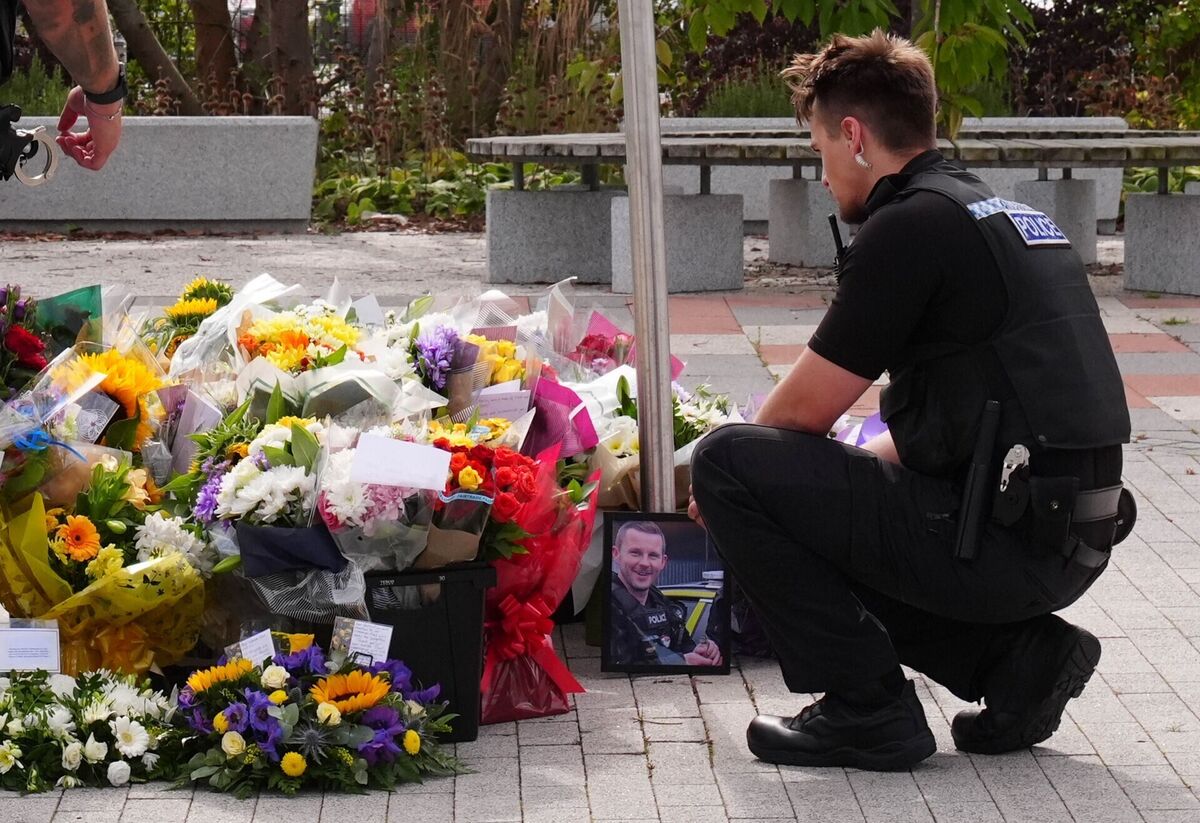
Garda pursuit training in such circumstances, as both the M9 and A66 crashes have shown, is not a viable solution. How can it be? Why would gardaí knowingly (and willingly) put their lives at risk when the offending joyriders have no regard for human life — least of all their own?
We have more than 960km of motorway on our island. That’s about the same distance as making a return journey from Cork to Dublin twice. It’s not humanly possible to police that much motorway all the time, especially during the hours of darkness.
All eyes are on Government, who have mostly remained tight-lipped in the aftermath of the M9 crash. What can the Taoiseach do that the gardaí can’t? It’s difficult to imagine a realistic solution when you know the offenders are prepared to kill and be killed.
Five years ago, three members of a burglary gang from Tallaght were killed driving against traffic on the N7 dual carriageway in West Dublin as they fled gardaí.
Even by introducing new laws and giving the gardaí greater resources and high-powered cars kitted out with roll cages to drive and personal safety harnesses to wear, nothing will protect you from a top-of-the-range BMW that’s thundering towards you at 200kph.
This current trend of wrong-way driving runs much deeper than a TikTok video uploaded for views and likes. Teenagers who steal cars and drive the wrong direction along a motorway have an insatiable appetite for danger. It’s their primary motivation.
These teenagers are deeply troubled on many levels. Engaging in this sort of deadly behaviour brings a warped sense of prestige. Admiration soars among the hierarchy of their peers the greater the risks they’re prepared to take.
There’s no respect among this breed for ordinary road users because they don’t understand what respect means. Driving head on into another car takes furiosity to a different level.
Rather than asking if wrong-way motorway driving is out of control, let’s ask if wrong-way driving can be controlled? As of now it can’t.
Soundbites and empty promises are just another way of acknowledging that no one genuinely knows how to combat it, and joyriders and criminal gangs are taking full advantage of that knowledge. It’s also worth noting the law doesn’t distinguish between a garda and any other road user.
Yes, it most likely comes down to what parents teach their children (or don’t teach them) and how well we think we know them, but there’s a natural cut-off point in that growth process, and that’s the arrival of the role model.
When furiosity feeds into the youngest years of life, it becomes impossible to recognise a different way of living unless someone you respect can show you that alternative. But that’s the catch-22 — when there’s an absence of respect. That’s not making excuses for these teenagers, that’s simply stating a fact.
Remember the social crisis which surrounded the joyriding epidemic here in the 1980s? Fort Mitchell prison on Spike Island opened in April 1985 to deal specifically with joyriders.
Social disadvantage, risk-taking, and masculinity were seen as the main causes for stealing cars and writing them off. If anything was learned from a decade of joyriding, it was that panic policymaking by politicians solved nothing.
What preserves us in dark times when nothing makes sense is our community. It’s often knowing you are not alone and that others are there to reach out to. Right now, it feels as though there’s little else.
What happened on the M9 changed the web of life for four people and wiped out the lives of five others. Two weeks is not long in the lifetime of a human tragedy, until the next one happens. For those innocently impacted, their lives have been cruelly unhinged.
It’s the sense of loss and anger that hides in the aftermath, making the idea of respect sound hollow. Sometimes the only comfort is in the sound of silence.
CONNECT WITH US TODAY



Be the first to know the latest news and updates