Shona Murray: Russian threat forces Europe to shift priorities — and resources
Because of Putin's war, many European countries are spending more money on defence — money that should be spent on education, roads, health, and capital investment
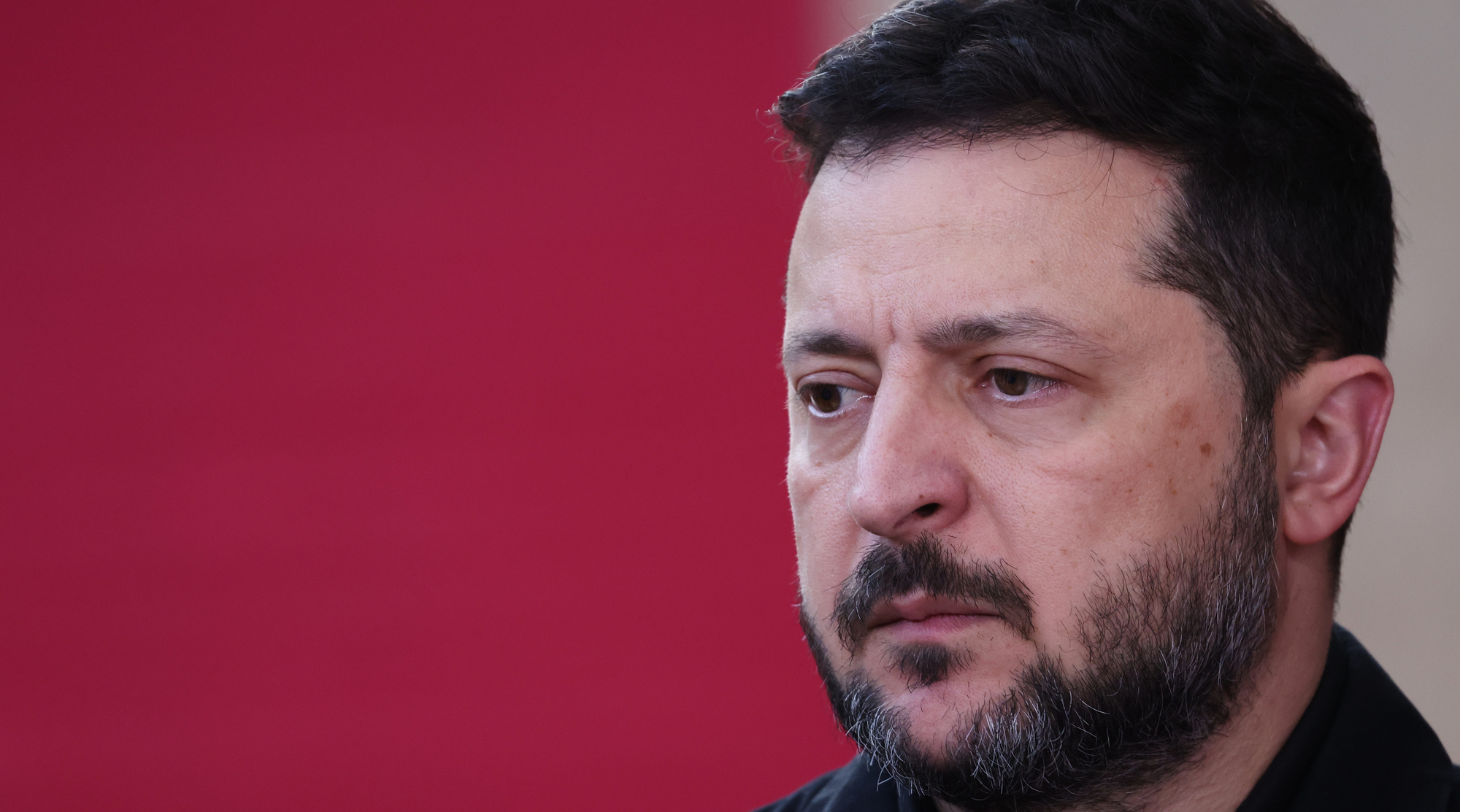
Ukraine's president Volodymyr Zelenskyy: 'Russia is prepared for war with Europe but does not want one.' Photo: AP/Omar Havana

Ukraine's president Volodymyr Zelenskyy: 'Russia is prepared for war with Europe but does not want one.' Photo: AP/Omar Havana

‘RUSSIA is prepared for war with Europe but does not want one,” Vladimir Putin said this week.

Russia has been waging war on Europe for some time. His initial invasion of Ukraine in 2014, including the annexation of Crimea, and the subsequent full-scale of invasion of Ukraine since 2022, has fundamentally changed the continent forever.

The Kremlin’s operations as a hostile foreign state actor across the wider continent have escalated since that time.

Europe has been responding to Moscow’s deliberate tactics aimed at disrupting European democratic and civilian life, and testing the resolve and unity of the EU.

Frequent drone incursions across European airspace — often carrying an explosive payload capable of causing damage to civilians — have forced governments to completely change the trajectory of their states and priorities. Particularly those in Baltic countries close to Russia such as Estonia, Lithuania, Latvia, Finland, and Poland which sits on the Baltic Sea. 

Each is already spending on average around 5% of GDP on defence and defence-related technologies — money that should be spent on education, roads, health, and capital investment is redirected for anti-drone technology, robotics, new missile/air defence systems, and submarines.

Russia’s consistent attacks, such as the semtex-laden drone in Leipzig airport in August or the arson attack in Estonia also in August, are designed to strike fear and division in populations and undermine Western support for Ukraine.

Earlier this month, Estonian prime minister Kristan Michal announced a “further” €10m to purchase military equipment for Ukraine. It followed a previous €21m — again used to purchase US weapons through the Nato mechanism.

Several US military technologies are more advanced than European comparisons, although that is changing due to an urgency in Europe to become more self-sufficient and strategically autonomous from Washington.

This includes the Patriot surface-to-air and anti-ballistic missile defence systems — the only system capable of taking out Russian ballistic missiles, and for which one interceptor costs $4.2m per unit. Most European countries are donating their Patriots — those that have them — or are giving money to the US to fund them for Ukraine.

No right-thinking government on Earth wants to announce rounds and rounds of taxpayer funding to purchase weapons from outside Europe — helping a rival economy — for Ukrainian soldiers to repel the Russian army on the battlefield.

Nor does it make good news when instead of announcing plans for a new school, or investment for the agriculture or tourist sectors, a state needs to supply funding for its neighbour to intercept hypersonic and ballistic Russian missiles.

Even in its capital, Kyiv, children and hospital patients are killed in their beds. Despite being so far away from the battlefield there is no protection. Or as we saw recently the case of a one-year-old and her mother, Inna, who were killed when a Russian jet-powered Shahed drone struck a playground in Kharkiv.

“Over the next 10 years, we will invest €26bn in national defence. Half of that amount will go directly towards armaments and military capabilities,” Michals said.

Tallinn and other capitals are not just taking this measure out of neighbourly solidarity.

They are on the frontline of an ever more risk averse Kremlin, whose aims on the battlefield are largely failing after nearly five years of war.

Instead, Putin has turned to pounding Kyiv with ballistic missiles amid a global shortage of powerful defence interceptors due to the usage by the US military in Iran, where much of its stockpile is now heavily depleted.

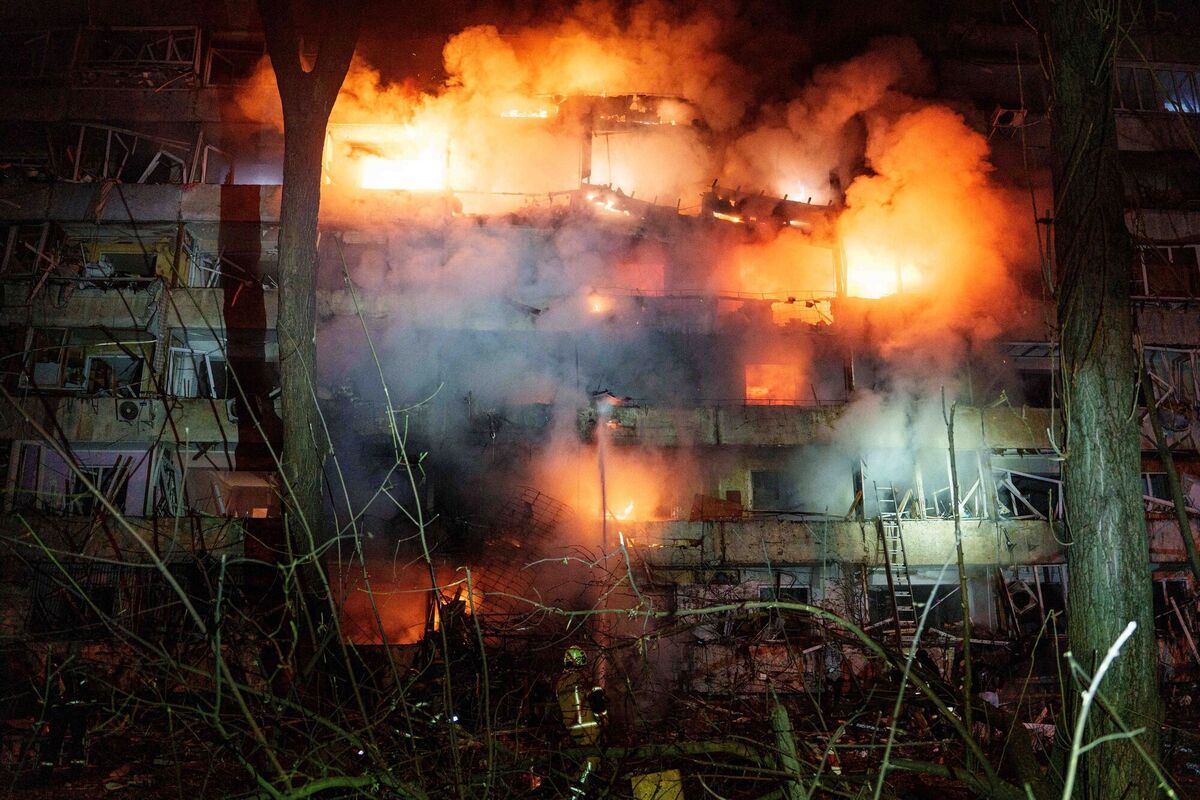
A Russian missile strike destroys a block of flats in Kyiv earlier this month. Photo: AP/Evgeniy Maloletka

He is also targeting European states with the calculation that Europe’s traditional ally, the US, won’t be there the moment an attack reaches the threshold where a more robust response is called for — one where there are civilian deaths in Nato territory and other countries want to react in a proportionate manner targeting Russian military facilities.

To some extent, it’s not a totally wild theory. At time of writing, US secretary of defence Pete Hegseth is still withholding Patriot missiles from Ukraine — even though they’ve been paid for by Europe and Canada.

Zelenskyy said on Monday that Ukraine’s been waiting for almost a month for Hegseth to sign off on their transfer. Each delay means more lives lost.

“Almost every day these brutal strikes leave people killed and injured,” Zelenskyy wrote on social media. “We need to unblock the deliveries of Patriot interceptors already approved by European countries.”

On Thursday, a Russian drone struck a train platform in the Ukrainian city of Dnipro, killing 14 people and injuring another 14.

People were merely standing at a train station, and Russia purposefully killed them as part of the daily horrors inflicted on innocent people throughout this endless war.

Meanwhile, president Zelenskyy warned that more ballistic missile strikes are to come, like they do every day.

More in this section

Revoiced

Newsletter

Had a busy week? Sign up for some of the best reads from the week gone by. Selected just for you.

Cookie Policy Privacy Policy Brand Safety FAQ Help Contact Us Terms and Conditions

© Examiner Echo Group Limited